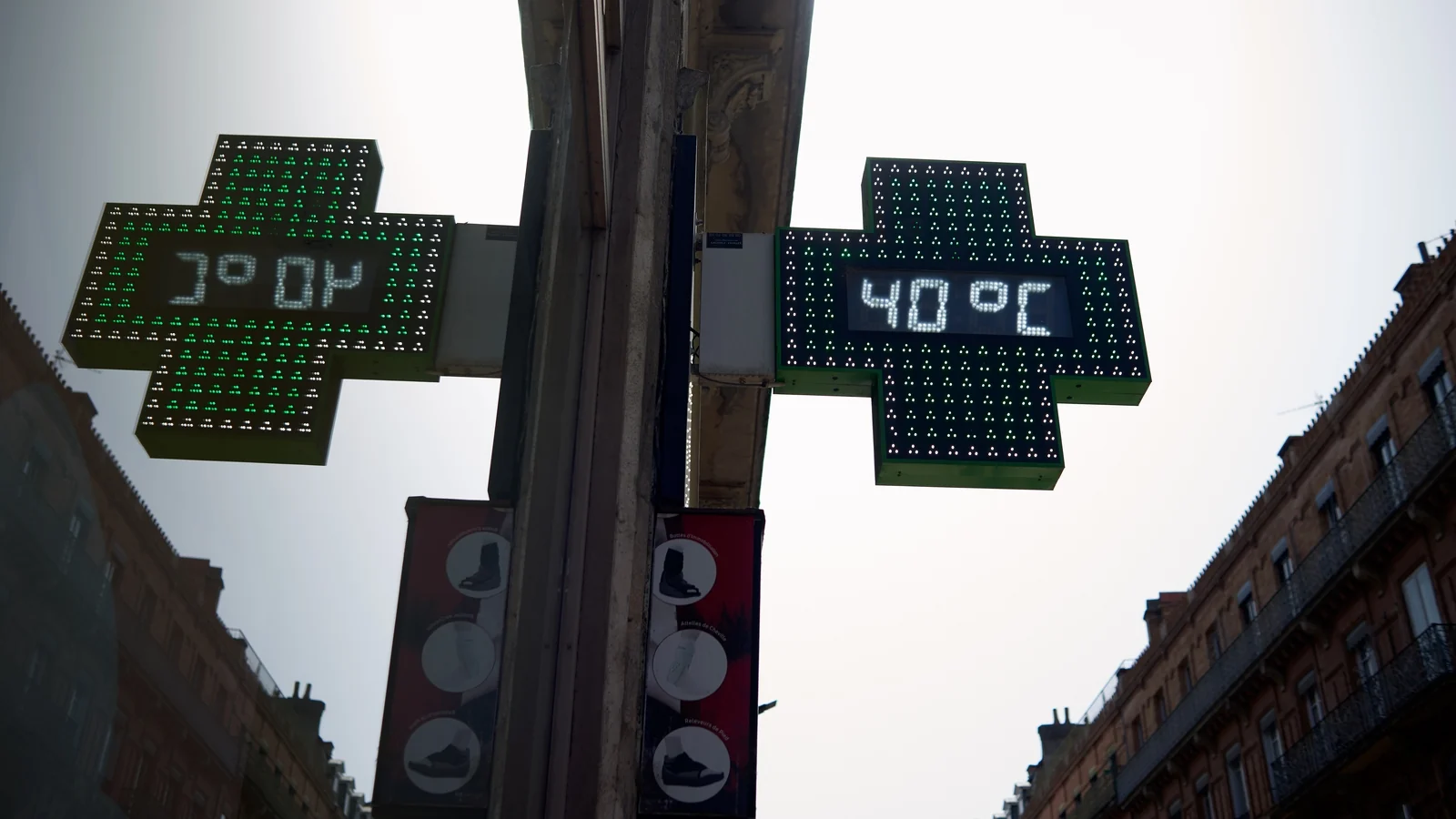
Rising heat deaths, deepening drought and worsening air quality are colliding with sluggish political momentum — prompting scientists to urge governments to formally declare climate change a global health emergency.
The call follows new findings from the Lancet Countdown on Health and Climate Change, which concludes that the damage to human health is now increasing faster than the measures countries are taking to rein it in.
Comparing the decade since nations signed the Paris Agreement in 2015 with the decade before, the researchers found that health harms have intensified more rapidly in the post-Paris era.
The analysis suggests that annual average heat-related deaths climbed by nearly 36% worldwide after the agreement was introduced.
In 2023, heat was associated with a record 710,000 deaths, the team reported, with more than 70% of that total linked to human-caused climate change.
More than 140 experts from over 30 countries contributed to the paper, which was led by University College London (UCL) and produced in collaboration with the World Health Organization (WHO).
Research looked at how health interacts with heat and air quality among other ‘indicators’
Released ahead of the UN climate summit Cop31, due to begin next month, the report assesses 54 separate “indicators” spanning the ways health intersects with heat and air quality, climate suitability for infectious disease transmission, energy systems, adaptation, health research funding, legislative engagement, extreme weather events and climate-driven economic losses.
Among its findings: extreme drought hit nearly 52% of the world’s land for at least one month in 2025, the second-highest level ever recorded.
Drawing on new satellite-based analysis, the authors also reported that 80% of global land has experienced major shifts between drier and wetter groundwater storage conditions since 2003 — changes they said have wide-ranging consequences for food security and sanitation.
The report noted that clean energy investment reached a record in 2025 and was almost twice the amount invested in fossil fuels. It added that cleaner air has helped avert an estimated 323,000 deaths each year across at least 77 countries where fossil-fuel air pollution has declined since 2016.
Even so, the researchers warned that fossil fuels still account for more than 80% of the world’s energy supply, continuing to generate the planet-heating emissions driving the climate crisis.
Experts called for health to be placed at the centre of every climate decision
The UN has recently cautioned that the world is set to overshoot the critical 1.5C warming threshold above pre-industrial levels — a point beyond which extreme weather becomes more frequent and severe, and the likelihood of triggering irreversible tipping points rises.
Within that context, the Lancet Countdown team said the 100 largest oil and gas companies are on course to surpass production levels compatible with limiting warming to 1.5C by 150% by 2040, up from 138% last year.
In response, the experts behind the report argued that health should be treated as a central consideration in every climate decision, from emissions cuts to funding choices.
Professor Marina Romanello, executive director of the Lancet Countdown, said: “A decade after the Paris Agreement, our findings are unambiguous: the health harms of climate change are growing faster than the world’s response to them, and in many cases even accelerating.”
“Real progress has been made in clean energy, health system readiness, and health-protective regulation, all of which are already delivering health benefits to local communities.
“However, progress has been too slow, too small, and isn’t reaching those who need it most.
Read more:
Greenhouse gas levels hit new record highs in 2025 – UN
Latest Climate Change stories
“That is why we are calling for climate change to be formally recognised as a global health emergency, with health placed at the centre of every climate decision.”
She added: “These numbers point to a clear emergency.
“The rate of increase in many climate-related health threats is accelerating, while heat deaths linked to climate change have reached a record high, and the economic toll is battering vulnerable sectors and communities the hardest.
“The risks become even more profound when you consider how different hazards interact and compound.
“At the same time, drought is spreading, and the world is swinging to water extremes, some drying out, while others are flooding.
“This isn’t a gradual worsening; it’s a step change that must be recognised as the global health emergency it is.”