Beijing’s Double Act: Power, Pageantry and the Art of Playing Both Sides
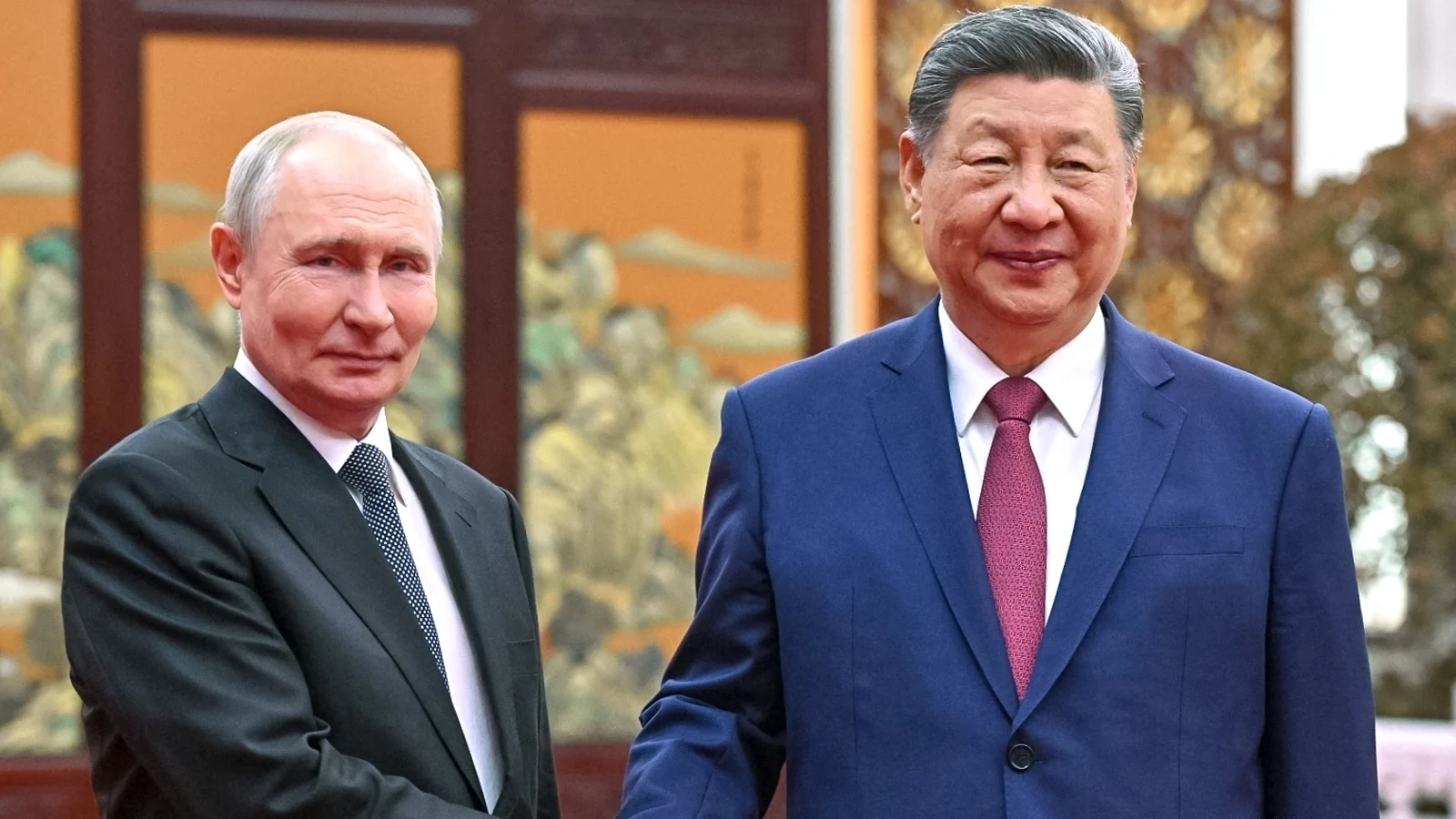
They came in a heartbeat, two men who have shaped headlines and history: one departed, the other arrived. One was greeted with a cautionary note; the other with an embrace that seemed to belong to another era.
In the span of a week, Beijing staged a geopolitical tableau—an arena where steel drums, marching guards and children clutching flags created a familiar script. Yet behind the choreography there was a subtler, far more consequential drama: a nation rehearsing the role of indispensable mediator while quietly hedging its bets.
Not Just Optics: What Those Parades Really Mean
To step into Tiananmen Square during a state visit is to enter a living portrait of modern China: synchronized, meticulous, deeply symbolic. Vendors selling jianbing and paper lanterns stand shoulder to shoulder with uniformed honor guards. A brass band blares, the crowd swells, and cameras frame faces—some radiant, some calculating.
“Beijing wants the world to see that decisions are made here—whether Moscow or Washington likes it or not,” said Dr. Aaron Glasserman, a scholar who studies Sino-global relations. “That doesn’t mean China wants to be the world’s firestarter. It wants to be the thermostat.”
Ask a teacher waving a small flag outside the Great Hall what she thinks and you get something warmer and more human. “I brought my students so they could see history up close,” Li Na, a primary-school teacher, told me. “They cheered, they sang. For them, it is about being proud of where they live.”
Two Guests, Two Messages
On the surface, both visits featured ritual—the pomp one expects when states stage power. But the tone shifted in the details.
When the American kept his distance, the subtext was clear: a firm reminder on Taiwan and a calibrated cordiality that left no illusions about sovereignty or rivalry. When the Russian arrived, the atmosphere softened to a warmer intimacy—old comrade, old jokes. Yet warmth did not translate into carte blanche.
“Xi wants space to strengthen China without inviting a showdown with Washington,” said Sunita Rao, a geopolitics analyst based in Singapore. “That means being friendly with Moscow, but not so entangled that Beijing’s options are constrained.”
Deals Danced Around, Not Signed
Among the missing headlines was the absence of the long-discussed Power of Siberia II pipeline—a proposed 2,600-kilometre artery intended to carry Arctic gas to China’s eastern coast. For Moscow, the pipeline represented both a lifeline and leverage; for Beijing, it was an expensive insurance policy.
“Russia needs markets; China needs supply diversity,” said Ivan Sokolov, who advises energy firms in Moscow. “But Beijing has spent the past decade widening its energy portfolio—LNG imports, renewables, cross-border links—so it can afford to be choosy.”
Complicating matters, tankers from the United States reportedly set sail for Chinese ports not long after the American visit—a sign that energy ties to Washington, riven by tariffs and disputes in recent years, were thawing in practical terms. The message was not lost: Beijing can tap multiple suppliers, and Russia is no longer the only game in town.
Quick facts
- Power of Siberia II: proposed pipeline roughly 2,600 km in length.
- Russia turned to alternative markets after sanctions imposed following its 2022 invasion of Ukraine.
- China is the world’s largest energy importer and has aggressively diversified suppliers over the past decade.
High North Ambitions and the Arctic Chessboard
Another strand woven into the summit’s tapestry was the Arctic. As polar ice recedes, new maritime routes and untapped energy reserves have transformed the High North into a geopolitical prize.
Beijing and Moscow signed on to deepen cooperation there, using language like “territory of peace” and lamenting what they called “militarisation” of high latitudes. But this diplomatic prose sits atop practical ambitions: ports, research stations, and access to resources.
“The Arctic isn’t a sentimental project,” explained Dr. Helen Carter, a former diplomat now teaching international security. “It’s a strategic equation: who controls the routes, who builds the infrastructure, who gets the resources when the ice recedes.”
Friends, Foes, and the Shape of Alliances
Out front, China and Russia reaffirmed a “comprehensive strategic partnership,” a phrase both performative and substantive. Behind the prose, the alliance resembles a marriage of convenience: mutual interests, mutual distrust of Western pressure, but not necessarily shared goals across every domain.
Analysts in Seoul and Washington use a number of acronyms—CRINK among them, for China, Russia, Iran and North Korea—to describe budding coalitions that seek alternatives to a Western-dominated order. Yet the cohesion of such coalitions is debated.
“They are aligned more by what they oppose than what they propose,” said Glasserman. “That’s a fragile glue.”
Still, make no mistake: for Moscow, Beijing’s goodwill is a lifeline amid sanctions. For Beijing, Moscow is a geopolitical partner whose value varies by the day’s calculus.
Local Voices: Pride, Pragmatism, Unease
Walking the hutongs near the city center the morning after the Kremlin delegation left, I heard a chorus of reactions. An old man sipping tea by a chessboard said he liked the spectacle—“It’s beautiful to see the country respected.”
A taxi driver, who asked to be called Zhang, was more pragmatic. “We want peace, jobs, and the lights to stay on. Leaders can hug and sign papers all they want—what matters is whether the economy keeps humming.”
At a street stall, a young student shrugged. “People here aren’t pro or anti; we just want the chance to study abroad, get work, travel.”
So What Does This Mean for the Rest of Us?
These visits are not merely photo ops. They are signals to markets, to allies, and to adversaries. China is projecting itself as the pivot in a more multipolar world while carefully calibrating its ties so that it doesn’t lose the very breathing space that lets it grow.
Consider the choices Beijing faces: deepen economic ties with Washington and risk alienating Moscow, or lean into a bloc of like-minded states and risk economic friction with the West. The decision is less binary than a chessboard square; it’s a negotiation of posture and policy.
What does this mean for you—reader in Lagos, London, Lagos, or Lahore? It means your energy prices, trade opportunities, and even diplomatic choices may increasingly be shaped by conversations that play out in grand halls and on ceremonial red carpets several time zones away.
Closing Thoughts: Power, Patience and the Long Game
China’s diplomatic dance in Beijing last week was eloquent in its silence. It was as if the country whispered: we will be friends where it suits us, rivals where necessary, and indispensable always.
“China is buying time,” said Sunita Rao. “Time to settle its economy, time to diversify its energy, time to make itself the hub of a new set of international arrangements.”
And time, perhaps, is the most valuable currency of all. In an era of quick headlines and impatient politics, Beijing appears to be playing the long game—patient, pragmatic, and palpably powerful. Are the rest of the world’s capitals prepared to respond?