When an Island Becomes a Diplomatic Hotspot: Greenland, Guns, and the Future of NATO
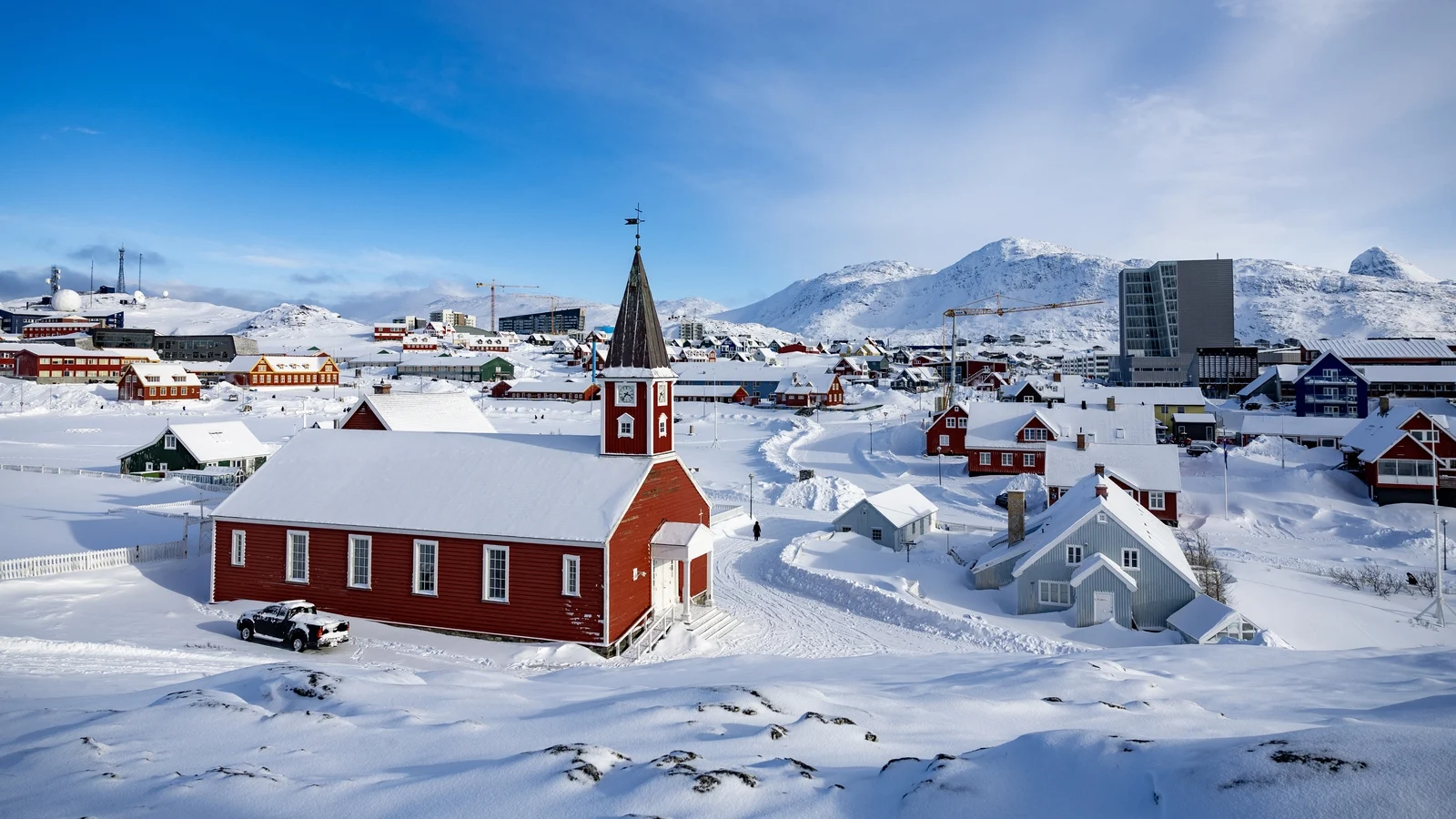
Walk the icy streets of Nuuk at dusk and you can taste the steel of the Arctic air—sea salt, diesel, and the faint tang of seals simmering in pots at back-alley kitchens. Children race on scooters past murals of hunters and humpback whales; satellite dishes bloom like flowers on corrugated roofs. Greenland is small in people but vast in story, and right now its future has become a flashpoint for a larger global conversation about power, law, and belonging.
What would you do if a superpower stared across the ocean and said, bluntly, “We want that land — one way or another”? That’s the scenario Danish leaders and defence ministers across Europe are grappling with as headlines about President Trump’s repeated suggestions to “take” Greenland have refused to die. The rhetoric has sparked more than headlines: it has ignited meetings in Reykjavik, Stockholm, Brussels and Washington, and it has provoked a rare, broad chorus of European disapproval.
The stakes — why Greenland matters
Greenland is 2.16 million square kilometres of ice, rock and midnight sun — and, increasingly, of strategic value. It sits astride the North Atlantic, guarding sea lanes that are becoming more navigable as the Arctic warms, and it hosts the Thule Air Base, a linchpin for missile warning and early-space surveillance. Beneath its ice lie minerals and rare earths that a modern economy prizes. Climate scientists warn that the Arctic is warming faster than much of the planet — a phenomenon called Arctic amplification — opening previously frozen seas to ships and submarines alike.
“If Greenland were to be seized by force, it wouldn’t be a problem between two nations,” Andrius Kubilius, the EU’s Commissioner for Defence and Space, told a security conference in Sweden. “It would be the end of NATO.” The words landed like a dropped glacier: constitutional, treaty-bound, and yet terrifyingly possible in the fevered logic of great-power chess.
Voices from capitals and from the docks
In Copenhagen, Prime Minister Mette Frederiksen framed the controversy as more than a geopolitical spat. “This is a decisive moment,” she said in public comments ahead of talks in Washington. “We are ready to defend our values — including in the Arctic. We believe in international law and in the right of people to decide their future.” Those words were echoed by leaders across Europe: Sweden’s prime minister called the rhetoric “threatening,” Germany committed to greater responsibility in Arctic security, and a coalition of seven European states signed a letter insisting Greenland’s destiny belongs to Greenlanders and Denmark alone.
On the wind-scoured wharves of Ilulissat, where iceberg tongues glitter in the late light, locals speak with more personal alarm than diplomatic nuance. “We are not a chess piece,” said Aqqalu, a fisherman who asked that only his first name be used. “Our fathers hunted here, our children will live here. You do not just buy a home from its people.” In a café in Nuuk, a teacher named Sara shrugged and said, half-joking, half-frightened: “Imagine someone coming and telling you they can take your kitchen. That is how this feels.”
Polls consistently show Greenlanders are overwhelmingly opposed to being transferred to another sovereign power. While precise numbers vary, independent surveys have documented deep scepticism about any sale or transfer, with many citing a history of Danish colonial rule that lingers in memory and in policy.
Alliances, law, and the fragile scaffolding of order
NATO has long been the network through which North America and Europe coordinate defence. The suggestion that the United States might seize territory from an ally — even if framed as a security necessity — challenges the bedrock assumption that alliances protect members from each other’s appetites. “If a member were to take such unilateral action, it would tear at the very fabric of collective defence,” said a retired NATO strategist who asked not to be named. “We are not just talking bases and missiles. We are asking whether the rules that bind states are still strong enough to stop the biggest among them from acting alone.”
At a defence conference in Sweden, NATO commanders acknowledged the rising importance of the Arctic. “There is no immediate threat to NATO territory,” General Alexus Grynkewich noted, describing ongoing military activity from Russia and China as cause for attention rather than alarm. But talk of “no immediate threat” does not comfort communities that live on the frontlines of climate change and strategic competition.
What the maps don’t show
Maps flatten stories. They cannot capture the warmth of a Greenlandic living room, the collection of whalebone carvings in a trading post, or the legal pathways that produced Greenland’s home rule in 1979 and enhanced self-government in 2009. They also don’t show the practicalities of sovereignty: who runs education, who manages fish quotas, and who negotiates with mining companies seeking the rare earths and uranium tucked into Greenland’s bedrock.
“People forget there are negotiations that happen every day,” said Anja, a municipal planner in Sisimiut. “We are discussing schools, water, and infrastructure. These are the things that determine our lives more than any headline.” She laughed softly. “But headlines shape the air we breathe, too.”
Global ripples
Why should a reader in Nairobi, São Paulo, or Seoul care about a potential dispute over a distant, icy island? Because Greenland is part of a web of emerging pressures: great-power competition, climate change that rearranges trade routes and resources, and norms around sovereignty and coercion. If one powerful country can take territory from an ally because it says “security” demands it, what does that say to smaller nations watching their borders and resources?
And there is the climate connection. As Greenland loses ice — the island has contributed significantly to global sea-level rise over recent decades — the physical geography that made its remoteness a buffer is changing. Warmer waters, new shipping lanes, and expanded access to minerals make the Arctic a strategic theatre, not a frozen backwater.
Where do we go from here?
European diplomats are not idly issuing press releases. Meetings in Brussels, Reykjavik and London have focused on clarifying defence commitments and strengthening legal protections; ministers are discussing practical steps to ensure the Arctic remains secure for all who live there. “We will protect what is at stake here — together,” a Western European foreign minister said at a closed briefing.
At street level, Greenlanders continue their quiet stewardship: repairing nets, teaching traditional songs in schools, debating self-determination in municipal halls. Their voice — not geopolitical grandstanding — will be the vital piece in any future. That is the simplest, most radical assertion in this drama: that sovereignty is not a commodity to be traded in backrooms, but a living relationship between people and place.
So ask yourself: how do we balance legitimate security concerns with respect for the decisions of small communities? How do global powers avoid treating territories like chess pieces? The answers are not military alone. They require diplomacy, respect for international law, and listening to the people who call Greenland home.
In the end, whether alliances hold or fray will depend on how states choose to interpret their neighbours — as partners bound by shared rules, or as rivals to outmaneuver. Greenland’s icy shores are watching us all. Will we learn to be better neighbours?