When the Beautiful Game Meets a Dangerous Virus: Houston’s World Cup Buzz Under a Shadow
The tiki-taka of anticipation is playing out on Houston’s streets—cafés buzzing with predictions, murals sprouting national flags, vendors rehearsing their chants—yet a low, insistent note of caution threads through the city’s summer soundtrack.
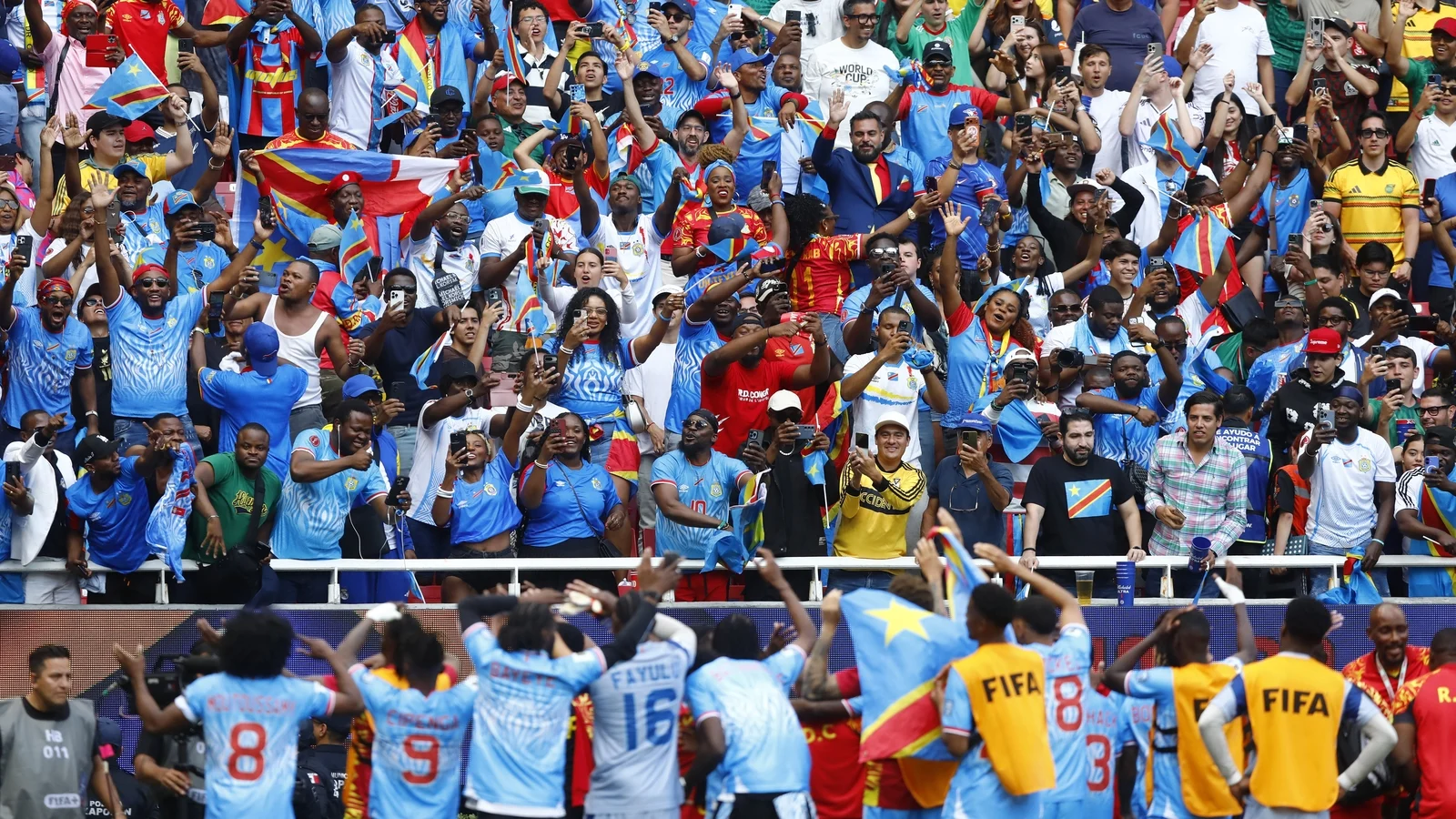
In three weeks, Houston will host seven World Cup matches, a sporting tidal wave that promises to baptize stadiums and sidewalks in color. One of those nights—17 June—has been circled in calendars around the globe: Portugal versus the Democratic Republic of Congo (DRC), a match that carries more than tactical intrigue. For the DRC, this is their first World Cup appearance since 1974, when they marched onto the global stage as Zaire. For Houston, it’s a test of hospitality and public-health resolve all at once.
The outbreak at the center of the storm
Across the Atlantic and deep in central Africa, a Bundibugyo strain Ebola outbreak has alarmed global health authorities. The World Health Organization formally declared the situation a “public health emergency of international concern,” citing the strain’s rarity and the lack of approved vaccines or therapeutics specific to Bundibugyo.
Official tallies released by health teams put suspected cases at nearly 750, with at least 177 suspected deaths. “I am deeply concerned by the scale and speed of this epidemic,” WHO Director-General Tedros Adhanom Ghebreyesus told delegates in Geneva, his voice carrying the kind of gravity that makes governments sit up.
For a sporting spectacle that draws hundreds of thousands of people into airports, hotels and stadiums, those numbers aren’t abstract. They are a call to action—and to difficult decisions.
Houston: excitement with a steady heartbeat
Walk into a sports bar in Midtown and you will find a different beat. “It’s excitement tempered by common sense,” says Ethan Bratton, a local journalist who’s been tracing the city’s preparations. “People here know how to throw big events. We’ve got world-class medical centers and experts. The vibe is: don’t panic, but do pay attention.”
That “common-sense” posture is visible in practical ways. Hospitals in Houston—home to the Texas Medical Center, the world’s largest concentration of medical institutions—have briefings scheduled with event organizers. The Houston Host Committee says it’s in constant contact with FIFA and public health agencies, and will follow guidance “as preparations for the tournament move forward.”
Yet the city’s optimism carries an undercurrent of contingency. “If it comes to disruption, I’d expect delay or relocation, not outright cancellation,” Bratton adds. “Safety always trumps spectacle.”
Teams, travel and the 21-day bubble
Logistics have become the battleground where sport, science and diplomacy intersect. The US government’s World Cup task force has told the Congolese delegation—who are training in Belgium—that they must maintain a strict “bubble” and isolate for 21 days prior to arrival or risk being denied entry.
“We’ve been very clear to Congo that they should maintain the integrity of their bubble for 21 days,” Andrew Giuliani, Executive Director of the White House Task Force for the World Cup, said bluntly. “We cannot be any clearer.”
The Centers for Disease Control and Prevention (CDC) has also imposed temporary travel restrictions: non-US passport holders who have been in the DRC, South Sudan or Uganda within 21 days may be barred from entry. Those rules, issued 18 May, were set as 30-day exemptions—scheduled to lapse 17 June in the current guidance—adding a narrow window for teams, staff and supporters to align their movements with public-health rules.
From Kinshasa to Liege: a team on the move
The DRC squad has already reshaped its itinerary. A planned training camp in Kinshasa was cancelled; the team decamped to Belgium. They have friendlies lined up—against Denmark in Liège and Chile in southern Spain—part of an itinerant build-up that echoes the modern athlete’s peripatetic life.
“Our priority is keeping our players safe,” said an anonymous official within the Congolese federation. “Everyone is cooperating with health authorities. We are a footballing nation stepping onto the world stage—we will do it responsibly.”
Names to watch include former Manchester United defender Axel Tuanzebe—who scored the decisive extra-time goal in Mexico to beat Jamaica at the play-off—and Premier League standouts Aaron Wan-Bissaka and Yoane Wissa. They are part of a roster tasked with carrying a nation’s hopes while navigating quarantines, testing regimes and the logistic puzzle of international travel during an outbreak.
Voices from the ground: fear, fairness and responsibility
Not all perspectives fit neatly into “calm” or “panic.” In Kinshasa’s markets, vendors who sell jerseys and scarves worry about livelihoods if fans can’t travel. “If people cannot come, that’s my bread gone for the month,” said Marie, a scarf seller near Stade des Martyrs. “We want our boys to shine on TV—money is good then—but health comes first.”
Public-health experts warn that the game plan must be bigger than movement restrictions. Professor Anne Moore of University College Cork points out the logistical and ethical questions: “We must ensure the team has not been exposed, that support staff and fans can be tracked, and that resources are poured into outbreak control where it’s needed most. Emergencies need ready-to-go surge capacity.”
She notes a hard truth: global sporting events are porous membranes in a connected world. “When masses of people gather, any infectious agent can find new pathways. This is not about alarmism; it’s about preparedness.”
History as a teacher
Sporting calendars have been rewritten before. The COVID-19 pandemic pushed the Tokyo Olympics and Euro 2020 back a year; the specter of Zika in 2016 prompted debates about Rio. Those precedents are instructive, not deterministic.
“We learned tough lessons about public health readiness and the social costs of postponing events,” says Dr. Lina Sousa, an epidemiologist who advises major-event planners. “The right response balances the immediate public-health imperative with the wider harms of isolation and cancelled livelihoods. That balance is difficult but necessary.”
What should fans and citizens take from this?
For the casual observer, the moment poses simple but urgent questions: When cheering from a stadium seat, how much do you trust the systems that screen your health? If you’re a fan abroad, are you prepared for sudden travel curbs? If you are a policymaker, what are you willing to sacrifice to keep both public health and global sport intact?
The answers won’t come from a single press release. They will be forged in coordination rooms and hotel corridors, in laboratories and locker rooms, and in the practical judgment calls of ordinary people: the vendor who sells scarves in Kinshasa, the volunteer steward in Houston, the medic on call in Belgium.
For now, the refrain is measured: the DRC are expected to travel and play, provided their pre-trip isolation is airtight. FIFA says it is monitoring the situation and working with health authorities across host countries. Local officials in Houston are keeping their fingers on the pulse.
And as the world prepares to watch players run, pass, feint and score, perhaps the larger game is this: can humanity stage a global celebration while acting as a responsible global community? It is a question the next 21 days will help answer—one whistle at a time.