Smoke over the stalls: a market, a drone and a country fraying at the edges
When I arrived in Malha by imagination and inquiry — not on the ground, but through the voices of those who remain — the first thing I felt was the absence. Markets are measured in sound: the clack of donkey hooves, the bargaining baritone of elders, the high laugh of children threading between stalls. After the attack on Al-Harra market, there was an echo where a town should be.
“We woke to smoke and screaming,” said Aisha, a fruit seller who had run from her stall with only the shawl around her wrist. “By the time we came back, the shop where my husband kept nails and sugar had burnt to bones.”
The North Darfur Emergency Rooms Council, a network of volunteer first responders coordinating relief across the state, said a drone strike tore into the market on the weekend, killing 10 people and setting multiple shops ablaze. The group — one of the few functioning lifelines in the region — did not assign blame.
For a country that has endured a grinding, ruinous war since April 2023, the scene in Malha will sound all too familiar: civilian space invaded by a weapon designed to remove the human element from violence. But where drones are meant to sterilize combat, their consequences are messy, intimate and irretrievable.
The strike and its immediate aftermath
“Ten dead, and many more burned,” said a medic with the Emergency Rooms Council. “We are volunteers. We carried bodies with our bare hands because there was no other help.”
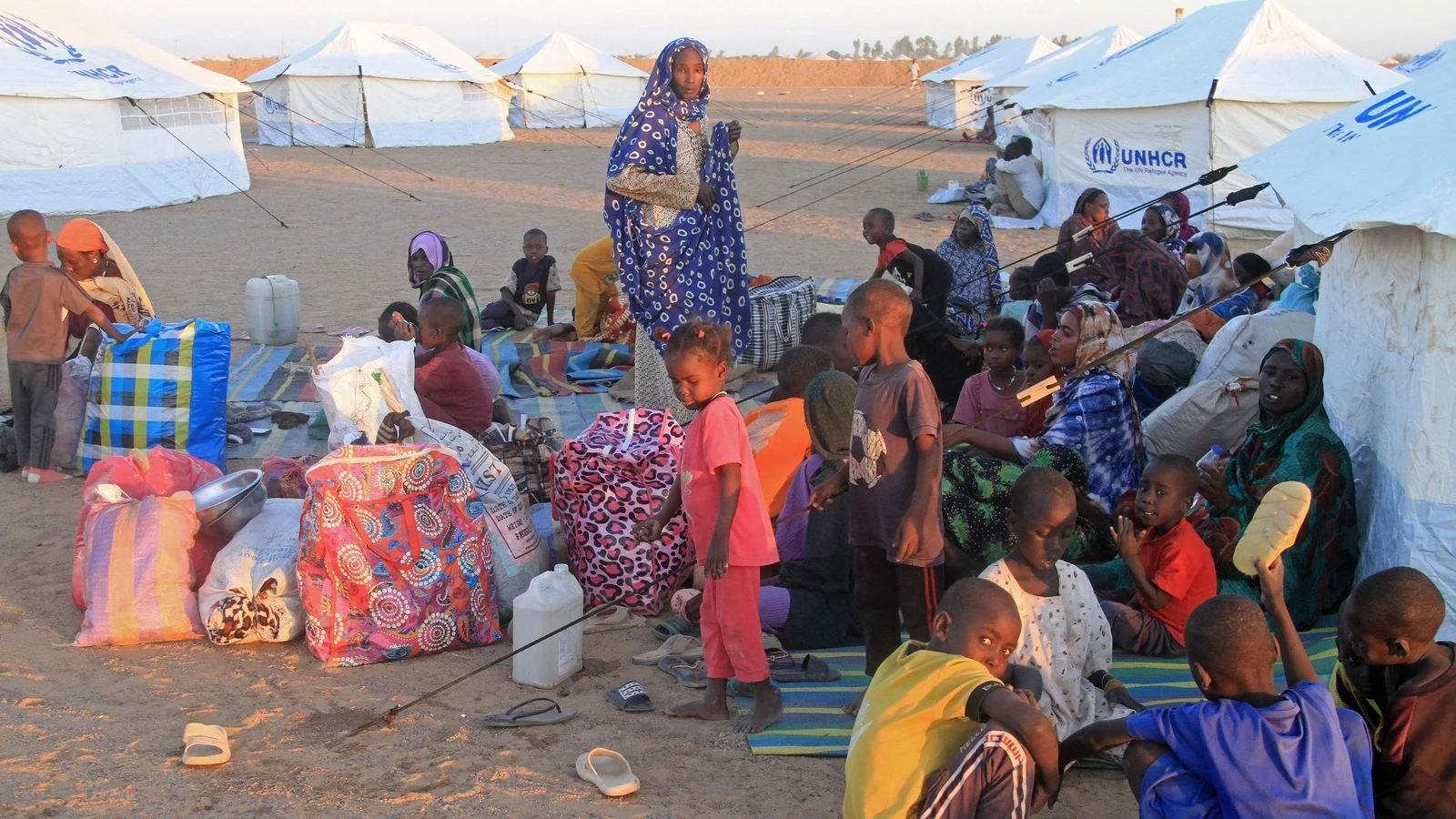
Images from other towns under similar duress — charred corrugated iron, half-melted plastic crates, families sitting on blankets counting what remains — tell the same story. No official from either the Sudanese army or the Rapid Support Forces (RSF) immediately claimed responsibility, and in many of these battles the fog of war is thick with denials and accusations.
But the method is telling. Drones, artillery and airstrikes have made marketplaces, hospitals, and neighborhoods into theaters of high-tech, low-accountability violence. Who fires? Who authorizes? Who is held to account? In Sudan today, answers are scarce.
Front lines moving south: Kadugli, Kordofan and the thin red lines of supply
While the smoke in Malha lingered, fighting intensified elsewhere — most notably in South Kordofan, where Kadugli, the state capital, stands besieged and starved. Humanitarian organisations evacuated staff from Kadugli this weekend after a recent drone strike killed eight people as they fled the city. The United Nations relocated its logistics hub out of Kadugli, a sign that supply lines and lifelines are fraying.
“We had no choice,” an aid worker who left Kadugli told me over a crackly call. “The roads were blocked. Communications were gone. Staying would have been a death sentence for our teams.”
UN agencies have said the city is suffering — in their words — catastrophic losses. Last month, the UN declared a famine in Kadugli. The International Organization for Migration reports more than 50,000 civilians have fled the region since late October. Others remain trapped, foraging for food in the surrounding forests.
The RSF’s capture of El-Fasher last October — a clinch that removed the army’s last Darfur stronghold — altered the map. With that momentum, the RSF has redirected its campaign toward Kordofan, a patchwork of towns and roads that stitch together northern and eastern army-held territory with RSF-controlled Darfur. Control here is not just military: it is control of trade, of oil and mineral roads, and of a people’s access to food and medicine.
Ethnic fissures and the remaking of everyday life
Kordofan, like Darfur, is an ethnic tapestry, home to numerous non-Sudanese Arab communities alongside other groups. When towns fall, the violence can be selective — a grim dance of retaliation and retribution that targets specific neighbors and communities. After El-Fasher’s fall, local reports spoke of targeted attacks that forced families into flight and left entire neighborhoods hollowed out.
“You are not just losing property,” said a community leader from Dilling, who asked to remain anonymous, “you lose trust, you lose the neighbor who used to bring your child to school. That can take generations to rebuild, if it’s possible at all.”
Humanitarian unraveling: disease, displacement and the collapse of prevention
War is not only measured in bullets and bodies. It is measured in infections that spread where vaccination programs are disrupted, in infants who take their first breath in shelters, and in hospitals that run out of fuel for incubators. Doctors Without Borders (MSF) has warned that a preventable measles outbreak is sweeping across Central, South and West Darfur. Since September 2025, MSF teams have treated more than 1,300 measles cases, the organisation said, blaming delays in vaccine transport, approvals, and coordination.
“Measles is a litmus test for the breakdown of services,” said Dr. Lina Mahmoud, an MSF field epidemiologist. “When kids stop getting vaccinated, what follows is predictable and preventable tragedy.”
The broader numbers are staggering. Since the fighting erupted in April 2023, tens of thousands of people have been killed and nearly 12 million displaced. The UN has described the situation in Sudan as the world’s largest displacement and hunger crisis — a label that ought to shake the international system awake.
- April 2023: War begins between the Sudanese army and the RSF.
- Nearly 12 million people displaced across Sudan and into neighboring countries.
- More than 50,000 civilians fled Kordofan since late October.
- MSF treated over 1,300 measles cases in parts of Darfur since September 2025.
Why the world should care — and what can be done
To many outside Sudan, the country’s collapse feels distant, a smear on the evening news. But there is an undeniable truth: the unraveling here ripples outward. Regional stability in the Horn of Africa is fragile. Food prices and migration pathways shift. Global humanitarian organizations are stretched thinner than at any time in recent memory.
Some critics argue that the international response has been too fragmented. Funding pledges evaporate; logistics hubs close; relief workers pull out. “When agencies leave, people die,” said a UN official who asked not to be named. “Relocation isn’t recovery.”
Others point to the changing character of conflict. Drones and remote weaponry make warfare faster and, many would argue, more indiscriminate. Accountability mechanisms lag behind. Proxy interests complicate ceasefire talks. The technology speeds the killing while diplomacy slows.
A moment to ask hard questions
What does it say about our era that marketplaces — the most ordinary of human institutions — have become acceptable targets in modern conflict? How do we hold fast to norms when those who break them use innovation as an excuse?
And for people in places like Malha and Kadugli, the questions are more literal: Where will we get food next month? Who will treat our children’s fevers? How do we bury the dead with dignity?
There are no tidy answers. But listening matters. So does pressure: on parties to the conflict to allow humanitarian corridors, on donors to fund life-saving vaccines and food, and on international institutions to keep attention from slipping. Political resolutions require sustained, sometimes boring, work: verification teams, ceasefire monitors, humanitarian logistics, and legal investigations.
Parting scene: the small, stubborn acts of life
Back in Malha, Aisha told me she had already replanted a small patch of okra beside what remained of her stall. “The children need something to eat,” she said. “If I sit and wait for help, there will be nothing.”
That stubbornness — the human habit of tending life in the face of ruin — is the thread that keeps the story from becoming only statistics. It’s also a call. Will the rest of the world stand by, parsing committees and press statements? Or will it choose to do the tedious, necessary things that save lives: fund the vaccines, open the corridors, keep humanitarian staff in place, and insist on accountability?
For now, the smoke over Al-Harra market hangs in the collective memory of a country learning the cost of modern war. For those who fled, and those who stayed, the future is not a line on a map. It is a market stall, a child’s measles shot, a truckload of wheat. Those are small things. They are everything.