A small street in Shreveport, and a morning that will not be forgotten
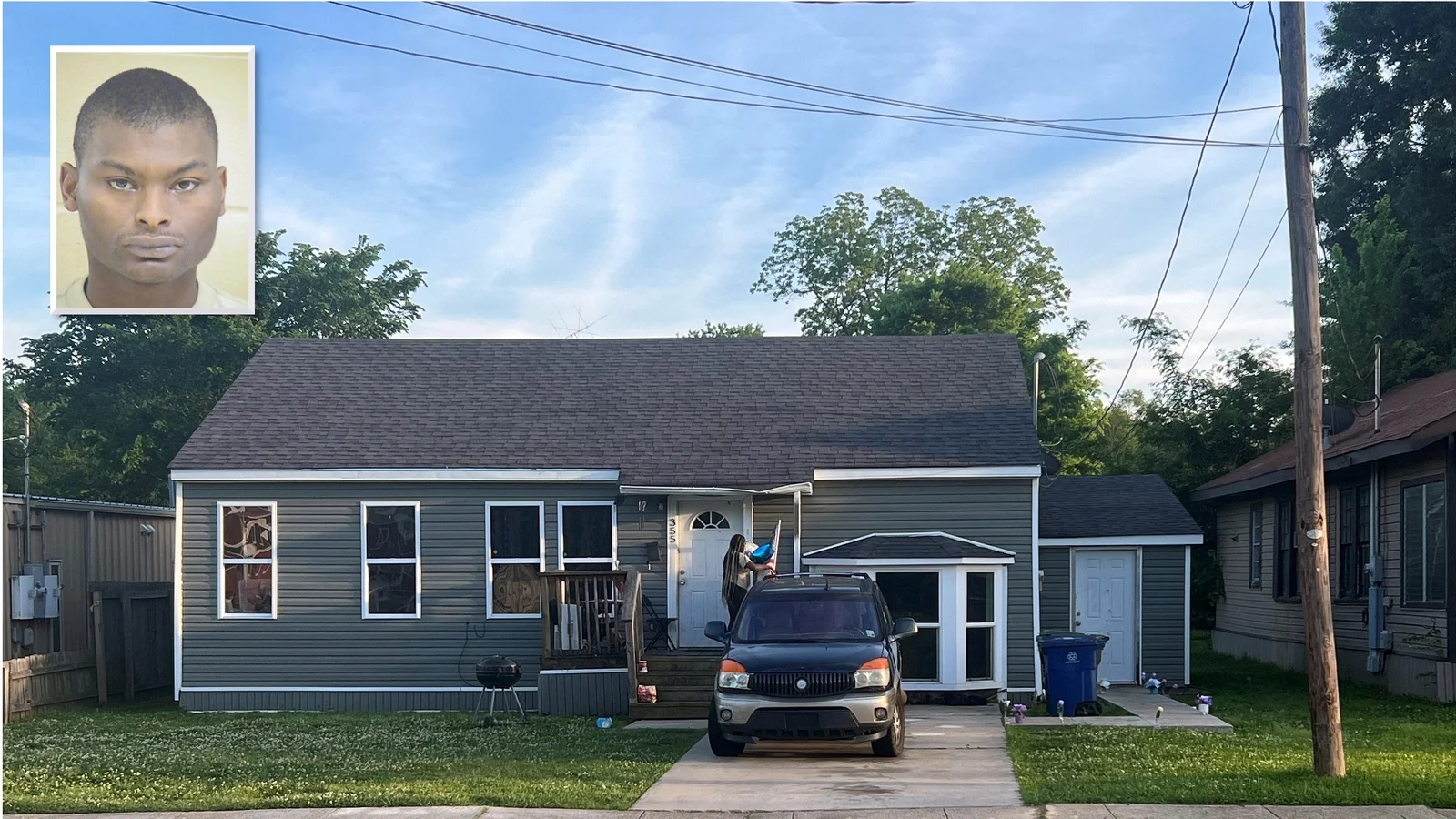
It was the kind of dawn you find across many American towns: quiet, humid air hanging over porches, a few cars idling as neighbors began their routines. In a small two-storey house on a modest street in Shreveport, Louisiana, that ordinary morning turned into the unthinkable.
Early on a weekday, gunfire swept through three separate homes in a brief, brutal span. By the time the sun rose fully, eight children lay dead — three boys and five girls, their ages between three and eleven. Seven of them were siblings; one was their cousin. Two women were critically wounded. The man police later identified as the shooter, 31-year-old Shamar Elkins, fled in a carjacked vehicle before being stopped and fatally shot by officers after a pursuit.
The sequence of a tragedy
Local law enforcement says the attack began as a domestic disturbance. According to investigators, a woman was shot at a house where the violence first erupted; the suspect then moved to another nearby residence where the children were killed. One child survived with non-life-threatening injuries and was taken to hospital. Authorities have described the episode as confined to a single shooter and said they are still combing through three separate scenes for evidence and motive.
The Caddo Parish Coroner’s Office released the names of the children: Jayla Elkins, 3; Shayla Elkins, 5; Kayla Pugh, 6; Layla Pugh, 7; Markaydon Pugh, 10; Sariahh Snow, 11; Khedarrion Snow, 6; and Braylon Snow, 5.
What police said
“At the end of that pursuit, the suspect exited the vehicle with a firearm, and ultimately our officers were forced to neutralise the suspect,” a police corporal told reporters. Investigators have said they were not aware of prior domestic-violence complaints in the defendant’s history, though records show he pleaded guilty to a firearms charge in 2019.
Neighbors, grief, and the details that haunt a neighborhood
People who live on that block described a place where childhood echoed across yards — bikes, chalk drawings, dogs and the quick energy of small people at play. “Yesterday afternoon, all of those kids were in the front yard playing,” one neighbor recalled, the image of them frozen in memory like a photograph smudged by sudden grief.
By evening, the curb outside the house was a small, makeshift shrine: bouquets, stuffed animals, handwritten notes. A candlelight vigil drew families and strangers alike, an uneven choir of prayer and stunned silence. A local pastor, standing under a magnolia tree heavy with blossoms, said softly, “We cannot erase what happened, but we can sit with the pain and hold the survivors. The danger is not just in the weapon — it is in the broken places of life that allow violence to grow.”
A videographer at the scene filmed five bullet holes pocking the white door of the house — small, terrible punctuation marks on a room that had been full of ordinary life.
A national pattern, and the questions it raises
For the country at large, this attack landed as another grim waypoint in an ongoing crisis. According to public health data and independent trackers, the United States records tens of thousands of firearm-related deaths each year, the majority of which are suicides, with homicides and mass shootings adding to the toll. Gun Violence Archive, which tracks mass shootings (incidents in which four or more people are shot, not including the shooter), said this was the deadliest mass shooting in the U.S. in more than two years.
Those cold statistics do not blunt the raw human questions: How did a man with a previous firearms conviction obtain a weapon? What led to the breakdown that ended in such loss? How do communities detect and address the danger signs of domestic violence before they erupt into catastrophe?
Voices from the city and beyond
Local officials called the slayings “terrible” and lamented the scale of the loss. The mayor of Shreveport noted the “distressing” fact that the victims were all children and urged the community to respond with compassion. State leaders sent condolences; the scene became a focal point for grief for a city already familiar with economic challenges and the complicated fabric of southern life.
A family friend who attended the vigil lingered at the foot of the street: “There’s no single word for this. We come from a place that prays, that cooks for one another, that watches each other’s kids — and yet here we are. We have to ask ourselves what we’re missing as neighbors and friends.”
Domestic violence, firearms access, and prevention
Experts say this tragedy sits at the intersection of two critical and overlapping issues: domestic violence and the ready availability of firearms. Studies consistently show that intimate partner violence escalates when guns are present. Cities and states that have tried to limit firearm access to people with domestic-violence restraining orders or recent convictions have seen measurable reductions in some forms of fatal violence, researchers note.
“When you combine personal turmoil with easy access to a gun, the odds of a lethal outcome rise sharply,” said a domestic-violence advocate. “Prevention isn’t just about the firearm — it’s about early intervention, mental-health resources, and a community willing to say something before tragedy blooms.”
How a community holds on
In the days after the killings, resources appeared in small, grassroots ways: a church opened its doors for counseling, high school staff offered rooms for students to meet with grief counselors, and neighbors coordinated meal trains for relatives. Fundraisers began to appear online, and volunteers threaded through hospital waiting rooms, offering tissue and quiet company to those whose faces were rimmed with the kind of shock that looks like a physical weight.
But the practical needs are immediate and long-term: medical bills for the wounded, funeral arrangements for the dead, and the psychological scars an entire neighborhood will carry for years. “When violence like this happens,” said a social worker who has worked in Shreveport for decades, “it ripples outward. Kids who watched, adults who could not help, first responders who carried the scene home — all of them need sustained support.”
What do we owe the victims — and ourselves?
When awful things arrive on quiet streets, they test our collective imagination: What kind of future do we want for our children? How do we balance rights, safety, and the realities of grief? These are hard questions, and they have no single answer.
Today, a small city is counting its losses and lighting candles. Tomorrow, the work begins: investigations, funerals, policy debates, and the slow, ordinary labor of rebuilding trust. For now, we can hold the faces and names of the children close, refuse to let them dissolve into a statistic, and ask ourselves what we will do differently next time — as neighbors, as voters, and as a nation.
What would you change in your community to make sure the next morning stays ordinary? How do we turn mourning into action without turning grief into political division? Share your thoughts; listen to the survivors; and, if you can, reach out to someone near you who may be struggling.