When the Sea Becomes a Stage: Ireland’s Dilemma After the Flotilla Interception
On a wind-swept morning in the Dáil, a small ship off the coast of Greece became the catalyst for a much larger conversation — one about law, conscience, and how nations choose to hold other states to account.
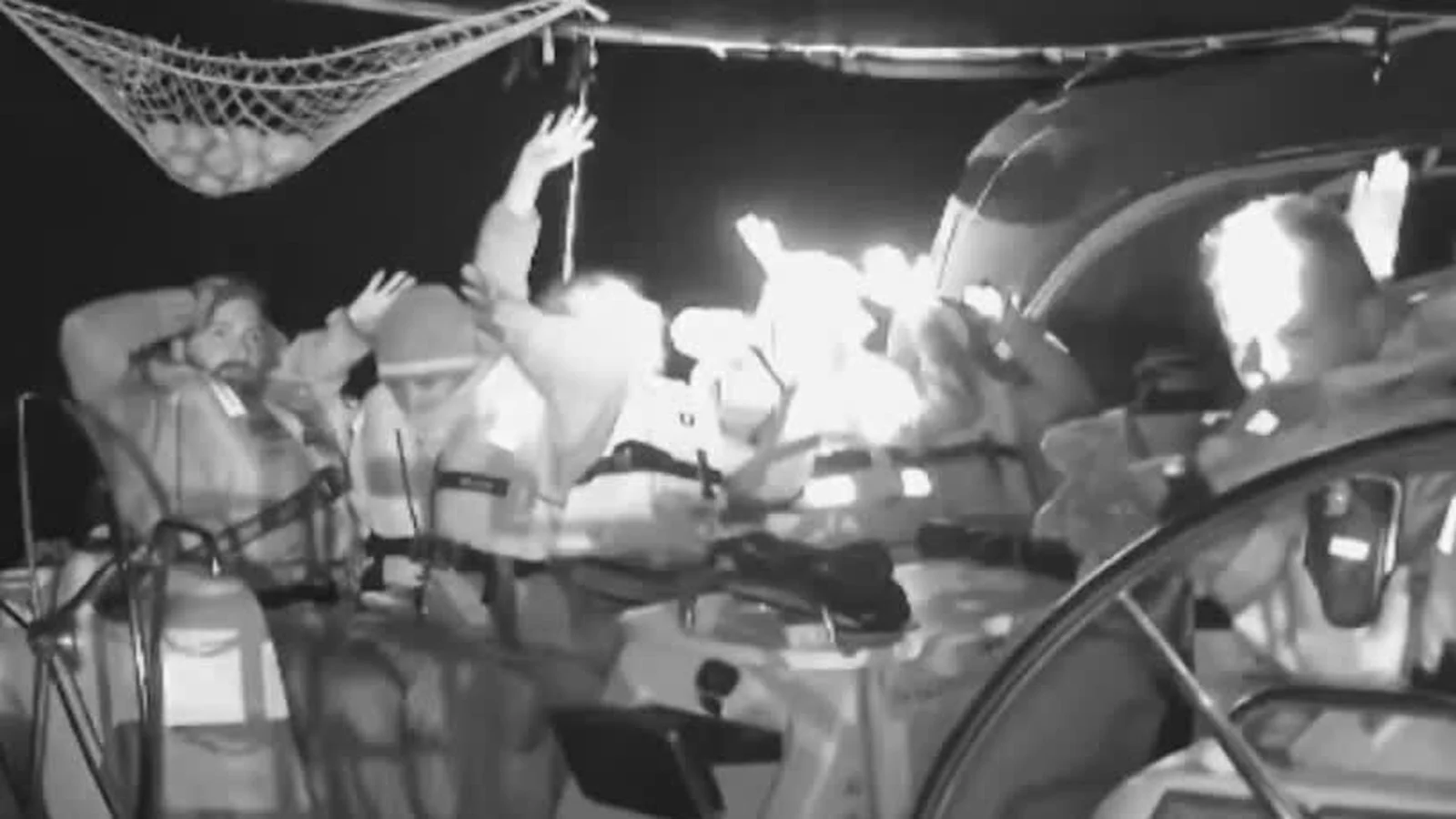
Dozens of activists, some of them Irish citizens, were detained after Israeli forces intercepted a flotilla bound for Gaza in international waters last week. Seven of those detained were from Ireland and have since been released. But the brief headlines don’t capture the long, layered grief and political urgency that followed: a flurry of parliamentary questions, demands for sanctions, and the resurfacing of a stalled piece of Irish law meant to address trade with occupied territories.
“This is not just a diplomatic spat — it is a human story,”
a flotilla participant told me on a late-night call. “We were trying to bring attention. We were trying to remind the world there are people in Gaza whose lives are governed by a blockade.”
The flotilla’s interception is the latest drama in a long-running, contentious issue. The Gaza Strip — home to more than two million people — has endured severe restrictions for years. International aid agencies have frequently warned of deteriorating humanitarian conditions, and the seaborne protests echo the 2010 Mavi Marmara incident, when violence during a similar confrontation left several activists dead and reshaped global debate about blockades and the rights of civilians.
A call for an investigation and sanctions
In Dublin, People Before Profit-Solidarity TD Ruth Coppinger used the Leaders’ Questions to press the Government for a robust response. She urged ministers to demand an investigation into the interception and to consider economic sanctions against Israel — arguing that states cannot look the other way when actions in international waters raise questions about the use of force and collective punishment.
“When are you going to sanction Israel?” she asked directly, capturing the emotional pitch of many who watched the footage and read the accounts streaming off the boats.
Minister for Foreign Affairs Helen McEntee replied by reiterating Ireland’s long-stated advocacy for Palestinian rights and the two-state solution, stressing that much of Ireland’s diplomatic work occurs at a European level. “We need to advocate at a European level,” she told the Dáil, underlining the reality that small states often use multilateral forums to amplify their influence.
Questions of law, politics and complexity
Legal scholars say the interception of vessels in international waters is laden with legal complexity. Under international law, naval blockades can be lawful in the context of armed conflict if they meet strict criteria; civilian ships in international waters generally enjoy protection unless they present a direct threat or the interception adheres to precise legal standards.
“The line between lawful blockade enforcement and unlawful interference with humanitarian initiatives is a narrow one,” said Dr. Siobhán Murphy, an international law expert at Trinity College Dublin. “Each incident demands transparent investigation and prompt, independent legal scrutiny. That’s how confidence — and accountability — is restored.”
For others, the response must go beyond legal niceties. “We need political consequences,” argued a campaigner from a Dublin solidarity group. “If states are stopped from acting because of realpolitik, it sends a cruel message to the people suffering on the receiving end.”
The Occupied Territories Bill: an old promise, a live issue
The flotilla episode also re-opened another political file that has been gathering dust in the corridors of power: the Occupied Territories Bill. First proposed about eight years ago, the bill would make it illegal for Irish businesses to import goods from settlements in occupied territories.
Three-hundred-and-fifty lawyers have publicly backed the bill, asserting it would withstand legal scrutiny. Yet its passage has been slow, with government ministers repeatedly promising action without delivering clear timelines.
“It must be exhausting in your role trying to come up with new excuses each time on the bill,” Deputy Coppinger said, her frustration reflecting broader public impatience among community groups and some opposition politicians.
Minister McEntee told the Dáil that the government remained committed to implementing the legislation, but that the matter was thorny — entwined, she said, with questions about economic exposure and the role of services in the proposed restrictions. She also noted ongoing consultations with the Attorney General, promising clarity on timelines soon.
Why the delay matters
Critics argue the delay is not merely bureaucratic hesitancy but reflects deeper economic and geopolitical entanglements. “Ireland’s trade networks and corporate ties — especially where US multinationals are concerned — complicate the calculus,” said an economist who asked not to be named. “Governments often speak from principle, but policy that bites into commerce requires a tougher stomach.”
Those in favour of quicker action point to both moral and strategic reasons. They argue that trade restrictions against settlements are a lever that democracies can use without military intervention — a non-violent tool to shape behaviour and push for adherence to international norms.
Voices from the streets and the docks
Back in Dublin’s neighborhoods, reaction to the flotilla and to the political standoff was immediate and personal. At a small café near the docks, an elderly man who had been a volunteer on solidarity campaigns since the 1980s told me, “Ireland has a history of standing with the underdog. It is in our bones.”
A young medical student who had travelled to the region with aid shipments added, “People on the ground in Gaza need access to medicine and the basics. Whether it’s through law or pressure, governments should make sure humanitarian norms are respected.”
Meanwhile, in the Dáil, the Social Democrats’ deputy leader Cian O’Callaghan accused the Government of breaking an election promise by delaying the bill’s implementation. The tension between electoral commitments and policy realities is a thread that will likely run through Irish politics for months to come.
What should we expect next?
The immediate fallout will likely be diplomatic — demands for investigations, calls at the United Nations, and heavy media scrutiny. Ireland, which has long sought to amplify its voice at the EU level, will press for a united European response, McEntee said.
But the story stretches beyond a single flotilla. It surfaces broader questions: How should small states balance values and economic ties? What is the role of civil society in shaping foreign policy? And when does principled rhetoric become actionable policy?
As readers, what do we want our governments to do when international law seems insufficient or slow? Do we accept incrementalism in the name of economic stability, or do we demand bolder moves to curb what many call systematic injustice?
Final frame
On the sea, the flotilla’s wake fades. In parliament, the exchange of words grows louder. But for families in Gaza, for the activists who put their bodies on boats, and for a generation of Irish voters who expect moral clarity, the incident will not soon be forgotten.
“We didn’t go because it was easy,” one activist said. “We went because someone has to keep shining a light.”
Whether that light becomes policy, sanctions, or simply another parliamentary debate remains to be seen. For now, the questions raised by the interception ripple outward — asking not only what states will do, but what citizens will insist upon.