A Thin Margin, a Big Pause: Slovenia’s Government in Limbo
On a damp spring morning in Ljubljana, baristas wiped espresso machines and the city’s pastel buildings seemed to hold their breath. Newspapers ran headlines that would have sounded improbable just weeks ago: a prime minister-designate saying he couldn’t put together a cabinet. In political terms, the country of just over two million people has been handed a messy arithmetic problem—one that will determine whether a liberal coalition governs or whether a conservative, Trump-tinged alternative gets a second chance at power.
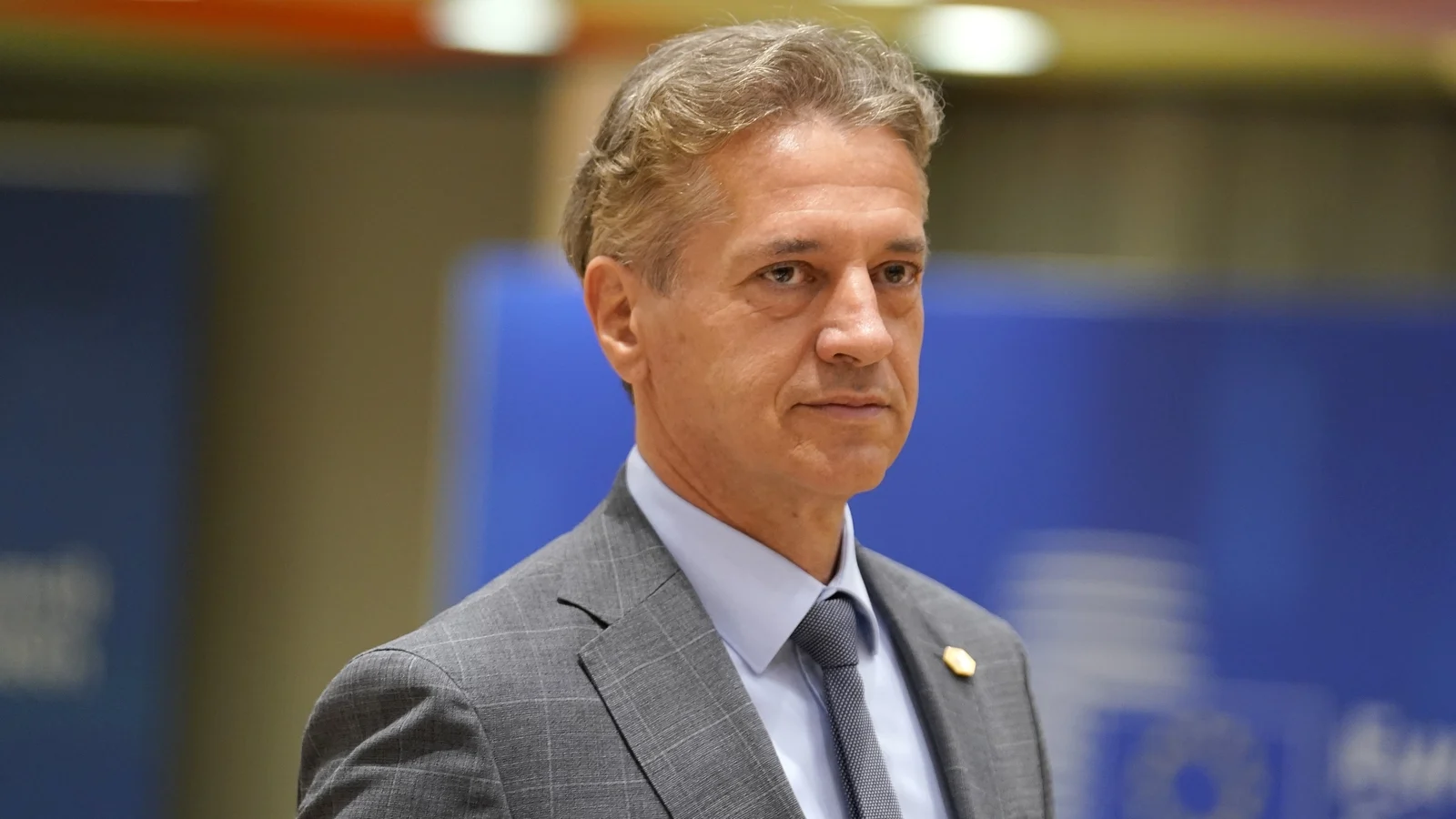
“We are looking forward to our work in the opposition,” Robert Golob told reporters after meeting President Nataša Pirc Musar, describing a failure to secure partners among centre-right parties despite his party’s election victory. Golob’s Slovenian Spring (or the liberals he leads) emerged with a razor-thin edge in last month’s ballot: 29 seats in a 90-seat parliament. The conservatives led by Janez Janša, a polarizing figure who has already served three terms and whose foreign sympathies have included public admiration for Donald Trump, secured 28 seats.
The arithmetic of uncertainty
Numbers are rarely neutral. They are living things in parliamentary systems—bones around which alliances must clothe themselves. With 90 seats available, an outright majority requires 46 votes. Golob’s 29 and Janša’s 28 are both far from that mark, and even small parties or one or two wavering deputies can flip the script. The failure to form a coalition is not simply bureaucratic; it is a map of trust, old rivalries, and ideological fault lines.
“Politics here is now like a mountain pass in spring—still slippery,” said Dr. Ana Kranjc, a political scientist at the University of Ljubljana. “One misstep and you slide back. We have one party that won more seats but cannot find reliable partners. The other—Janša’s SDS—has kept its powder dry publicly. That creates an interregnum where the shape of government is uncertain.”
Voices from the street
At an old wooden table in a cafe near the dragon bridge, Maja, a 48-year-old nurse, stirred her tea and sighed. “We voted for change,” she said. “But now it looks as if change has voted for a timeout. I trust Golob, but he needs to find people who can actually work together. If that fails, what then? More promises, more talking.”
A young activist, Luka, who organizes community cleanups in Maribor, was blunt: “If the political class can’t agree, maybe voters should get to decide again. They promised a fresh start. That means not just new faces but new habits.”
What happens next: procedure and possibilities
Slovenia’s constitution sets the clock ticking. President Pirc Musar has 30 days from the parliament’s inaugural session on 10 April to propose a prime minister-designate. If the nominee fails to secure a parliamentary majority, parties have a further 10 days to present alternatives. If those doors close, the country could face either continued deadlock or fresh elections.
Janša, the runner-up, has publicly resisted immediate coalition talks. “The SDS is not forming any government at the moment,” he said, adding that he wants to focus on the constitution of the parliament and is “ready for new elections tomorrow” if that would produce a clearer mandate. Whether that is bravado or strategy—waiting for political winds to shift in his favor—remains to be seen.
Why this matters beyond Slovenia
It might be tempting to read this as a local skirmish. But Slovenia is more than a postcard of green valleys and alpine lakes; it is a member of the European Union and NATO, a small but strategically placed player in the heart of Central Europe. The balance of its government affects how Brussels and its neighbors handle everything from judicial reform and media freedom to migration and regional cooperation.
“For the EU, a stable government in Ljubljana matters,” said Markus Weiss, an analyst at a Brussels think-tank. “When small member states wobble, it complicates consensus-building on sanctions, energy security, and even enlargement policy. Janša’s flirtation with populist rhetoric and close ties to leaders outside the mainstream have often put him at odds with European institutions.”
Local color: culture, history, and the texture of debate
Walk the old town and you’ll notice how politics converses with daily life. Bus drivers chat about fuel prices and municipal budgets. Farmers in the lowlands of Prekmurje fret about subsidies; vintners on the Karst worry about export markets. In the Ljubljana market, sellers of Carniolan sausage and honey laugh, argue, and trade opinions on public radio reports. The debates are not abstract; they are about school funding, hospital appointments, and whether small businesses will get the help they need.
“We are used to coalition governments here,” noted historian Alenka Vidic. “Slovenia’s politics has always required compromise. That has been both our strength and our Achilles’ heel. A habit of coalition-building keeps extremism in check, but it also means negotiation fatigue can set in.”
Numbers that explain the mood
- Population: roughly 2.1 million people.
- Parliament: 90 seats; majority requires 46.
- Election results snapshot: Golob-led liberals 29 seats; Janša’s SDS 28 seats.
- Key date: Parliament inaugurated 10 April; president has 30 days to propose a candidate.
Broader currents: trust, polarization, and the health of democracy
Across Europe, the last decade has shown how thin the membrane between centrist governance and populist upsets can be. Slovenia’s story is a microcosm of a larger question: when electoral results are close, how do societies distribute power without eroding trust? Citizens look for competence and integrity; politicians look for partners and leverage. Both tasks come up against an increasingly fragmented media landscape and a public that is impatient for tangible results.
“Trust is the currency of democracy,” Dr. Kranjc added. “When parties refuse to talk, voters lose faith. When they compromise too quickly, voters feel betrayed. It’s a delicate score to keep.”
What readers should watch
There are several immediate things to monitor in the coming weeks: the president’s nomination; whether Golob or Janša can pull together multi-party support; any smaller party that decides to become a kingmaker; and public sentiment in the form of protests or demonstrations. If a government cannot be formed, the prospect of early elections—an expensive and destabilizing option—looms.
But beyond the mechanics, ask yourself this: what kind of political culture do you want in your country? One where parties hold out for purity, or one where messy compromise gets things done? Slovenia’s next moves will be a test of both ideals. They will reveal how quickly leaders can put daily governance above headline-grabbing rhetoric, and whether citizens get the tangible results they were promised.
“We want stability, not theatre,” said Maja, tapping her cup. “If our leaders can’t make that happen, they should let us decide again.”
As Ljubljana’s spring deepened, the streets filled with pedestrians and the drone of scooters. The politics of a small country can feel abstract to outsiders yet urgent to those who live here. For now, Slovenia is in a pause—exquisite, frustrating, and deeply human. The next act will tell us whether this pause becomes a new melody of cooperation or a prolonged cacophony that sends citizens back to the polls.