The Unlikely Fight: When a U.S. President and the Pope Became Global Headline News
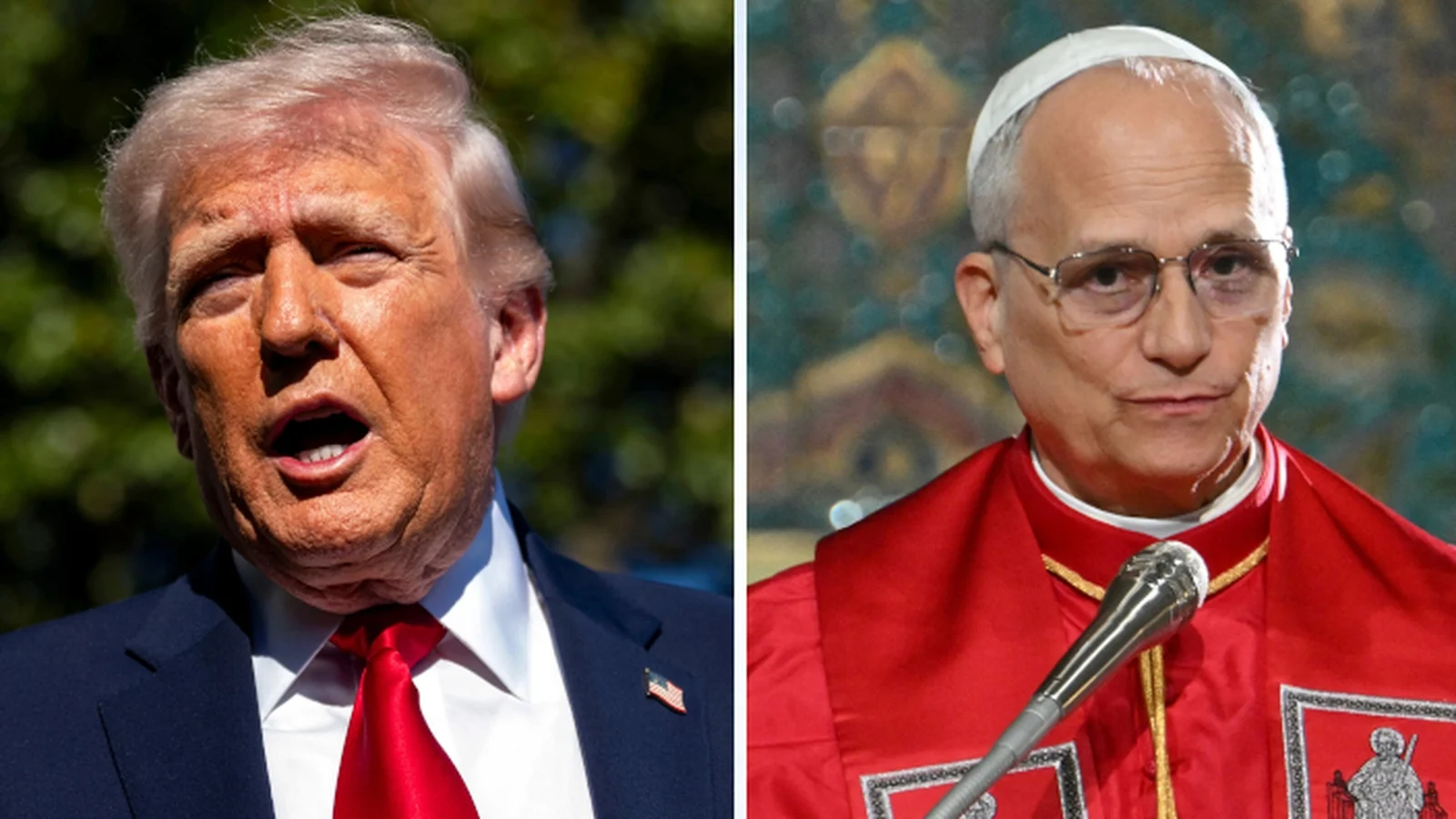
Something peculiar and a little raw is unfolding on the world stage: the leader of the most heavily armed nation on earth and the spiritual shepherd of roughly 1.4 billion Catholics are trading barbs like rival politicians. It reads like the kind of drama that belongs to satire—except it isn’t. The clash between President Donald Trump and Pope Leo XIV has cut across politics, theology, and public sentiment, and the ripples are only beginning to be felt.
On a sun-drenched day at the White House, a terse exchange to reporters punctured the usual choreography of presidential press moments. “There’s nothing to apologize for. He’s wrong,” the president said, voice taut, after a social media post had escalated tensions with the Vatican. The post included a controversial AI-generated image and a cascade of criticism aimed at the pontiff’s stance on a fraught war in the Middle East.
How a Personal Feud Became a Political Problem
This is not simply about personality. It’s about constituency and symbol. For years, conservative Christians—evangelicals and other religious conservatives—have been a reliable base for the Republican Party. Their turnout powered decisive victories in recent cycles, elevating moral language (and promises) to the top of campaign playbooks. Now, a widening rift with the head of the global Catholic Church threatens to rattle that alliance.
“People who supported him didn’t always love his theatrics, but they trusted that he defended their values,” said Dr. Elena Morales, a political sociologist who studies religion and voting behavior. “When the Pope becomes a target, some believers feel personally slighted. It’s a symbolic wound.”
The immediate stakes are domestic. With midterm elections looming, party strategists worry that alienating voters who put faith at the center of their civic life could cost crucial seats in Congress. When political identity and spiritual identity overlap, small slippages can have outsized consequences.
Voices from the pews and the pulpit
On an ordinary Sunday in Lancaster County, Pennsylvania, the pews were full. The pastor, wiping his hands on an embroidered cloth, paused when asked about the Vatican-White House rift. “Faith is not a political accessory,” he said. “If your political life begins to eclipse your moral life, you’ll find congregations asking questions.”
Not all reaction is the same. Inside the White House, a senior adviser close to the president defended the posture as necessary. “The president sees himself as protecting American interests,” the aide said. “When global religious leaders step into geopolitics, he won’t be neutral.”
Across the ocean, in a sleepy plaza outside St. Peter’s Basilica, tourists drifted among pigeons as priests and nuns moved with quiet purpose. A softly spoken Italian nun, Sister Anna, shook her head. “We are called to speak for the poor, the displaced, the frightened,” she said. “When anyone uses faith to sow division, it wounds the church.”
The Contentious Issues: War, Migration, and Moral Authority
The immediate flashpoint was the Vatican’s vocal criticism of an announced military campaign in Iran—language the Pope called “truly unacceptable.” The pontiff has also been outspoken about forced mass deportations that many describe as inhumane. These comments, taken together, have provoked an unusually public spat between two very different offices of authority.
“This is not just about policy,” noted Father Miguel Santiago, a theologian based in Buenos Aires. “It’s about moral language. When a religious leader uses the pulpit to critique a state’s choices, the state answers back. The result is messy.”
Observers point to a few broad realities that help explain why this fight matters. First, religious bodies are not monolithic: Catholics, evangelicals, and mainline Protestants all have varying positions on foreign policy, immigration, and national security. Second, modern media—especially social platforms—amplify every clash, often reducing nuance to soundbites. Finally, the presence of new digital tools like AI means images and messages can be created and distributed with an unprecedented speed that outpaces thoughtful response.
When imagery becomes scripture
One of the episodes that inflamed opinion was an AI-generated image shared by the president—an image that many interpreted as casting him in the likeness of religious iconography. The image was swiftly deleted, but not before it had been screenshotted and spread across the globe.
“People expect humility from leaders who invoke the sacred,” said Dr. Naomi Feldman, a media ethicist. “When the line between political theater and religious reverence blurs, the backlash can be steep.”
Broader Implications: Faith, Politics, and a Polarized World
What lessons might we draw? First, this episode reveals something larger about how religion and politics are entangled in the 21st century. Countries and communities are not simply negotiating policies; they are negotiating meaning—what counts as moral action, what it means to be a faithful citizen, and who has authority to speak for conscience.
Second, it pushes us to ask uncomfortable questions: Should spiritual leaders weigh in on geopolitics? Should political leaders weaponize religious symbolism? Both paths have historical precedent, and both can be risky.
“We have entered an era where the symbolic matters as much as the substantive,” said Dr. Morales. “That’s true in Washington, Rome, and in communities everywhere.”
What’s next?
For now, the exchange shows no sign of cooling. Vatican delegations continue to press the humanitarian case in international forums; the White House is doubling down on hard-line policy rhetoric. Back home, voters—especially those whose identities overlap with faith communities—are watching closely.
As a global audience, we might ask ourselves: what do we expect from our leaders when sacred values and stark political choices collide? And how do we hold them accountable—for policy, for rhetoric, and for the ways their words shape the moral imagination of a nation?
Whether you find yourself in a chapel, a mosque, a synagogue, a town hall, or scrolling endlessly on your phone, this conflict matters because it asks us to choose what kind of common life we want to inhabit: one where compassion and humility steer decisions, or one where spectacle outruns ethics.
In the end, perhaps the clearest truth is this: when the language of the sacred is bent into political ends, everyone—believer, critic, and bystander alike—loses a little ground in the struggle to understand what is truly moral and what is merely strategic.