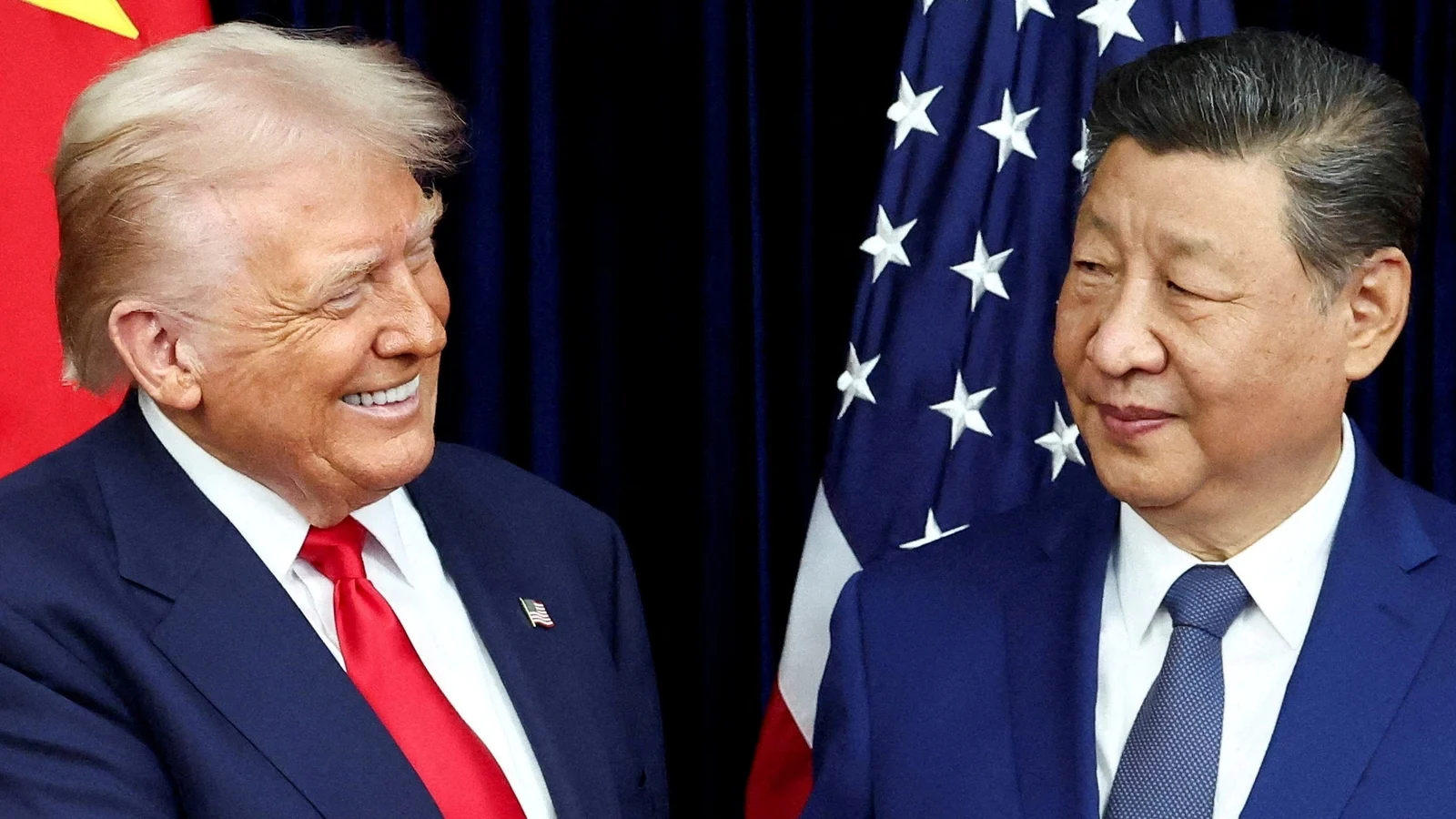
When Two Giants Share a Table: Why a Beijing Meeting Matters for the Rest of Us
There is something quietly theatrical about world history being negotiated over tea and tidy photo-ops.
Next week, in a ballroom that will be swept and scrubbed and photographed, the presidents of the United States and China will meet again. Their conversation will be dissected by diplomats, amplified by pundits and digested by markets. But for citizens in Dublin, Dakar, New Delhi and Wellington, the stakes are no less intimate: which rules will govern trade, tech, shipping lanes and the everyday tools of our lives?
Ask a container-ship captain off the coast of Rotterdam and he will tell you, in a voice worn thin by engine hum and salty air, that a single decision in Beijing or Washington can reroute his entire season. “One sanction, one tariff, one port that closes for a week,” he said, “and you feel it in your bones—costs rise, schedules slip, people lose jobs.”
A duel that feels like a dance
This encounter is not a simple confrontation. It is part competition, part choreography. On one hand, Beijing increasingly talks about self-reliance—securing chips, energy and food supply chains so the state is not vulnerable to external shocks. On the other, Washington leans on a legacy of military reach, advanced semiconductors, and deep capital markets.
“Both sides are playing for time,” said a European trade adviser who asked not to be named. “They want breathing space to shore up their strengths and mask their weaknesses.”
If you look at the ledger, the interdependence is striking. Taiwan still produces roughly 90% of the world’s most advanced semiconductors, with many of the chip designs originating from US firms. At the same time, bilateral trade in goods and services between Washington and Beijing runs into the hundreds of billions of dollars each year—enough to bind economies together even as politicians attempt to decouple them.
What a ‘G2’ could mean—and who gets cut out
There is talk—quiet and then louder—of a duopoly of influence. Imagine a “Board of Trade” where the two largest economies carve out neat pathways for their own commerce. Such an arrangement would not be illegal; it would be strategic. But for smaller and mid-size nations, it could be existentially awkward.
“If you’re not at that table, you’re at least at risk of being on the menu,” said Maeve O’Connell, who runs export strategy for a family-owned medical-device firm in County Cork. “We’ve worked for years to diversify our markets. If Beijing and Washington decide who buys what, suddenly our clients get squeezed.”
From Brussels to Canberra, policymakers are asking whether the old multilateral glue—centered on institutions like the World Trade Organization—still holds. If the world’s two biggest economies begin to silo their trade, the rules could bend, then break.
The power of ports: Hormuz, the South China Sea and the arteries of trade
A short detour to geography explains why diplomatic niceties have teeth. The Strait of Hormuz and the South China Sea are not picturesque backdrops; they are economic lifelines.
About one-third of the planet’s maritime trade transits the South China Sea. When tankers stall in Hormuz, fuel prices ripple into airlines’ ticket books and trucking companies’ balance sheets. When shipping slows, shelf prices rise. For economies that depend on imported energy and exported goods, these choke points are strategic flashpoints.
Iranian tankers may not be a household topic in Helsinki, but the cost of a blocked strait shows up in heating bills and bus fares. Hence Washington’s public pressure—and Beijing’s private calculus—to get shipping moving again.
Diplomacy as theatre and leverage
China has been busy polishing its peacemaker image. Foreign delegations have flowed through Beijing in recent months. These visits serve two purposes: keep trade moving and burnish the narrative that China is the stabilizing hand in an unruly world.
“It’s about legitimacy,” said an international relations professor in Shanghai. “If you can claim to be the broker of calm, you gain soft power even as you fortify hard power at home.”
But beyond the optics, there’s a transactional reality. China buys vast quantities of crude oil, and Beijing’s leverage over Tehran—combined with its trade heft—gives it unusual sway. Conversely, Beijing still depends on global demand to soak up overcapacity in its factories. That double bind drives much of the present negotiation.
Technology: the marrow of this century’s rivalry
Behind trade tariffs and port diplomacy lies a quieter, more existential contest: who will set the rules for artificial intelligence, semiconductors and critical materials like rare earths?
Rare earths are not rare in the geological sense, but China’s processing hegemony gives it clout. In 2020 and 2021, Beijing used export curbs as a bargaining chip, reminding the world that supply chains have pressure points.
“Control over key inputs—whether it’s chips or magnets for military hardware—translates directly to geopolitical influence,” said a policy analyst in Washington. “It’s not just commerce. It’s security.”
Small states, big concerns
For smaller democracies, the rules matter because they buy time and space. “Our governments rely on an equitable, rules-based system,” said a New Zealand trade negotiator. “That system lets us punch above our weight. If it crumbles, the choices get harder and the costs higher.”
That is why ministers in capitals from Dublin to Wellington watch the Beijing meeting with equal parts hope and trepidation. A deal that stabilizes shipping lanes and trade flows could calm markets and lower costs. A secretive arc between the two powers could shrink opportunities for everyone else.
So what might happen?
- They could agree on narrow, technical arrangements—temporary pauses on tariffs, targeted restore-of-trade measures—buying time and headlines.
- They might set up institutional frameworks to manage non-sensitive trade, effectively creating quid-pro-quo zones while leaving high-tech and security issues unresolved.
- Or they could use the summit to posture—flexing domestic support—without producing meaningful outcomes, kicking hard choices down the road.
Whatever the outcome, the meeting will not simply be about two leaders. It will be about the millions whose livelihoods depend on the steadiness of supply chains, about dissidents and journalists who watch for signals about human rights, and about the fragile architecture of global cooperation in a warming world with proliferating technologies.
So here is a question for you, the reader: do you want global rules set quietly between two capitals, or an open architecture where many countries can negotiate and shape the future? Your answer will tell you whether you should be a spectator or raise your voice in the weeks ahead.
In the end, the meeting in Beijing will reveal less about who is winning and more about how the game will be played. Will it be zero-sum, or will the giants leave space for the rest of us to breathe? The choice matters far beyond the photo-op—because the world those leaders sketch will determine the next decade of trade, technology and the everyday freedoms we take for granted.