Under the Drone’s Shadow: Lebanon’s Fragile Ceasefire and the Human Cost
On a late spring morning not far from Beirut, a bakery owner named Samir wiped flour from his hands and watched a convoy of families hurry past with plastic bags and children clinging to blankets. “We bake the bread, but we can’t feed peace,” he said, voice low, as a distant hum—perhaps a drone, perhaps memory—skittered over the hills. The scene captures the jarring normalcy and relentless fear that now stitches together daily life across swathes of Lebanon.
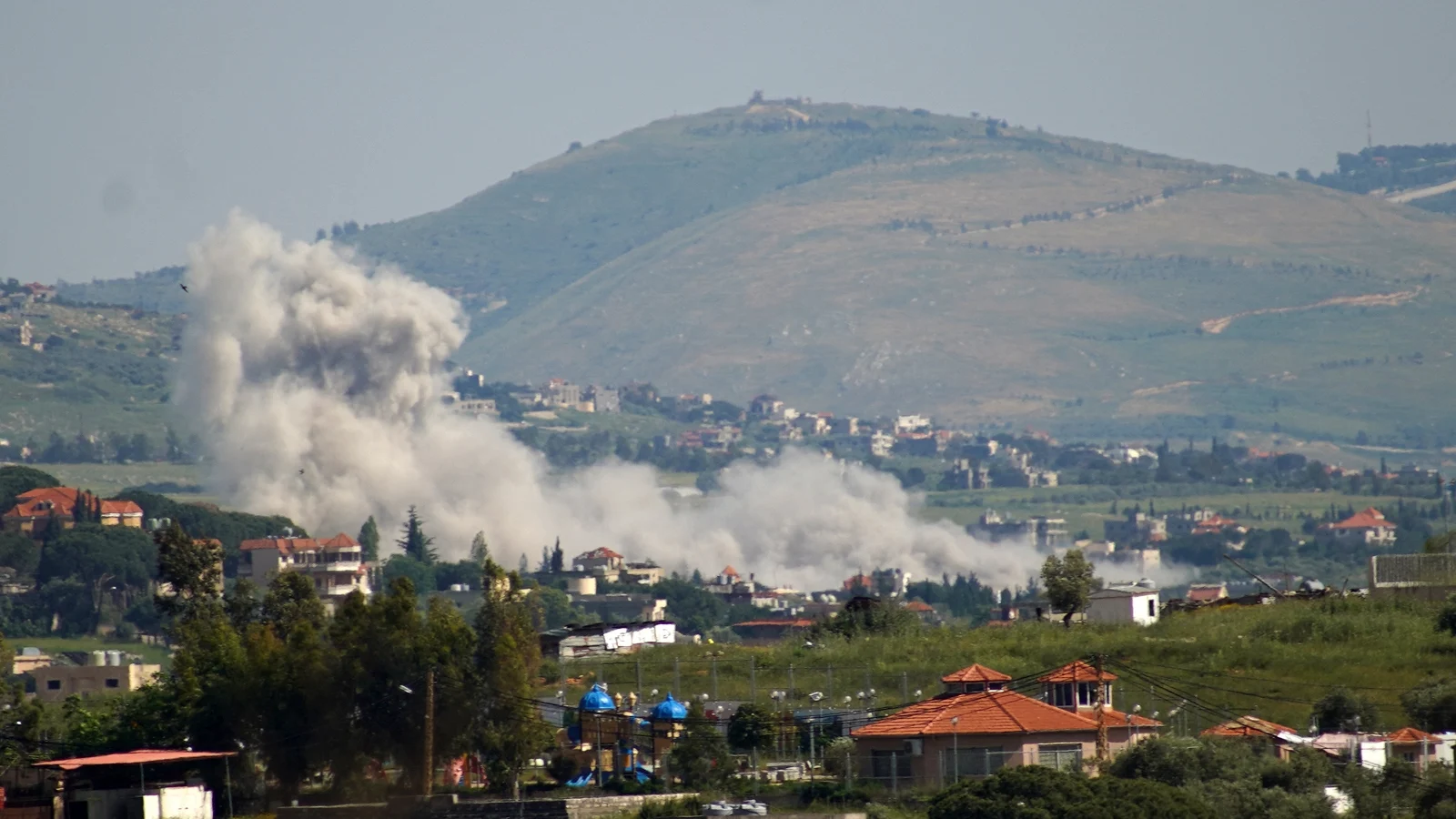
Since the outbreak of hostilities on 2 March, Lebanese authorities say at least 2,869 people have died from Israeli strikes, a grim tally that includes dozens killed even after a ceasefire came into effect on 17 April. The truce was supposed to pause the bloodshed. Yet on a recent day, Lebanon’s state-run National News Agency (NNA) recorded strikes on more than 30 locations across the south and the Bekaa Valley—testimony to how fragile any pause has become.
Diplomacy in the Eye of the Storm
In Beirut this week, President Joseph Aoun and Prime Minister Nawaf Salam each received the United States ambassador, Michel Issa, in separate meetings. The exchanges were not ceremonial; they were the small, intense choreography of a nation pleading for restraint. Mr. Salam appealed to Mr. Issa to “exert pressure on Israel to stop the ongoing attacks and violations, in order to consolidate the ceasefire.” It was less a diplomatic nicety than a plea from a country straining under the weight of war.
The talks segue into a scheduled trilateral meeting in Washington between Lebanese and Israeli representatives—a third attempt to negotiate terms and de-escalate a conflict that has already redrawn neighborhoods, livelihoods, and headlines. If diplomacy is a slow craft, it is being asked to carry the rapidly rising tide of human misery.
Where the War Touches Home
Drive south from the capital and the geography of loss reveals itself in stop-start ways. In Zebdine, a town in the south, the NNA reported a particularly wrenching incident: an Israeli drone struck two people “while they were distributing bread” from a municipality vehicle to residents who had refused to evacuate. The image is searing—municipal volunteers, doing what people do in a pinch, suddenly risking everything.
“We stayed because the elderly cannot walk,” said Layla, a 62-year-old resident who is now in a makeshift shelter on the outskirts of West Bekaa. “We have our olive trees, our memories—where would we go?” Her voice trembled, then hardened. “But they hit where we eat.”
People here speak in short, image-rich sentences about disrupted rhythms: the bakery oven that once smelled of sesame and thyme, the schoolyard where the call to prayer and the school bell used to punctuate mornings, replaced now by the clatter of displacement. Lebanese authorities say more than one million people have been uprooted since March—families spread across relatives’ homes, public buildings, and schools converted into camps.
The Military Reality: Rights, Warnings, and Retaliation
On the military front, the lines are as blurry as the media images. Israel’s armed forces say the war has cost them 18 soldiers and one civilian contractor since the conflict began. Their doctrine under the truce, as framed by Washington, allows them to act against “planned, imminent or ongoing attacks.” That caveat has been a frequent justification for strikes that, to civilians, look indistinguishable from indiscriminate hitting.
“You can have rules, but when that rule has a big loophole, it’s not much of a rule,” commented Rana Haddad, a Beirut-based conflict analyst. “The practical effect is that any movement or gathering near a military target becomes suspect—and then civilian infrastructure pays the price.”
Hezbollah, the armed group that carried out the initial cross-border rocket attacks on 2 March in response to the assassination of a senior Iranian-linked commander, has claimed multiple strikes against Israeli military positions—at least 20 attacks it said were retaliation for ceasefire violations. Israel, for its part, reported that two Hezbollah drones damaged unmanned engineering vehicles and that its forces had “eliminated” a militant cell in south Lebanon.
Evacuations, Fear, and the Weight of Displacement
Warnings from the Israeli military preceded several strikes: evacuation messages were sent for seven southern towns and two locations in the Bekaa. The result was a “large wave of displacement,” according to the NNA. Hundreds of families on the run, children clutching plastic water bottles, elders avoiding the bright sun that reveals dust and fingerprints on their past lives.
“Our home is a rectangle of light in my mind,” said Karim, a father of three whose village was evacuated. “I wake up and try to draw it with my fingers so I don’t forget. You don’t know how heavy forgetting is until you are forced to.”
Humanitarian groups warn of compounding crises: shelter shortages, shortages of medical supplies, water insecurity, and the looming specter of disease in overcrowded shelters. Lebanon’s already-strained health system—still recovering from economic collapse and Beirut’s 2020 port blast—has been pushed to the brink.
Local Color and Everyday Resilience
In small acts of defiance and humanity, ordinary Lebanese keep the fabric of community together. Men stack sandbags in a school courtyard and women stir huge pots of lentil soup to feed neighbours. A volunteer doctor named Amal sets up an impromptu clinic from a converted van: “We stitch what we can, we give what little medicine we have, and we tell jokes when the children cry,” she said, half joked, half survival strategy.
There is also music—tender, melancholy oud strums passed among displaced adolescents—and the stubborn persistence of morning coffee brewed thick and bitter, offered to anyone who knocks. These rituals, small as they are, become anchors.
Questions That Won’t Fade
How long can a ceasefire survive an exception clause? Whose lives count as collateral in the calculus of deterrence? And what happens when diplomacy arrives late, when the geography of homes has been altered as much by evacuation as by ordinance?
These are not abstract questions; they are questions asked by parents like Layla, by municipal bakers like Samir, by analysts and diplomats. They reach beyond Lebanon’s borders, probing the global conscience as regional powers watch, and as Washington schedules yet another diplomatic intervention in hopes of threading a brittle peace.
The camera pans, the headlines scroll, and in towns like Zebdine and refugee centers in West Bekaa, people add another piece of knowledge to their battered stores of resilience: hope must be tended. The rest—the maps, the negotiations, the statistics—are the language of those far from the smell of burning flour and the sound of a child laughing despite everything.
Will the world listen to that laugh? Or will it only hear the hum of drones? The answer will be written not in conference rooms, but in the slow, stubborn work of rebuilding homes, lives, and trust.