A razor-thin Israeli election has triggered a fresh political storm, with Arab parties pushing back hard against unproven claims of foreign money and accusing Prime Minister Benjamin Netanyahu of trying to frighten rivals away from working with them.
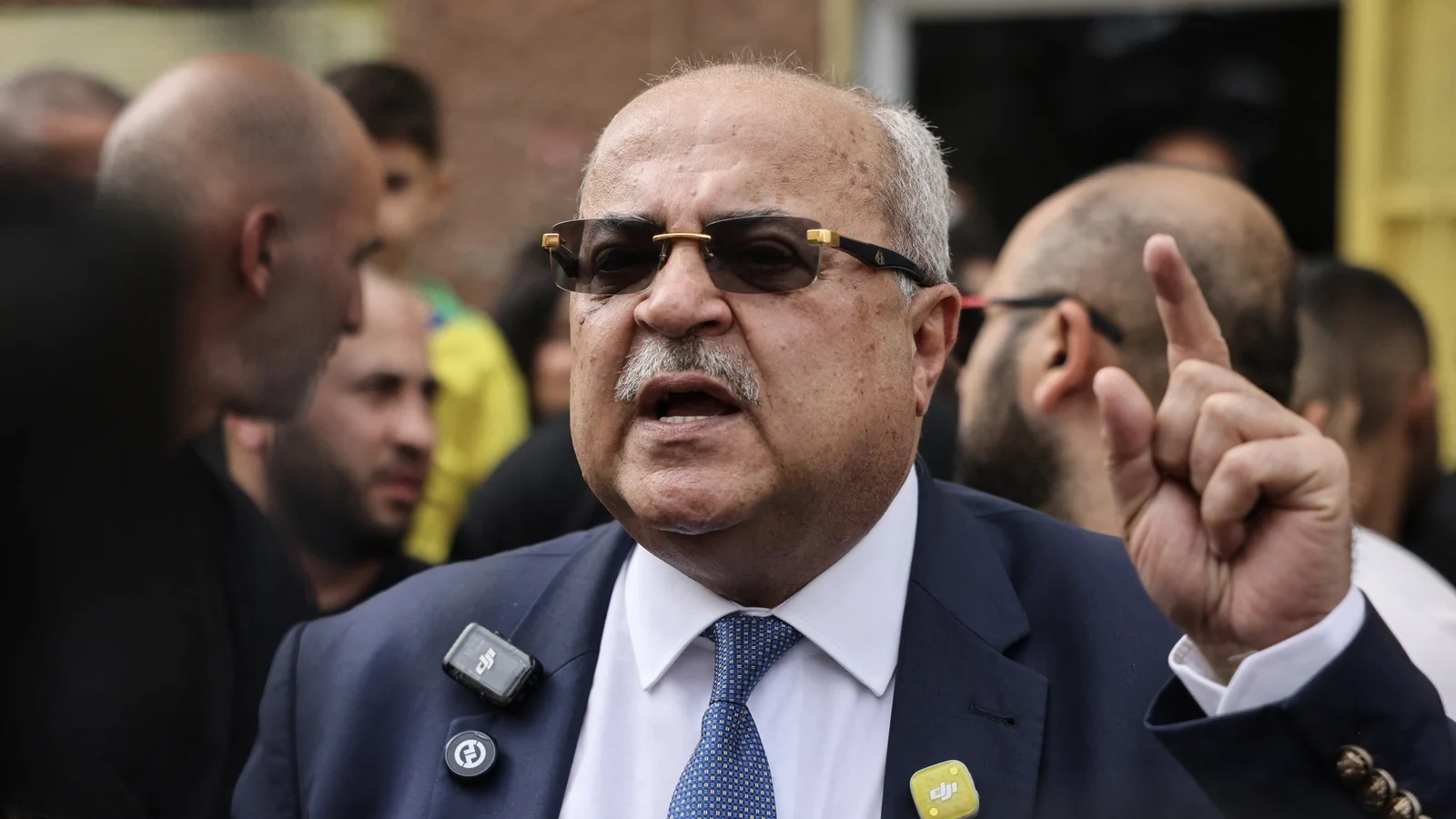
Ahmad Tibi, one of the leaders of the Arab Joint List party, said Mr Netanyahu was driving what he described as a coordinated, poisonous effort aimed at discrediting the outcome at the ballot box.
“This entire campaign is directed against Eisenkot, to prevent him, intimidate and scare him off forming a government that relies on external support from the Joint List or Ra’am,” Mr Tibi told Reuters, referring to the two Arab parties.
Mansour Abbas, leader of the Arab Ra’am party, said his party had no role in any alleged suspicious activity and called for authorities to investigate fully.
He said that Mr Netanyahu was on an incitement campaign against Israel’s Arab citizens.
“We have one message in response to the campaign of incitement and delegitimization he is waging against Arab citizens: Nothing will come of it, because there is nothing there,” Mr Abbas said in a statement.
Qatar denies interference
Qatar also moved to rebut claims, with a foreign ministry spokesman dismissing accusations “made by certain Israeli politicians and their contacts in the media” that Doha had meddled in Israel’s vote.
“We categorically deny allegations that Qatar has interfered in Israeli elections or funded any activities intended to influence their outcome,” said Majed Al Ansari.
“They accuse Qatar of buying off Benjamin Netanyahu, the Israeli political left and now, in this latest campaign, the Arab vote… These accusations are ridiculous and dangerous in equal measure.”
Exit polls showed the race between Benjamin Netanyahu and Gadi Eisenkot too close to call
With final tallies still pending, Mr Netanyahu’s bloc has intensified pressure on Israeli Arab political leaders, amplifying unproven allegations of foreign funding as part of a broader effort to blunt the influence of parties that may prove decisive in post-election coalition talks.
Israeli President Isaac Herzog urged an investigation into claims of fraud but warned against tarring the entire Arab Israeli public, which turned out to vote in unprecedented numbers.
Israel was nearing the end of counting ballots from Tuesday’s election, and neither Mr Netanyahu nor the opposition bloc led by former military chief Gadi Eisenkot appeared able to reach a majority in the Knesset.
The accusations emanating from the Netanyahu camp, which at least one key Arab party has rejected, risk injecting instability into the process at a moment when the threat of a return to war with Iran is hanging over the region.
Turnout among Israeli Arabs — descendants of Palestinians who remained after Israel was established in 1948 — surged in the election.
Ben Gvir calls for Arab leaders’ arrest
Earlier, Israel’s far-right national security minister called for the arrest of Israeli Arab leaders whose parties posted strong gains this week, pointing to the same unproven allegations of foreign financing.
Israel’s security agency Shin Bet “must order, already this morning, the arrests of the heads of Arab parties suspected of involvement in Qatari money”, Itamar Ben Gvir said.
He was referring to unsubstantiated claims by several ministers that the parties — potential kingmakers after neither Prime Minister Benjamin Netanyahu nor the opposition bloc secured a majority — received money from Qatar, the energy-rich Gulf powerbroker that has channels to Hamas.
Israelis, meanwhile, continued waiting for the final results to confirm the emerging picture: no parliamentary majority for Mr Netanyahu and his allies, and no clear majority for the parties trying to unseat him.
The deadlock sets up tough choices in the coming weeks, including whether Jewish and Arab parties could forge a historic partnership, or whether factions that campaigned on removing Mr Netanyahu might ultimately abandon that pledge and join the deeply divisive prime minister.
For now, Mr Netanyahu remains in office.
Final results could be released as soon as this evening, once about 500,000 absentee ballots are counted from military personnel, diplomats, people in prisons and hospitals and others.
Those votes are not expected to dramatically change the outcome.
Local media projected 53 parliament seats for Mr Netanyahu’s bloc, 48 for opposition parties and 19 for Arab-led ones, which also want Mr Netanyahu out.
Mr Netanyahu’s main challenger, former military chief Gadi Eisenkot, said in his first public remarks since speaking to supporters early yesterday that any new government should serve everyone and reflect the public’s will.
He did not address whether he might align with Arab-led parties that performed strongly, after some Arab citizens cast ballots despite longstanding boycotts rooted in decades of discrimination.
But he has said he is willing to work with them to reach the 61-seat majority needed in the 120-seat Knesset.
The Joint List cited an “unprecedented show of strength” and praised Jewish voters “willing to swim against the tide of racism”, saying it was open to political co-operation.
Left-wing Israelis gather to demand a joint government of Arabs and Jews and block roads in Tel Aviv
Small demonstrations took place overnight in Tel Aviv — and even in more conservative Jerusalem — backing a coalition that would include Arab-led parties.
Until 2021, no Arab party had entered a governing coalition, and that participation was brief.
Although Likud won the most votes, Mr Netanyahu’s party has accused Arab-led factions of stealing the election and has asked the election committee to investigate.
Likud has not offered specific evidence for the accusation, and the election committee has said reported irregularities in the generally calm vote were limited.
Next week, Israel’s president will choose someone to try to form a government. Traditionally that task goes to the leader of the party that wins the most votes, but the law does not require it.
If repeated attempts fail, Israel would head into another election early next year.
Yesterday, President Isaac Herzog indicated he wanted to avert that scenario — a view Mr Eisenkot has also expressed.
Another election would raise new uncertainties, including whether Arab citizens would again vote in large numbers and whether tens of thousands of Israelis who flew home to cast ballots would repeat the journey.
Many said they returned to vote because they believed the country needed saving from Mr Netanyahu.
Already split across deep lines — Jewish and Arab, secular and religious — Israel went into the vote with high-stakes questions unresolved.
Among them is whether the rapidly growing ultra-Orthodox community should continue to be exempt from compulsory military service, as many families mourn sons and daughters lost in three years of inconclusive wars.
Read more:
Israeli elections: What happens next?
Netanyahu’s Likud accuses Arab parties of stealing Israeli election
Netanyahu loses his majority, but no one has won it yet
Mr Netanyahu, Israel’s longest-serving prime minister, remains a particularly polarising figure, facing corruption allegations and criticism that he prolonged negotiations linked to the war in Gaza — including efforts to free hostages — for political advantage.
Many voters focused on security, but Israel’s international standing is also in play after widespread condemnation of the treatment of Palestinians in Gaza and rising violence by Jewish settlers in the occupied West Bank.
For Arab citizens, who account for 20% of Israel’s population, the results have stirred cautious optimism.
Brosli Elias, a Nazareth resident in one of Israel’s largest Arab cities, said: “God willing, we will have something for us in the government, something that will bring us our rights.”
At the same time, the prospect of additional strikes against Iran has added another layer of uncertainty, with the Trump administration discussing further attacks after the midterm elections on 3 November.
Experts have said Mr Netanyahu could use a renewed all-out war as grounds to press for a unity government under his leadership.
Such a move could further delay a step Mr Netanyahu has long resisted: a public inquiry into the security failures behind the deadliest extremist attack in Israel’s history — the Hamas-led assault on 7 October 2023 that ignited the war in Gaza.