Seventy-one Billion Reasons to Care: Rebuilding Gaza and the Moral Math of the International Community
Brussels felt unusually solemn this week. Beneath the glass atrium of the EU institutions, the hum of diplomats and the click of cameras were underscored by a single, disquieting statistic: $71 billion. That is the estimated price tag for rebuilding Gaza, a figure the EU’s foreign policy chief, Kaja Kallas, announced after months of consultations with the World Bank and the United Nations.
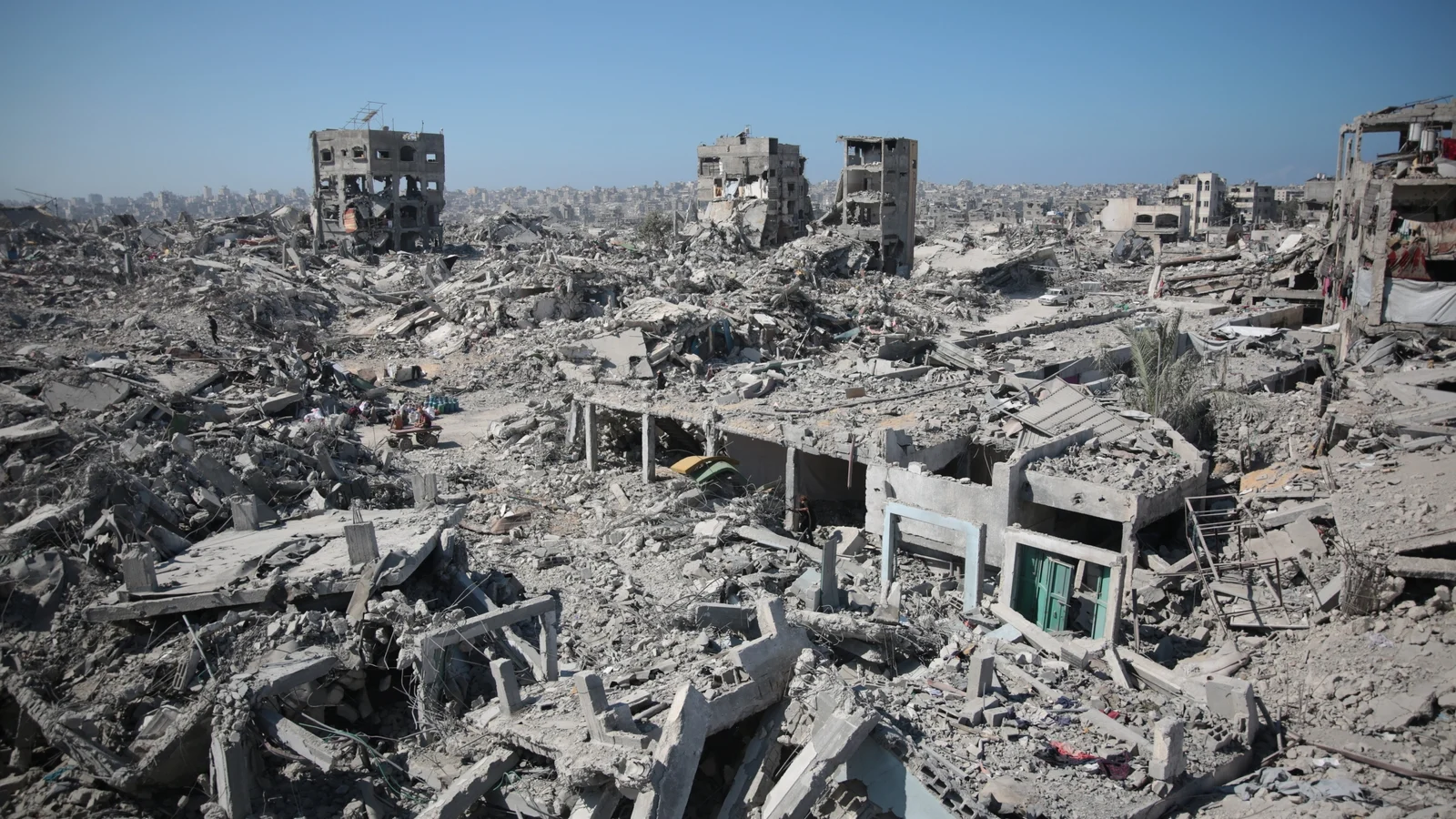
Numbers can be cold. But behind this headline sits a human geography of flattened neighborhoods, demolished hospitals, schools turned into shelters, and families who no longer recognize the streets they grew up on. Gaza is home to roughly 2.3 million people — a dense strip of land where everyday life has become a feat of endurance. The reconstruction needs are not abstract. They are kitchens to be rebuilt, water systems to be repaired, childhoods to be stitched back together.
Why $71 Billion?
Kallas was blunt: “This figure is the result of months of hard calculation and frank conversations with the UN and the World Bank.” The number is meant to bring clarity to a staggering practical challenge: reconstructing homes, restoring services, reinvigorating a shattered economy and, perhaps most crucially, creating conditions for a political future that avoids repeating this devastation.
But the announcement was also a mirror held up to the world’s conscience. “I often hear accusations of double standards, that we support Ukraine, but we don’t support the Palestinians,” Kallas said in Brussels. “Let me get this straight: Europe is the biggest supporter of the Palestinian people. Europe is the largest donor and the main backer of the Palestinian Authority. European missions on the ground support Palestinian police, justice and governance and border management. You will not find a stronger supporter of the Palestinian people anywhere in the world.”
Her words aim to counter a political narrative that pits one humanitarian crisis against another. Yet they don’t erase the hard policy disputes now playing out in capitals from Dublin to Jerusalem.
The Political Fault Lines
At the heart of this week’s meetings was a terse, but consequential, debate over the EU-Israel Association Agreement — the treaty governing trade and partnership between the bloc and Israel.
Ire, Spain and Slovenia have called for a formal review of the agreement, citing a spike in settler violence in the West Bank, Israeli actions in Lebanon, and controversial legislation debated in the Knesset that would impose the death penalty on Palestinians convicted by military courts in the West Bank. Such a review is not just bureaucratic theatre: Article 2 of the agreement binds both sides to respect human rights and international law. If Israel is found to be in breach, the EU could impose punitive measures up to suspension — but only if all member states agree.
“Member states have put this on the table,” Kallas told reporters. “Suspension of the Association Agreement requires unanimity.” That requirement has been the stumbling block. Germany, Hungary and Czechia (among others) have previously balked at drastic action, and last summer the EU stopped short of suspension when Israel pledged to open greater humanitarian access into Gaza.
Spain’s prime minister, Pedro Sánchez, called for full suspension over the weekend — a move that drew an immediate, sharp rebuttal from Israel. Foreign Minister Gideon Saar posted on social media in Spanish that Israel would “not accept hypocritical lectures from someone who keeps ties with totalitarian regimes,” naming Turkey and Venezuela in his response.
Who’s in, who’s out?
Beyond the EU’s internal fissures, a wider institutional contest is unfolding. The United States has proposed a “Board of Peace” to help govern post-war arrangements in Gaza. The EU, Kallas said, will not join that mechanism because it diverged from the UN Security Council blueprint and from the principle of Palestinian-led state-building. “For us, the role of Palestinians in building up Palestinian state is the most important. It has to be Palestinian-led, and Palestinian-owned,” she said.
Yet she left open the possibility of parallel efforts. “The Global Initiative for the Implementation of the Two-State Solution could work in parallel with the US-sponsored entity,” she added, suggesting that different diplomatic tracks might coexist if they respect Palestinian agency.
Voices from the Ground
It’s one thing to speak of agreements and bank estimates in conference rooms; it’s another to walk through Gaza’s neighborhoods. Layla, a schoolteacher from Khan Younis, told me in a phone call that numbers don’t capture the small, stubborn things people miss. “We count our memories the way people count bricks now,” she said. “A home is more than a roof. It is where my son learned to tie his shoelaces. Will they rebuild those moments?”
Ahmed, who runs a small hardware store near Gaza City, was pragmatic. “We need electricity, sewage, and access to building materials. Not promises. Materials.” His voice had the fatigue of someone who’s negotiated scarcity his whole life. “We’ve rebuilt before. But every time, the cost is not only in money — it is in trust.”
A Palestinian aid worker in Rafah, requesting anonymity for safety, put it bluntly: “71 billion is a start, but only if it comes with accountability, access and protection. Otherwise we are only funding another temporary fix.”
Big Money, Bigger Questions
There are practical questions that follow a figure like $71 billion. Where will the money come from? Which institutions will manage it? How will projects be prioritized — housing, hospitals, water, livelihoods? And perhaps the most sensitive question: What political strings will come attached?
Historically, reconstruction in conflict zones has been a magnet for competing agendas. Donor leverage can rebuild infrastructure — and also reshape local governance. That tension explains some EU nervousness about joining unilateral or exclusionary initiatives that risk sidelining legitimate Palestinian authorities.
- Who disburses funds: multilateral banks, UN agencies, bilateral donors?
- Which legal frameworks ensure human rights and protect civilians?
- How do we prevent corruption and ensure long-term sustainability?
Beyond Aid: What Kind of Future?
Reconstruction is not merely bricks and mortar. It is a test of political imagination. Will the international community fund a temporary reconstruction that leaves the same political dynamics in place? Or will donors couple infrastructure with a genuine push for a viable, internationally backed two-state solution — the political horizon that many say is essential to prevent another cycle of destruction?
“Rebuilding without political clarity is like patching a dam with paper,” said an EU diplomat speaking off the record. “If there is no credible pathway to a two-state outcome, every investment risks becoming a bandage on a wound that will reopen.”
That sentiment helps explain why some EU members are cautious about unilateral approaches and keen to keep the Palestinian Authority central to any post-war governance. It also explains why others, alarmed by settler violence and legislative moves in Israel, are pushing for punitive measures under the Association Agreement.
What Can You Do?
As readers, we are often left with headlines and soundbites. But crises like Gaza require sustained public attention. Ask your representatives about humanitarian corridors, transparency in aid, and support for Palestinian-led rebuilding. Demand clarity about the mechanisms for disbursing funds, and insist that human rights be non-negotiable.
Can $71 billion buy peace? No. But it can buy hospitals, schools, and the dignity of having a home. It can provide a platform for political negotiations that honor the agency of the people whose lives will be most affected. The deeper question is whether the international community is ready to match generosity with political courage.
When the diplomats had left Brussels and the meeting rooms grew quiet, Kaja Kallas offered a parting provocation: “You will not find a stronger supporter of the Palestinian people anywhere in the world.” Her words were both a declaration and a challenge — to other partners, to Israel, and to Palestinians themselves. Rebuilding Gaza will test alliances, values, and the world’s willingness to turn rhetoric into durable reality.
What will we choose to rebuild: temporary shelters or a future people can believe in? The answer will reverberate far beyond one narrow strip of land.