Gunfire at the Gala: A Night of Glamor Interrupted
They came for the jokes, the jostle of politics and press, the half-serious roast that is as much a Washington ritual as it is a vanity fair. The White House Correspondents’ Dinner has always been a place where power and punchlines collide — until a few seconds of violence turned a ballroom into a tableau of chaos and courage.
On a warm spring evening at the Washington Hilton, where chandeliers gild the ceiling and the city’s political life often feels like a pageant, a man armed with a shotgun, a handgun and knives pushed through a hotel security checkpoint toward the ballroom where the dinner was in full swing. He opened fire, and the sound of laughter and camera shutters snapped into silence.
The scene
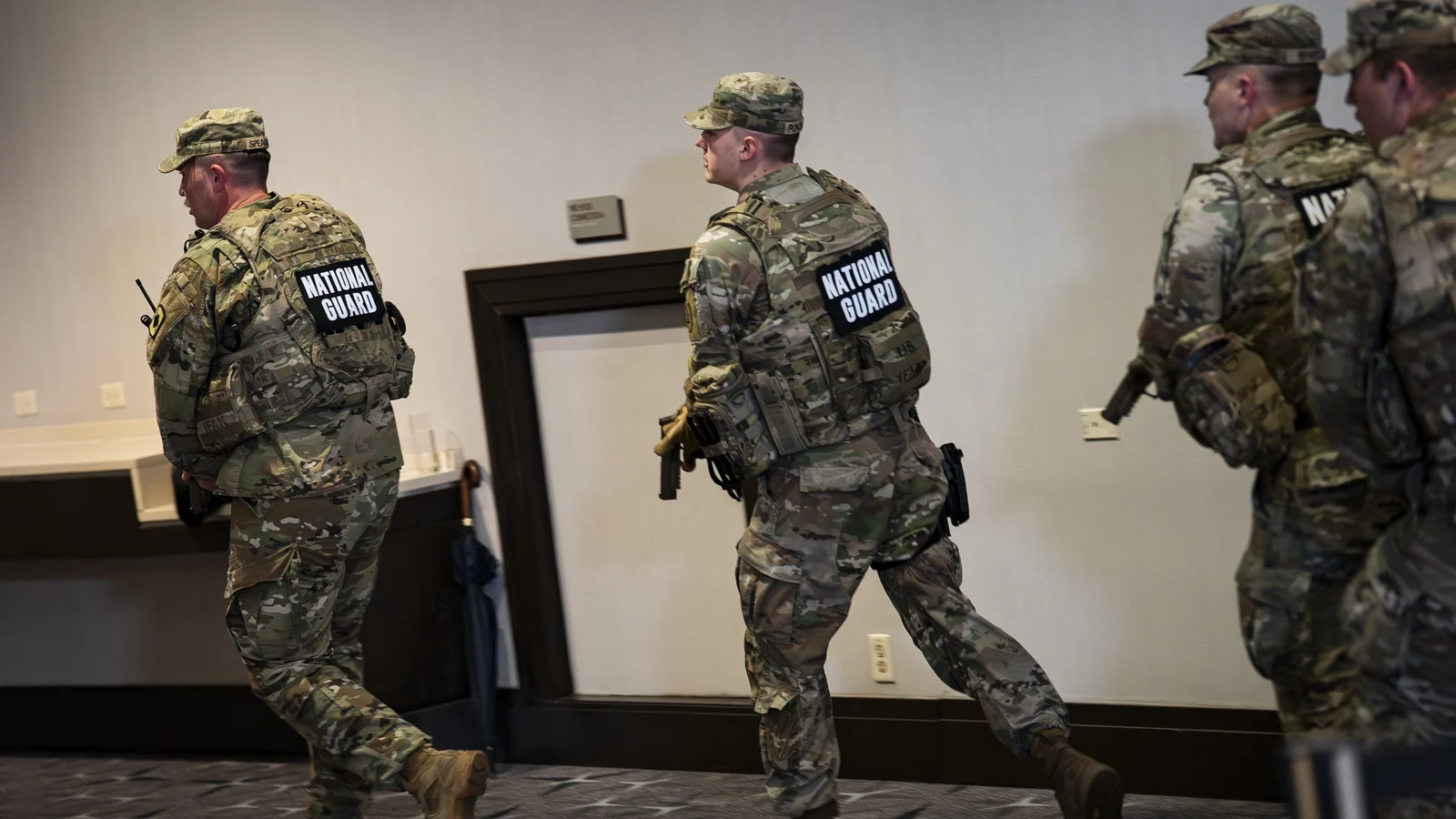
Guests watched as Secret Service agents moved with practiced urgency. The president and first lady, already at the head table, were hurried offstage. A Secret Service agent at the checkpoint was hit — saved, officials later said, by a bulletproof vest — and quickly taken to hospital before being released. Within moments, other agents and plainclothes officers tackled and detained the suspect near the entrance. The man, later identified as 31-year-old Cole Tomas Allen of Los Angeles, was arrested at the scene.
“I was three rows back,” said a journalist who asked to be identified only as Maria. “One second it was jokes about the midterms, the next it was everyone ducking. You hear shots and your brain doesn’t want to accept it. Then agents are on him — it was quick but felt like forever.”
A chilling claim
Acting officials quickly painted a stark picture: the apparent target of the attack was not only the glittering cohort of political and media elites in the room but the president and senior members of his administration. An acting U.S. Attorney General said investigators believed the president and his team were “likely” targets. In the hours after the incident, law enforcement revealed that the suspect had checked into the Washington Hilton a day or two earlier and had sent a manifesto to family members shortly before the event.
“This was not a random burst of rage,” said an official involved in the investigation. “He had a plan and he executed part of it, but the plan was stopped before tragic loss of life on a larger scale.”
Who was the man arrested?
The name on the arrest report — Cole Tomas Allen — belongs, authorities say, to a 31-year-old who had been living in Los Angeles. Officials said he referred to himself in his materials as the “Friendly Federal Assassin,” language that investigators and family members described as both alarming and incoherent. Mr. Allen, according to law enforcement sources, sent that document to relatives shortly before heading to Washington.
“He was a troubled kid,” said a neighbor from a Los Angeles block where the suspect once lived. “You wouldn’t think he’d end up here. He liked his music and kept to himself, but people saw signs and some did try to get help.”
Charges being prepared include assault on a federal officer and use of a firearm during a crime of violence. The suspect is due to appear in court later today where those charges will be filed formally.
Security, luck and a vest
The Secret Service, whose mandate is to protect the president and visiting dignitaries, came under immense scrutiny and praise in quick succession. The agent who was struck by gunfire was wearing protective gear — a vest that, according to officials, prevented a bullet from becoming a fatal wound.
“The vest did its job,” said Anthony Guglielmi, a Secret Service spokesperson, who confirmed the officer had been released from hospital. “The agent is in good shape and was able to continue assisting at the scene.”
“We train for chaos,” a veteran protective agent told me. “You cannot predict everything, but you prepare for reactions. Tonight, that training saved lives.”
Questions for a polarized moment
What does it mean when such an emblematic evening — where journalists, politicians and entertainers mingle under the same roof — becomes the setting for an armed attack? For many Americans, it is another flashpoint in a longer narrative: that of a deeply polarized country where political violence has crept into the public square with increasing frequency.
Since 2024, the president has survived two other attempts on his life, underscoring how security challenges have escalated alongside political division. But the danger here extends beyond a single individual: it raises urgent questions about the safety of public events, the reach of radicalizing online chatter, and the fraying of civility in public discourse.
“These are not isolated incidents,” said Dr. Lena Ortiz, a security studies scholar at a university in the capital. “We’re seeing a pattern where grievances — sometimes rooted in mental illness, sometimes stoked by conspiratorial communities online — are culminating in violent attempts that target both leaders and institutions. The question is how to balance openness in democracy with the very real need for security.”
Numbers that sob into the record
- Gun violence remains a deep national problem: hundreds of mass shootings are recorded each year by civilian tracking organizations, and roughly 40,000–50,000 Americans die from firearms annually when suicides and homicides are combined.
- The Secret Service has long credited rigorous training and coordination with preventing would-be assassinations; but each new incident tests those systems in unpredictable ways.
Local color and a city that keeps watch
Outside the Washington Hilton, Dupont Circle hums with life: sidewalk cafés, late-night taxis and a steady stream of people returning from a night out. Locals said the hotel’s ballroom — a place of velveteen drapes and silver-framed mirrors — had always seemed slightly removed from the street-level dramas of the city. Last night, the separation blurred.
“I walked by afterward and you could still smell smoke from the pyrotechnics of someone’s wallet flash,” said Omar, a doorman who has worked in the hotel district for decades. “We’re used to big names, loud laughter, and a bit of nonsense. But tonight the nonsense almost turned deadly.”
After the headlines: what comes next?
In the days to come, investigators will pore over surveillance footage and digital footprints. Family members will be questioned. The courts will convene. And for many Americans, the image of agents rushing a president from a stage will linger.
There will be the predictable chorus: condemnation, calls for tighter security, and renewed argument over mental health, firearms policy and the corrosive effects of our current political climate.
But there is another thread in this story worth pulling: the way in which ordinary people — journalists, servers, hotel staff, and the agents themselves — can act in the darkest moments to steady a room. That is where, perhaps, the most human part of this incident sits.
So I ask you, reading this from wherever you are in the world: what do we owe one another in public life? How do we preserve the rituals of democracy — even the absurd, self-satirical ones — while protecting those who participate in them? The answers are not quick, and they will require more than security protocols. They will require a conversation about civility, community and the common life we share.
Tonight, a vest and fast action held a catastrophe at bay. Tomorrow, the harder work begins.