Britain’s Balmy Year: A Slow-Burning Surprise that Feels Anything But Normal
Walk through any British town and you’ll notice it: the way daffodils have nudged up early in hedgerows, how rivers hum a little lower in their beds, the way people in light jackets linger outside cafés at dusk. To the naked eye, it’s a subtle rewriting of the seasons. To the Met Office, it may soon become a line in the record books.
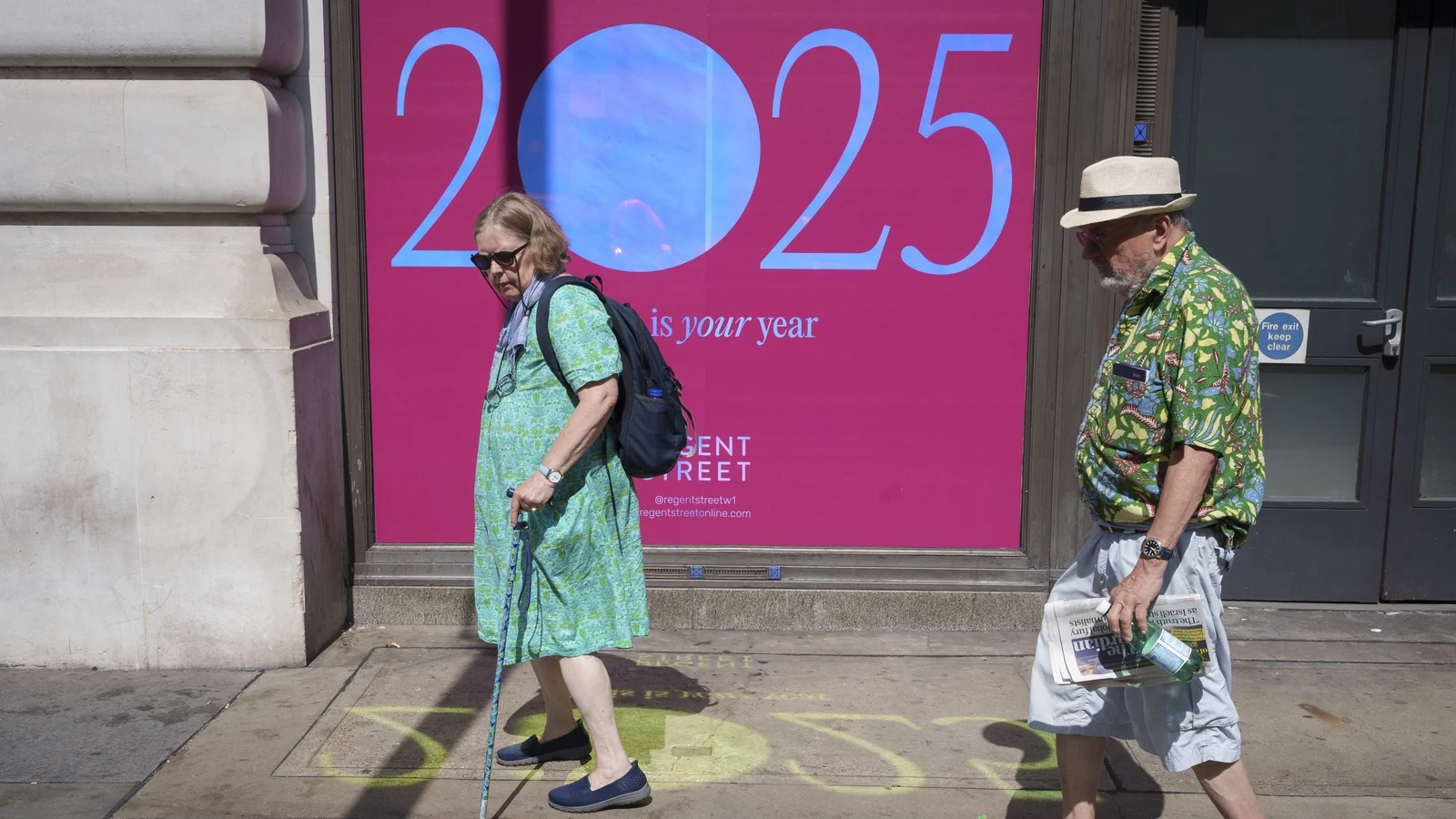
As 2025 draws to a close, the UK’s provisional annual mean temperature is tracking at 10.05°C — a fraction higher than the 10.03°C high set in 2022. If that holds after a forecasted Christmas cold snap nudges the numbers one way or the other, the Met Office says 2025 will be the warmest year on record in Britain, the second time the annual mean has nudged past 10°C in observational records going back to 1884.
Numbers That Tell a Story
Numbers, however small, can change a narrative. A difference of two-hundredths of a degree — 0.02°C — is the kind of statistical hairline that only climatologists and weather obsessives usually notice. But stacked against a longer arc, the figure feels seismic.
- 2025 provisional UK mean: 10.05°C
- Previous high (2022): 10.03°C
- Records extend back to: 1884
- Years with newly set UK annual mean records this century: 2002, 2003, 2006, 2014, 2022 (and possibly 2025)
“At this stage it looks more likely than not that 2025 will be confirmed as the warmest year on record for the UK,” says Mike Kendon, senior scientist at the Met Office. “In terms of our climate, we are living in extraordinary times. The changes we are seeing are unprecedented in observational records back to the 19th century.”
What It Feels Like on the Ground
On a damp afternoon in Whitby, a seaside town in North Yorkshire, fisherman Tom Hargreaves watches the sea with a mix of curiosity and concern. “The tides feel different,” he says. “We used to count on certain months for the crabs and the cod. Now the patterns shift, and you have to relearn the sea a little every year.”
In the Midlands, a vegetable grower named Amina Shah points to cracked soil beneath polytunnels. “We had two heatwaves in summer and then heavy rain that flooded the low beds,” she tells me. “Crops ripen faster, pests arrive earlier. It’s weather on steroids — and you pay for that on the farm.”
These are not isolated anecdotes. Four of the last five years could now sit within the top five warmest years on record for the UK. All of the top 10 warmest years have occurred in the past two decades. Beyond local livelihoods, those statistics mirror a global truth: warming is accelerating, and its fingerprints are everywhere.
Connecting Local Change to a Global Trend
It’s worth stepping back. Britain’s temperature record is a small, precise window into a much broader planetary shift. The Intergovernmental Panel on Climate Change’s assessments have repeatedly underscored that human-driven emissions have raised global temperatures and altered weather patterns. Heat records on land and sea, retreating glaciers, and rising sea levels are part of a mosaic scientists have been warning about for decades.
Dr. Leila Mensah, a climatologist at a university research centre, explains: “Regional records — like Britain’s possible warmest year — are pieces in a larger puzzle. They don’t exist in a vacuum. Ocean heat content, Arctic sea ice decline, and shifts in atmospheric circulation all interact to make these extreme anomalies more likely.”
And the stakes are practical. London’s drainage systems, designed for an Earth that no longer exists, struggle with both intense rainfall and prolonged dry spells. Health services see more heat-related illnesses. Insurance premiums climb in flood-prone zones. The impacts ripple outward in small ways and profound ones.
Not Just Hot Days: A New Weather Vocabulary
The public conversation about climate is often reduced to extremes: heatwaves, storms, floods. But the reality is more nuanced. A “warmest year” does not imply every day was sweltering. It speaks to an altered baseline — the atmospheric thermostat has shifted, and seasons drift.
“Think of climate change like a slow-moving staircase,” says Maya O’Neill, an environmental journalist. “Each step feels small alone. But after a few steps, the view is very different. That’s what a new annual mean temperature represents: a step change in the baseline of our environment.”
This shift can mean milder winters but also more erratic patterns: surprising cold snaps, sudden snowfalls, and intense short-lived storms. A forecasted cold spell over Christmas illustrates that variability: a warm year can still have chilly surprises embedded within it. It’s a reminder that climate change exacerbates unpredictability as much as it raises averages.
Policy, Responsibility, and Everyday Choices
Why should these statistics nudge policy? Because infrastructure, planning, and agriculture are long-term investments. When the climate baseline moves, so must policy frameworks.
Local councillor Hannah Price from coastal Devon explains the tradeoffs she sees: “We’re trying to balance coastal defence spending with nature-based solutions. You can harden everything with sea walls, but that’s expensive and often short-term. Restoring eelgrass beds, salt marshes, and dunes can offer resilience and ecological benefits — but it takes political will and time.”
Consumers too have a role. Small domestic choices — reducing food waste, insulating homes, shifting diets — add up. Corporations and governments wield outsized influence in shaping the pace of transition, but collective behaviour matters.
Questions to Sit With
As you read this, consider these questions: How will your town look in ten years if this trend continues? What choices are you and your community prepared to make? And which institutions are still treating climate like a future problem rather than the present one?
These aren’t rhetorical. They are invitations to reckon with the fact that climate change is not an abstract graph but something that tweaks the rhythm of daily life: where children play after school, how farms plan their sowing, how towns budget for floods.
Closing Thought: A Warm Year, A Call to Action
Whether 2025 ultimately claims the title of warmest year or not matters less than the story that the data tell: Britain’s climate is changing, and fast. Statisticians will refine numbers. Meteorologists will debate models. But people will keep noticing the daffodils poking through early and the fishermen recalculating when to set their nets.
“We’re not predicting doom,” says Kendon, blunt and steady. “We’re documenting change. That in itself is a call.”
So let this moment be a call to look closely — not just at thermometer readings, but at the human texture of change. Because records are not just about numbers; they are about futures being written in real time. And every future asks us, in some way, what we’re prepared to do next.