A Quiet Escape, a Loud Welcome: Maria Corina Machado’s Nobel Moment in Oslo
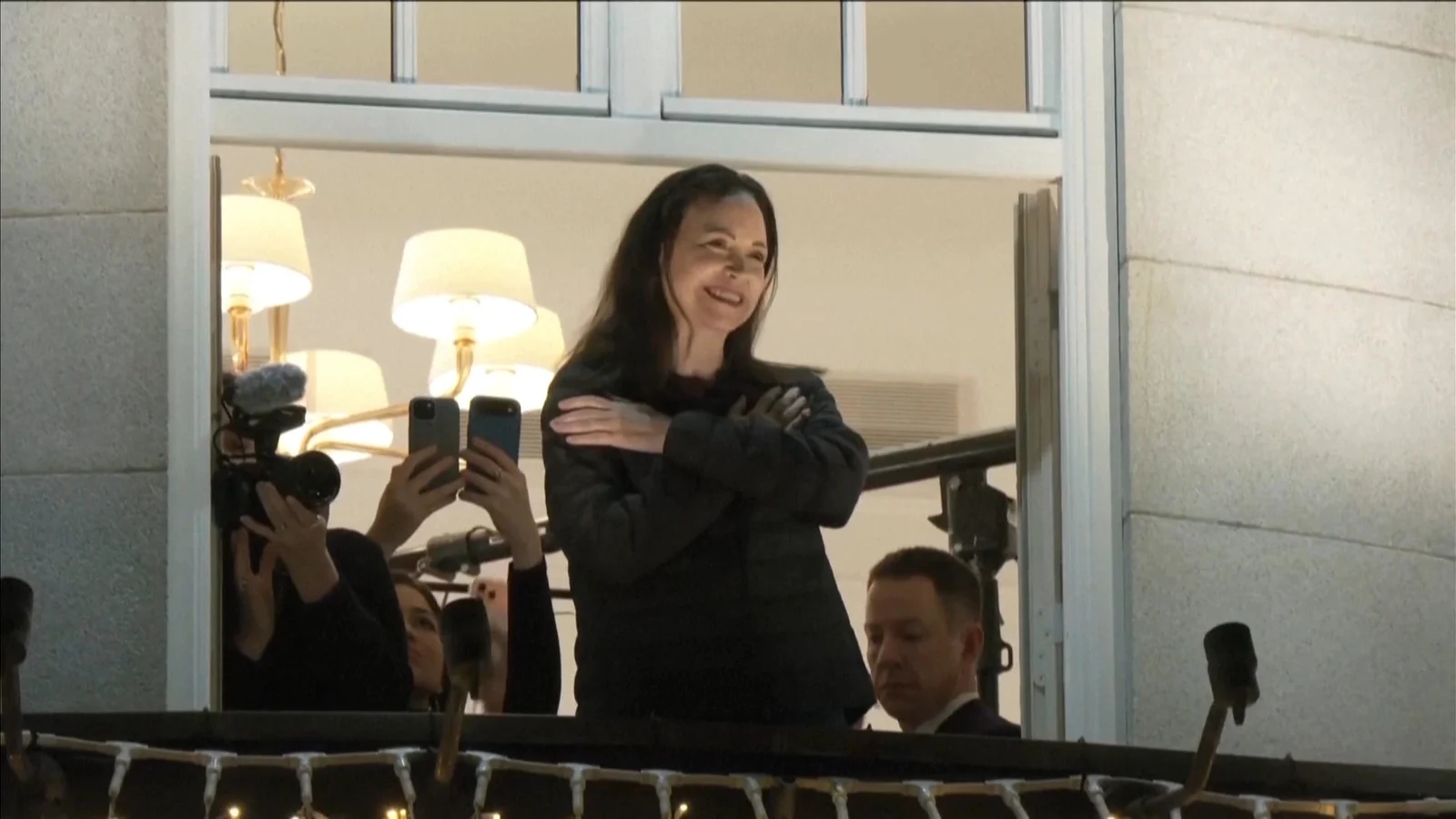
There was a wind off the Oslofjord that morning sharp enough to make heads bow and flags snap like living things. On the balcony of the Grand Hotel, under a pale Scandinavian sky, a woman who had spent more than a year invisible to the cameras stepped into the light — not because she wanted to bask, but because the world wanted to see what Venezuela has been trying to hide. Maria Corina Machado, Nobel Peace Prize laureate, arrived in Norway in secret and, for a few hours, let herself be human again: hugged, sung to, filmed on dozens of phones, and loudly cheered by Venezuelans who have made the world their new address.
This is not a dry dispatch about ceremony and protocol. It is a story of exile and risk, of a people dispersed across continents and yet, for a single day, tightly cradled by one another’s presence. Machado’s journey to Oslo — a covert departure by boat to Curaçao, then onward on a private plane — reads like a spy novel. But the stakes are painfully real: she left a country where a decade-long travel ban and an expanded campaign of arrests chased her into hiding. Her return, she promises, will be deliberate, despite the danger.
“I came to receive the prize on behalf of the Venezuelan people”
“I came to receive the prize on behalf of the Venezuelan people and I will take it back to Venezuela at the correct moment,” Machado told reporters outside Norway’s parliament, a short, razor-edged statement that said more in what it left unsaid. When pressed on timing, she declined — because timing, in a life like hers, is strategy and life preserver rolled into one.
Her voice broke when she spoke of her children, who live in exile. “For over 16 months I haven’t been able to hug or touch anyone,” she told the BBC, wiping years of absence into a handful of hours. Imagine that: one of the world’s most visible dissidents, unable to embrace family for more than a year, suddenly reunited on a quiet Oslo morning. The crowd’s reaction — singing Venezuela’s national anthem, waving yellow, blue and red flags, and crowd-surfing smiles — felt less like fanfare and more like a communal exhale.
Faces in the crowd, voices with a history
Diana Luna, a Mexican-German woman who had travelled to Oslo for the ceremony, summed up what many felt: “After all these months in which she has been in hiding and her life has been in danger, seeing her together with the entire Venezuelan diaspora is a reassurance that she is safe, and it keeps our cause alive.”
Nearby, a teacher from Valencia with a permanent residency card in Madrid told me, “We carry our country in our pockets and in our passport photos. When she came out on that balcony I felt like I could breathe Venezuelan air again.”
A prize that is both personal and geopolitical
Machado’s Nobel acceptance, delivered in Oslo via her daughter Ana Corina Sosa Machado, was more than rhetoric. “Freedom is a choice that must be renewed each day,” the daughter read, a line that landed like a challenge aimed at anyone tempted to reduce Venezuela’s crisis to a regional problem. This is not only about one nation’s democratic backsliding; it is about what happens when institutions hollow out under the weight of political charisma, economic collapse, and the erosion of rule of law.
Venezuela has charted a grim course over the last two decades. Once among Latin America’s richest oil producers, the country has endured hyperinflation, infrastructure collapse, and mass migration. According to United Nations estimates, more than seven million Venezuelans had left the country by 2023 — a diaspora that now stretches from Bogotá’s crowded buses to Madrid’s kitchen tables to Miami storefronts. These are not abstract figures. They are the grandparents who skip birthdays, the doctors who requalify abroad, the children learning new languages and new griefs. Machado’s visit plugged a living, beating heart back into that statistic.
The escape and the risks
Her exfiltration — leaving by boat to Curaçao and then flying privately to Oslo — was handled by security aides close to her camp, according to sources briefed on the operation. It was clandestine out of necessity: Venezuelan authorities had barred her from travel and, after a disputed election that led to heightened arrests of opposition figures, stealth became survival. The electoral authority and the top court had declared President Nicolás Maduro the winner in that vote; the opposition contests that result and published ballot-level tallies they say prove their candidate won. Either way, the political temperature in Caracas has been near boiling.
Machado has not softened her words about the sources of the regime’s endurance. She has named illicit funding streams — drug trafficking, black-market oil, arms and human trafficking — as the fuel for a powerful repression apparatus. “We need to cut those flows,” she told reporters in Oslo, standing beside Norway’s prime minister. It is hard to argue with the logic that money lubricates power; whether alleged links can be proved in court is another matter entirely.
Alliances, controversies, and a Nobel dedicated to an unlikely figure
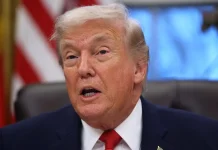
One of the more eyebrow-raising moments of Machado’s Oslo appearance was her partial dedication of the prize to former U.S. President Donald Trump, who has loudly claimed he himself deserved a Nobel. Machado has aligned with hawks close to Trump, and has argued that Maduro’s government has ties to criminal groups that threaten regional security. That stance has made her a polarizing figure, both within Venezuela’s fractured opposition and across an international audience wary of militarized interventions.
“There’s a real debate here,” said José Ramírez, a Caracas-based political analyst following the events from exile. “Her moral clarity about democracy is unquestionable. But questions remain about the means and the allies one chooses. History will judge those choices — and the Venezuelan people will decide their path.”
What does this moment mean — for Venezuela, and for the world?
When Joergen Watne Frydnes, head of the Norwegian Nobel Committee, compared Machado’s struggle to figures like Nelson Mandela and Lech Walesa, he was gesturing toward a lineage of dissent that forced regimes to reckon with the human cost of repression. Yet he also cautioned against expecting moral purity in political struggle: the choices activists confront under dictatorship are often between the difficult and the impossible.
That ambivalence matters. It asks us as observers: whom do we support, and under what terms? Do we accept simple narratives of good versus evil, or do we interrogate the messy, pragmatic alliances forged by those who remain on the ground? Machado’s actions — her flight, her alliances, her pledge to return — invite those hard questions.
Looking ahead
“Of course I’m going back,” Machado told reporters, a line that carried both bravado and calculation. She says Maduro’s exit is inevitable, but that the timing will depend on the work she still needs to do. For the Venezuelan diaspora in Oslo, Madrid, Bogotá, and Houston, the moment was both a celebration and a summons. The Nobel has spotlighted their cause in a way that will not simply fade from social feeds.
So where do we stand today? With a woman who risked everything to accept an award in the open, a community that keeps vigil across continents, and a country whose pain has become a global question of migration, resources, and power. Does the prize change anything on the ground in Caracas tomorrow? Perhaps not in the immediate sense. But it alters the narrative: it forces international attention, reinforces solidarity networks, and, for a few fragile hours in Oslo, allowed a mother to touch her children again.
What will you remember from this day — the balcony, the anthem, the clandestine boat crossing to Curaçao, or the image of a smiling portrait in the Oslo City Hall? Maybe all of it. Maybe the more enduring memory will be the palpable reminder that democracy, once lost, is not a relic but a daily choice that demands courage, planning, and a willingness to keep showing up — even when the cameras are pointed elsewhere.