Home Blog Page 20

Sarah, Duchess of York stripped of city honor after Epstein ties

Sarah Ferguson loses freedom of city over Epstein links
Six companies linked to the former duchess started winding down in the wake of the publication of the Epstein files, according to Companies House documents (File image)

Guildhall at dusk: York strips a royal friend of an old honour

On an overcast evening in York, under the stone gaze of the medieval Guildhall and within earshot of Minster bells, councillors took a decision that felt both ceremonial and seismic.

Sarah Ferguson — known to many as the Duchess of York and once a familiar figure in this city’s life — has been formally stripped of the Freedom of the City, a rare civic honour conferred on her and Prince Andrew in 1987 as a wedding gift from York.

The council voted unanimously to withdraw the title, invoking Section 249 of the Local Government Act 1972. It is a short, legal-sounding sentence that carries a long shadow: the formal removal of an honor that binds a place’s history, its values and its public conscience.

Why now? The Epstein files and a city’s conscience

The decision followed fresh public scrutiny over the duchess’s association with Jeffrey Epstein after the release of thousands of documents that have continued to unsettle institutions and individuals alike.

“We now know, following the release of thousands of documents, that Sarah Ferguson too had a close friendship with Epstein, which continued well beyond his conviction,” Liberal Democrat councillor Darryl Smalley told colleagues during the debate. “We don’t expect recipients of York’s highest honour to be saints. We simply do not want them to be best friends of convicted paedophiles. We stand with victims. We stand for the rule of the rule of law. We stand for decency.”

The files in question — civil suit records, flight logs and correspondence that surfaced in waves after Epstein’s arrest and death — have become a global dossier, prompting a re-examination of connections among elites across industries and borders. Epstein was convicted of soliciting prostitution involving minors in Florida in 2008, and later faced renewed scrutiny and criminal charges in 2019 before his death in custody. These events and the subsequent documents have fed demands for accountability that reach from boardrooms to town halls.

Voices from the meeting — and from the streets

The council chamber was not just populated by figures in suits. The public gallery held citizens who had asked to be heard, and a handful did. “The decision before you tonight is whether to remove the freedom of the city from Ms Ferguson,” said Gwen Swinburn, a member of the public who addressed councillors. “It should not be a difficult one. It is the absolute minimum you should be doing.”

Labour group leader Councillor Claire Douglas reinforced the sentiment of public accountability: “As the people of York would expect, holding this status requires upholding the values and behaviours consistent with such an honour. Those who continued to associate with Jeffrey Epstein after his crimes became widely known fall well short of these expectations. Sarah Ferguson falls into this category as the Epstein files have shown. I therefore call on council to support the motion as presented.”

Outside, in a narrow street lined with teashops and independent bookshops, responses were variegated. “It’s symbolic, but symbols shape culture,” said Arun Patel, who runs a small printing press near the Shambles. “If York honours someone, the honour reflects on us. Taking it away is a statement.”

“It’s about saying you’re on the side of survivors,” added a local women’s rights campaigner who asked not to be named. “Symbols can hurt or heal. This is a small step toward both recognition and repair.”

Officials and the mechanics of withdrawing an honour

Removing an honorary freedom is procedurally straightforward but politically delicate. The council resolved, in a single-motion statement, that the honour conferred in 1987 be withdrawn under the Local Government Act. For York, the act of revocation follows a precedent: Prince Andrew had his Freedom of the City removed in 2022 — the council was told at the time he was the first person ever to have the honour taken away.

Councils award honorary freeman or freeman titles for distinguished service, for exceptional residents, or as a mark of respect to visiting royalty and dignitaries. The rights are largely ceremonial — the city key, the honorary status, invitations to civic events — but the symbolism is potent in a community that traces its identity through centuries of civic ritual.

Aftershocks: business closures and a charity shuttered

The fallout has not been merely symbolic. Companies House records show that six firms linked to Sarah Ferguson entered the process of winding down in the wake of the files’ publication. Her charity, Sarah’s Trust, announced it would close “for the foreseeable future.”

For councillors who voted to rescind the freedom, these practical consequences reinforced their judgment. For others, the removals raise broader questions about how institutions shake off association with scandal and whether rescinding honours is enough to address harm done.

What does it mean to take away an honour?

When a city strips someone of an accolade, what does it accomplish beyond making a moral point? Some call it an overdue correction. Others worry it can become a ritual of public shaming without follow-up actions to support survivors or reform systems that enabled the harm.

“Symbolic acts can catalyse change — but only if they’re paired with resources and policy,” said Dr. Helen Carter, a social policy researcher who has studied institutional responses to abuse. “Councils need to use moments like this to invest in survivor support, education and transparency. Otherwise the public sees only a headline and not the hard work that needs to follow.”

For many in York, the decision is also about the city’s sense of itself. York trades on its heritage, yes, but also on civic trust. Removing an honour is a way for the community to say what it stands for now — and what it will no longer tolerate.

Looking outward — a local moment with global resonance

What happened at the Guildhall is part of a pattern playing out around the world: institutions reassessing the legacies of those they’ve honoured as new information comes to light. Universities, museums and towns are reassessing names on buildings, portraits on walls, and civic accolades. The question becomes not only whom we choose to celebrate, but how we live with those choices when the past shifts underfoot.

So what should readers take away from York’s decision? Perhaps this: that public honours are not relics frozen in time but living markers of communal values. When those values are tested, communities will respond — sometimes loudly, sometimes quietly — to reaffirm what they want their future to look like.

“We are a city with a long memory,” one alderman told me as the meeting broke up, the Guildhall’s ancient beams creaking in the chill. “But memory is not the enemy of change. We remember so we can do better.”

As York closes one chapter, the larger story continues: a global reckoning with power, privilege and responsibility. The question lingers for every community—what will we do to turn symbolism into substance?
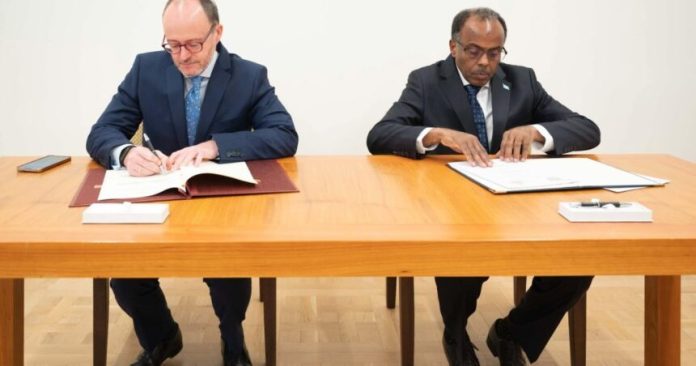
Soomaaliya oo heshiis muhiim ah la saxiixatay dowlada Spain

Mar 26(Jowhar)-Dowladaha Soomaaliya iyo Spain ayaa kala saxiixday heshiis is-afgarad oo dhidibada u taagaya xoojinayo xiriirka labada dal,gaar ahaan dhinacyada siyaasada iyo dibolomaasiyadda.

European Parliament moves forward on U.S.-EU trade deal with safeguards

EU parliament advances US trade deal with safeguards
The ‌parliament has been debating proposals to remove EU import duties on ⁠US industrial goods

Brussels bets on certainty — but not without a safety net

On a gray spring morning in Brussels, the glass façade of the European Parliament reflected a city that never quite dries itself off: umbrellas, bicycles, and hurried suits moving toward the hem of European power. Inside, after months of anxious consultations and late-night briefings, lawmakers voted to move forward with legislation that will implement the European Union’s side of a high-stakes trade understanding with the United States.

The vote was decisive but far from unanimous: 417 in favour, 154 opposed and 71 abstentions. That tally tells you everything you need to know about this moment — an act of cautious confidence rather than wholehearted embrace.

Not a victory lap — a pragmatic pause

“This is a crucial step,” said Maroš Šefčovič, the European Commissioner responsible for trade ties with the U.S., stepping out of the chamber with a palpable mix of relief and restraint. “It delivers certainty for businesses, while giving us levers to act if Washington strays from its commitments.”

Certainty, however, has a shelf life. Lawmakers grafted on sunrise, sunset and suspension clauses — safety valves designed to make the deal conditional and reversible. The concessions are explicit: tariff reductions will be rolled back if the U.S. fails to live up to the bargain or if a surge of harmful imports destabilizes European industries. The concessions expire by 31 March 2028 unless renewed.

What was agreed — and what remains contentious

The legislation would remove several EU import duties on U.S. industrial goods and expand market access for American agricultural produce — a central plank of the Turnberry understanding signed last July in Scotland. Lobster, a sensitive symbol of agricultural and fisheries policy, will continue to cross the Atlantic at zero tariffs, a perk first negotiated with the Trump administration in 2020.

Yet the relief is not unqualified. Parliament insisted that Washington remove the steep, roughly 50% import levies it imposed on goods judged to contain U.S. steel or aluminium — a measure that has hit products from wind turbines to motorcycles. Many MEPs argued those surcharges, announced a month after the Turnberry talks, must disappear if Europe is to lower its own barriers.

Voices from the street and the factory

On the docks of Zealand, a lobster fisherman named Marc from Brittany told me, “When tariffs go down, we’ll sell a little easier. But you can’t run a boat on promises — I need stable markets and predictable costs.” His weathered hands and wry smile were a reminder that trade deals translate into livelihoods in ways politicians seldom see in briefing rooms.

At a turbine assembly plant in northern Germany, engineer Aisha Müller watched half a dozen massive blades ease onto a truck. “Our business is the green transition,” she said. “Tariffs that tax steel content are taxes on climate action. We can’t afford added uncertainty if we’re building Europe’s clean energy future.”

From outside the European Parliament cloakroom, a young policy aide from Portugal — who asked not to be named — summed up the mood: “Nobody thinks this is perfect. But there’s a recognition that, without some instrument to keep the transatlantic market functioning, both sides lose.”

Why many lawmakers hesitated

Resistance in the chamber was not trivial. Critics called the package lopsided; some said it asked too much of the EU in exchange for too little from the U.S. “This is not really an agreement,” Bernd Lange, chair of the Parliament’s trade committee, warned during the debate. Socialist MEP Kathleen Van Brempt, blunt as ever, called it “a bad deal” that fails to shield Europe from tariff threats and coercive behaviour.

The unease is rooted in realpolitik: the United States is the EU’s largest trading partner. EU exports to the U.S. reportedly climbed to a record €555 billion in 2025 — a potent reminder of the stakes. But as trade scholar Dr. Elena Rossi of the University of Milan told me, “Trade is no longer just about prices and quotas. It’s about strategic autonomy, supply-chain resilience, and the ability to accelerate decarbonisation. Those priorities sometimes conflict.”

Safeguards: sunrise, sunset, suspension

  • Sunrise clause: Reductions are conditional on the U.S. fulfilling its commitments.
  • Sunset clause: Concessions would expire on 31 March 2028 unless renewed.
  • Suspension clause: The EU can pause the deal if the U.S. breaches terms or if a flood of imports causes severe disruption.

These mechanisms are the Parliament’s answer to a new reality: international trade can be weaponised, and allies can change tack quickly. The memory of threats to impose new tariffs over unrelated geopolitical rows has left a trace of mistrust.

Washington’s response — and the road ahead

The U.S. Mission to the EU welcomed the vote. “We appreciate the constructive approach taken by European partners,” a spokesperson said. “This is a step forward in revitalising mutually beneficial transatlantic trade.” But welcome is not commitment, and the next weeks will matter. Representatives of the Parliament and EU governments must negotiate final texts; Parliament will then vote again — likely in April or May.

That window will be a tightrope walk. Negotiators must preserve market access and wind down frictions while holding the line on strategic industries. The spectre of new American import levies or political brinkmanship means that every clause in the final text will be read as much for tone as for substance.

Bigger themes: allies, supply chains, and green policy

This debate is not only about tariffs. It is a mirror of the tension between open global markets and national efforts to protect vital industries and accelerate the energy transition. When a European wind-turbine maker worries about steel tariffs, they are thinking both about their bottom line and whether the policy environment will let them deliver clean power in time.

We are witnessing a broader trend: trade policy as a tool of geopolitics. Tariffs are no longer merely economic instruments but can be used to reward or penalise behaviour. That forces democracies to choose between economic interdependence and strategic hedging.

What should readers take away?

Ask yourself: do you want open markets that drive growth and lower prices, even if they sometimes create winners and losers within societies? Or do you want tighter control over supply chains, potentially at the cost of higher consumer prices and slower growth? There is no single right answer — only trade-offs that reflect political choices and social priorities.

For the moment, Brussels has chosen a middle path: a conditional opening, wrapped in protections. It’s a pragmatic refusal to be naïve and a modest bet that trade with the United States can be both expansive and accountable.

As the negotiators return to the drafting tables, the fishermen, turbine builders, and farmers will keep watching, ready to call foul if the protections prove empty words. “We asked for stability,” Marc the fisherman said, looking toward the horizon where the sea and sky met, “not a story that keeps changing with the tide.”

In a world where trade can be a bridge or a battleground, that simple wish feels more urgent than ever.

Nicolás Maduro returns to U.S. court over contested legal fees

Maduro due back in US court in dispute over legal fees
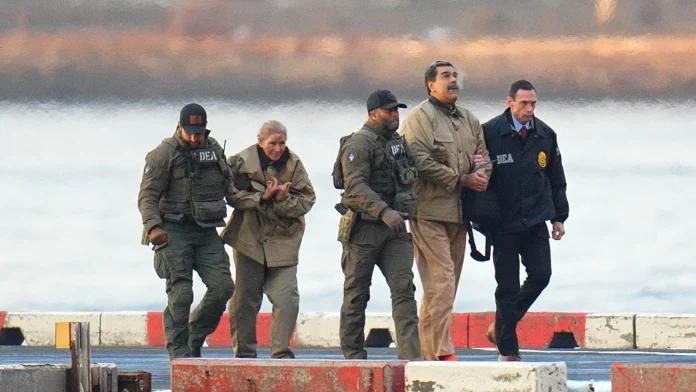
Nicolas Maduro and Cilia Flores pictured in January following their transfer to New York

Nicolas Maduro Returns to a Manhattan Courtroom: Where Law, Politics and Oil Meet

The scene is almost cinematic: a gray Manhattan morning, courthouse marble cooler than the hum of distant traffic, and a man whose name roils headlines around the world stepped into the ring of American justice. Nicolas Maduro, the ousted president of Venezuela, along with his wife Cilia Flores, will stand before a federal judge in Manhattan in a case that reads like a geopolitical thriller — drug trafficking and narcoterrorism charges, questions of diplomatic recognition, and an argument over who should pay for their defense.

It’s not just a legal matter. The case feels like a map of modern power — the United States’ decades-long struggle to curb illicit drug flows, the contested legitimacy of governments, and the shadow of oil wealth that has long defined Venezuela’s place on the world stage. The couple’s detention in Brooklyn’s Metropolitan Detention Center after a dramatic US special forces operation in Caracas on 3 January has thrust all of that into stark relief.

The Courtroom Drama

Legal battles often turn on arcane procedural details. Here, the headline snag is the Sixth Amendment — the constitutional right to counsel. Maduro and Flores say they cannot afford the lawyers of their choosing because US sanctions block the Venezuelan state from transferring funds to pay their defense fees. They have asked US District Judge Alvin Hellerstein to dismiss the indictment on that ground.

“Under Venezuelan law and longstanding custom, the expenses of the president and first lady are borne by the state,” said a lawyer representing the couple in court filings. “To deny that funding is to deny them a fair chance to be represented by counsel of their choice.”

Prosecutors are blunt. They point to the fact that Washington has not recognized Maduro as Venezuela’s legitimate president since 2019, and therefore the United States cannot simply allow Venezuelan government funds to flow here for legal expenses. “If defendants cannot afford counsel, the federal system provides public defenders,” a Justice Department attorney told the court in a terse filing. “Recognition decisions have real consequences.”

Barry Pollack — a high-profile lawyer who once defended WikiLeaks founder Julian Assange and who is representing Maduro — has told the court he may withdraw unless Judge Hellerstein dismisses the charges or Venezuela is allowed to pay his fees. “I cannot ethically continue to represent clients who cannot pay and for whom the source of funding is illegal under our own statutes,” Pollack said outside court, his tone equal parts legalism and weariness.

Charges, Precedents, and the Weight of a Word: Narcoterrorism

Maduro faces four felony counts, including narcoterrorism conspiracy — a charge that criminalizes trafficking when proceeds are alleged to fund activities the United States deems terrorist. It is a rarely litigated statute; past attempts to secure convictions under similar theories have sometimes unraveled on witness credibility and evidentiary grounds.

A Reuters analysis of related cases found that, in instances where narcoterrorism allegations were central, two of three convictions were later overturned on appeal — a reminder that even when the law is invoked, the path to a durable conviction is far from certain.

Voices from Two Cities

In Caracas, the tone is a layered blend of disbelief and weary defiance. “We were cooking arepas when we heard,” laughed Marta, a vendor near Plaza Bolívar, fingers still dusted with cornmeal. “Some people say it’s an imperial plot, others say there is truth to the charges. But either way, life continues — the children need schoolbooks, the buses need fuel.”

Back in Brooklyn, a resident who walks past the detention center daily summed up a different set of emotions. “You see people come and go — lawyers, family members, translators,” he said. “It strikes you that justice here is very procedural… but also very human. There’s fear, there’s anger, there’s boredom. That’s true whether you’re accused in Queens or Caracas.”

Legal scholars watch with a mix of fascination and alarm. Dr. Elena Rodriguez, an expert in international criminal law, said, “This case tests the boundaries between foreign policy and criminal procedure. When recognition decisions intersect with criminal indictments, courts become inadvertent theaters for diplomacy.”

Local Color and Global Currents

To understand why this case matters, you have to know a little about Venezuela’s DNA. Once among the richest nations in Latin America thanks to its vast oil reserves — estimates commonly place its proven reserves at well over 300 billion barrels, the largest in the world — the country has endured a decade-plus of political turmoil, economic collapse and mass migration. More than 7 million Venezuelans now live abroad, according to UN estimates, a diaspora that has reshaped the politics of the region.

Sanctions imposed by the United States during the Trump administration — and maintained in various forms since — were aimed at crippling networks of corruption and pressuring Maduro from power. Washington declared Maduro’s 2018 re-election fraudulent, and in the years since, the diplomatic chessboard has been complex, with rival factions, quota-driven oil politics at OPEC, and regional actors all coaxing different outcomes.

Maduro has always framed accusations — especially those tying him to narcotics trafficking — as pretexts for seizure of Venezuela’s oil riches. “This is about control of our resources,” he said in a video address before his capture, his voice resonant with the rhetoric of sovereignty. “They want our oil, and they will use every lie to get it.”

Why You Should Care

Beyond the personalities and the courtroom theatrics, the case raises weighty questions: When a state’s recognition is withdrawn, what protections remain for its leaders under foreign legal systems? How do international sanctions interact with fundamental rights like counsel? And when allegations of narcotics-fueled violence cross borders, what is the balance between accountability and geopolitical maneuvering?

These are not abstract queries. Around the world, courts and capitals are grappling with similar dilemmas — from how to treat deposed leaders to how to police illicit financial flows that fund instability. The legal texture here could set precedents for how democracies and autocracies alike handle transnational accusations in an age of polarized diplomacy.

What Happens Next?

Judge Hellerstein will have to decide whether the sanctions regime creates an unconstitutional barrier to defence for the accused — a question that could reverberate far beyond this case. Meanwhile, the political chess pieces continue to shift. Delcy Rodriguez, who has acted as interim president in Maduro’s absence, has been part of a broader recalibration of Venezuelan-US relations since the capture, an adjustment that adds a diplomatic layer to the courtroom drama.

So, what does justice look like when law, politics and national sovereignty are braided together? Will this be a prosecution that clarifies the law, or one that deepens the fog? For the people of Caracas selling arepas and for the people of Brooklyn walking past the jail, the answers will shape more than headlines — they will shape how communities across the hemisphere understand fairness, accountability and power.

As you read this, consider: should political recognition determine legal rights? And when powerful nations pursue criminal charges against foreign leaders, who watches the watchers?

WTO: Conflict Sparks Worst Global Trade Disruption in Eight Decades

War causing 'worst trade disruption in 80 years' - WTO
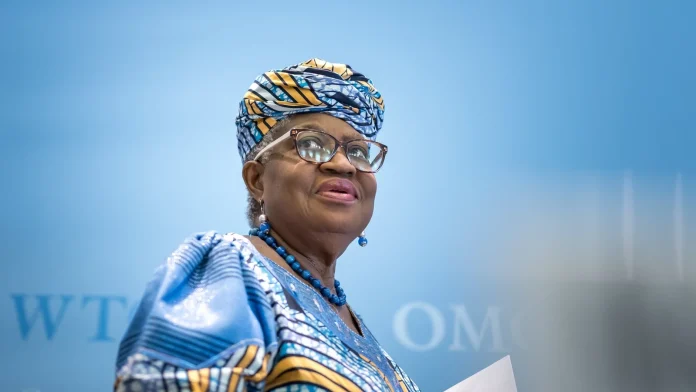
WTO Director General Ngozi Okonjo-Iweala said the scale of the war in the Middle East has destabilised trade in many sectors

In Yaoundé’s July heat, a global system trembles

There was a humidity in Yaoundé that morning that felt like a reminder: the world’s weather — political, economic, climatic — is changing. Under a sky the color of pressed linen, trade ministers from 166 nations filed into a conference center ringed by flamboyant trees and the distant hum of motorcycle taxis. They carried briefcases and worries. They came to talk about a system many once took for granted: global trade.

“This is not an ordinary ministerial,” said one diplomat from West Africa as she adjusted her scarf. “We’re not just negotiating tariffs. We’re negotiating the shape of the future.”

What greeted them was stark. From the podium, World Trade Organization Director-General Ngozi Okonjo-Iweala issued an alarm she said should be impossible to ignore: the global trading apparatus is experiencing disruptions “the worst in the past 80 years.” The words landed like a thunderclap, cutting through the polite hum of ministers and the flash of camera phones.

Why Yaoundé matters

This is only the second WTO ministerial held on African soil — Nairobi was the first in 2015 — and choosing Cameroon’s capital felt deliberate. “Africa is the continent of the future,” Okonjo-Iweala told the assembly, her voice equal parts challenge and invitation. “If we are to rebuild trust in multilateralism, this is the place to do it.”

Walking out of the conference center later, you could sense the symbolism: outside, a street vendor arranged ripe mangoes in a pyramid. A bilingual official from Cameroon, smiling but weary, pointed to the crowds and said, “Trade is not abstract here. It is how my neighbor earns a living and how her child goes to school.”

Fault lines: geopolitics, climate and technology

The conference is happening against a jagged backdrop. Conflicts from the Middle East to Ukraine and Sudan have jostled routes, raised premiums on shipping insurance, and sent spikes through the prices of energy, fertilizers and food. Supply chains that once flowed like clockwork now stutter or divert, forcing companies to rethink everything from sourcing to storage.

“We used to assume predictable sea lanes and steady supplies,” said a logistics executive who asked not to be named. “Now that assumption is fractured.” He tapped a tablet showing near-real-time shipping delays and added, “Companies are paying for insurance they never thought they’d need.”

For many nations, the sting is immediate. Farmers in North Africa and the Sahel, reliant on imported fertilizer, face narrower margins and lower yields. Island states dependent on fuel imports watch tankers with thinly disguised alarm. The WTO’s membership — 166 countries — is trying to thread a needle: keep trade open while protecting national security, jobs, and political stability.

The erosion of multilateral faith

Okonjo-Iweala did not mince words. “We cannot deny the scale of the problems confronting the world today,” she said, cataloguing pressures that range from strategic rivalry between major powers to an accelerating climate crisis and the dizzying speed of technological change.

Her plea was not only practical; it was moral. Multilateralism — the post-World War II architecture built to prevent the errors of the past — is being loudly questioned. Protectionist instincts, export controls, and unilateral sanctions are all part of a creeping fragmentation that threatens smaller economies the most.

“When the system is fraying, the poorest pay first,” said a development economist at a London university. “Trade has been a ladder out of poverty for many countries. If that ladder collapses, the consequences will be social, not just economic.”

Markets jitter as the Middle East casts a long shadow

It’s not only trade negotiators who are watching these developments. In Tallinn and Frankfurt, officials at the European Central Bank—tasked with guarding financial stability for a currency area of 350 million people—have issued blunt warnings. Luis de Guindos, the ECB’s vice-president, suggested that the recent conflicts in the Middle East could spark “systemic stress” in markets already tense from high asset valuations and concentrated risk in non-bank finance.

“This conflict could trigger the unravelling of interconnected vulnerabilities,” de Guindos said. The concern is straightforward: shocks to energy supplies and shipping lanes can ripple through commodity markets, raise inflation expectations, and put pressure on credit markets where private lending has ballooned in recent years.

Christine Lagarde, the ECB president, offered a measure of calm, noting there are reasons to hope a fresh inflationary wave will not match the severity of 2022. Yet traders have begun re-pricing the likelihood of interest rate moves, and bond markets, equities, and commodity benchmarks are all sensitive to headlines about the Strait of Hormuz — an artery that normally carries about a fifth of the world’s seaborne oil and gas.

What’s at stake

Dozens of ministers, negotiators, academics and entrepreneurs convened here are speaking, privately and publicly, about three big risks:

  • Fragmentation: Bilateral blocs and unilateral measures that undermine predictable rules.
  • Financial contagion: A shock to energy or shipping that spills into markets already stretched by complex, opaque credit structures.
  • Food and energy insecurity: Disruptions to fertilizer, gas and crude that reverberate from ports to pantry shelves.

“We’re not in a drill,” said a West Asian trade official. “Every decision we take here will affect supply chains and the cost of living for hundreds of millions.”

On the ground in Yaoundé: voices you won’t hear in the briefings

At a cafe near the conference venue, an elderly Cameroonian teacher, Father Emmanuel, sipped coffee and watched delegates cross the square. “My students ask me why countries argue,” he said. “I tell them: because they have different histories, different fears. But the classroom is where we remember we share the same future.”

A young entrepreneur, Nouhoua, who runs a small agri-tech start-up in Douala, described the paradox: “Global trade disruption is a threat but also an opportunity. If markets fragment, local supply chains can grow. But we need access to technologies, financing, and predictable rules to scale. Without that, we’re stuck.”

Questions to sit with

As you read this from wherever you are — a coastal town, a mountain city, a commuter train — ask yourself: what does a more fragmented world look like for you? How much price risk on your grocery bill would make you look twice at global trade as a policy priority?

The Yaoundé gathering is more than a negotiation. It is an argument about whether humanity will face shared challenges collectively or retreat into narrower, short-term protections. It is about whether trade will be used as a tool for resilience or as a cudgel in geopolitical contests.

After the speeches: the hard work begins

Ministers will leave Yaoundé later this week with pages of communiqués and perhaps some narrow agreements. But the real test won’t be the press conference or the handshake photos. It will be the follow-through: rebuilding trust, clarifying rules for emerging technologies, and creating safety nets for countries most exposed to shocks.

“We can stitch this back together,” Okonjo-Iweala said, not with boastfulness but with craftsmanship. “But it will take courage, creativity and the willingness to see others’ vulnerabilities as part of our own.”

That is the challenge facing not just negotiators in Yaoundé, but citizens everywhere: to treat global trade not as an abstract statistic but as a chain whose links are shared. Will we patch the links, or will we let them fray? The answer will define the decade ahead.

Former Google Executive Matt Brittin Appointed BBC Director-General

Ex Google executive Matt Brittin announced as BBC DG
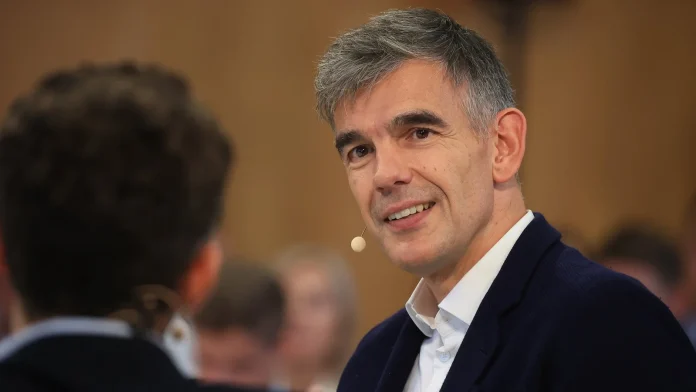
Matt Brittin is a former McKinsey consultant who spent almost two decades at Google

A New Captain for the BBC: A Tech Chief Steps Into the House of Broadcasting

On a bright morning that felt faintly like a stage cue, the corridors of Broadcasting House in London—those familiar, Art Deco arteries where the BBC’s heartbeat is still heard in the hum of printers and the clack of keyboard strokes—welcomed a new figure. Matt Brittin, 57, former Google executive and now the newly appointed Director General of the BBC, will take up the reins on 18 May. The news landed like a stone dropped into a wide pond: ripples of curiosity, relief, scepticism and cautious optimism spread from Salford’s MediaCity to living rooms in Accra, Delhi and Sydney.

“Now, more than ever, we need a thriving BBC that works for everyone in a complex, uncertain and fast changing world,” Brittin said in his first public words after the appointment. “At its best, it shows us and the world who we are.”

From Boat Races to Boardrooms: An Unconventional Path

His résumé reads like a modern fable of reinvention. A Cambridge alumnus who rowed in three consecutive Boat Races and represented Britain in Seoul in 1988, Brittin has the kind of sporting pedigree that still inspires a wry sort of respect in the newsroom—a reminder that discipline, rhythm and teamwork cut across life’s arenas.

After early stints at McKinsey and a near two-decade run at Google—where he rose to become the company’s president for Europe, the Middle East and Africa—Brittin has been described by colleagues as “relentlessly curious” and “strategic-minded.” He was honoured with a CBE in the King’s New Year honours list for services to technology and digital skills, and his transition into public broadcasting feels, to some, like an emblem of the times: the diffusion of tech-sector leadership into civic institutions.

Quick facts

  • Start date: 18 May
  • Salary: £565,000 (€652,000)
  • Background: Former McKinsey consultant; nearly two decades at Google, latterly president for EMEA
  • Athletics: Member of 1988 British Olympic rowing team; bronze at 1989 World Rowing Championships

He’s Taking Over in Stormy Waters

Brittin inherits an organisation still raw from recent controversy. Tim Davie resigned in November 2025 amid backlash over a Panorama edit of a speech by Donald Trump; Deborah Turness, the Chief Executive of BBC News, stepped down at the same time. Those exits marked a rare leadership rupture at an institution that, for more than a century, has anchored British public life.

“This is a moment of real risk, yet also real opportunity,” Brittin acknowledged. “The BBC needs the pace and energy to be both where stories are and where audiences are.” It is a clarion call, and one that hints at the balancing act ahead: preserve the BBC’s editorial standards and public-service ethos while racing to meet audiences that increasingly live on screens other than the television.

Inside the Building: Voices from the Ground

In the canteen on the lower ground floor, over mugs of builder-strong tea, reactions were mixed. “We need someone who understands platforms and audience behaviour,” said one senior editor who asked not to be named. “If he can bring pace without eroding editorial independence, that could be transformative.”

A long-serving producer, leaning against a column stacked with scripts, was more guarded: “We’re not Google. You can’t just scale people’s attention the way you scale ad clicks. Our currency is trust.”

Outside the BBC, the response has been global. A freelance journalist in Nairobi noted, “British media sets a tone internationally. If the BBC adapts well, it can help elevate journalism standards elsewhere. But if it pivots too hard towards metrics, we risk losing nuance.”

A media analyst in New York offered a wider perspective: “This appointment signals an acceptance—however reluctant—that public broadcasters must grapple with the realities of a digital marketplace dominated by algorithms. Whether a former tech executive can tilt things without compromising public service values is the central question.”

What’s at Stake: Trust, Money, and Modern Audiences

The BBC is not simply a broadcaster; for many it is a national ledger of stories—history, comedy, investigation, and weather warnings. It remains one of the world’s most recognizable public broadcasters, with “over 100 years of innovation in storytelling, technology and powering creativity,” as Brittin himself put it. But the engine that kept that legacy running—public funding via the licence fee, a remit enshrined by charter—faces relentless pressure.

How do you modernise a hundred-year-old mission for a generation that fragments its attention across apps, podcasts and short-form video? Brittin’s tech background suggests an appetite for data-driven strategy: where are audiences drifting, how do they want news curated, and what formats work for what platforms? Yet the cautionary voices are many: journalism cannot be reduced to engagement metrics alone.

Culture Clash or Convergence?

There is also a human question: will the culture of Silicon Valley—fast, iterative, numbers-led—clash with the BBC’s slow-burn craft of investigative reporting and documentary-making? Some staff worry about performance metrics, others see an opportunity to sharpen digital storytelling.

“I’ve worked with Matt,” a former colleague from his Google days told me. “He’s pragmatic and obsessed with outcomes. That can be a gift for an organisation needing focus. But he listens. And in the BBC, listening will have to extend beyond boardrooms to communities across the UK and overseas.”

A New Playbook? The Deputy and the Details

The BBC has said Brittin will appoint a Deputy Director General—an arrangement that could help balance bold direction with institutional continuity. There’s also the practical matter of leadership bandwidth: the salary—£565,000 a year—signals the seriousness of the role and the expectations that come with it.

And then there’s the public: pensioners in garden chairs in seaside towns, commuters on packed Tube carriages, students in shared flats, and world audiences watching BBC World Service broadcasts. Each brings a different sense of what the BBC should be.

Why This Matters Beyond Britain

At a time when global democracies wrestle with misinformation, concentrated media power, and the ethics of algorithmic distribution, the direction the BBC takes matters far beyond the UK’s borders. A stronger, nimble public broadcaster could be a model for twenty-first-century media stewardship. A misstep, conversely, could be instructive in how not to marry tech and public service.

So here’s my question to you, the reader: what do you want from your public broadcaster in 2026 and beyond? Do you want the BBC to chase audiences where they live—on apps and social platforms—or to double down on slow, painstaking, investigative work that upholds accountability even if viewership is smaller? Can a former tech leader reconcile both?

Closing Notes: Trust, Time, and the Telling of Stories

Matt Brittin walks into a building full of history but also full of unanswered questions. He has spoken about humility—”to listen, to learn, to lead and to serve the public”—and he arrives with a mix of business discipline and athletic rhythm. Whether that blend is the tonic the BBC needs will be tested in editorial decisions, funding debates, and the quiet metrics of public trust.

For the journalists at the BBC, and the millions who rely on its programmes, this is a hinge moment. Change is inevitable. The choice now is how to shape it: with haste, heed and heart, or with a gaze toward the next viral metric. As the newsroom settles and the first editorial meetings begin, everyone will be listening—not just for strategy memos, but for the tone this new leadership sets. After all, at its best, the BBC does not only tell us the news; it reflects something of who we are. The next chapter is about to be written, and the pen is in new hands.

Meta ordered to pay $375 million over misleading child safety claims

Meta told to pay $375m for misleading over child safety
New Mexico Attorney General Raúl Torrez called the verdict 'a historic victory'

Santa Fe’s Sun, a Jury’s Hammer, and a $375 Million Question for Big Tech

On a bright morning in Santa Fe, where adobe walls warm under a desert sky and courthouse steps have seen protests and prayers alike, the jury returned a verdict that will echo beyond New Mexico’s borders.

After less than a day of deliberation, 12 citizens found that Meta Platforms—the company behind Facebook, Instagram and WhatsApp—broke state consumer protection law. The jury tallied 75,000 individual violations at $5,000 a piece, producing a civil penalty of $375 million.

It was not just the size of the number that mattered. It was the symbolism. For the first time, a jury in the United States has concluded that a major social media company knowingly misled users about the safety of its services and, in doing so, created openings exploited by predators. For a city known for its artists and storytellers, the courtroom became a stage for a story about children, technology and accountability.

The verdict and what led to it

The trial—six weeks of testimony, documents and sometimes harrowing detail—was spearheaded by New Mexico Attorney General Raúl Torrez, a Democrat and former prosecutor who framed the case as protecting the state’s children from corporate indifference. The state had urged the jury to award more than $2 billion in damages; the jury settled on the $375 million number after finding that Meta engaged in unfair or deceptive trade practices and acted unconscionably toward New Mexico residents.

“This is a historic victory for every child and family who has paid the price for Meta’s choice to put profits over kids’ safety,” Torrez said after the verdict, striking a tone part triumph, part admonition. Meta quickly said it disagreed and would appeal. “We respectfully disagree with the verdict and will appeal,” a company spokesperson said, reiterating that Meta believes it works to keep people safe and that identifying bad actors is difficult.

At trial the state presented a covert operation as its opening salvo. In 2023, investigators created accounts on Facebook and Instagram posing as children under 14. The accounts were promptly hit with sexually explicit material and messages from adults seeking contact—evidence, prosecutors say, that predators had virtually unfettered access. Those interactions led to criminal charges against several individuals.

Prosecutors also leaned on internal company documents—emails, memos, research summaries—from which they argued Meta understood the risks its products posed to minors. Jurors heard how features like infinite scroll and auto-play videos were engineered to maximize engagement, keeping young users glued to screens and susceptible to harm. Meta’s lawyers countered: the company provides robust disclosures and safety tools and cannot be held liable for third-party content that flows across its platforms.

Voices from the courthouse and the community

Outside the courthouse, reactions were raw and varied. “I brought my daughter here today because this felt like a decision about the kind of world she’ll grow up in,” said Elena Ruiz, a high school teacher from Albuquerque. “We’ve all seen how fast things can spiral online. This felt like holding someone responsible.”

Not everyone cheered. Jacob Meyers, who works in tech support and worries about overreach, told me, “I get that predators exist, and we need better tools. But I also worry about a lawsuit culture that stifles innovation and blames systems when the problem is human behavior.”

Experts who followed the case say the New Mexico decision may spark a shift in how courts think about platform responsibility. “This isn’t just a local ruling,” said Dr. Rebecca Lin, a psychologist who studies adolescent behavior and tech. “It signals to other state AGs and plaintiffs that platform design—how algorithms nudge attention—can be scrutinized under consumer protection laws.”

Where this fits in a larger pattern

The Santa Fe ruling arrives amid a tidal wave of litigation and scrutiny. Meta faces thousands of lawsuits nationwide alleging the company deliberately designed apps to be addictive to youths, contributing to anxiety, depression and self-harm. Some lawsuits seek damages in the tens of billions, according to Meta’s own regulatory filings. In California, another jury began weighing related addiction claims, and congressional hearings—sparked in part by a 2021 whistleblower disclosure—have painted a picture of internal research showing potential harms to teens.

Legal battlegrounds are also wrestling with constitutional and statutory shields. Meta has argued the First Amendment and Section 230 of the Communications Decency Act protect the company from liability for user-generated content. In New Mexico, a judge rejected the Section 230 defense, clearing the path for a jury to consider the claims. Still, legal appeals are likely—and expected.

What happens next

For now, the jury verdict is only one chapter. In May, Judge Bryan Biedscheid will hear a bench trial—no jury—on the state’s separate request to declare Meta a public nuisance and to compel changes to platform design. Attorney General Torrez has said he will ask the court for injunctive remedies: effective age verification, better tools to remove predators, and other structural fixes aimed at protecting children statewide.

“Financial penalties are important, but we want long-term changes,” Torrez told reporters. “We want the design choices that make children vulnerable to be unmade.”

  • Verdict: Meta found to have violated New Mexico consumer protection law
  • Penalty: 75,000 violations @ $5,000 = $375 million
  • Next steps: Appeal expected; May bench trial on public-nuisance and remedies

Why people beyond New Mexico should care

The courtroom in Santa Fe was small, but the issues are global. Every app that measures success in minutes spent and clicks generated faces the same tension between engagement and safety. Countries from the UK to India are wrestling with platform regulation; parents everywhere are asking: who protects our children when screens are their classrooms, marketplaces and social commons?

And then there is the cultural dimension. In New Mexico, a state with deep family networks and multigenerational households, concerns about online predators are not abstract. “We teach our kids to be careful crossing the street,” said Maria Gomez, a grandmother who watches her grandchildren after school. “But the danger online feels unstoppable sometimes. We need someone to build a fence.”

That image—a fence, a safety net—is powerful. It invites a broader question: What kinds of fences do we want technology companies to build? Regulations? Transparent algorithm audits? Robust age verification? Or, perhaps, a cultural shift toward less attention economy-driven design?

The answer will shape the lives of millions of young people. It will determine whether platforms continue to be treated primarily as neutral conduits of third-party speech, or whether the architecture of those platforms will be judged for the risks it creates.

Closing thoughts

Back on the Santa Fe plaza the day after the verdict, an artist painted banners near the courthouse, images of children with smartphones turned to stars. People walked by, some nodding, some hurried. The case is far from over. Appeals will wind through courts. Trials will continue. And whether you live in a small New Mexico town or a megacity thousands of miles away, you are now part of an unfolding public conversation about safety, corporate responsibility and the kind of digital world we want to inhabit.

So ask yourself—what do you want the next generation to inherit from the internet? A playground with a fence and adult supervisors. Or a wild park with hidden traps? The answer may determine not only the next legal battle, but the future of childhood itself.

Drone Crashes in Romania Following Russian Attacks on Ukraine

Drone crashes in Romania after Russia strikes Ukraine
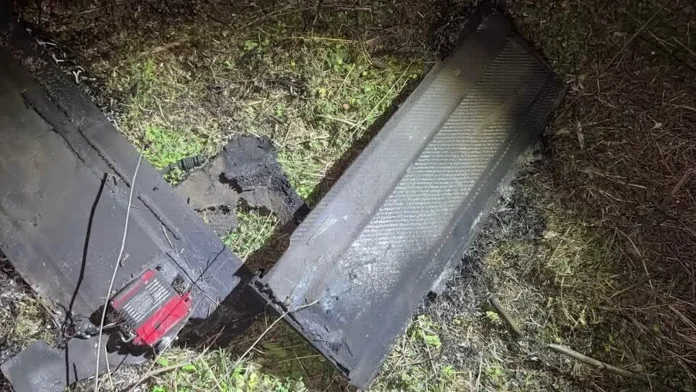
Romania said the drone had been deflected by Ukraine's air defence

Nightfall Over Parches: When a War You Can’t See Lands in Your Yard

It was a late, ordinary hour in the Romanian village of Parches when the phone alerts woke people in their beds: an unusual warning about potential danger nearby. By the time anyone had put on shoes and stepped outside, a charred ring of meadow waited two kilometres from the village gate—blackened grass, a tangle of carbonized reeds, and the twisted skeleton of a drone. No bodies. No broken windows. Only fragments and questions.

“I thought it was fireworks at first,” said Ana, a schoolteacher who lives three streets from where the drone came down. “Then my neighbour showed me photos. I couldn’t believe something from a war could end up here—like it had a mind of its own.”

The Ministry of Defence was blunt and specific. In the small hours, at 00:44, a drone that Ukrainian air defences had pushed off course crossed into Romanian sovereign airspace for roughly four kilometres and crashed two kilometres from Parches, well outside the inhabited zone. Officials reported only a patch of burned vegetation and debris. No casualties. No property damage. The emergency services say the device was found after a local resident alerted authorities.

Scrambled jets, shaken villagers

Two F-16s were scrambled during the night, a reminder that Romania — a NATO member and close ally of Ukraine — takes even small breaches seriously. “We don’t treat these incursions as isolated incidents,” a defence analyst in Bucharest told me. “Every fragment of technology that drops into our territory is a piece of the conflict, and it raises both tactical and political questions.”

The sight of fighter jets criss-crossing the starless sky is not new here. Since Russia’s full-scale invasion of Ukraine in 2022, Romanian skies have registered multiple airspace violations and scattered debris from drones and missiles. For villagers like Ana, those facts are less abstract and more of the texture of late-night conversations: should you sleep with windows open in the summer? Should children be allowed to play in the fields? The alarms on phones have made strangers of neighbours who now ask one another, “Did you get the alert?” as a way of checking in.

Where borders blur and technologies spill over

This incident is small when counted in strictly military terms, but it is emblematic of a larger, unnerving pattern. Modern warfare—cheaper, more autonomous, and more widely proliferated—doesn’t respect clean front lines. Drones, loitering munitions and electronic warfare can travel hundreds of kilometres, and when they fail, they fall into somebody else’s backyard.

“The asymmetry of drones changes everything,” said Dr. Elena Marin, a security studies professor. “A country can project force in new ways, but the margin of error has grown. Neutral countries find themselves hosting the by-products of high-tech battles, and that can stretch diplomatic patience.”

Romania reacted to this reality in a concrete fashion: in 2025 it enacted legislation permitting the interception and destruction of unauthorized drones that breach its airspace. To date, no such shoot-down within Romanian airspace has been reported under that law. The policy is both deterrent and acknowledgment—an effort to establish rules for a new kind of aerial geography.

Local voices, local rhythms

In Parches, life goes on in the human tempo of cooking and chores, but now with an added nervousness. “Our lives are tied to the fields,” said Ion Popescu, an elderly farmer who has worked the same patch of land his whole life. “When something strange falls into them, you feel like a stranger in your own place.”

Emergency responders praised the community for the quick phone call that located the wreckage. Officials say citizens received alerts about the possible danger ahead of time—an example of how civil defence systems and ordinary vigilance intersect in modern crisis management.

Meanwhile, the wider theatre grows louder

This single drone in Romania is part of a much larger wave of attacks directed at Ukraine. In a recent bombardment, Russian forces launched 153 drones at Ukrainian targets; Ukrainian air defences reportedly neutralised or downed 130 of them. Another strike struck ports on the Danube in Odesa region, damaging warehouses, quays and administrative buildings and injuring at least one person, according to regional authorities.

The port town of Izmail, Ukraine’s largest on the Danube, described a “massive” barrage that left close to 17,000 consumers without power and disrupted water supplies in nearby Vylkove. Local leaders spoke of damaged energy and industrial infrastructure and port operators reporting hits on their premises—yet officials said the port continued to operate despite the disruption.

“The tempo of these attacks has increased,” said Andrii Sybiha, Ukraine’s foreign ministry official, noting that Odesa’s maritime infrastructure has endured more strikes in the past month than in the previous year. The toll here is not just structural; it is economic and humanitarian. Ports are arteries for grain exports, for imports, for livelihoods. Each strike ripples into global food markets and supply chains.

What cooperation looks like: factories, funding and fragile alliances

In response to both threat and opportunity, Romania and Ukraine have taken an unusual step: a plan to co-produce drones in Romania with up to €200 million in funding from the EU’s SAFE Initiative. The two countries signed a statement of intent during a recent presidential visit to Bucharest. The move signals a shift from simply being a neighbour affected by warfare to becoming a partner in defense-industrial response.

“Local production can create jobs, build resilience, and reduce dependence on distant suppliers,” said an EU official involved in the initiative. “But it also deepens political ties and raises questions about the export and control of military-capable technology.”

  • Key facts from the recent incidents:
    • Drone entered Romanian airspace for approximately 4 km and crashed 2 km from Parches.
    • No casualties reported; only vegetation burned and debris found.
    • Two F-16 aircraft were scrambled during the night.
    • In Ukraine, 153 drones were launched in a recent attack; 130 were downed or neutralised.
    • Close to 17,000 consumers were left without power in the Izmail area after strikes on Danube port facilities.

From backyard fragments to global questions

What happens when a speculative weapon like a drone becomes a household nuisance? When a piece of foreign technology smolders in a neighbor’s field, the abstractions of geopolitics become tactile: smoke-stained grass, the smell of burnt insulation, the conversation at the market.

We should ask ourselves: what are the ethical rules of engagement in a world where mistakes land in civilian hands? What obligations do combatants have to prevent spillover? And how do neutral or allied states like Romania balance prudent defence measures with the risk of escalation?

For now, Parches will likely keep an eye on the skies, and Romania will continue to juggle diplomacy, defence policy and community reassurance. The drone in the field is a small object, but it carries big questions—about sovereignty, technology, and the messy bleed of modern conflict into everyday life.

“You get used to many things in these years,” Ana said, wrapping a cardigan tightly around her shoulders as she pointed to the blackened patch of earth. “But you never get used to fear. You only learn how to share it.”

Israel oo sheegatay iney dishay Taliyihii Ciidanka Badda ee Ilaalada Kacaanka Iran

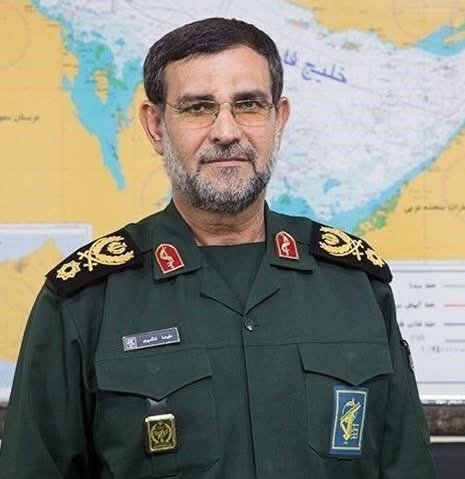
Mar 26(Jowhar)-Warbaahinta Israa`iil oo xiganaysa saraakiil amni oo katirsan nidaamka Netanyaha ayaa sheegaysa in la dilay Taliyihii Ciidanka Badda ee Ilaalada Kacaanka Iran Alireza Tangsiri.

Trump says Iran reluctant to admit it wants a deal

Trump says Iran 'afraid' to admit it wants a deal
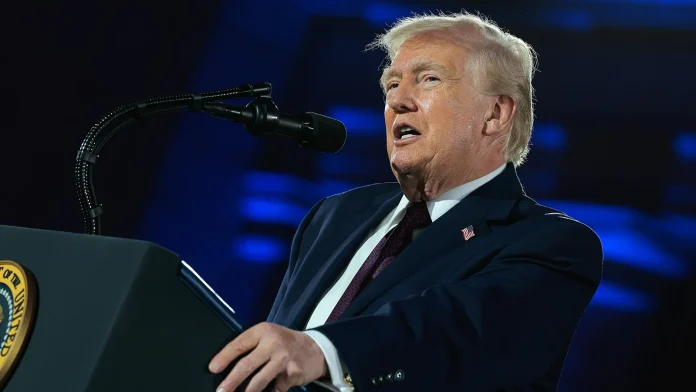
Mr Trump repeated his assertion that Iran was being 'decimated' in the conflict now in its fourth week

When a Dinner Room Remark Echoes Around the World

It began, as so many seismic moments do, with an off-the-cuff line at a private dinner: a president telling allies that the adversary was eager to make a deal but too frightened to admit it, for fear of retribution from within and without.

Those words—sharp, theatrical, reckless depending on your angle—landed far beyond the Washington dining room. They ricocheted across Tehran’s wide boulevards and into the corridors of oil traders in Singapore, onto the tractors of farmers in Kansas and into the UN’s debating chamber in New York. When leaders speak in that register, the microphones never fully go off.

“Negotiating—but silent”: Two Narratives Collide

On one side, a White House insisting that channels of communication remain open, quietly working through intermediaries and diplomats to shape a 15-point plan it says would disarm Tehran’s most dangerous capabilities. “Talks are ongoing and productive,” a senior U.S. official told reporters this week, while warning that the administration is prepared to escalate strikes if Iran does not capitulate.

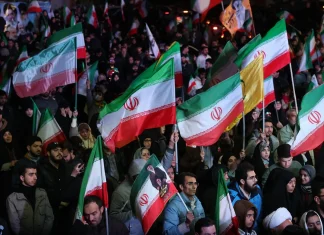
On the other, Iran’s foreign ministry publicly declares that there is no intention to negotiate—an emphatic refusal amplified on state television and in the streets of Tehran, where portraits of the deceased supreme leader and his son have become focal points for both mourning and defiance.

“They want to talk. They are whispering. But in public they must shout resistance,” said a mid-ranking Iranian official who asked not to be named. “This is as much about survival of our leaders as it is about posture.”

Theatre and Reality: Military Claims and the Human Cost

The spectacle of high-stakes rhetoric is matched by hard numbers. U.S. Central Command, in a rare televised briefing, said more than 10,000 targets inside Iran had been struck. The commander claimed that 92% of the country’s largest naval vessels were out of action and that missile and drone launch rates were down by more than 90%.

“Our goal is to cripple Tehran’s ability to project power,” Admiral Brad Cooper said in the briefing. “We are on track.”

Whether those numbers, released in the fog of conflict, hold up under independent scrutiny is another question. What is indisputable is the human ripple effect. The World Food Programme warned that if the conflict drags on into June, tens of millions more people could face acute hunger—compounded by supply-chain disruptions, soaring fuel costs and blockages at the Strait of Hormuz, the narrow chokepoint that carries roughly 20% of the world’s oil and liquefied natural gas.

“We are seeing an energy shock unlike any in recent memory,” said Dr. Lina Karim, an energy economist at the Institute for Global Studies. “Insurance premiums for tankers are surging, alternatives are hard to source quickly, and nations with thin fiscal buffers are already recalibrating budgets. It’s a domino set tilted against the world’s poorest.”

Tehran’s Streets: Portraits, Tea, and Fear

Walk through central Tehran and the scenes are layered. Men sip strong black tea in cafés while news anchors parade grainy footage of damage. A woman clutches a framed image of the supreme leader’s son, eyes wet and resolute. Shopkeepers in the Grand Bazaar talk in low voices about the price of diesel for delivery vans and the risk that sanctions or naval seizures could starve the market of basic goods.

“The day the fuel trucks don’t arrive, people will remember these days as the beginning of something worse,” said Reza, a 45-year-old grocer whose small shop has sold saffron and pistachios for three generations. “We are proud, we are angry, but also we are scared.”

Those anecdotes are the immediate human geography of global policy. Behind the numbers and the bravado, ordinary lives are redrawing their expectations.

Pakistan, Proxies and a Fragile Diplomatic Ladder

Diplomacy, when it exists, seems to travel circuitously. Reports indicate Pakistan is serving as a conduit between the U.S. and Iranian officials, ferrying proposals that aim to remove enriched uranium stockpiles, cap missile programs and choke funding to regional proxies. U.S. spokespeople have declined to detail interlocutors; Iranian leaders have rebuffed the overture in public.

Meanwhile, the president has framed the campaign as a “military operation” rather than a formal war—language he says shields him from congressional oversight. “Words matter,” said a constitutional law professor in Washington. “Calling something a military operation is a political decision with legal consequences.”

And yet, as UN Secretary-General António Guterres warned, the world faces the specter of a widening regional conflict. “We must climb the diplomatic ladder,” he urged, in a plea that felt more like a life preserver tossed into a stormy sea.

Markets, Meals and the Moral Question

Back on the ground in Omaha, a soybean farmer named Amy scrubbed her hands on an oil-stained rag and shook her head at the notion that the fight was far away. “If diesel doubles, we can’t plant. If fertilizer can’t get here, yields drop. That’s food for fewer people—and that’s not a purely economic problem,” she said.

Across the globe, governments are dusting off emergency measures last used during the COVID pandemic as they try to blunt the shock to households and small businesses. Central banks are on alert as inflationary pressures spike; one forecaster has warned that energy-driven inflation could push consumer prices up several percentage points in the coming quarters.

What price, then, do we put on the certainty of peace versus the certainty of victory? Is military success worth the economic and humanitarian hangover? These are not rhetorical questions for the families who now delay hospital trips because fuel is scarce or the merchants who count dwindling stock under lock and key.

Choices Ahead: Escalation or Engagement?

Officials in Washington say timelines for military operations are measured in weeks—four to six, they suggest—while moving thousands of troops and marines to the Gulf to provide options that might include a ground operation. Opponents at home call for congressional oversight; allies abroad urge restraint.

“We have to ask ourselves whether the instant gratification of a military ‘solution’ outweighs the long-term instability it could sow,” said Professor Amrita Sen, a scholar of Middle Eastern geopolitics. “Decades of history show that power vacuums, whether economic or political, breed new—and sometimes worse—instabilities.”

Where Do We Go From Here?

The question lands at the doorstep of every reader, whether you are an investor recalibrating risk, a parent worrying about grocery bills, or a citizen watching from afar. Can quiet diplomacy prevail when leaders trade theatrical threats? Is there enough political bandwidth left—across capitals and within fractious legislatures—to build a sustainable settlement?

History will judge this moment not just by the statements issued in dinner rooms or the number of targets struck, but by whether we chose the harder path of patient, inclusive negotiation over the seductive clarity of military triumph.

What do you think? When governments wield force and words with equal intensity, who ultimately pays—and how do we, as a global community, ensure that the price is not counted only in headlines?

TikTok to comply with 'upsetting' Australian under-16 ban

Greece to bar under-15s from social media starting in 2027

0
Greece’s bold move: a country tries to reclaim childhood from the screen On a late spring afternoon in Athens, parents clustered outside a primary school...
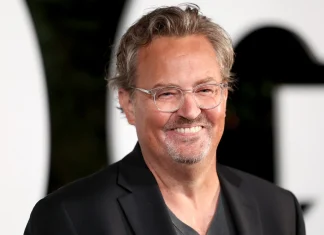
'Ketamine Queen' due in court over Matthew Perry's death

Woman nicknamed ‘Ketamine Queen’ to face court over Matthew Perry death

0
The Quiet of a Hot Tub and the Loud Echo of a Celebrity's Death It was a foggy October morning in Los Angeles when the...
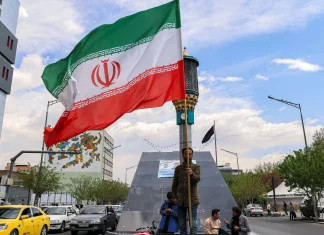
US-Iran truce: What we know

US and Iran Agree Truce: Essential Details You Should Know

0
Two Weeks to Breathe: A Fragile Truce, a Crowded Strait, and the World Holding Its Breath Late into the night, a fragile agreement flickered to...
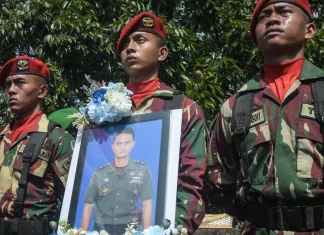
Peacekeepers likely killed by Israel and Hezbollah - UN

UN Says Peacekeepers Likely Killed in Strikes by Israel, Hezbollah

0
Under the Olive Trees: When Peacekeepers Become Targets The sun sinks slow over southern Lebanon, gilding the knobby trunks of centuries-old olive trees and casting...
Relief as Trump pulls back at eleventh hour

Trump backs down at the eleventh hour, easing national tensions

0
A Day the World Held Its Breath: How a Single Post Rewrote Normal It began like a thunderclap in an otherwise ordinary morning: a short,...