Tuesday, December 23, 2025
Home Blog Page 25

European involvement crucial to clinching a comprehensive Ukraine peace deal

European input crucial to 'finalise' Ukraine peace plan
French President Emmanuel Macron welcoming Ukrainian President Volodymyr Zelenksy at the Elysee Palace in Paris

In Paris, at the crossroads of hope and hard bargaining

There was a different kind of light over the Élysée Palace that day — not the warm gold of postcard Paris, but a hard, purposeful glare that often arrives when decisions with global consequences are on the table.

Volodymyr Zelensky arrived from Kyiv under the kind of scrutiny and expectation that only wartime leaders know. He was greeted with the usual courtesies, but more than that: a palpable sense among European capitals that Kyiv’s fate is not merely a regional matter, but a test of whether democratic nations will insist on terms that preserve sovereignty rather than reward aggression.

“We came to listen and to stand with Ukraine,” said a senior European diplomat who watched the meeting from the margins. “This is not a show of photo-ops. There are sleepless nights behind every line on those drafts.”

Agenda: sovereignty, security and territory

Zelensky spoke plainly after his discussions with French President Emmanuel Macron. He set out Kyiv’s red lines: sovereignty intact, meaningful security guarantees, and the inescapable reality that territorial concessions remain the greatest stumbling block.

“If peace means the loss of our land and the weakening of our defense, then that is not peace,” a member of the Ukrainian delegation told me, speaking in a corridor where maps and coffee cups shared equal importance.

That corridor-quiet encapsulates why the 28-point plan—which Washington floated recently and which Kyiv and its European partners now seek to rework—has become so contentious. Observers say the original draft appeared to veer towards compromises that would leave Ukraine smaller, militarily constrained and less able to host Western forces — conditions many in Kyiv view as tantamount to strategic defeat.

From Florida fairways to Moscow: a negotiation in pieces

The arc of this diplomatic week traced some improbable geography. In Florida, near manicured greens and the hum of luxury, US and Ukrainian officials convened twice to reframe the US plan. The venue — a club connected to a well-known real-estate circle — felt more like a high-stakes retreat than a government conference.

After the sessions, the plan’s steward left Florida for Moscow, a move that injected fresh urgency into already fraught talks. The envoy’s trip to meet the Kremlin underlined a sobering fact: no settlement will be durable unless Moscow, the other principal party, is at the table and ready to accept compromise.

“Negotiations are rarely linear,” said an international mediator who has worked on ceasefires in other conflicts. “You have back channels, you have envoys ferrying messages, and often you get to a place where the envelope isn’t big enough for all the demands. That’s when you either flatten the envelope or tear it open.”

Why this moment matters

There are roughly 1,200 kilometers of active front line in this conflict, and those kilometers are not inert — they are the sum of towns, homes, livelihoods and lives. As winter approaches, the stakes shift: long-range strikes against energy infrastructure risk plunging civilians into darkness and cold, while the grinding attrition on the eastern front chips away at morale and territorial control.

Consider Dnipro, a city that, until recently, many outside Ukraine visualized only as a waypoint on a map. When Russian missiles struck repair workshops there, officials said at least four people died and around 40 were wounded. Vitalii Kovalenko, who owns one of the shops, described the scene in language that mixed shock with weary practicality: “Everyone hit the floor. Then we counted heads. One chap was dusted with shrapnel but breathing. We are lucky in the small things.”

Fragility at home: corruption, politics and the peace table

Diplomacy doesn’t happen in a vacuum. Zelensky’s government has been grappling with its own upheaval: anti-corruption raids, resignations, and accusations that have sent ripples through the political class. His chief of staff resigned amid investigations, two ministers were dismissed, and officials in Kyiv argue over how these events should affect the peace process.

“A country that asks for guarantees must be able to show it can enforce rule of law,” said a Kyiv-based anti-graft campaigner. “But you also cannot allow a scandal to be used by opponents to derail urgent diplomacy.”

This internal turbulence feeds into a larger narrative: western capitals watch closely, and some see domestic weaknesses as leverage in negotiations. That, in turn, complicates the work of crafting guarantees that will hold when guns fall silent.

Voices from the street: fear, resolve and weary humor

Walk through Kyiv, Paris or Warsaw these days and you will hear the same mix of tones: fatigue, steely resolve and a kind of gallows humor. In a café not far from the French meeting venue, an elderly woman who fled Donetsk in 2014 stirred her tea and said, “Peace is not about stopping the noise. It is about being able to plant a tree again in your yard.”

A younger aid worker offered a different calculus: “We want peace, yes. But what price? Would you trade your child’s future for a quiet evening now?”

These are not theoretical questions in Kyiv. They shape public opinion and define what concessions are politically possible for a government whose legitimacy depends on defending its territory.

Key facts at a glance

  • Front line length (reported): ~1,200 km
  • Reported casualties in Dnipro strike: 4 dead, ~40 wounded
  • US 28-point plan: originally included demands Kyiv brands as excessive; specifics remain under negotiation
  • Diplomatic shuffle: US-Ukrainian talks in Florida; envoy scheduled to visit Moscow

Reading the tea leaves: what comes next?

There will be more talks, more airport handshakes, and more sideline briefings. The essential question — who is willing to give what, and who can guarantee those promises — is not a technicality. It is the hinge on which millions of lives swing.

Some analysts argue that the path forward requires a hybrid approach: robust security guarantees backed by international forces, clear mechanisms for reconstruction, and a phased, verifiable approach to territorial disputes. Others insist there can be no compromise on certain lands, viewing any transfer as a slippery slope toward further encroachment.

What do you think? Is there a model of peace that can hold in our age of technologically enabled warfare and resurgent imperial ambitions? Can democracies stitch together guarantees that are trusted by both a nation under siege and a skeptical aggressor?

For now, the work continues in salons and Situation Rooms, on frozen front lines and in the hearts of ordinary citizens who simply want to resume planting trees. The diplomats will craft language and the generals will measure gains and losses. And somewhere between the maps and the murmured prayers, the real test will begin: can the world construct a peace that respects borders, punishes aggression and restores hope?

Death Toll in Hong Kong Fire Climbs to 146, Officials Say

Death toll after Hong Kong fire rises to 146
Residents had previously raised concerns over fire risks at the complex

Smoke, Silence and a Long Line of Flowers: Inside Hong Kong’s Deadliest Residential Fire

On a gray morning in Tai Po, the air still tasted faintly of smoke. It wound through the narrow streets and over the canal where people had queued for hours, white chrysanthemums trembling in their hands. They came in droves—neighbors, colleagues, domestic workers, strangers—each one carrying a note or a memory for the 146 people now confirmed dead after a ferocious blaze tore across a cluster of high-rises at Wang Fuk Court.

“As of 4pm (8am Irish time), the latest death toll stands at 146. We cannot rule out the possibility of further fatalities,” Chief Superintendent Tsang Shuk-yin of the police’s casualty enquiry unit told reporters at a press conference, her voice steady against a backdrop of chokepoint roads and shuttered shops.

The scene: A canal bank, flowers and the smell that won’t lift

The ritual of mourning in Hong Kong is quiet and exacting: low voices, white flowers, folded paper offerings. A line stretched for more than a kilometre along the canal near Wang Fuk Court, people standing shoulder to shoulder. Some attached small handwritten notes to bouquets—”I will remember you,” “Come home safe”—and then released them into the custody of the city that had failed, in many people’s eyes, to keep its residents safe.

“I worked three nights a week for Mrs. Chan across the hall,” said a woman who would only give her first name, Rina, holding a candle that flickered like a tiny, stubborn star. “When I heard, my legs turned to water.” She is among thousands of migrant domestic workers whose presence is woven into the city’s daily life—and among the dead, the confirmed losses include seven Indonesian and one Filipino worker. Dozens more migrants remain unaccounted for.

How the flames spread so fast

The fire swept with terrifying speed. It began on a Wednesday afternoon and climbed the exteriors of seven of the complex’s eight 32-storey blocks. Bamboo scaffolding, draped in the familiar protective green mesh used across the city during renovations, created a ladder for the flames. Foam insulation layers added to that combustible mix.

Authorities say the complex was home to over 4,600 people. Many residents later reported that the fire alarms were not working properly. Rescue operations concluded on Friday, but for weeks—months—questions will linger about why safeguards failed when they were needed most.

Key facts at a glance

  • Confirmed deaths: 146 (as of the latest update)
  • Buildings affected: Seven of eight 32-storey blocks at Wang Fuk Court
  • Residents in the complex: Approximately 4,600
  • Confirmed migrant worker casualties: At least 8 (seven Indonesian, one Filipino)
  • People arrested in connection with the blaze: 11
  • Petition signatures demanding independent inquiry: Over 10,000 (first petition), 2,700+ (second petition)

Anger, petitions and a call for accountability

Anger followed grief. An online petition demanding an independent probe into potential corruption and construction oversight lapses drew more than 10,000 signatures before it was closed. A second petition, started by a Tai Po resident living overseas, has more than 2,700 signatures and bluntly states: “The government owes Hongkongers genuine, explicit accountability.”

“We can’t accept platitudes anymore,” said Marcus Leung, a local shopkeeper who has lived in Tai Po his whole life. “People were telling the council for months that the mesh and scaffolding looked dangerous. They said alarms weren’t working. Nothing changed.”

Police have arrested 11 people so far. Among those detained is 24-year-old Miles Kwan, who was part of a group that launched the petition demanding an independent inquiry, according to two people familiar with the matter. For many, the arrests raise as many questions as they answer: are they a step toward justice, or a disruption of civic pressure?

National security meets public grief

China’s national security authorities issued a stern warning after the fire, saying they would apply the national security law to prevent what they described as “anti-China” forces from exploiting the disaster. The language evoked the tumult of 2019, when massive pro-democracy protests roiled the city and left frayed tensions in their wake.

“We sternly warn the anti-China disruptors who attempt to ‘disrupt Hong Kong through disaster’,” read a formal statement relayed by officials. “No matter what methods you use, you will certainly be held accountable and strictly punished.”

To many ordinary citizens, the warning read like an attempt to clamp down on civic grief that has a political sting. “We came to mourn,” said Leung. “We didn’t come to protest. But you cannot separate mourning from the reasons people have to be angry.”

Voices from the ground: Little gestures, large losses

An outdoor prayer meeting for the Filipino community drew hundreds this morning, a mosaic of languages and hymns. Men and women from different walks of life shared stories of those missing: the neighbor who cooked, the aunt who babysat, the cleaner who hummed in the elevator.

“She used to leave notes for my children on the fridge,” said one woman, clutching a laminated photo. “I can’t stop wondering if she was awake when it started. Did she hear the alarms?”

Dr. Helen Kwong, an emergency physician who has worked in Hong Kong’s public hospitals for two decades, notes the systemic vulnerabilities. “These kinds of exterior fires exploit the scaffolding and cladding systems that are increasingly common in redevelopment,” she said. “If alarms are nonfunctional and evacuation routes are impeded, you have a recipe for catastrophe.”

Wider meanings: Governance, migration and the urban condition

There is a structural story here, one that stretches beyond a single tragedy. Hong Kong is a dense, vertical city constantly remaking its skin—scaffolds and mesh, renovations and hurried retrofits. Migrant workers, who keep many households functioning, live and work in a city where regulations, enforcement and the informal economy intersect messily.

Ask yourself: in cities where space is at a premium and profits press against safety margins, how much do we tolerate? How many warnings must go unheeded before accountability becomes not only demanded but enforced?

What comes next

The immediate rescue operations have ended, but investigations are intensifying. Criminal and corruption probes are under way into the fire’s cause and whether unsafe materials or shoddy renovation practices played a role. For families who lost someone, these investigations are not abstract; they are the thin thread that may lead to answers and, perhaps, some measure of justice.

“We are exhausted, but we will not let this die in the paperwork,” said one community organizer who preferred not to be named. “This is about our neighbors. It is about whether a city that calls itself modern can keep people safe.”

Hong Kong has weathered riots, pandemics and economic shocks. Today it mourns. The line of white flowers along that canal is a public ledger of grief, and a private demand for change. Will the reactors of policy and law move swiftly enough to honor both the dead and the living? Cities around the world would do well to watch—and to ask, honestly, whether they are doing enough to protect their own vertical neighborhoods where millions continue to live, work and sleep, sometimes perilously close to danger.

British lawmaker handed two-year sentence in Bangladesh graft probe

British MP gets two years in Bangladesh corruption probe
UK Labour Party MP Tulip Siddiq was found guilty of corruptly influencing her aunt in helping her mother get a piece of land in a government project

When London and Dhaka Collide: A Family, a Courtroom, and the Strange New Geography of Politics

On a wet morning in Hampstead, Tulip Siddiq walked the quiet streets of her London constituency, children bundled in pushchairs, the smell of fresh bread from a nearby bakery drifting through the mist.

Thousands of miles away, in the swelter and press of Dhaka’s legal quarter, judges in a special court read sentences that echoed across continents. The names were the same; the worlds, shockingly different. What began as a local corruption case in Bangladesh became, overnight, a story about diaspora politics, legal reach, and the fragile line between accountability and political theatre.

A sentence, and a thousand questions

Last week, a Special Judge’s Court in Dhaka announced prison terms in a case that entwined three women from the same family: an MP in the United Kingdom, a former prime minister, and a figure considered central to the land deal at issue. The court said Tulip Siddiq was given two years for allegedly using her influence to secure land through a government project; her aunt, the former prime minister, was sentenced to five years and — according to separate rulings published last month — had also faced a death sentence in an unrelated trial that accused her of ordering a brutal crackdown on campus protests.

The details are dizzying. Siddiq, who represents Hampstead and Highgate in Westminster, was tried in absentia. So were the others. Her mother, Sheikh Rehana, was reported to have been handed a seven-year term and was described by the court as the principal participant in the deal. The judgments, the court said, were handed down after prosecutors alleged misuse of public power and corrupt influence.

It is essential to note how sharply contested every line of this story is. Siddiq’s legal team calls the charges “baseless and politically motivated.” Speaking to a British newspaper earlier this year, she dismissed the accusations as “completely absurd,” and told friends she felt like “collateral damage” in a bitter power struggle playing out back home.

Two cities, two realities

In Hampstead, neighbours say Siddiq is the sort of MP who knows the baker, who pops into community meetings and whose children sometimes play in the park. “She’s one of us,” said Meera Chopra, a local community organiser. “It’s hard to square the woman who came to our Eid event with these headlines.”

In Dhaka, the scene outside the courthouse was entire theatre: throngs of supporters, jostling television crews, and the low murmur of rickshaw drivers offering their take. “People here are tired of elites getting away with things,” said Rahim Hossain, a tea stall owner who has watched public trials since the transition of power. “But others say courts are being used as instruments. We don’t know whom to believe.”

How did the case reach across borders?

A key practical point: the United Kingdom currently has no formal extradition treaty with Bangladesh. That fact has created a liminal space where legal pronouncements in one country can have enormous political and reputational effects on figures who live safely—sometimes literally—beyond reach.

Earlier this year Siddiq resigned from a ministerial role in the UK Treasury after an inquiry by the prime minister’s ethics adviser examined her ties to Bangladesh’s political elite. Laurie Magnus, the adviser, concluded that she had not breached the Ministerial Code but recommended that the prime minister reconsider her responsibilities. “I wasn’t prepared to be a distraction to the government,” Siddiq later said when announcing her decision to step down.

Voices from the courtroom and the kitchen table

When courts operate in this cross-border way, they become story-makers as much as adjudicators. That’s why the reactions are so varied—and raw.

  • “Justice must be seen to be done,” said one retired judge in Dhaka who asked not to be named. “But due process must also be beyond reproach. Trials in absentia raise legitimate questions.”
  • “It’s painful to watch,” said Amina Begum, 34, who sells samosas near the courthouse. “We remember when big names were untouchable. People want answers.”
  • “A British MP shouldn’t be silenced in this way,” said a London campaigner for diaspora rights. “At the same time, if there are legitimate allegations, they shouldn’t be waved away because of geography.”

What the data tell us

Some context: Bangladesh is home to roughly 170 million people, one of the world’s most densely populated nations, whose politics have long revolved around fierce rivalries within a small set of elite families. In the United Kingdom, the Bangladeshi diaspora is concentrated in cities like London, with a community numbering around half a million people—voters, business owners, and activists who often carry the political baggage of two homelands.

The interplay between domestic courts and international reputations isn’t unique to Bangladesh and the UK. Around the world, countries increasingly use legal tools as instruments of political contestation. Awareness of this trend matters because it reshapes how we think about citizenship, accountability, and mobility in a globalized era.

Where does that leave us?

So what should we make of this tangled story? First: reporting the verdict is not the same as endorsing it. Courts have handed down sentences; defendants and supporters maintain their innocence. Second: the case exposes a gap in international mechanisms for addressing allegations that span borders while safeguarding fair process.

Legal scholars point to three hard truths:

  1. Trials in absentia complicate appeals and the perception of due process.
  2. Political context—especially in countries with polarized elites—can influence both prosecution and public reception.
  3. For diaspora politicians, residence in another country does not insulate them from legal or reputational fallout back home.

Questions worth asking

As you read this from whatever city you call home, consider the following: How should democracies reconcile the need for accountability with the imperatives of fair trial standards? What responsibilities do politicians who straddle two countries owe to the constituents in each place? And how, in an age of instant news, do verdicts passed in one court shape the political life of another nation?

The answers won’t be simple. They will involve law, diplomacy, and a willingness to confront uncomfortable realities about power—and about how power can be wielded across oceans.

For Tulip Siddiq, the sentences mean a sustained public debate about her ties, her past, and her future—and for the many communities watching from both Dhaka and London, a reminder that in the global village, local politics are never just local.

“I want people to know who I am,” a friend says of Siddiq in London. “Not only headlines.”

That wish—to be known beyond the news cycle—might be the most human plea in all of this. It asks us to look more closely, listen more patiently, and demand that the mechanisms we trust to deliver justice do so with clarity, fairness, and an eye toward the greater good.

Rubio hails Ukraine peace-plan talks as ‘very productive’ after meeting

Ukraine peace plan talks 'very productive', says Rubio
Oksana Markarova was Ukraine's ambassador to the US

Sun, Sand and the Shadow of War: A Quiet Florida Room Where Big Decisions Stir

On a humid Florida afternoon, the glitter of palms and the distant rumble of traffic belie the gravity of a conversation unfolding behind closed doors.

It was an unlikely stage: a conference room cooled by air-conditioning and florescent lights, where U.S. and Ukrainian officials sat across from one another and tried, in practical terms, to sketch the outlines of peace. Outside, tourists ambled; inside, maps and timelines were spread like battle plans, not for invasion but for negotiation.

“We came here to be purposeful,” one U.S. official said afterward, voice low and urgent. “There is a lot of detail to work through, and we know which interests cannot be compromised.”

That blend of pragmatic urgency and cautious optimism was the tenor of the meeting. It was described by participants as “very productive” — a phrase that, in diplomacy, usually means the hard work of piecing together competing priorities has begun, not that a treaty is signed.

Private Envoys, Public Stakes: The Witkoff Journey to Moscow

Within days of the Florida talks, an unusual diplomatic thread was set to continue in Moscow. Steve Witkoff — introduced by the White House as a special envoy — prepared to fly eastward, carrying with him the hope of translating negotiators’ progress into a conversation with the Kremlin.

Witkoff’s trip illustrates one of the more modern quirks of international relations: diplomacy that mixes official channels with private, high-level intermediaries. That blend can accelerate talks — or complicate them. It raises questions: who speaks for a nation in moments of existential consequence, and how are private actors held accountable for outcomes?

“When private envoys step into statecraft, they bring flexibility,” said an international affairs analyst. “But they also test the limits of transparency. The public deserves to know the red lines that cannot be crossed.”

Priorities on the Table: Security, Sovereignty, and Rebuilding

According to Kyiv’s negotiating team, three priorities guided the talks: protecting Ukraine’s territorial integrity, ensuring any dialogue is substantive rather than cosmetic, and building on prior progress made in Geneva. Those aren’t just diplomatic phrases — they are lifelines for a country that has been living with war for more than three years.

The broader picture is unmistakable. Millions of Ukrainians have been displaced inside the country and abroad; whole neighborhoods and critical infrastructure have been damaged repeatedly. International institutions have warned that reconstruction will require long-term investment in the hundreds of billions of dollars — a scale of rebuilding that will reshape Europe for decades.

“We’re not bargaining over lines on a map,” said a Kyiv negotiator who attended the Florida meeting. “We’re bargaining over how families can come home, how power will be restored, how our schools and hospitals will be rebuilt. That changes the way you negotiate.”

Corruption, Confidence, and a Fragile Trust

Trust is the fulcrum of any lasting deal. President Trump expressed hope that the Florida meetings could lead to a breakthrough, but he also warned that a corruption scandal surrounding Ukrainian officials — widely reported and hotly contested — “was not helpful.”

For many Ukrainians, the word “corruption” is a painful one: decades of graft had hollowed out institutions long before 2022. Tackling it is essential not only to build international confidence but to ensure that billions of dollars of aid and investment actually reach the hospitals, the roads, and the businesses that will sustain reconstruction.

“We know there are errors in our past,” said a Ukrainian reform advocate. “But asking the country to be perfect while it’s still under fire is unreasonable. The goal must be to build systems of accountability that survive the peace.”

The Human Cost: A Drone Strike Near Kyiv and the Everyday Toll

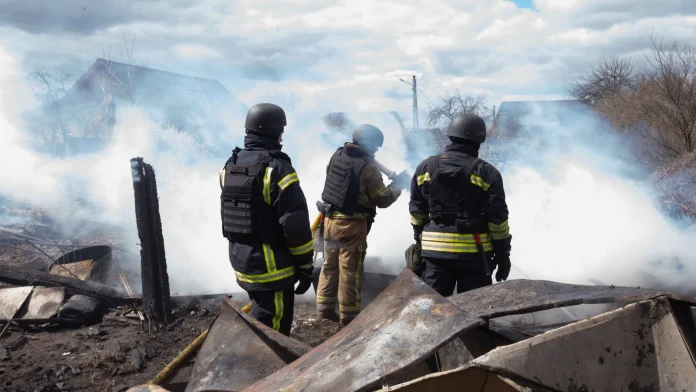
Diplomats met and planned while, back home, the war’s violence carried on in small but devastating ways. A Russian drone strike on the outskirts of Kyiv’s Vyshhorod district killed one person and wounded eleven, including a child, regional officials said. Rescue workers picked through shattered glass and bent metal; neighbors gathered coats and tea for the injured. A local woman, her voice hoarse from crying, wrapped her hands around a thermos and said, “We hold our breath each night. We tuck the children in and pretend the next knock on the door is just the wind.”

These aren’t statistics on a page. They are real lives interrupted — the baker whose oven has been dark for months, the teacher who turned her classroom into a shelter, the elderly man who still tends his balcony tomatoes despite the risk.

Rebuilding, Reimagined: New Appointments and the Long Game

President Volodymyr Zelensky made a significant administrative move amid the diplomacy. He appointed Oksana Markarova, formerly Ukraine’s ambassador to the United States, as his adviser on reconstruction and investment. This signals a recognition that diplomacy and reconstruction are two sides of the same coin: you cannot negotiate a durable peace without planning for the economic and social revival that will hold it together.

“We have to build not just houses but hope,” said a Western reconstruction strategist. “Investors need guarantees. Citizens need services. Both require strong institutions and clear priorities.”

Markarova’s American experience and ties to international finance could be pivotal in marshaling private capital, diaspora investment, and multilateral funds toward rebuilding critical energy grids, hospitals, and schools. But she will face the classic headache of post-conflict recovery: how to ensure speed without sacrificing oversight.

What Would Real Security Guarantees Look Like?

For Kyiv, “security guarantees” are not a rhetorical flourish — they are a prerequisite. What form those guarantees take — NATO accession, bilateral defense pacts, neutral status with strong external guarantees — could define the contours of peace for years. Each option carries political and military reverberations across Europe and beyond.

Ask yourself: how do nations balance the immediate hunger for peace with long-term stability? How much sovereignty can be preserved if external powers must guarantee Ukraine’s safety? These are not theoretical concerns. They will shape lives everywhere, not just in Kyiv.

Why This Matters to the World

The Florida talks, the private envoy’s flight to Moscow, the appointment of a reconstruction czar, and the ongoing attacks near Kyiv are all chapters in a larger story — one where the norms of international law, the integrity of democratic institutions, energy security, and migration patterns intersect.

Europe’s energy grids, global grain supplies, and the architecture of collective security have already been altered. The financial cost of rebuilding Ukraine will test the globe’s willingness to invest in stability rather than short-term gains.

So as diplomats shuttle across continents and negotiators map out contingencies, we should ask: what kind of peace are we willing to fund and protect? What sacrifices will we demand — and which lines will we refuse to cross?

Closing Thoughts

When the Florida rooms empty and the envoys fly, ordinary people in Ukraine will still wake to sirens, repair crews will still mend power lines, and parents will still whisper reassurance into cold bedrooms. Diplomacy is essential. So is patience, persistence, and a hard-headed commitment to rebuilding lives, not just borders.

We watch, and we wait: for concrete guarantees, for the cash and governance to rebuild, and above all, for a peace that Ukrainians themselves can call their own. Will the global community step up to that test? Only time — and courage — will tell.

Axmed Madoobe iyo safiirka Mareykanka oo ka wada hadlay doorashooyinka iyo shirka mucaaradka

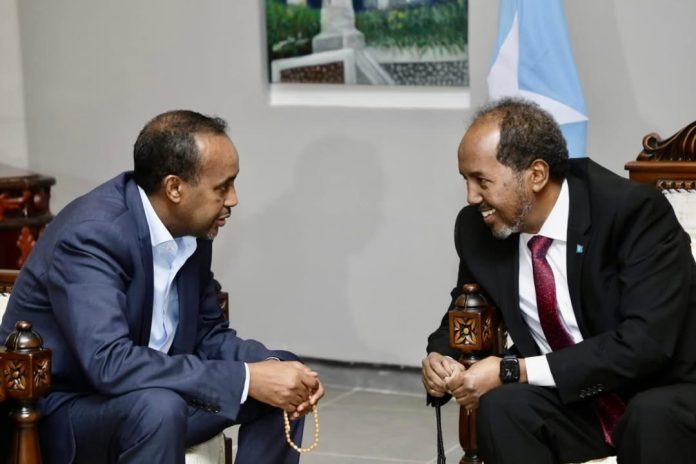
Dec 01(Jowhar)-Madaxweynaha Dowladda Jubaland, Mudane Axmed Maxamed Islaam, ayaa maanta Magaalada Kismaayo ku qaabilay Safiirka Dowladda Maraykanka ee Soomaaliya, Danjire Richard H. Riley, iyo wafdi uu hoggaaminayo oo booqasho shaqo ku yimid Jubaland.

Qaramada Midoobe oo shaqada ka joojisay 680 shaqaale oo Soomaali iyo Ajaanib isugu jirta

Dec 01(Jowhar)-Tan iyo bilowgii sanadkan sii dhamaanaya ee 2025, hay’adaha Qaramada Midoobay ee ka hawlgala Soomaaliya waxay shaqada ka joojiyeen in ka badan 680 shaqaale, sabab lagu sheegay hoos h dhac ku yimid maalgelinta gargaarka.

Pope Urges Peace in Lebanon During Historic Visit

Pope takes message of peace to Lebanon
Pope Leo XIV is welcomed by Lebanese President Joseph Aoun upon his arrival at Beirut International Airport

A fragile arrival: a pope steps into a country on edge

When the plane carrying Pope Leo XIV touched down in Beirut, it was like a soft exhale in a room that has been holding its breath for years.

The morning air smelled of citrus and diesel; city sounds—minibuses honking, the distant call to prayer, a dog barking—folded into the cadence of security vans and motorcades. Flags fluttered on poles. A few dozen residents lined the route, some with flowers, some with hands raised in blessing, others simply watching as if trying to memorize a moment they’d been waiting for.

“We need a sign that life can go on,” said Rania Haddad, a schoolteacher from the Ashrafieh quarter, her eyes fixed on the convoy as it passed. “Not a political bandage. A real breath of peace.”

Why the world is watching

Lebanon is a mosaic of communities and contradictions: a country of roughly six million people, including around one million Syrian and Palestinian refugees, where centuries-old religious traditions sit alongside a modern cityscape scarred by 21st-century crises.

Since 2019, Lebanon has been reeling from a financial collapse that plunged much of the population into poverty, with more than three-quarters of households reporting dire economic strain. The 2020 Beirut port explosion, which killed over 200 people and caused billions of dollars in damage, remains a fresh wound in the city’s collective memory. Add to this the regional spillover of the Gaza conflict and the intermittent clashes between Israel and Hezbollah in the south, and you have a nation that often feels perched on the edge.

That precariousness is precisely why Pope Leo’s two-day visit feels larger than its schedule: the pontiff arrives as a moral and diplomatic signal, a personification of global attention placed upon a small country carrying outsized burdens.

A message of peace amid the rumble of rockets

In a region where headlines frequently turn to violence, a religious leader’s words can be both balm and accelerant. Lebanon’s officials and civil society leaders have been eager to frame the visit as a plea for restraint.

“We welcome any voice that can pierce the fog of hatred,” said Naim Qassem, a senior figure in Hezbollah, in a brief televised comment, adding that he hoped the pope’s presence would press for an end to attacks. “Every human life should be shielded from war.”

“This is a chance for the world to look at Lebanon’s suffering, not just our geopolitics,” President Joseph Aoun told aides prior to their meeting. “We are a people with a history of coexistence; we want that story to continue.”

At the same time, many Lebanese worry about what may come next. Recent months have seen renewed hostilities along the southern border, and the fear of escalation is constant in the villages that fringe the Blue Line. “We sleep with one ear open,” said Karim, a 42-year-old farmer from the south who asked that his surname not be used. “Every time the sky darkens, my children ask if the rockets are for them.”

On the ground: neighborhoods, hospitals, and a nation’s heartbeat

Pope Leo’s itinerary is densely packed: five cities and towns across the country, an outdoor Mass on the Beirut waterfront, a meeting at the presidential palace, and a prayer at the ruins of the port—one of the most potent symbols of Lebanon’s recent trauma.

He will also visit a psychiatric hospital, one of the few such institutions in Lebanon, where caretakers speak of growing demand and shrinking resources. “Mental health has been the silent victim of the past years,” said Dr. Layla Mansour, a psychiatrist who has worked at the facility for over a decade. “Trauma doubled with economic despair. People come in for treatment and leave to face a currency that buys less every day.”

At the hospital, staff prepared small handwritten signs in Arabic and French, welcoming the pope with messages that blended faith and plea: “Pray for our children,” read one. “Pray for our dignity,” read another.

Visiting a city of scars

The port site where the pope will pray is a place of ritualized mourning. Families have installed memorials; photos hang on cracked walls; rusted containers stand like sentinels. “We come here when the world is too loud,” said Amina, a widow who lost her brother in the blast. “We come to remember him with people who understand sorrow.”

Interfaith bridges and uneasy lines

Before landing in Beirut, Pope Leo visited Istanbul’s Blue Mosque and attended an Orthodox liturgy—a small but deliberate sequence of gestures toward interfaith engagement. Ecumenical Patriarch Bartholomew, presiding at the Orthodox service, underscored what many hope the papal trip will spell out: “Christians must stand together in unequivocal condemnation of war and violence,” he said.

In Lebanon, where Christians, Muslims, Druze, and others share neighborhood streets and family ties, such appeals resonate. Sheikh Sami Abi al-Muna, a leading Druze cleric, described the visit as “a glimmer of hope”—a phrase repeated by many who long for a renewal of trust among communities.

But bridges are fragile. The pope will not travel to the south—areas that have borne the brunt of strikes—so his reach has symbolic limits. Still, for many locals, the symbolism matters. “This is not about politics alone,” said Mireille Khoury, a baker whose shop sits near the waterfront. “It’s about saying to the children who watched flames last year that the world still cares.”

Numbers that matter

Context sharpens the moment: Lebanon’s economy shrank by roughly 60% in the first years after the currency collapse, according to World Bank estimates, and unemployment has remained stubbornly high. Food and fuel prices have surged; hospitals have cut back; public services tremble. Against this backdrop, a global religious leader’s visit is an intervention in narratives as much as in policy.

How much can a papal visit change geopolitics? Not much in the immediate sense. But soft power is not nothing. It can influence diplomats, remind international media of human stories behind policy decisions, and inspire local conversations about reconciliation and reconstruction.

What happens next—and what the visit could mean

There will be speeches, prayers, and handshakes. There will be photographs that travel the globe. And then the motorcade will depart, and life will continue in the small shops, the UN tents, the refugee camps, and the neighborhoods where ordinary resilience keeps the city alive.

“We don’t expect miracles,” a volunteer at a community center told me as the pope’s motorcade passed by. “We hope for attention that leads to action—funds for rebuilding, support for mental health, pressure for ceasefires. We want the world not to look away.”

So I ask you, reader: in a world where conflicts flare and faith is often politicized, what do we owe to places like Lebanon? Is a visit from a global religious figure a balm, a bargaining chip, or both? And how do we turn moments of international focus into sustained commitment to human dignity?

Pope Leo’s two days in Lebanon will be measured in speeches and shared moments. But the true test is what comes after—the policies, the aid, the quiet work of rebuilding trust between neighbors. For a nation that knows how to survive, hope is not a prediction; it’s a practice. Let’s watch, listen, and—if we can—help keep the practice alive.

Sen. Xuseen Sheekh oo shaaciyay inuu yahay musharax u taagay xilka madaxweynaha Koofur Galbeed

Dec 01(Jowhar)-Xuseen Sheekh Maxamuud oo ka tirsan xubnaha sare ee Xisbiga Madaxweynaha Xasan Sheekh Maxamuud, ayaa si rasmi ah u shaaciyay inuu yahay musharax u taagan xilka Madaxweynaha Dowlad-Goboleedka Koonfur Galbeed Soomaaliya.

Armed forces aid Asian flood victims as death toll nears 1,000

Militaries assist Asia flood victims as toll nears 1,000
People wade through a flooded street after heavy rainfall in Wellampitiya on the outskirts of Colombo

When the Rain Wouldn’t Let Go: Floods That Swept Through Sri Lanka, Indonesia and Beyond

The air over Sumatra and Sri Lanka still tastes like mud and diesel: heavy, metallic, and seeded with the sharp chlorine of disinfectant as neighbours try to salvage what they can. Helicopter rotors thud in the distance like anxious heartbeats. Children, soaked to the waist, pick through sodden toys while elders sift through mud-caked photographs and grocery tins. For many, the storm didn’t end when the rain stopped — it simply left a new, quieter kind of ruin.

In the past week, torrential rains driven by separate weather systems and a rare tropical cyclone have hammered large swaths of South and Southeast Asia. Officials say nearly 1,000 people have died across four countries — Indonesia, Sri Lanka, Thailand and Malaysia — with hundreds more wounded or unaccounted for as whole villages remain cut off by mudslides and collapsed roads.

On the Ground: Stories from the Flood Lines

Indonesia: Isolated villages, a president under pressure

In Sungai Nyalo, a village an hour or two from Padang in West Sumatra, the water has ebbed but it left everything grey. Once-bright houses are muted with a film of silt; banana trunks lean at odd angles, their leaves shredded. Trucks push slowly through waist-deep water. “Everything I planted this year is gone — the cassava, the rice seedlings,” says Rudi, a farmer whose hands are permanently stained with earth. “How do you replace a season of food?”

Indonesia has been hardest hit in raw numbers. Officials report at least 442 fatalities, with hundreds still missing as rescuers comb through mud-choked ravines and collapsed slopes. President Prabowo Subianto flew to North Sumatra and vowed to make “the immediate delivery of aid” his priority, deploying helicopters, aircraft and three warships with supplies — along with two hospital ships — to reach communities unreachable by road.

“There are several isolated villages that, God willing, we can reach,” Prabowo said as he toured inundated districts. Yet he faces growing calls to declare a national emergency and pleas from citizens for clearer leadership. For now, international assistance has not been publicly requested — a stance that contrasts with neighbouring Sri Lanka’s open appeal.

Sri Lanka: A country reaching for help

In Kaduwela and across the central highlands, the scene is both immediate and eerily familiar — a reminder of earlier catastrophes. Sri Lanka’s disaster management authorities report at least 334 dead, with many communities still inaccessible because of fallen trees and landslides triggered by Cyclone Ditwah. President Anura Kumara Dissanayake declared a state of emergency and, speaking to a nation wrapped in blankets and waiting for power to return, promised rebuilding.

“We are facing the largest and most challenging natural disaster in our history,” he told the country. “We will build a better nation than what existed before.” His words carried hope, but citizens on the ground speak of fear and fatigue.

“My house is completely flooded,” said Selvi, 46, sheltering in a Colombo suburb, her voice trembling. “I packed four bags—clothes, papers, a few things I could not leave. I don’t know where to go yet. We need shelter, clean water, something to cook.” Military helicopters have airlifted some stranded residents and delivered food, but one helicopter reportedly crashed north of Colombo, underscoring the perilous nature of rescue operations.

Thailand and Malaysia: Anger and heartache

Southern Thailand recorded at least 176 deaths in the latest deluge, making it one of the deadliest flood incidents in the country in a decade. Across the border in Malaysia’s Perlis state, two people lost their lives. Public anger in Thailand has focused on perceived delays and mismanagement: two local officials have been suspended as citizens demanded faster, more transparent relief.

“People are asking: why did it take so long to get help to our villages?” asked a local volunteer in Phuket. “Lives are not just numbers; they’re our mothers, our children.” The question hangs over much of the region — a nagging thread between grief and the politics of response.

How We Got Here: Weather, Vulnerability and a Warmer World

The immediate cause is familiar to anyone who tracks weather in this part of the world: monsoon season, intensified by a rare tropical system that dumped rain over wide areas of Sumatra, Sri Lanka and the Malay Peninsula. But climate scientists warn that it’s not just timing — it’s intensity. A warmer atmosphere holds more moisture. For every degree Celsius of warming, the air can store roughly 7% more water vapor, making extreme rainfall events more likely and more severe.

“We’re seeing the fingerprints of climate change in the increased frequency and severity of these storms,” said Dr. Aisha Khan, a climate scientist based in Singapore. “Add to that decades of deforestation, unplanned urban expansion, and fragile slopes destabilized by human activity, and you create conditions where a single heavy rainfall can become a catastrophe.”

Long-term trends matter. The floods follow a string of extreme events across the globe — from European heatwaves to North American floods to island nations losing beaches and freshwater sources — and point to a sobering truth: adaptation and preparedness will be as crucial as mitigation.

Relief Efforts and the Limits of Rescue

Governments and aid groups have mobilised: ships loaded with supplies, helicopters lifting families from rooftops, and hospital vessels anchoring offshore. In Indonesia, authorities have used naval assets to reach villages inaccessible by road. Sri Lanka has called for international assistance; Indonesia has so far kept a more inward-facing approach.

On the practical side, relief prioritises food, clean water, shelter, and medical care. Volunteers and NGOs are coordinating with militaries to deliver:

  • Emergency rations and drinking water purification tablets
  • Temporary tarpaulin shelters and blankets
  • Mobile medical units and psychological support teams

Yet logistics remain a nightmare. Roads are buried under mud, communication lines are down in pockets, and many communities are reachable only by air or sea. The challenge is not just to save lives in the short term, but to keep them safe for months ahead as diseases, hunger, and economic collapse can follow in the wake of the floodwaters.

Looking Forward: Rebuilding, Responsibility and Resilience

There is grief, of course—families counting the missing, markets shuttered, schools closed. But there is also an uneasy resolve. “We will be back,” said Rudi, the farmer in Sungai Nyalo, rolling his mud-stained sleeves up to check a broken irrigation pipe. “It will take time. The land will take time. But we will plant again.”

The broader questions are harder: How will these nations balance immediate rescue with long-term planning? How will leaders incorporate climate science into infrastructure planning? And what global responsibilities do wealthier nations have to support adaptation in vulnerable regions?

As you read from afar, consider this: your mornings may be dry, your rooftops intact, but the rains that fell here are part of a shifting global weather system with consequences that ripple across economies and supply chains. Will the lesson be a call to action — smarter land-use policy, investments in resilient infrastructure, early-warning systems — or will it be filed, like too many tragedies, under ‘unpreventable’?

The people in the flood zones are not waiting for philosophical answers. They want clean water, safe shelter, and the kind of steady, accountable help that rebuilds not just houses but livelihoods. If the images of mud and broken lives move you, consider supporting reputable relief organisations, staying informed, and asking elected leaders what they are doing to bolster resilience at home and abroad.

The storm has passed for now. The real work — the slow, grinding labor of repair and reform — is just beginning. And as helicopters turn for another run and neighbour helps neighbour pull a sodden mattress from a ruined home, you can feel it: a fragile, human determination to keep going.

Maraykanka oo dalbaday inuu is casilo Madaxweynaha Venezuela si looga hortago dagaal

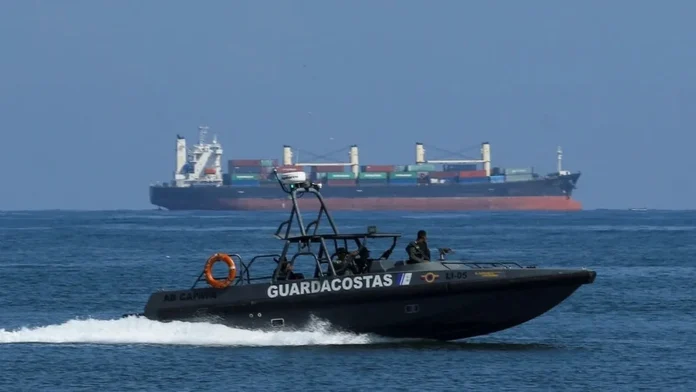
Dec 01(Jowhar)-Dawladda Maraykanka ayaa la sheegay inay digniin kama dambays ah u dirtay Madaxweynaha Venezuela Nicolas Maduro, iyadoo Aqalka Cad ee Maraykanku uu ka dalbaday inuu si degdeg ah xilka iskaga casilo si uu dalkiisu uga badbaado weerarka Maraykanka.

Japan prepares to restart world's biggest nuclear plant

Japan readies restart of world’s largest nuclear power plant

0
When a Vote Echoes Beyond the Chamber: Niigata’s Nuclear Crossroads On a gray morning in Niigata, beneath clouds that promised snow and a wind that...
'Very fortunate' injuries avoided after UK sinkhole

Residents lucky to escape injuries after sudden UK sinkhole opens

0
When the Canal Gave Way: A Dawn Rescue on the Llangollen At 4:22 on a mist-chilled morning in Whitchurch, sleep was ripped from the town...
NGOs fear impact of new Israel registration rules

NGOs warn new Israeli registration rules will harm their operations

0
When Paperwork Becomes a Lifeline: The Human Cost of New NGO Rules for Gaza Walk through any makeshift shelter in Khan Yunis and you'll see...
Nine killed in gun attack at bar near Johannesburg

Nine killed in bar shooting on Johannesburg’s outskirts

0
Rewrite the following news content into a completely original, vivid, and immersive blog post of at least 800 words, tailored for a global audience. Write...
Trump calls for House vote to release Epstein files

Trump administration denies concealing Jeffrey Epstein files amid cover-up claims

0
Black Ink on White Paper: What the Partially Censored Epstein Files Reveal — and Hide On an overcast morning in Washington, stacks of legal paper...