

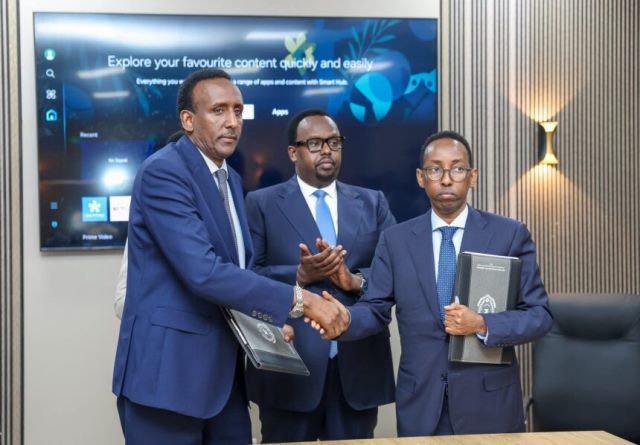
Apr 18(Jowhar)Ra’iisul Wasaare Ku-xigeenka XFS Saalax Axmed Jaamac, ayaa maanta xilka u kala wareejiyay Agaasimaha cusub ee Hay’adda Socdaalka iyo Jinsiyadda Xuseen Khaasim Yuusuf iyo Agaasimihii hore Mustafe Sheekh Cali Dhuxulow.
Police fatally shoot gunman after he opened fire in Kyiv
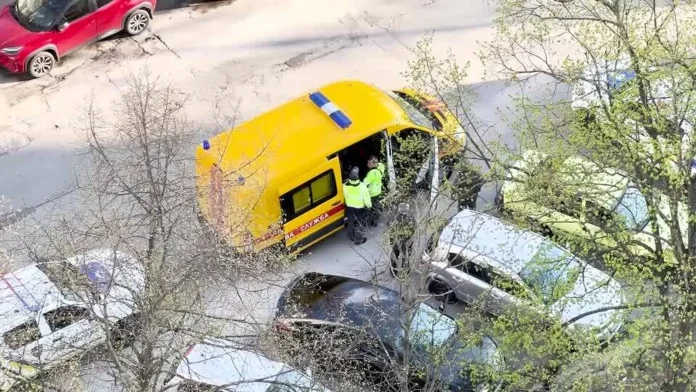
Gunfire in a Kyiv Supermarket: A City’s Morning Interrupted
It was the kind of ordinary morning that in its ordinariness makes violence feel all the more surreal: commuters with steaming cups of coffee, a mother arguing gently with a toddler over cereal, an elderly man crouched by the deli counter choosing his bread. Then came the shots. In Holosiivskyi, a leafy district of Kyiv known for its parks and busy markets, a man opened fire in a supermarket and then barricaded himself inside, plunging a neighborhood into confusion and grief.
Interior Minister Ihor Klymenko announced on Telegram that police intervened and the attacker was “liquidated during the arrest.” “Special forces of the national police stormed the store where the attacker was,” Klymenko wrote. “He took people hostage and shot at a policeman during his detention. Before that, negotiators tried to contact him.”
Mayor Vitali Klitschko, speaking with the bluntness of a city that has learned to speak plainly about trauma, said the suspect had killed two people and that there were fatalities inside the store. He added that ten people were being treated in hospital and five others had sustained injuries. Beyond the numbers are faces, and families, and a city quietly bracing itself.
Inside the Store
“I heard three bangs—then the lights jittered,” said Olena, a cashier in her thirties who lives a few streets away. “At first I thought someone dropped a box. Then people started running. A woman pushed a stroller out and just kept whispering, ‘We have to go, we have to go.’”
Witnesses described a scene that shifted from confusion to organized fear: shoppers ducking behind shelves, a small group wedged into a frozen food aisle, a teenager using a phone flashlight to signal rescuers. “There was this humming sound of machines, then shouts, and the feeling that time had stopped,” said Ihor, a delivery driver who pulled into the lot as police arrived. “You realize you’re closer than you thought.”
How the Response Unfolded
According to officials, negotiators were engaged, trying to talk the shooter out. The standoff ended when special forces entered the store. The Interior Ministry’s account says the attacker shot at a policeman during the arrest attempt. Kyiv’s mayor confirmed the death toll is being clarified; in chaotic hours after violence, numbers often change as police and hospitals sort through the injured.
Paramedics ferried victims to nearby hospitals, where doctors worked through the morning to stabilize the wounded. “We are treating ten people at the moment,” a hospital spokesperson told reporters, though names and ages have not been released. The lack of immediate detail does not dim the urgency: each official figure represents a life disturbed or lost.
What Holosiivskyi Feels Like Now
Holosiivskyi, a sprawling district that balances parks and residential blocks, has been a refuge of sorts in a city that has known too much alarm. Locals here are wary but not unused to emergency sirens; the rhythms of city life have been tested for years. Still, the shock of this incident cut through that weary normalcy.
“We come here to buy bread and light bulbs,” said Marta, who ran a small flower stall outside the supermarket before being asked to leave by police lines. “You don’t expect to flee for your life between the tomatoes and the soap.” Her hands trembled as she rearranged roses into buckets. “I’m not angry. I’m sad. Angry takes more energy.”
The scene outside the store was distinctly Kyiv: volunteers offering water, neighbors wrapping blankets around trembling shoppers, and a cluster of bystanders comparing phone videos. Blue-and-yellow flags streaked across the district’s lampposts—everyday markers of nationality that, in moments like these, offer both comfort and a reminder of fragility.
Voices from the Ground
“I was picking up dog food when it happened,” said Petro, a retiree who watched police tape stretch across the street. “You think of how small things can flip in a second. It’s a city of people trying to live. We’ll grieve, we’ll thank those who ran in to help, and then we’ll go on.”
A younger woman, Yulia, who waited hours to collect a friend from the hospital, put it more bluntly: “We are exhausted. We cannot keep rehearsing these horrors and still expect to sleep.”
Wider Threads: Security, Trauma, and Urban Life
Incidents like this don’t happen in a vacuum. They sit at the crossroads of global trends—urban density, weapon availability, mental health stresses, and the aftershocks of prolonged conflict. Kyiv has carried the scars and vigilance of recent years; still, each attack presses new questions about prevention and preparedness.
“Cities have to balance being open, democratic places with the need to protect citizens,” said a security analyst, asking to be identified only as Dmytro to avoid drawing official attention. “The immediate response—the speed of the police, hospital readiness—saves lives. The longer-term answer is social: mental health services, community ties, and intelligence that spots danger before it erupts.”
Globally, urban centers are wrestling with similar dilemmas: how to maintain public life without surrendering to fear. How do you keep the supermarket a convivial space instead of a place coded with risk? How do you tend to trauma that builds slowly, through news cycles and community losses?
Facts to Keep in Mind
- Officials say the attacker was killed during an arrest attempt by special police forces.
- Mayor Vitali Klitschko has indicated the suspect had killed two people and that there were fatalities inside the store.
- Ten people are being treated in hospital; five others sustained injuries, according to the mayor.
- Negotiators attempted contact before the assault team entered the premises.
Questions We Should Ask
When news like this lands at your phone, what do you think about first? The victims and their families, of course. Then perhaps the person who did the shooting—how did they get here?—and the responders who moved into danger. But there is a quieter question, too: how does a community stitch itself back together after the ordinary becomes a site of fear? What rituals of mourning and rebuilding will take hold?
As Kyiv sorts through unanswered questions and families count their losses, the city will confront both immediate needs and persistent ones. Emergency care, counseling, clear public information—these matter now. In the longer term, the work will be social and structural: building trust, investing in prevention, and ensuring that supermarkets remain places of everyday life, not arenas for tragedy.
Closing Thoughts
For now, Holosiivskyi remembers. People will return to the aisles, to the coffee shops, to the small normalities that make a city liveable. They will do so with a sharpened sense of one another’s fragility and resilience. “We will go to the store again,” Olena said quietly, “because we have to live.”
What would you do if your routine was disrupted? How do you imagine cities could better protect ordinary life—without turning every street into a fortress? There are no easy answers. But there are, and always will be, people who run toward danger rather than away—police, medics, neighbors—whose actions remind us what a community can be at its best.
Kulan looga hadlayay saameynta Buundooyinka Sabiib iyo Bariire ee Shabaab burburiyeen oo ka dhacay Muqdisho
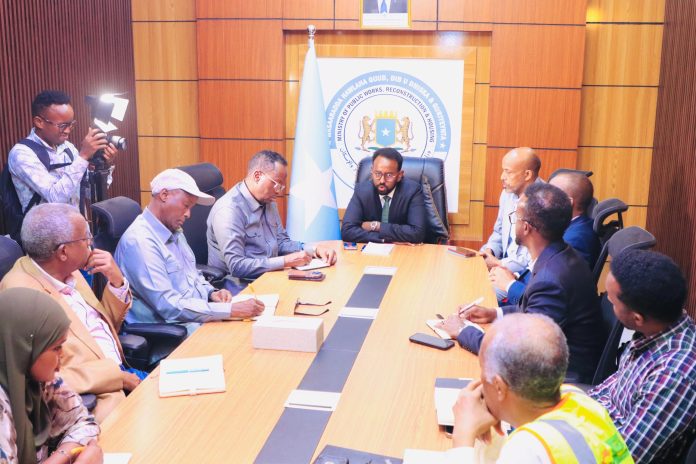
Apr 18(Jowhar)Wasiirka Wasaaradda Hawlaha Guud, Dib-u-dhiska iyo Guriyeynta ee Jamhuuriyadda Federaalka Soomaaliya, Mudane Xildhibaan Ayub Ismail Yusuf , ayaa shir-guddoomiyay kulan muhiim ah oo dhex maray Wasaaradda Hawlaha Guud iyo Wasaaradda Beeraha iyo Waraabka.
Hogaamiyaha Koofurgalbeed oo kormeeray xarumaha Wasaaradaha
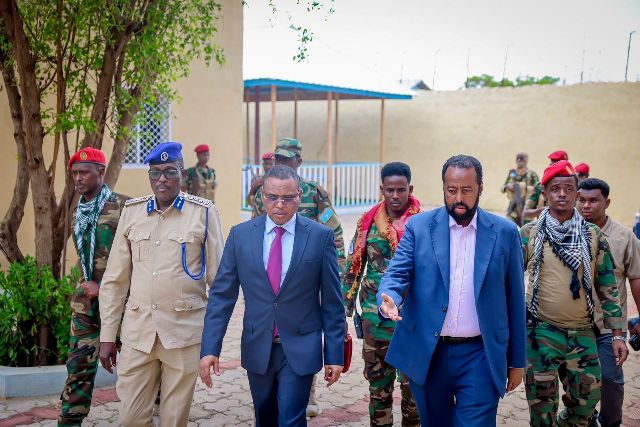
Apr 18(Jowhar)-Hoggaamiyaha ku-meel-gaarka ah ee Dowladda Koonfur Galbeed Soomaaliya, Mudane Jibriil Cabdirashiid Xaaji Cabdi, ayaa kormeer shaqo ku tagay qaar ka mid ah wasaaradaha Koonfur Galbeed, si uu u qiimeeyo habsami u socodka howlaha shaqo ee hay’adahaasi.
Iiraan oo duqeysay maraakiib maraysay Marinka Hormuz
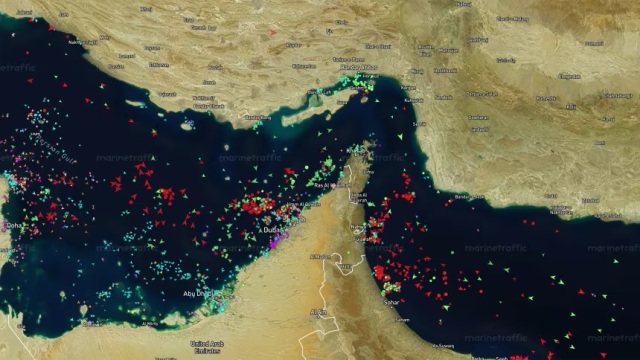
Apr 18(Jowhar) Wararka ka imanaya dalka Iran ayaa sheegaya in markab marayey marin biyoodka Hormuz ay rasaas ku fureen laba doonyood oo ay wateen ciidamada ilaalada kacaanka Islaamiga ah ee Iran.
Madaxweynaha Soomaaliya oo la kulmay Ra’iisul Wasaaraha Serbia
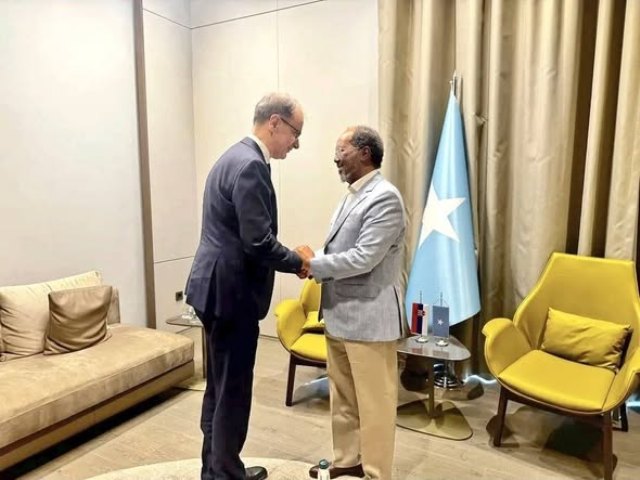
Apr 18(Jowhar)Madaxweynaha Jamhuuriyadda Federaalka Soomaaliya, Mudane Xasan Sheekh Maxamuud, ayaa kulan laba-geesood ah la yeeshay Ra’iisul Wasaaraha Jamhuuriyadda Serbia, Prof. Dr. Đuro Macut, intii ay socotay Madasha 5-aad ee Diblomaasiyadda Antaaliya (ADF2026), oo ka qabsoontay oo lagu qabtay dalka Turkiga.
Iran reopens Strait of Hormuz: live updates on shipping and regional impact
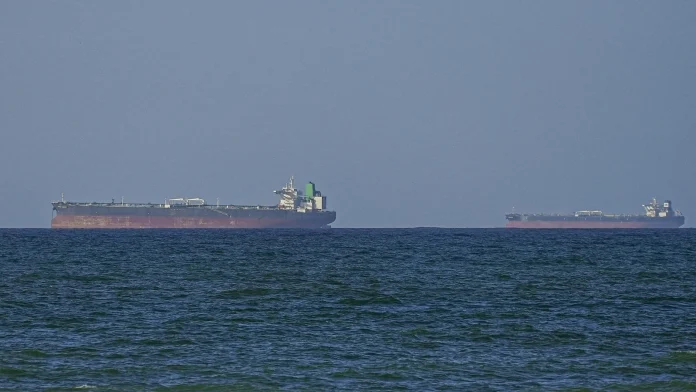
As it happened: Iran reopens the Strait of Hormuz
On a humid dawn in Bandar Abbas, the harbor’s usual rhythm returned like a breath exhaled after a long held silence. Small dhows bobbed, seagulls circled, and the clatter of tea cups rose from a seaside teahouse where fishermen and port workers huddled to watch the horizon. “We were all nervous,” said Reza, a crab fisherman who has threaded these waters for thirty years. “The sea is our life. When the world stops passing, you feel it in your bones.”
Iran announced today that it had reopened the Strait of Hormuz to commercial traffic after days of restricted passage that had thrown a fragile global energy market into a temporary tailspin. The strait — a slim artery linking the Persian Gulf to the Arabian Sea — is one of the planet’s most consequential chokepoints. About one-fifth of seaborne-traded oil moves through this narrow passage, carrying crude that fuels cities from Tokyo to Turku.
The scene at the waterline
The reopening was not cinematic. There were no trumpets, no boom of celebratory cannons. Instead, there were routine navy patrols resuming designated transit lanes, maritime pilots reporting clear waters, and, most tangibly, ships slowly easing out of anchorages where they had waited for days. A merchant captain radioed in a weary-sounding message: “We can finally head south. That’s the best news I’ve had this week.”
At the Hormuz port, saffron-scented smoke drifted from a small street stall, and an elderly tea vendor joked, “You must be careful — when ships dance, tea gets cold.” His humor belied the serious undercurrent of fear: every closure or skirmish here ripples across economies and households worldwide.
What triggered the shutdown?
Officials framed the closure as a response to rising tensions in the region and declared it a necessary precaution to protect local and national interests. A senior Iranian maritime official, speaking on condition of anonymity, told reporters, “We acted to ensure safety. Now the situation has been clarified and shipping may resume under monitored conditions.”
That measured language masks the complexity beneath. In recent weeks, localized confrontations, naval shadowing, and exchanges over seized vessels had escalated alarm among shippers and insurers. When passages near vital chokepoints tighten, decisions to halt navigation are often taken out of abundance of caution: tankers avoid risk, captains seek safe harbor, and companies calculate exposure in the blink of a market’s eye.
Why the Strait matters — and everyone should care
Think of the Strait of Hormuz as a global heartbeat. It is narrow — at its slimmest point only about 21 nautical miles across — and unforgiving. Yet it is also astonishingly busy. According to the International Energy Agency, roughly one-fifth of the world’s seaborne oil exports flows through here on a steady, grinding cadence.
When that cadence falters, the effects are immediate: energy traders watch brent futures, ports brace for adjustments, and families in importing nations feel the squeeze at gas pumps weeks later. The last time similar tensions spiked, insurance premiums rose, detour routes became costly, and markets flirted with volatility. “The economics of closure are straightforward,” explained Leila Martin, a maritime risk analyst in London. “Diverting a supertanker adds days and millions of dollars in extra costs. For countries with thin energy margins, even a short disruption can be painful.”
- Strategic weight: The strait connects the oil-rich Persian Gulf states to global shipping lanes.
- Economic impact: A short-term closure can lift freight costs and ripple through industrial supply chains.
- Security calculus: Naval presence from multiple countries underscores how local conflicts become global flashpoints.
Local voices, global reverberations
In the coastal markets, traders spoke in human terms about what geopolitics looks like when it touches everyday life. “When the tankers stop, my buyer in Dubai calls and says ‘hold shipments,'” said Farideh, who sells fabric in a narrow shop beneath arcaded balconies. “And then I can’t pay the electricity bill on time. Things you think are far away are very near.”
An Oman-based logistics broker, who asked not to be named, described the technical headaches: “We had 10 tankers waiting at anchorage yesterday, and the crew rotations have now been pushed back. Those delays turn into unpaid overtime, logistic nightmares, and more carbon emissions when ships burn fuel idling.” There is an uglier arithmetic to disruption: longer voyages mean more fuel, more emissions, and greater strain on a planet already tallying climate costs.
What markets and governments are doing
Markets reacted quickly when movement slowed. Commodity desks reported brief spikes in oil prices and a rise in the cost of maritime insurance for ships transiting the region. Governments meanwhile nudged emergency plans into play — tapping strategic reserves, re-routing shipments where possible, and quietly negotiating through diplomatic backchannels.
A European diplomat, who declined to be identified, said, “Every government wants the same thing: steady seas. We’re coordinating intelligence and trying to keep commercial traffic safe without inflaming the situation further.” That balancing act — using diplomacy to keep trade flowing while avoiding escalation — is now standard operating procedure in the age of interconnected risks.
Is this a long-term change or a blip?
That depends on decisions that have little to do with tides and everything to do with politics. Some analysts see these interruptions as wake-up calls that could accelerate longer-term shifts: investment in pipelines that bypass chokepoints, greater strategic petroleum reserves, and a faster pivot toward cleaner, decentralized energy systems that reduce reliance on fragile maritime routes.
“The world is learning a hard lesson about chokepoints,” said Dr. Hamed Azari, a geopolitical risk professor. “Globalization brought incredible efficiencies, but it also concentrated vulnerabilities. Whether states respond by diversifying routes, building redundancy, or by accelerating renewables will determine the next decade.”
How to hold this moment in perspective
For people on the shoreline like Reza, the reopening is relief mixed with wariness. “We are happy the boats go,” he said, tightening his weathered hands around a thermos. “But the sea has moods. We must be ready if it changes again.”
For global citizens, the moment asks a question: how much fragility are we willing to accept in systems that feed our cities and economies? The Strait of Hormuz will not disappear from maps; the physics of geography remain stubborn. But policy choices, investments, and diplomacy can make the difference between a short, manageable pause and a prolonged crisis that leaves real people counting the cost.
As ships resumed their slow procession southward this morning, the tea vendor in Bandar Abbas poured another cup and shrugged: “The water has always decided our fate. We only choose how we live with it.” How do you think the world should live with such dependence — and where should we invest to make those lives less precarious?
Iran Orders Another Strait Closure in Response to US Blockade
Smoke, Steel and Diplomacy: The Strait of Hormuz at the Edge of a Fragile Peace
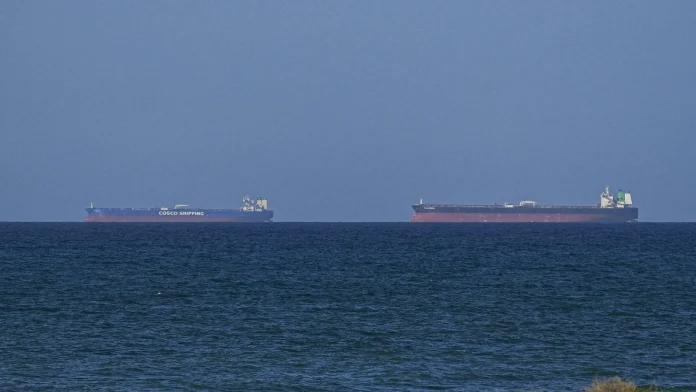
At dawn the sea around Larak Island glinted like a molten coin. Four LPG carriers slid through the narrow throat of the Strait of Hormuz, hulls low in the salt and a convoy of oil and chemical tankers tailing them as if wary of every wake. Seabirds lifted at the sound of engines; a fisherman in a long, sun-bleached boat shaded his eyes and counted the ships as if tallying the day’s catch.
Then, in Tehran, a terse announcement blared across state television: Iran’s central military command said it would resume “strict management” of the strait—reversing a previous gesture that had opened the vital waterway as a confidence measure in negotiations. The reason given was simple, blunt and emblematic of the moment: Tehran accused the United States of breaking a promise by continuing a naval blockade of vessels bound for Iranian ports.
What changed, and why it matters
To understand why a single sentence on state TV matters to the world, picture a map in your head. This narrow corridor of water funnels roughly one-fifth of the world’s seaborne oil trade—an artery of energy through which economies and futures flow. When it chokes, prices ripple; stock markets jitter; supply chains recalibrate.
“We reopened to show goodwill,” a senior Iranian military official told a small group of foreign reporters, speaking on condition of anonymity. “But goodwill is not a one-way street. Until freedom of movement for our commercial vessels is restored, we will not treat this corridor as open in practice.”
The announcement landed as a convoy crossed—the first substantial movement of ships in the strait since a fresh phase of hostilities flared between Iran and a US-Israel coalition weeks earlier. The conflict, which Iranian officials and some international observers trace back to a US-Israeli strike on February 28, has already killed thousands, splattered violence across borders and sent oil prices climbing as shipping effectively stalled.
Voices from the water and the docks
“We are used to uncertainty here,” said Karim, a 48-year-old tanker mechanic based in Bandar Abbas, who watched the convoys from shore and wiped engine oil on his trousers. “But this is not just about engines and money. My cousin’s son joined the navy last month. He called home, he said, ‘Dad, I don’t know if I’ll be home for Eid.’ That frightens everyone.”
A captain steering a chemical tanker through the channel described the scene with a careful, sailor’s cadence. “There are more eyes on the bridge than usual,” he said. “The IRGC [Islamic Revolutionary Guard Corps] wants coordination. We have to file our passage plans. That changes the rhythm—it’s more controlled, less like free trade and more like moving through a federal checkpoint.”
Diplomacy on a tightrope
Behind the scenes, diplomats, mediators and generals have been trying to turn back the clock from kinetic conflict to negotiated settlement. Pakistan, under the stewardship of army chief Field Marshal Asim Munir and Prime Minister Shehbaz Sharif, has been schlepping between capitals—Tehran, Doha, Riyadh, Ankara—in search of a roadmap out.
“We have drafted a framework for an initial understanding,” a Pakistani official involved in mediation said. “If all sides agree, a short memorandum could be signed quickly, with a comprehensive agreement to follow within 60 days. But frameworks are fragile things. They fracture at the smallest pressure points.”
One such pressure point is Iran’s nuclear program, a perennial tinderbox in any negotiation. The United States reportedly proposed a 20-year suspension of all Iranian nuclear activity; Tehran countered with a three-to-five year pause. The gap has not closed. “Negotiation is not surrender,” a Tehran-based diplomat reflected. “To many here, any deal that looks like humiliation will be rejected at prayer and at the ballot box.”
From Washington
In Washington, the calculus is domestic as much as strategic. “Our posture is that Iran must not develop a nuclear weapon,” a White House official said on background. “At the same time, we are asking our partners to maintain pressure if necessary.” President Donald Trump, addressing reporters on the tarmac, struck a tone of cautious optimism while warning that the temporary ceasefire could end if a longer-term deal isn’t sealed.
That domestic lens matters. With gasoline prices high, inflation eating discretionary budgets and key midterm elections looming, US leaders face incentives to de-escalate—but also to secure ironclad terms.
Markets, missions and conditional calm
The market reacted quickly when ship movements resumed: oil prices dipped roughly 10% and equities recovered modestly after days of volatility. More than a dozen countries said they would be willing to join an international mission to protect shipping when conditions permit—an echo of past multilateral convoys that patrolled high-risk waters.
Yet Tehran insists any protection must respect its sovereignty and coordination requests. “Every ship must coordinate with the IRGC,” declared a spokesmen in an official broadcast. “Military vessels linked to hostile forces will not be permitted to pass.”
- Percentage of global seaborne oil historically passing through the Strait of Hormuz: about 20%.
- Reported casualties since the conflict escalated: thousands (estimates vary by source).
- Proposed US suspension of Iranian nuclear activity: 20 years; Iran’s counter: 3–5 years.
Local color: life under the shadow of the strait
On the shores of Hormuz Island, where little cafes serve black tea and sweet dates, hospitality mixes with apprehension. “The mullahs say don’t bow to humiliation,” said a shopkeeper who gave his name as Hassan. “But my daughter needs work. If ships stop, we stop. If ships move, maybe life goes on.”
On the Friday the military announcement came, the call to prayer rose over Tehran’s skyline and echoed against satellite dishes—a sound that threaded through the city’s sense of endurance. In the bazaars, clerics’ defiant sermons rallied national pride; in living rooms, mothers checked the news on their phones and counted the cost of each headline.
Questions for a connected world
What do we owe each other when a single narrow channel can tip the global economy? How do states balance national dignity against global interdependence? And what will it take for negotiators to build a durable bargain that neither humiliates nor emboldens?
These are not merely regional questions. The Strait of Hormuz sits at the junction of commerce and coercion, where local lives meet global markets. When a tanker creaks its way past Larak Island, it carries more than crude: it carries the consequences of decisions made in rooms far from the water.
Finally, one last voice—an international maritime security analyst who has watched previous convoys through the strait—summed it up: “Chokepoints tell us who we are. They expose fragilities. If diplomacy fails, the ripples will be felt in living rooms from Mumbai to Manhattan. If diplomacy holds, they may remember this as the time the world paused, held its breath, and negotiated back from the brink.”
For now, ships move under watchful eyes, and the world watches with them. Will the rhythm of commerce return to normal, or will this corridor remain a barometer of a deeper instability? The next moves—on decks, in courtrooms, in the back rooms of palaces and on the streets—will tell the story.
Ra’iisul wasaaraha Israel oo ka carooday hadalka Trump ee ahaa inaan duqeyn danbe laga fulin karin Lubnan
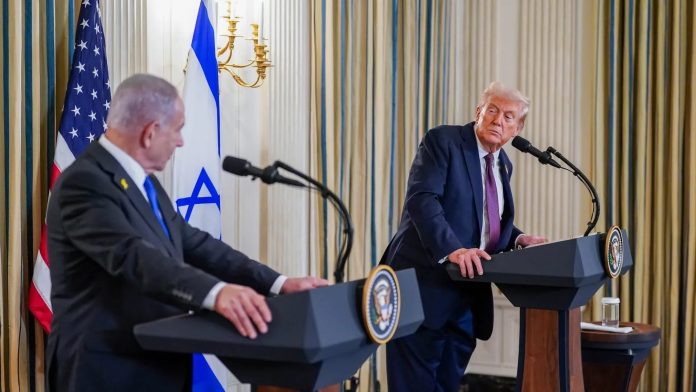
Apr 18(Jowhar) Benjamin Netanyahu ayaa ka carooday hadalka Trump ee ahaa in aan duqeyn dambe laga fulin karin gudaha dalka Lubnaan, oo ay mamnuuc tahay, waxaana uu isticmaalay erayga ah “Enough is enough” (waa nagu filan tahay), Tani waxay si weyn uga yaabisay Netanyahu iyo kooxdiisa, maadaama uu ka hor imaanayo qoraalka rasmiga ah ee heshiiska xabbad-joojinta ee 10-ka maalmood ah.
Massive 800-drone Russian daytime assault kills six in Ukraine
Daylight Thunder: Ukraine Faces an Unprecedented Drone Barrage
On a bright spring morning that some residents remember for the smell of fresh bread and the...
Retrial Set for U.S. Lawyer Convicted in Wife and Son Murders
When the Scales Waver: The Overturning of the Murdaugh Murder Conviction
There are moments when a courtroom ruling sounds less like a verdict and more...
Corbyn says Starmer is unlikely to survive as prime minister
A Party at Sea: Why Corbyn Thinks Starmer’s Premiership May Not Last
There are moments in politics that feel less like a slow boil and...
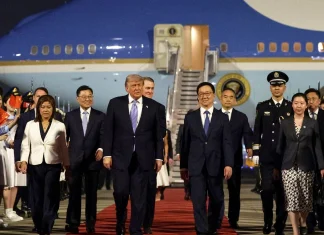
Trump declares he can end Iran conflict without Beijing’s assistance
Air Force One, a Red Carpet and the Long Shadow of Two Giants
The engines had hardly cooled when the cameras began to hunt for...
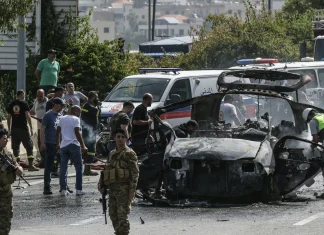
Lebanon reports Israeli vehicle strikes kill 12 civilians
In the shadow of Washington: strikes, funerals and fragile diplomacy on Lebanon’s southern shore
On a coastline where lemon trees meet the Mediterranean and cars...
Pope apologizes for comments perceived as clashing with Trump
Pope Leo XIV, Bamenda, and the Price of a Misheard Word
There are moments politics devours ritual, and a papal trip to a city scarred by conflict is exactly the place you would expect such a feast. In the warm, dry air of Bamenda — the Anglophone heartland of Cameroon, where prayers are as likely to be whispered under mosquito nets as shouted in cathedral aisles — Pope Leo XIV stood and spoke of “tyrants” and the ravaging forces of the world. The line landed like a stone thrown into a pond: ripples radiated not only across Cameroon’s battered hills but all the way to Washington, sparking an argument that the pontiff says he never intended to have.
Words Written Before Words Were Heard
As the papal plane pressed on toward Angola, the Pope took a rare moment with journalists to clarify what he called a misunderstanding. “Those words were composed long before the exchange with the American president,” he said, according to aides who traveled with him. “It is a sermon to the world, not a salvo to any particular office.”
That clarification is both humble and urgent. Humble because the Vatican has traditionally avoided direct sparring with secular leaders; urgent because in an age of instantaneous interpretation, a single phrase can be framed, amplified, and weaponized before context arrives.
What Happened in Bamenda
To stand in Bamenda is to feel history’s pressure. The town’s red-earth streets are often alive with a stubborn optimism — market stalls arrayed with plantain and yams, children in tidy uniforms cutting across courtyards — but there are also checkpoints, a hardened police presence, and the quieter violence of displacement. An Anglophone crisis that many track back to 2017 has calcified into a long-running insurgency: tens of thousands have fled their homes, and human rights groups estimate the death toll runs into the thousands with hundreds of thousands displaced.
Into this space walked the Pope — flanked by security, greeted by bishops in scarlet, by women in woven headscarves who pressed rosaries into his hands. His reference to “tyrants ransacking the world” was read back by many as a moral condemnation of those who wield power with impunity. But where one audience saw a rebuke aimed at a particular leader, another saw a universal warning: a call to care for the vulnerable and to resist the seduction of brute force.
Voices from the Ground
“We wanted someone to look at our suffering,” said Father Emmanuel Nkwenti, a local priest in Bamenda. “What moved people was that he was here at all. Whether the words were for one man or many, the message was for us — do not forget the poor.”
A woman who asked to be identified only as Lydia, clutching a baby and waiting outside the cathedral, said, “The Pope reminded me to have hope. Even if the world is noisy and leaders shout, we still have our faith.”
Security forces and civic leaders in Bamenda also spoke of the show of care that accompanied the visit. “It’s not every day that the whole world looks at us,” said Samuel Tchouakeu, a municipal official. “When he spoke of injustice, our people felt seen.”
The Global Echo: How Media Framing Made a Fight
There is a narrower, louder story that unfolded outside Cameroon. A few days before the Pope’s remarks, the U.S. president had publicly criticized him — part of a pattern of sharp, personal commentary that has characterized recent exchanges between political figures and religious leaders. Once those two threads — the president’s rebuke and the Pope’s sermon — were stitched together by pundits and social media, interpretation mutated into confrontation.
“The news cycle wants conflict,” said Dr. Maria Alonso, a media analyst in Madrid. “A calm clarification won’t get the same treatment as a dramatic feud. So both sides felt pressure to perform: politicians to double down; institutions to defend themselves; the press to hustle for perspective.”
The papal team — and many Vatican watchers — insist the Pope’s intention was pastoral, not partisan. “He’s a shepherd first, not a political debater,” said a Vatican official who asked not to be named. “He doesn’t want to be dragged into personalities.”
Experts Weigh In
Professor Harold Bendix, a scholar of religion and international affairs at the University of Chicago, offers a broader frame. “Religious leaders have moral capital,” he said. “When they speak about tyranny, it resonates because it taps into a longer tradition of prophetic critique. That message can be misread as personal if there are already salvos being fired.”
And what does this misreading cost? For communities like Bamenda, the distraction of a headline skirmish risks eclipsing the urgent, less photogenic needs — humanitarian aid, reconciliation, local justice mechanisms. “When the world’s eyes are on the squabble rather than the suffering, money and diplomacy follow the spectacle, not the solution,” said Ama Nkeng, a human-rights worker in Douala.
What Are We Asking of Our Leaders — and Ourselves?
That question hangs in the air like incense. Do we expect the head of a global church to be a diplomat capable of neutral nuance, or do we want a prophet who names wrong without fear? Can the same voice be both?
Ask yourself: when a public figure speaks, do you first wonder which side they’re on? Or do you listen for the people underneath the rhetoric — the families in Bamenda, the communities displaced by conflict, the children finishing their homework by candlelight?
There is an uncomfortable truth here. Global discourse today is short on patience and long on outrage. Leaders who try to rise above the fray are often flattened into caricatures by headlines that favor drama. The Pope’s response — to express regret that his words were perceived as a challenge rather than a pastoral plea — is a small act of de-escalation in a world that seems to want escalation.
The Road Ahead
For Bamenda and places like it, de-escalation means more than careful language. It means concrete engagement: humanitarian corridors, negotiated truces, support for local mediators, education programs for displaced children. For global citizens, it means a little more patience with nuance and a little less appetite for viral indignation.
“We should judge words by what they bring into the world, not by how loudly they are shouted,” said Father Nkwenti. “If the Pope’s speech helps someone find shelter, that is what matters.”
In the end, the episode is a mirror: it reflects how thin the line is between sermon and scandal, between pastoral care and political theater. It asks us to choose what we will amplify — the clash of personalities or the wounds of people. Which will you listen for?