

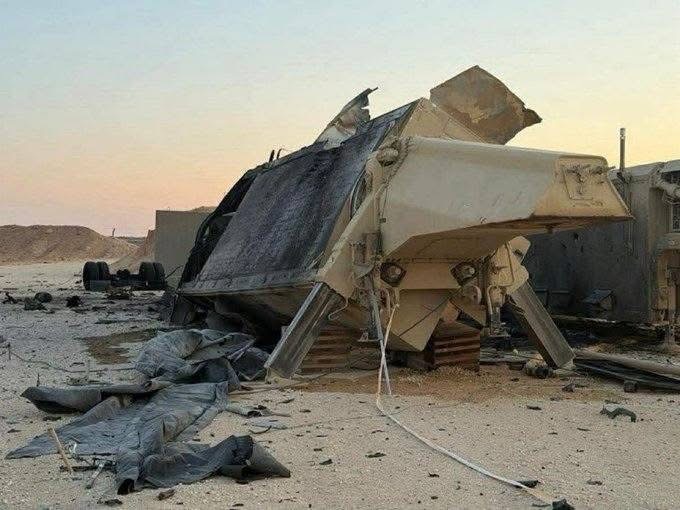
Mar 07(Jowhar)-Diyaaradaha aan duuliyaha lahayn ee Iran oo qiimahoodu yahay $30,000 ayaa maanta burburiyay radar Mareykanku leeyahay oo qiimihiisu yahay $300 milyan oo ku yaalay dalka Urdun.
Trump Warns of Devastating Strikes on Iran, Signals Tough Response
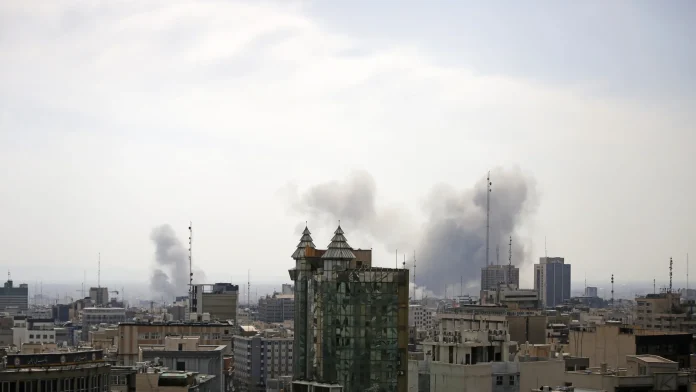
When Words Hover Like Missiles: Trump’s Stark Warning to Iran and What It Means for a Restive Region
There is a peculiar sound to political threats that travel across continents: a clipped sentence on a screen, amplified by millions, then echoed in alleys, cafes and parliament halls half a world away. “Iran will be hit very hard,” the line cut through the static this week, a terse warning that landed like a pebble thrown into an already turbulent pond.
Whether you cheered, flinched, or turned away from the headlines, the phrase has weight. It’s shorthand for a complicated stew of history, policy, pride and fear that has simmered across the Middle East for decades. And for ordinary people in Tehran, Beirut, Baghdad and Washington, it raises a simple and urgent question: what comes next?
The moment and the music behind it
Threats like this don’t exist in a vacuum. They echo earlier chapters of recent history—the 2018 U.S. withdrawal from the Iran nuclear deal, the escalation cycles of drone strikes and proxy skirmishes, the killing of Iranian General Qassem Soleimani in 2020, and the patchwork of sanctions that have squeezed Iran’s economy for years.
“Words can be the first step toward warming up to war,” said Dr. Leila Mansouri, a Tehran-based scholar who studies regional security. “When a leader uses language designed to terrify or coerce, it reshapes how cities prepare, how markets react, and how diplomats work behind the scenes.”
On the street in northern Tehran, a fruit vendor named Reza wiped his hands on a plastic bag and looked straight into the distance. “We have lived with threats for a long time,” he said. “My mind goes to the children. I worry about electricity, medicine, everything. Every new headline makes the winter feel longer.”
Not just bluster: why the rhetoric matters
Political rhetoric isn’t just about delivering a line for the cameras. It’s a lever. It can sway markets (oil prices are especially sensitive), it can harden alliances, and it can give license to proxy actors who already have a reason—political, ideological or economic—to act. The Middle East is crisscrossed with such actors, from Hezbollah in Lebanon to Houthi rebels in Yemen, all of whom read the same headlines and sometimes take them as cues.
“A statement is an instrument of strategy,” explained Colonel (ret.) Amir Haddad, who now lectures on Gulf security. “It calibrates deterrence and signaling. But it also creates incentives for miscalculation. That’s where the danger lies—an unintended clash between two sides that only wanted to posture.”
People count the costs
Behind the geopolitics are lives and livelihoods. Iran is home to roughly 86 million people; its economy has been battered by sanctions, declining oil revenues and, in recent years, climate stress that affects agriculture. According to World Bank and IMF assessments over the last few years, Iran’s GDP has been volatile, and living standards for many families have stagnated or declined.
“You can measure fear in the items people buy or stop buying,” said Leyla, a pharmacist in Shiraz. “When medicines get pricier or disappear because of banking sanctions and supply-chain friction, fear becomes tangible.”
Across the Gulf, a fisherman in Bandar Abbas told me he checks his nets and then the news. “We are small,” he said. “We fish because the sea gives and takes. But the sea is not the only thing that takes. When politics climbs into our boats, we have to choose whether to go out at all.”
Economic and security tremors
The stakes are global as well. Iran sits at the mouth of the Persian Gulf and near the Strait of Hormuz, a chokepoint through which roughly 20% of the world’s seaborne petroleum passes. Even the threat of conflict there can spike oil prices and unsettle markets from Tokyo to London.
Sanctions are another blunt instrument. Since 2018, unilateral U.S. sanctions have slashed Iran’s crude exports from pre-sanctions peaks—estimates vary, but exports fell from more than 2.5 million barrels per day in earlier years to considerably lower levels under pressure. Those economic shocks filter down to ordinary citizens, who see inflation and shortages in pharmacies and supermarkets.
Voices from the neighborhood
In Beirut, a taxi driver named Samir thumbed his rosary and sighed. “When the big boys shout, we look out the window and we see fathers and sons leaving for work—some of them might not come back. We have memories of bombing runs in the 1980s. We know what that sound means.”
Meanwhile, an aid worker who asked to stay anonymous because of security concerns said bluntly: “The humanitarian footprint of any conflict in this region is huge. We are already stretched thin with displaced people in Syria and Yemen. Open conflict would outstrip our capacity.”
Experts weigh in
Analysts say there are clear risks of escalation, but also reasons for cautious optimism. “Leaders generally understand the costs of full-scale war in the 21st century,” noted Maya Kravitz, an international relations specialist. “Economic interdependencies, global media scrutiny, and perhaps most importantly, the unpredictable nature of conflict—these act as brake pedals.”
Still, she warned, “Societal tensions and domestic politics can push leaders toward starker postures. A short-sighted, emotionally charged declaration can have long-term consequences.”
What should readers take from this?
First, remember that a headline is a headline—but it is rarely the whole story. Second, think about the human dimensions: the farmer in Khuzestan, the mother in Basra, the hospital administrator in Tehran, and the port worker in Dubai—all of whom brace themselves when powerful figures exchange short, sharp sentences.
Finally, ask yourself: how do we collectively prevent rhetoric from becoming reality? How do democratic societies hold leaders accountable for the domestic and international fallout of inflammatory language? These are not small questions. They require policy, diplomacy, and a media conversation that balances urgency with nuance.
Paths forward
Diplomacy remains the necessary tool. Back channels, multilateral fora, and pragmatic engagement on issues such as nuclear verification, maritime security, and humanitarian access are boring, slow, and essential. People I spoke to—from diplomats to shopkeepers—kept returning to the same idea: they wanted predictability. Predictability, even if austere, trumps the anxiety of sudden escalation.
“We want a table where discussions happen, not a battlefield where words turn into weapons,” said a senior diplomat who has spent years courting peace initiatives. “It’s not glamorous, but it saves lives.”
How you can stay informed
- Follow multiple outlets to avoid single-source narratives.
- Look for reporting that includes local voices and context, not only quotations from capitals.
- Support reputable humanitarian organizations on the ground if you want to help people affected by conflict or sanctions.
Closing—an invitation
When politicians issue stern warnings, nations hold their breath. But beyond the headlines are people making breakfast, tending markets, praying, planting and mourning. If nothing else, this moment is a reminder: global politics is not an abstract chessboard. It’s a messy, human place where words can heal—or wound.
So let me ask you: when leaders speak in absolutes, do we have the courage to demand the counterweight of patient diplomacy, or will we be swept by the drama of the moment? The answer matters—not only to capitals—but to the quiet corners of the world where real lives continue, storm or shine.
Xarunta Qaran ee Amniga Saaybarka (SOMCIRT) oo xarriga laga jaray
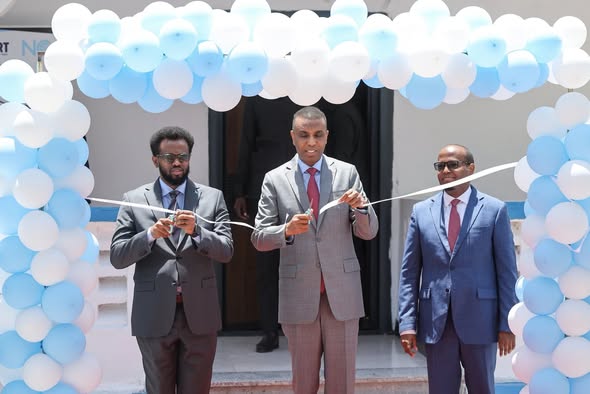
Mar 07(Jowhar)-Ra’iisul Wasaaraha Xukuumadda Jamhuuriyadda federaalka Soomaaliya Mudane Xamsa Cabdi Barre, ayaa maanta xarigga ka jaray Xarunta Qaran ee Amniga Saaybarka (SOMCIRT) oo loo diyaariyey ka jawaabista xaaladaha degdegga ah ee ka dhanka ah amniga Isgaarsiinta.
Washington Residents Weigh In: Would They Support a War With Iran?
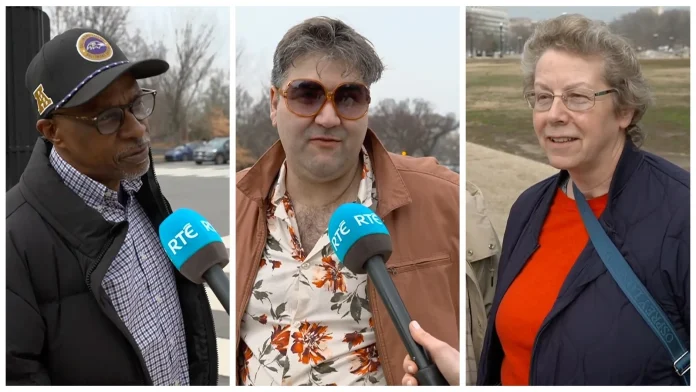
In the shadow of the Capitol: Washington’s pulse after a new chapter in the Middle East
On a brisk morning in Washington, the city’s usual rhythms—commuters, tourists, the joggers who keep time along the Tidal Basin—felt both familiar and fragile. Flags fluttered over government buildings, and the carriage horses near the National Mall ambled past stoic monuments that have long watched the world’s dramas unfold. Yet beneath the surface was a different kind of hush: a low-level hum of worry that surfaces only when distant bombs become headlines at your kitchen table.
This week, the United States and Israel launched what officials are calling Operation Epic Fury against Iran. The operation, announced with the kind of gravity that rewrites foreign policy playbooks, has rippled across the region and triggered an anxious response from capitals in Europe and beyond. Brussels called it “a dangerous moment for the continent,” and diplomatic cables have been moving fast between allies. Here in Washington—the political capital of the world—I walked streets and sat in cafés, listening, asking, absorbing the small, telling things people say when the future seems uncertain.
Voices on the street
“You worry whether your life will be touched directly,” said Maria Alvarez, a 34-year-old nurse from Arlington, stirring her coffee with a careful hand. “Not because I’ll end up in uniform, but because lines blur: prices, supply chains, kids at school worrying. It’s an ache you can’t leave at work.”
Across from her, two British tourists—backpacks still dusty from an east-coast road trip—paused their sightseeing to weigh in. “We didn’t come here to be reminded that a parking meter is safer than diplomacy,” joked one of them, then grew serious. “This feels like watching dominoes, and you don’t know which tile will fall next.”
At the foot of the Capitol building, a gray-haired veteran named Thomas Reed smoked quietly and said, “I served in the region thirty years ago. The faces change, the tech changes, but the feeling of being used as a bumped pawn… that’s the same. If the gamble is big, then the cost will be big.”
A young congressional aide, whose name I am withholding because she was not authorized to speak on the record, told me: “There’s a tension here—between the impulse to show strength and the hard math of what escalation means. It’s like watching two chefs over-salt the same dish.”
Local color: the city copes
Washington is a city of rituals. A vendor outside Union Station wrapped a pretzel in a paper bag and said, “Business slows when people read the news. They think about flights, not food.” A Metro operator, who watched commuters press their faces to the windows, shrugged and said, “We keep the trains moving. That’s how normal returns.”
On the corner of 14th and U Streets, a small Ethiopian café that usually hums with lunchtime chatter was quieter than usual. The owner, Amina, poured tea and told me she feared political tremors more than a drop in foot traffic. “I have family far away. When the phone rings, my hands shake. But I have to keep making injera and coffee. People need small certainties.”
What leaders are saying — and why it matters
International leaders have spoken in tones designed to steady markets and publics. European diplomats warned of spillover across the Middle East and the Mediterranean, pointing to refugee flows and economic shocks as near-term concerns. In Washington, briefings emphasized precision and aims: officials said the operation targeted capabilities they argued threatened regional stability. Opponents, though, warned the campaign could widen hostilities, pulling non-state actors and proxy forces into a spiral.
“This is not about victory parades,” said Dr. Lena Adams, a foreign policy fellow at an Atlantic think tank. “Operations with transnational implications require more than missiles and intelligence. They require contingency planning for diplomacy, humanitarian corridors, and a credible plan to avoid miscalculation.”
Her words echo a longer historical lesson: direct confrontations rarely stay contained. The Middle East is a dense tapestry of alliances and grievances; when one thread snaps, patterns shift unpredictably.
Numbers and context
It’s tempting to reduce this to statistics, but numbers can be both clarifying and misleading. Tens of thousands of military personnel from various nations remain stationed across the wider region; global oil markets reacted within hours, with traders pricing in potential supply disruptions. Humanitarian organizations have warned that any broadening of the conflict could displace thousands more people already vulnerable from years of instability.
Public sentiment is a mosaic: some Americans express resolute support for decisive action; others fear a return to long, expensive wars. Recent polling trends have shown greater skepticism among younger voters about military interventions, and a near-universal desire—across ideologies—for clear objectives and exit strategies.
Beyond the headlines: the human margins
Amid slogans and soundbites, people live lives that refuse to be reduced to geopolitics. In Dupont Circle, a teacher I spoke with admitted she spent her spare minutes drafting lesson plans about empathy and civic discussion, rather than tactics. “If nothing else,” she said, “this is a test of our ability to teach kids how to listen to each other when the news tells them to be afraid of the other.”
And at a small mosque near Columbia Heights, community leaders organized a vigil for peace. “We remember our own families who fled wars,” said Imam Kareem, lighting a candle. “We pray that others do not have to.”
Questions to sit with
What do we owe people on the ground—diplomats, medics, translators—who risk their lives when governments make distant decisions? How do democracies balance the need to deter threats with the moral and fiscal costs of war? As citizens, what information do we demand from our leaders before we accept conflict as inevitable?
These are not rhetorical indulgences. They are practical, pressing concerns that will shape budgets, elections, and families’ futures in ways spreadsheets cannot fully capture.
Where might things go from here?
Predicting the arc of any military operation is perilous. Diplomacy, back-channel talks, and the stance of regional players will all matter. So will domestic politics—leaders in capitals must answer not only to strategy but to voters whose impatience with open-ended conflict is growing.
“History is full of moments when hedging was wiser than hubris,” Dr. Adams told me. “We should prepare for both the possibility of de-escalation and the risk of wider confrontation. Plans that include relief, reconstruction, and political solutions are not optional extras.”
- Fact: The 2015 Iran nuclear agreement (JCPOA) reshaped regional dynamics and its unraveling after 2018 influenced subsequent tensions.
- Fact: Global markets are sensitive to Gulf instability; even rumors can sway oil prices and shipping insurance rates.
- Fact: Humanitarian groups continue to monitor displacement trends across the Middle East, where prolonged conflicts have already displaced millions.
Closing: a city holds its breath—and its routines
As the sun set behind the domes and spires, Washington’s neon signs flickered on. People lined up for dinner. A mother read a bedtime story to her son about faraway heroes. In the quiet corners of the city, conversations continued—sharp, tender, bewildered.
War arrives like the weather: sudden gusts, long drizzles, storms that change the landscape. How we respond—by shoring up diplomacy, by asking hard questions, by tending to those most vulnerable—will tell us more about this moment than any headline can. What kind of world do we want to leave to the next generation? That question, perhaps more than any missile trajectory, should keep us awake at night.
Madaxweyne Xasan oo u duulay dalka Tanzania oo madaxda EAC ay ku shireyso
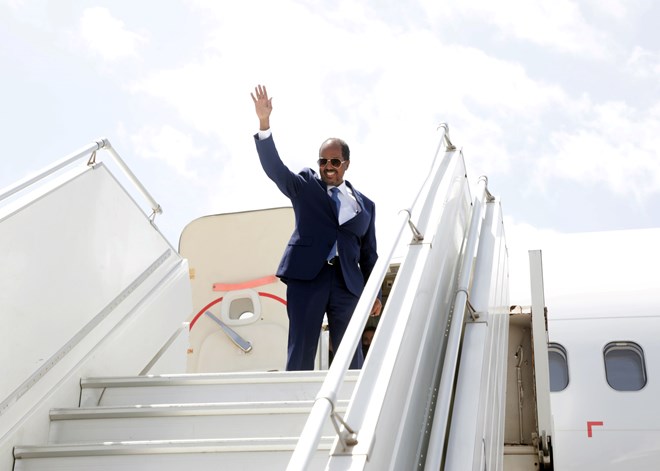
Mar 07(Jowhar)-Madaxda Ururka Bulshada Bariga Afrika (EAC) ayaa maanta oo Sabti ah yeelanaya kulan muhiim ah, iyadoo madaxda siddeedda dal ay isugu tagayaan magaalada Arusha, si ay uga qayb galaan Shirka 25-aad ee caadiga ah ee EAC.
Israel Carries Out Fresh Round of Wide-Ranging Strikes on Iran
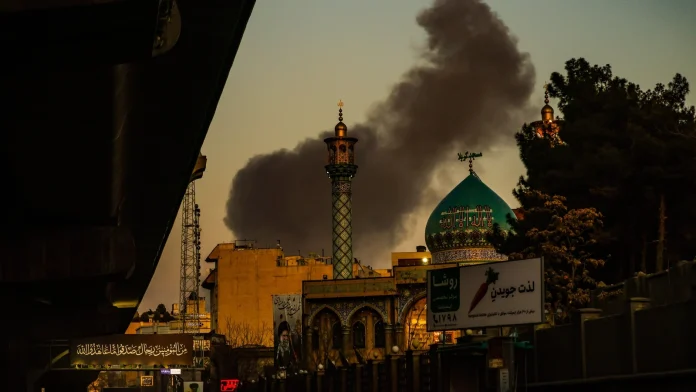
When Cities Became Targets: A Week That Rewrote the Map
It began, as so many tragedies do, with a sound that should not belong to a capital city: a concussive boom, then the distant clatter of glass and the low, human roar that follows disaster. Tehran’s skyline — usually silhouetted by minarets and a slow, dust-hued light — lit up with smoke. In the space of hours, Sunday felt like a line being redrawn, borders and certainties blurred by missiles, sirens, and the smell of burning rubber.
This was not a small flare-up. Over the past week, more than 3,000 Iranian military targets were hit by US and allied forces, according to US Central Command: Revolutionary Guard headquarters, missile batteries, command-and-control centers, naval vessels and subs. Iran answered with missile and drone strikes on Israel and neighboring Gulf states. Israel, in turn, announced a “broad-scale” wave of strikes on Tehran. The briefest glance at the map shows why this is terrifying: Tehran, the Strait of Hormuz, Beirut, Baghdad — all nodes in a tight, combustible network.
On the ground: noise, smoke, fear
“I was at Mehrabad when the first blast happened,” says a taxi driver in western Tehran, voice rough from sleep and smoke. “We thought an earthquake had come. Then we saw the airport wing burning. People ran without shoes.” The photograph seared into the world’s feed — a plume rising above Mehrabad — is a portrait of shock and ordinary life interrupted.
In Lebanon’s battered south, where Hezbollah holds deep roots, hospitals overflow. The Lebanese health ministry reports at least 217 killed in Israeli airstrikes; the Norwegian Refugee Council says some 300,000 people have been displaced within Lebanon alone. “There is nowhere else to go,” a schoolteacher in Tyre said, as children huddled under blankets in a converted gymnasium. “We have become the story the world clicks past.”
Numbers That Matter — and Their Limits
- 3,000+ Iranian targets struck in recent US-led operations (US Central Command)
- Brent crude jumped to $92.69 per barrel — up 8.5% on the day and nearly 30% for the week
- At least 926 dead, according to Iran’s health ministry (AFP could not independently verify)
- 217 killed in Lebanon, per Lebanon’s health ministry
- Six US service members confirmed killed; three UN peacekeepers wounded
- Strait of Hormuz carries nearly 20% of the world’s crude oil and roughly 20% of global LNG
Numbers help to orient us. They do not, however, convey the sound of a neighborhood in Tel Aviv as sirens cascade through the early evening, or the small, private rituals families perform when burying a child. And numbers are always contested: casualty figures from hot zones are notoriously difficult to verify; claims and counterclaims swirl with propaganda and panic.
Energy on Edge: Why Markets Shudder
When a narrow waterway can carry a fifth of the world’s oil and gas, geopolitics is not just about flags and force — it is about kitchens and factories and the cost of getting to work. Traders watch the Strait of Hormuz like a pulse. Disruptions there ripple outward: Brent crude spiked to $92.69 a barrel, an 8.5% jump in a single day and nearly 30% in a week. For consumers, that looks like higher fuel bills. For emerging markets, it can mean recessionary pressure. For governments, it sparks debate about strategic reserves and alternative routes.
“The economy feels every bullet,” a tanker captain in Dubai told me. “If the sea lane closes or we can’t be assured of insurance, cargo sits in port — and prices rise before anyone has time to think.”
Voices from the Capitals: Power, Posture, and the Language of Ultimatums
If the language of war is blunt, so too has been the rhetoric from leaders. On social media, President Donald Trump wrote, “there will be no deal with Iran except unconditional surrender.” White House officials echoed a similar posture: that when the United States determines Iran no longer poses a threat, Tehran will have effectively capitulated whether it admits it or not.
“We’re tracking everything,” said US Defense Secretary Pete Hegseth on television, brushing off reports that Russia had shared intelligence with Iran. On the other side, Iran’s UN ambassador reminded the world that leadership succession, should it occur, would be a domestic matter: “The selection of Iran’s leadership will take place strictly in accordance with our constitutional procedures,” he said.
World leaders begged for a different path. UN Secretary-General António Guterres called for “serious diplomatic negotiations,” warning of a conflict that “could spiral beyond anyone’s control.” Even Russia’s Vladimir Putin voiced support for an immediate ceasefire in a conversation with Iran’s interim president, signaling that even adversaries fear the contagion of a wider war.
Diplomacy strained, humanitarian alarms sounding
Diplomacy feels like the most fragile thing in a room full of loud weapons. Humanitarian agencies are scrambling. Hospitals report shortages of medicine; refugee organizations speak of routes clogged with families fleeing bombardment. And yet negotiations stall: one side demands unconditional surrender, another vows to choose its destiny without foreign interference.
What Happens Next?
We stand at a crossroads that is both strategic and moral. Will this spiral into a long, grinding war? Will alliances fracture or harden? Will the global energy system adapt quickly enough to keep the lights on in distant homes?
Those questions are not rhetorical. They are practical: how much fuel should a household stock if prices surge? How many communities should brace for waves of refugees? How will fragile states in the region — already weakened by debt, drought and displacement — absorb more shocks?
“The failure is not in the missiles,” an aid worker in Beirut told me. “It is in our inability to imagine a world where these civilians are not collateral.”
Faces, Not Footnotes
Beyond the strategy rooms and market tickers, there are faces: children tracing the smoke lines in the sky, parents trying to remember where they left vital medicines, old men in coffee shops arguing about the last time diplomacy worked. Their lives are not statistics to be toggled on a newsfeed. They are small constellations of hope and despair.
As you read this, you might feel distant — and you should also feel implicated. Wars are made of decisions in rooms far away, but their consequences arrive at doorsteps nobody expected. What responsibility do we, as citizens of a connected world, bear to those living beneath the roar? How do we ensure our leaders choose restraint over rhetoric?
A Call to Watch, to Listen, and to Care
The immediate future is uncertain. Markets will continue to surge and dip, commanders will plan and replan, and humanitarian corridors will be negotiated and violated. What we can do is refuse to let numbers replace names; to remind ourselves that behind every strategic target is a neighborhood, behind every escalation, a child who will remember the sound long after the cameras leave.
For now, the streets are full of smoke and the feed is full of claims. Somewhere in between lies the truth — and the hard work of diplomacy, empathy, and rebuilding that will be needed once the guns fall silent.
Australia mandates age verification for porn sites to block under-18s

When the internet gets a bouncer: Australia’s new rules to keep kids away from adult content
It began, as many changes do, with a quiet, necessary awkwardness: a parent at a school gate, scrolling through a morning feed, pausing on a headline that made the world feel a degree colder. “They’ve actually done it,” said Claire Mendoza, a mother of two in suburban Melbourne, still clutching her reusable coffee cup. “It feels like someone finally decided the online world needs a front door as much as a playground does.”
From this week, Australia’s online landscape looks a little more guarded. In an effort to shield children from sexually explicit material, extreme violence and content that normalises self-harm or eating disorders, the country’s internet gatekeepers—pornography sites, search engines, app stores, gaming platforms and even AI chatbots—are now required to verify that users trying to access age-restricted material are adults.
The shift is part of a broader push the government began late last year to tighten digital safety for minors. It builds on a December measure that barred users under 16 from opening social media accounts in Australia, and stretches further: the new rules compel platforms to move beyond the flimsy “I am 18+” checkbox and adopt actual age verification systems.
Not a trickle but a tide: who this affects
This is not merely a mandate for porn sites. It ripples across the digital economy.
- Search engines must blur or de-prioritise pornographic and vividly violent results for users who aren’t logged in.
- App stores and gaming networks must flag and restrict “adult-only” content from under-18 accounts.
- Generative AI companions—chatbots that can produce sexual or violent narratives, or material glamorising self-harm—must require age confirmation before generating such content.
Some platforms did not wait for the deadline. “We began pausing new registrations this morning,” said a spokesperson for a mid-sized adult entertainment provider who asked not to be named. “It’s disruptive, but the writing was on the wall. We’re rewriting onboarding flows and vetting providers.”
How do you prove you’re old enough? The tech, and the trade-offs
Age verification can look very different depending on the technology: scanned identity documents, third-party verification services that link to government registries, or biometric checks that compare a selfie to an ID photo. Each brings different trade-offs between efficacy and privacy.
“We can reduce a lot of accidental exposure by using robust verification,” said Dr. Aisha Navarre, a digital safety researcher at a Sydney university. “But there’s a privacy paradox here. To prove you’re over 18, many people have to hand over the same personal data that, in other contexts, could be misused.”
Privacy advocates warn of mission creep. If a kid’s online life now relies on corporate or third-party credential checks, where will that data live? How long will it be stored? And what happens if it is breached? Parents, too, fear exclusion—many teens and some vulnerable young people lack government IDs or are reluctant to submit personal documents for fear of family discovery.
“My daughter can’t have a driver’s license yet,” said Joel Kirwan, a single father in Brisbane. “She’s 17, part-time job, saving for a car. If the only way to watch seeded educational documentaries or research is to hand over ID to a private company—what does that do to her privacy? To our trust?”
Enforcement and consequence: the teeth behind the rules
The eSafety regulator has warned it will act against platforms that drag their feet. Financial penalties are significant—designed to be a clear deterrent—and could reach into the tens of millions of dollars for systemic breaches.
“We will not allow loopholes that mean kids can still stumble into harmful worlds,” said Julie Inman Grant, Australia’s eSafety Commissioner. “This is about aligning the online commons with the offline standards we already accept—no children into adult shops, no underage sales at bottle shops. The internet must have similar guardrails.”
The regulator says it will monitor compliance, conduct audits and pursue enforcement for systemic non-compliance. But it also acknowledges the limits of law alone. “No one law will erase all risks overnight,” an official noted. “This is one big step among many.”
Voices from the community: hope, scepticism, practicality
The reactions are a mixture. For some parents and teachers, the rules feel like overdue common sense.
“As an educator I see the fallout,” said Sarah Patel, a high-school counsellor in Adelaide. “Kids are getting desensitised, copying dangerous trends. Anything that slows that exposure and creates mandatory support signposts for suicidal ideation or disordered eating—especially when search engines can direct a young person to help first—can save lives.”
Others are cautious. Technology freelancers and privacy lawyers point out the risks of centralising identity verification in private platforms. Marginalised youth—those fleeing abusive homes, Indigenous teenagers in remote communities without mainstream identity documentation, or new migrants waiting for paperwork—could be inadvertently blocked from legitimate resources.
“We must ensure safe content and help seekers are accessible, but not at the cost of excluding the most vulnerable,” said Tomas Wei, a digital rights lawyer. “Design choices matter.”
Global echo: Australia isn’t alone, but it’s notable
Australia’s move mirrors a global trend: countries grappling with how to tame a vast, algorithmically mediated public square without eroding civil liberties. The European Union’s Digital Services Act and various national efforts in the UK and parts of Asia also aim to create clearer responsibilities for big tech platforms.
Yet Australia’s approach is distinct in its breadth—linking AI systems, search engines, app stores, and gaming platforms under a single protective umbrella. It also complements an emerging international conversation about a “digital duty of care” for platforms that profit from user engagement while bearing the consequences of harm.
What’s next—and what can readers do?
These rules raise deep questions: How do we balance safety with privacy? How do we protect children without turning the internet into a fortress that only the well-documented can enter? How should tech giants, governments and civil society share responsibility?
For readers wondering what to do now: talk to the young people in your life; ask how they use the internet and what they’ve seen. Advocate for transparent verification options that preserve privacy—age tokens, limited data retention, or neutral third-party checks. Support community organisations that help marginalised youth access online health resources without cumbersome ID checks.
“The challenge is designing systems that are both protective and humane,” Dr. Navarre said. “If we remember that children are citizens with rights, not just users, we make better choices.”
So, will a stricter online door usher in a safer childhood? Or will it create new, quieter divides? That depends as much on how the rules are implemented—and who gets listened to—as it does on the rules themselves. As a society, we can demand safety without surrendering privacy. We can insist on accountability without abandoning compassion. Will we?
Huntley Remains in Critical Condition After Violent Prison Attack
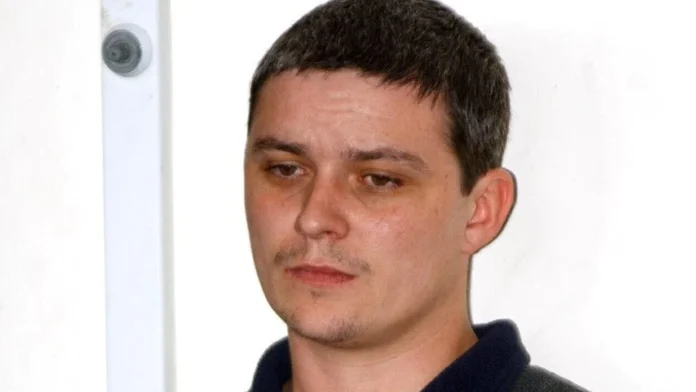
Blow in the workshop: a life of headlines ends on a hospital bed
On a cold February morning at HMP Frankland, the hum of machinery and the smell of dust and cardboard—ordinary sounds of a prison recycling workshop—turned ugly and sudden. Reports say Ian Huntley, the man convicted in one of Britain’s most notorious child murders, was attacked there on 26 February and left with catastrophic head injuries. He is now in hospital on life support, allegedly blinded and not expected to regain consciousness.
The image is jarring: a 52-year-old man, once a figure of international revulsion, reduced to a body in a clinical bed while nurses whisper updates to relatives. In the weeks since the headlines first broke, the scene has become a mirror in which Britain sees its anxieties about prisons, punishment and safety reflected back at it—distorted, complicated, deeply human.
A crime that never let a town sleep
The name Ian Huntley still pulls at the memory. On 4 August 2002, ten-year-olds Holly Wells and Jessica Chapman walked away from a family barbecue in Soham, Cambridgeshire, to buy sweets. They never came back. Huntley was later convicted of their murders and given a life sentence with a recommendation that he should serve at least 40 years. The case scarred a nation: vigils, an unusually intense media scrum, and a long, painful trial that revived a town’s grief every time the story returned to the surface.
After the recent attack, Huntley’s only daughter, Samantha Bryan, told The Sun on Sunday: “There’s a special place in hell waiting for him.” It is a sentence that bristles at the edge of compassion and fury, a shorthand for the mixture of grief and righteous anger survivors and communities often feel when faced with crimes of such brutality.
In the shadow of Frankland
HMP Frankland sits in County Durham, an imposing complex that houses some of Britain’s most dangerous offenders. Maximum-security, ringed by fences and cameras, its corridors are meant to hold violence at bay. Yet prisons are not vacuum-sealed fortresses; they are crowded human ecosystems where rivalries, reputations and retribution bubble under the surface.
Durham Constabulary confirmed that a man in his mid-40s was detained at the scene on the day of the attack. Beyond that, official statements have been cautious. A police spokesperson said only that the matter is under active investigation and that they will not be commenting further while inquiries continue. The restraint is understandable; details released too quickly can make an already fraught situation worse.
It is not the first time prisoners have tried to take justice into their own hands. In 2010, robber Damien Fowkes attacked Huntley with a homemade blade, carving an 18cm wound in his neck that required 21 stitches. At the time, Fowkes reportedly told a prison officer, “Is he dead? I hope so.” The memory of that incident hangs over Frankland like a cloud—one more reminder that notoriety invites danger behind bars.
Voices from the margins: anger, sorrow, and weary resignation
Outside the gates of Frankland, opinions ripple and collide. “You never forget the noise of Soham,” said a man who lives in the nearby village and asked not to be named. “People there still talk about it like it happened yesterday. But does anyone think this was the right thing? Vigilante violence doesn’t heal anyone.”
A prison officer, speaking on condition of anonymity, painted a portrait of a place trying to balance security and humanity. “We’re overstretched,” they said. “Staffing shortages make it hard to keep constant watch. You can’t stop what you can’t see, and these workshops are quieter, less supervised places where things can happen fast.”
“This case forces us to ask what our prisons are for,” said a leading criminologist I spoke to. “Are they sites of rehabilitation, punishment, containment—or some uneasy mix of all three? High-profile inmates present particular problems: they are magnets for both obsessive hatred and extreme caution.”
The larger pattern: prisons under pressure
This attack is not an isolated incident but sits within a wider trend that authorities have warned about for years. Ministry of Justice statistics have shown a rise in assaults in some prison estates over recent seasons. Analysts point to a toxic brew: rising prisoner numbers in particular categories, stretched staff rotas, underfunded rehabilitation programs and, in some places, an emboldened inmate culture where reputation and retribution matter more than rulebooks.
Globally, nations wrestle with the same problem. Overcrowded cells, limited mental-health support, and dwindling resources breed desperation and violence. Put simply, when institutions responsible for care and custody are strained, the space for predictable, safe outcomes narrows.
What happens next?
- Police and prison investigators will piece together the attack—how it happened, what weapons were used, whether protocols were followed.
- There will be questions about supervision in workshops, prisoner movement, and whether risk assessments were adequate for a man with Huntley’s notoriety.
- Politicians and policymakers may use the moment to argue for tougher measures or, conversely, for investment in staff and mental-health services to prevent violence.
Questions we struggle to answer
When the dust settles, the public is left with moral thickets. Does the knowledge that some criminals are loathed justify a failure to keep them safe? How do we provide justice but also uphold standards of care that separate civil society from the chaos of the streets? Are we prepared to admit that prisons reflect the inequalities and resentments of the societies that build them?
These are hard questions without neat answers. They demand more than outrage or tweets; they demand sustained public conversation about what punishment means in the 21st century and what we expect from institutions designed to hold human beings at their worst moments.
Ending notes: a town remembers, a system watches
In Soham, memorials still mark the lives of two children whose names will never erase the pain of their absence. Around Frankland, staff and inmates alike will be left to reckon with another violent puncture in an already fraught system. For the rest of us—isn’t it worth pausing to ask what kind of justice we want, and what sort of institutions can deliver it without becoming a second source of harm?
Violence begets more violence; headlines pass; policies shift and, sometimes, they don’t. But the human residue—grief, anger, unease—stays. As the investigation unfolds, perhaps the most useful response is not only to react, but to listen: to former victims, to prison workers, to communities, and to the quiet experts who keep returning to the same hard truths about containment, care and the costs of neglect.
Iranians Share Fears and Hopes as Conflict Nears One-Week Mark
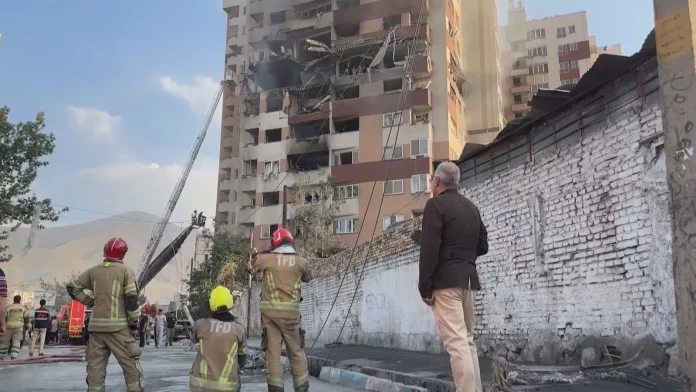
Inside Tehran: A City Between Jubilation and Fear, One Week into a New War
It has been almost a week since the attacks that have upended life across Iran—an assault that, according to residents I spoke with, involved the United States and Israel and culminated in the reported killing of Ayatollah Ali Khamenei and senior Revolutionary Guard figures.
Out in the neighborhoods of Tehran, the aftershocks are both literal and emotional. Front doors rattle from distant blasts; shop shutters sit half-drawn; the hum of daily life has been replaced by the hushed cadence of survival. Yet among the rubble of a disrupted routine, there are moments of bright, fragile human reaction—songs of joy, shouts of grief, and a kind of exhausted bewilderment that seeps into every conversation.
“We were all shouting ‘thank God’”
“I cannot describe how we felt at that moment,” a woman in Tehran told me, her voice low over a crackling phone line. “We were all just shouting at how happy we are. We all went to the windows and we were all shouting ‘thank God’ for giving us such an experience.”
Her words echoed across other accounts: spontaneous gatherings in hallways, neighbors crying in the street, the soft astonishment of a city that has known decades of political theater and repression. An elderly woman, she said, placed her hands on her chest and whispered, “thank God, he finally heard the mothers of this land,” a line that reduced the caller to tears as she recalled it.
Moments like these complicate any simple story of a besieged populace. In Tehran, joy and dread live side by side, separated sometimes by a single windowpane.
Carnivals of fear
But not everyone in the city is celebrating. A second woman, who fled Tehran in the days after the strikes, described a different nightly ritual: regime supporters taking to the streets in what she called “carnival-like” displays—loud music, fireworks, and organized processions. “The level of repression is so intense that even right now, the regime’s supporters are holding these celebrations every night, making loud noise and disturbing people,” she said.
“I don’t understand how someone whose leader has died is holding carnivals,” she added. “It feels like a public performance designed to frighten.”
Whether motivated by genuine grief, orchestrated loyalty, or sheer survival instinct, such displays have their own chilling logic: in an environment where dissent can bring brutal consequences, public spectacle becomes a weapon as well as a signal.
Lives Interrupted: The Everyday Toll
What does a city under bombardment look like on the ground? The picture, residents say, is deceptively mundane. Most strikes, they report, are aimed at military installations—IRGC bases, security headquarters, logistics hubs. But blast waves don’t read maps: windows shatter in adjacent apartment blocks, walls crack under the pressure, and people are warned away from whole neighborhoods flagged as potential secondary targets.
“Tehran’s situation is still closed down,” a man who remained in the capital told me. “Less than 2% of the shops we see open have customers. No one is coming in to buy anything. Most cities, including Tehran, look empty and quiet.”
This is not simply an economic disruption; it is the reconfiguration of daily life. Markets, teeming cafes, and public squares—spaces where ordinary citizens meet, trade, argue and laugh—have become quiet. For a city of roughly nine million people in the metropolitan area, even a partial exodus overwhelms families, transport networks, and the social fabric.
Hospitals and the human shield
Perhaps the most explosive allegation I heard is one that hits at the heart of humanitarian law: the claim that regime officials are sheltering military leaders inside hospitals. “I have friends who are doctors and nurses,” one caller said. “I’m really worried about them when they have to go to that hospital, because they hide the people they want to keep safe—important generals and commanders—inside hospitals.”
If true, that would put civilians and medical staff in grave danger and would blur the lines protected by international humanitarian law, which strictly prohibits using medical facilities for military purposes. For medics on the ground, the dilemma is stark—care for the wounded, or risk becoming collateral in a strategic calculation.
Voices from Within: Fear, Resilience and Fracture
Across the calls I compiled, a few themes kept returning: fear of reprisal, exhaustion with a state that uses public life as theater, and a fragile hope that this could be a historical hinge moment.
“They are repressing people very intensely in a structured way,” the woman who fled Tehran said. “When I see things like this, I get scared.”
Another Tehran resident described the odd normality of survival: “You go to sleep hearing explosions. You wake up and check your neighbors. You haggle for medicine. You teach your children rhythm of drills. These are the new lessons—the ones our grandparents never wanted to teach us.”
An academic in exile, who asked to speak anonymously, framed the moment in a larger historical arc. “Regimes rely on two things: fear and ritual. When a ritual—marches, sermons, flag-waving—collides with open grief or jubilation, the social contract frays. That’s what we are seeing,” he said. “But the outcome is not deterministic. People will act; whether they act collectively is the big question.”
What does the rest of the world see?
For outside observers, the conflict’s contours are often parsed in sober policy terms: alliance constellations, missiles exchanged, sanctions recalibrated. For Iranians I spoke with, the calculus is far more intimate. They worry about electricity cuts, about supply chains for bread, about whether their children will be able to go back to school. Many spoke of immediate practical fears—where to sleep if their building becomes unsafe, how to access medication, whether a friend or relative will return from the front.
“We are not asking for geopolitics to be kind to us,” one woman said. “We are asking for the right to be alive, to cook food, to sleep at night.”
Questions for the Reader—and for the World
What does it mean to witness from afar? How should a global community respond when civilians are caught between the machinery of war and the ritual of power? These are not rhetorical questions only for diplomats and generals; they are ethical queries for anyone who reads the news over coffee and scrolls on.
As a journalist, I found that the most powerful stories were not the declarations from foreign capitals but the small, human testimonies of people rearranging their lives. They are full of contradictions—joy at a reported death of a leader, fear of reprisals, sorrow for lost lives—even as they expose larger themes that will matter long after the rockets fall: the resilience of communities, the weaponization of public space, and the fragility of institutions meant to protect the most vulnerable.
Where do we go from here?
There are no easy answers. For now, Tehran waits, holds its breath, cleans shattered glass from doorways, and listens for the pattern of the next strike. Residents I spoke with wanted one thing above all: that the world not reduce their experiences to headlines and statistics. “Remember us as people,” said one voice. “Not just as a map.”
For those watching from afar, perhaps the smallest, most humane action is to listen—to stories like these, to the texture of daily fear and joy—and to let those stories shape how we imagine the future, and the responsibilities we bear toward it.
Former U.S. Presidents to Attend Civil Rights Leader Jesse Jackson Memorial
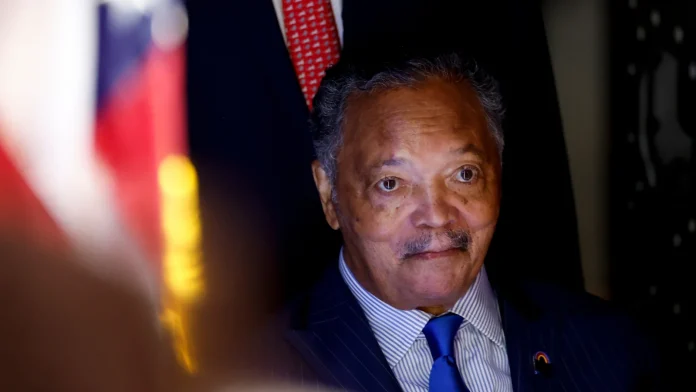
Chicago Stands Still: A City, a Movement, a Man
The morning the House of Hope opened its gates, the South Side felt like it had folded back a page of history and laid it out in the sun.
Ten thousand seats waited under vaulted ceilings and banners, but outside the rows of chairs the crowd pressed in, knitting itself together in coats and scarves, in choir robes and suits, in faces that had known Jesse Jackson’s rallies, his phone calls, his bargains at the bargaining table. People carried flowers, placards, and photographs; they carried stories. They had come from across the United States and from neighborhoods a few blocks away, all to mark a life that had pulled millions into politics and pushed a nation toward the hard work of inclusion.
Three former presidents—Joe Biden, Barack Obama and Bill Clinton—were expected to join thousands in a public memorial that felt less like a political pageant and more like a family reunion for a movement. Former first ladies Jill Biden and Hillary Clinton were also slated to attend. President Donald Trump, according to the White House, would not be there, citing scheduling conflicts and ongoing obligations.
Voices in the Room
“We come to reckon with loss, yes,” Chicago Mayor Brandon Johnson told reporters outside the church in a measured voice, “but we also come to plan. Rev. Jackson taught us how to make power meaningful for people who were never meant to have it.”
A longtime PUSH organizer, Thomas Reed, his hands callused from decades of canvassing, wiped a tear and said, “He wasn’t a man who delivered speeches and left. He made sure someone was watching the polls, that a young person had a voter registration card, that a factory worker got a fair contract. That’s how you change a life—one person at a time.”
Across the aisle a high school teacher, Maria Alvarez, who had driven in from Indiana, summed up why so many were here: “He didn’t just shout about rights—he taught us how to use them. He taught my students how to show up.”
A Life That Bent Toward Justice
Rev. Jesse Jackson, who died last month at the age of 84, was born in South Carolina and came of age in a segregated America. He rose from the churches of the South into the national spotlight in the wake of Martin Luther King Jr.’s assassination, becoming one of the most forceful voices for civil rights, voter registration, and economic justice.
He founded Organization for a Better America and later Operation PUSH—an effort launched to push corporations, labor unions and government to be more accountable to communities of color. In the 1980s and 1990s he built the Rainbow Coalition, joining a ragtag assembly of groups—farmers, laborers, people of faith, Black organizers—into a political network that aimed to broaden democratic participation.
Jackson ran for the Democratic presidential nomination twice, in 1984 and 1988. Those campaigns were more than symbolic bids: they registered new voters, shifted the party’s conversation toward poverty and inequality, and made “the Rainbow” a template for coalition politics across the country.
- Led major voter registration drives that mobilized hundreds of thousands across the 1970s–1990s
- Founded Operation PUSH in 1971 and later merged efforts into Rainbow/PUSH
- Twice sought the Democratic presidential nomination (1984, 1988), helping to expand the party’s reach
Songs, Sermons, Strategy
The memorial will include performances by Jennifer Hudson, BeBe Winans and Pastor Marvin Winans—voices that trace a line from gospel to the national stage, from church basements to arena floors. Music has always been part of Jackson’s palette: it was the cadence of his sermons, the hymn behind his organizing, the rhythm that moved crowds to register and to vote.
“Music was one of his organizing tools,” said Dr. Elaine Marshall, a scholar of American social movements. “He knew how a choir could hold a crowd while a new idea found its footing. He knew how to use story and song to make politics feel like belonging.”
Inside the House of Hope, the program promised eulogies, recollections from civil rights veterans, and a few sharp moments of political reckoning. The service functioned as ritual, remembrance, and road map all at once—a public rehearsal of values that Jackson had spent a lifetime trying to institutionalize.
Memory as Political Reply
It would be naïve to separate the memorial from the politics of the moment. Scholars and activists alike see the attendance of prominent Democrats as more than mere homage: it reads as a public assertion of values—multiracial inclusion, affirmative policy, and the importance of voting rights—at a time when those ideas are under pressure.
“This gathering is not only about honoring a person,” said Jane Dailey, a historian at the University of Chicago. “It’s about reminding the nation that the right to remember is itself contested. Efforts at the federal level in recent years have rolled back diversity programs and pushed back against how we teach and commemorate slavery and civil rights. That makes this day’s symbolism urgent.”
Indeed, the last half-decade has seen contentious battles over voting access and the framing of American history. Dozens of states enacted voting restrictions after 2020, according to civil rights groups, and cultural skirmishes over school curricula and public monuments have intensified. For many, Rev. Jackson’s life is a counterargument to those trends: a demonstration of the power of broad-based political participation.
What People Brought With Them
The crowd did not look like a single political column. There were elderly couples who remembered St. Sabina and Operation PUSH from the 1970s; young organizers in hoodies clutching flyers for local races; ministers in collars trading stories of how Jackson had once mediated a dispute or brokered a corporate pledge. Outside, food trucks offered fried chicken and collard greens; inside, church ushers handed out programs with slogans—”Keep the Rainbow Alive”—and the dates of upcoming voter registration drives.
“He made politics feel like a neighborhood potluck,” said Tanya Brooks, a community organizer who came with a group of volunteers. “Everyone brought something—time, skills, care. And everyone was welcome at the table.”
Beyond Chicago: The Questions He Left Behind
As people filed out into an afternoon that smelled of brisk air and spent incense, a few questions hung in the open space he left behind. How will the movement he helped shape adapt to a more fractured political landscape? Who will train the next generation to do the grunt work of democracy—knocking on doors, staffing precincts, teaching civics in living rooms?
“We have to think less about nostalgia and more about institution-building,” Dr. Marshall urged. “Rev. Jackson’s genius was that he didn’t stop at speeches. He put people into positions of influence. That’s what organizers need to do now.”
So what does the scene at the House of Hope teach us? That rituals still matter; that grief and strategy can sit side by side; that a single life can be a hotspot for a country’s broader debates about memory, race, and who counts as an American. It also asks the reader—where will you stand when the next movement asks you to show up?
The memorial will close but the questions remain, like a chorus unfinished. Outside, banners fluttered in a cold wind as people took one last look at the marquee and walked back into the city, already planning the next meeting, the next registration drive, the next act of civic care. In that perpetual organizing, perhaps the clearest tribute to Jesse Jackson is not the speeches or the names in the program, but the work that keeps unfolding day after day—slow, steady, and stubbornly hopeful.
Second Turkish-owned vessel passes through the Strait of Hormuz
Another Turkish-owned vessel has successfully passed through the strategically significant Strait of Hormuz, marking the second such passage in recent weeks. The vessel, carrying...
MP warns Israeli occupation in southern Lebanon has become ‘very dire’
In Southern Lebanon, Homes Become Frontlines — Voices from a Region Holding Its Breath
The sky over southern Lebanon has settled into a kind of...
U.S. and Iran hunt for missing American pilot after warplane shot down
Skyfall: When the Night Became a Hunt — Two US Jets Downed, a Pilot Missing, and a Region Holding Its Breath
The Gulf night stank...
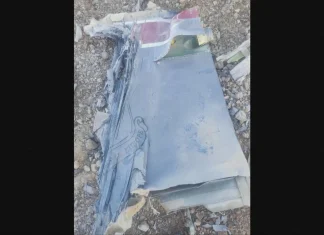
Live: US fighter jet shot down over Iranian airspace
When the Sky Broke: A Jet Falls and an Old Rivalry Reignites
The sun had not yet finished its climb when the news came in:...
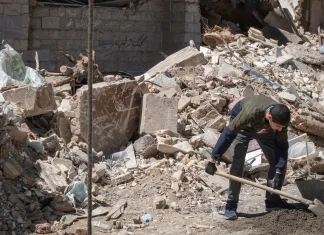
US fighter jet downed by Iran; pilot reportedly rescued
Smoke over the desert: an American warplane falls, and a region holds its breath
There are moments when the desert seems to inhale, as if...