Home Blog Page 4

Artemis II Explained: Journey Around the Moon and Back

Artemis II at a glance: To the Moon and back

Under a humid Cape Canaveral sky: Tonight, humans return to the Moon’s doorstep

There is a particular smell in the air tonight at the Kennedy Space Center—salt and diesel and the sweet, scorchy tang of rocket fuel that seems to settle into your lungs and your expectations. The countdown clock glows on a wall of trailers like a metronome for the planet. Families clutch thermoses and foam fingers; a man with a faded Apollo T‑shirt tells his granddaughter to look alive because “this is the stuff of Sunday school for future astronauts.”

At 6:24pm Eastern Time (11:24pm Irish time), a towering orange-and-white silhouette will attempt to write a new line in human history. Artemis II, NASA’s first crewed voyage around the Moon in more than 50 years, is poised to lift off from the same Florida coast that launched the age of Apollo. It’s not just a technical milestone; it’s an evening that mixes nostalgia, nerves, and the audacity of a future still mostly imagined.

The mission at a glance: what Artemis II means

Artemis is a program stitched together across decades—an arc that traces the retirement of the space shuttle, policy turns in Washington, and a new patchwork of public and private partnerships. At its heart is a simple, stubborn goal: return humans to the lunar neighborhood to stay, and use the Moon as a springboard to Mars.

Artemis II will be short by interplanetary standards—about ten days in space—but long in symbolic weight. It follows Artemis I, the 2022 uncrewed shakedown that lofted Orion on a lunar loop and brought it back to Earth. This time, four people will sit strapped inside Orion to verify that the spacecraft, systems, and procedures are ready for the more complex tasks ahead, including a planned crewed lunar landing slated for Artemis IV around 2028.

Quick facts

  • Launch window: 6:24pm ET (11:24pm Irish time).
  • Mission duration: approximately 10 days.
  • Vehicle: Orion crew module atop the Space Launch System (SLS), roughly 98 meters tall.
  • Partners: NASA working alongside commercial companies such as SpaceX and Blue Origin, and international agencies—most notably the European Space Agency (ESA), which provided Orion’s service module.

Meet the crew: four people, many firsts

There is an intimacy to the moments before launch: last hugs, a joke about packing the right socks, a quick survey of family photos taped to the inside of helmets. Then the faces become not just characters in a mission patch but mirrors for millions watching.

Reid Wiseman, 50, a former naval aviator, will command the flight. “You don’t get used to feeling this lucky,” he told me near the astronauts’ quarters, smiling with an honesty that felt like a private confession. “But you do get used to the weight of responsibility.”

Victor Glover, 49, who will pilot Orion, carries another kind of weight: representation. If the mission goes as planned, he will be the first Black man to travel around the Moon. “I grew up looking at images of space and feeling like they weren’t made for people like me,” he said. “This is proof that we belong up here, too.”

Christina Koch, 47, will be the first woman to fly the Artemis lunar circuit. “We keep opening doors,” she told a small crowd of students who came to see the launch. “One step for everyone who dreamed of more.”

And Canada’s Jeremy Hansen, 50 and a former fighter pilot, brings the international dimension into sharp relief as the first non‑American slated to fly around the Moon with NASA on a crewed flight. “My grandmother used to say, ‘We’re all passengers on this blue marble,’” Hansen told a journalist. “Tonight, we’re circling her.”

The hardware: a marriage of legacy and innovation

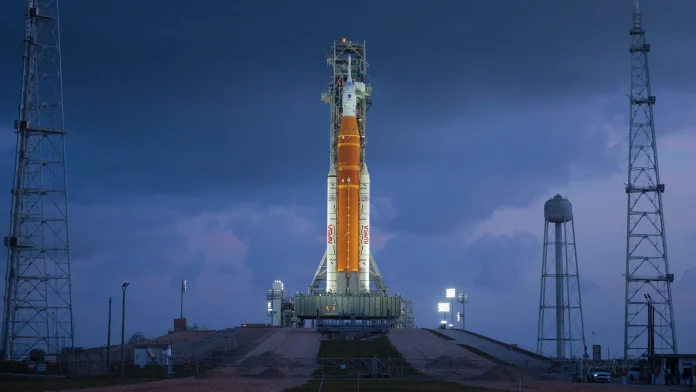
Stacked on the pad, the Space Launch System looks like a monument to American engineering: 98 meters of paint, welds and history, with RS‑25 engines that trace their lineage back to the shuttle era. The Orion capsule above it carries an ESA-built service module that supplies electricity, propulsion, and life support—an emblem of the program’s multinational nature.

Behind the scenes are private contractors—SpaceX and Blue Origin among them—tasked with developing lunar landers and elements that will turn sorties into sustained presence. It’s a different model from Apollo: corporate partners, international modules, and a political consensus that has shifted across administrations but converged on one thing—a desire to go back and stay.

The arc of the flight: precision, pause, and the far side

Nothing about the trajectory is casual. The rocket will not point directly at the Moon and sprint. After a powerful ascent, Orion will settle into an initial orbit around Earth where the crew will run through tests: life support checks, communication trials, and simulated manual dockings. This is a human-in-the-loop proving ground; if anything is amiss, mission controllers can abort before committing to the lunar leg.

When the time comes, Orion will fire and slip free of Earth’s gravity. For several days, the astronauts will run experiments and collect data. Then the capsule will arc out to the Moon and pass over its far side—an eerie moment when radio silence blankets the ship and the four people on board become, in purely physical terms, farther from Earth than any humans since Apollo 13.

To put that distance into perspective: Apollo 13’s crew reached about 248,655 miles (400,171 kilometers) from Earth in 1970. Missions like Artemis II could very well nudge the human record farther, a reminder of how exploration is often measured in inches and miles of daring.

Risks, repairs, and re‑entry

Space is unforgiving. During Artemis I, NASA discovered unexpected erosion on Orion’s heat shield. Engineers have since recalibrated approach angles and re-entry trajectories so the capsule meets the atmosphere a touch gentler than before, but re-entry remains one of the mission’s riskiest moments. The plan is for the spacecraft to follow a “free‑return” arc—using lunar gravity to sling it back toward Earth—and then endure a fiery plunge before parachutes slow the descent for a Pacific Ocean splashdown off the California coast.

“We’re not improvising,” said a mission safety lead. “But we’re also not naïve about the unknowns. This is test flight, exploration, and learning all at once.”

Why the world should care

Beyond the spectacle, Artemis II is a cultural and technological barometer. It will test the alliances and industrial base needed for sustained exploration. It will inspire classrooms and economies, from students in Lagos sketching lunar bases to engineers in Turin refining cooling systems for habitats. It raises questions, too: Who gets to share in the resources of space? How will partnerships between nations and private firms shape who steps onto another world next?

Tonight will not finalize those debates. But it will make them more urgent, more real, and more human.

How to watch

If you’re planning to tune in, the live feed will begin ahead of the 6:24pm ET launch window, and watch parties are set up across continents—from museums in Dublin to cafés in Nairobi. Bring a blanket, bring curiosity, and remember: the engines will scream, but the moment will settle into memory like the first paragraph of a longer story we are only beginning to tell.

So watch, listen, and ask yourself: what will it mean for your children to grow up under a sky where humans routinely come and go from another world? The answers won’t arrive tonight, but as the rocket rises, the question itself feels like progress.
NASA Readies First Crewed Moon Mission in Half a Century

NASA prepares for first crewed lunar mission in 50 years
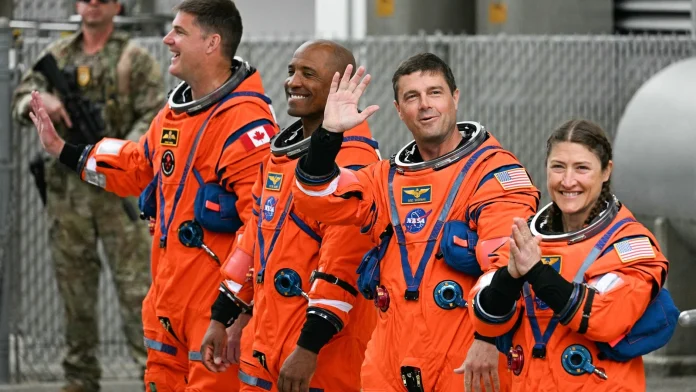
The astronauts walk out before traveling to the launch pad to board the Space Launch System (SLS) rocket for the Artemis II crewed lunar mission

Tonight, the Moon Gets a New Chapter: Artemis II Prepares for the Longest Human Journey from Earth in More Than Half a Century

Salt air clings to the skin along Florida’s Space Coast as a crowd gathers beneath a sky the color of forged steel. Children clutch foam rockets. Grey-haired veterans of a bygone space age trade stories about Saturn V engines. Farther down the fence line, a cluster of college students scroll live telemetry feeds on their phones, eyes reflecting the towering silhouette of a rocket that already feels, somehow, both ancient and brand-new.

At the center of that silhouette stands the Space Launch System — 98 meters of humming, humming potential, its Orion crew capsule perched at the tip like a promise. Tonight, if all goes to plan, four astronauts will climb inside and begin a nearly 10-day voyage that will take them farther from Earth than any human has been in more than 50 years.

What’s at Stake

Artemis II is more than a headline. It is a live test, a bet on engineering, diplomacy, and the idea that humanity can again step beyond the boundary of low Earth orbit. The crew — NASA’s Christina Koch, Victor Glover and Reid Wiseman, joined by Canadian astronaut Jeremy Hansen — have spent two weeks in quarantine, rehearsing contingencies, sleeping in pre-launch bunks and, this past weekend, stealing quiet moments with family at Kennedy Space Center’s beach house.

They were awake early this morning for a breakfast of rituals, a weather briefing, and the final checks before a 2 p.m. transfer to the pad. Mission controllers began loading the SLS core with 733,000 gallons of super-cooled propellant — the liquid that will feed the four RS-25 engines and, for a breathless stretch, all of human hope for returning to lunar exploration.

“Everything is going very well right now,” Jeremy Graeber, NASA’s assistant launch director, said during the fueling operation, his voice steady over the radio. Launch director Charlie Blackwell-Thompson added later, “Certainly all indications are right now, we are in excellent, excellent shape as we get into count.” The words were short and deliberate, like the final knots in a rope of confidence.

A Patch of Good Weather in a Two-Hour Window

Forecasters were smiling. NASA’s official launch window opens at 6:24 p.m. Eastern and the odds of the weather breaking the mission stood at only 20 percent — a buoying figure when storms and gusts commonly rearrange launch plans. If wind or lightning forces a scrub, controllers have a handful of backup days: a try on Friday and then a stretch of opportunities through April 6, with another window reopening at the end of the month.

But weather is only one of many wrinkles. The mission has already weathered a slip: an earlier hydrogen leak prompted a rollback to the vehicle assembly building for scrutiny, nudging the timetable back from a planned February lift-off, then March. Scrubs can be technical, bureaucratic, and painstakingly human; they are where patience becomes a mission-critical virtue.

A Journey to the Far Side of Human Reach

If launched, Artemis II’s crew will trace a looping path around the Moon and back, traveling roughly 406,000 kilometers (about 252,000 miles) from Earth — edging past the distance traveled by the troubled Apollo 13 crew in 1970, which set the modern record for farthest human flight. Humans have not broken Earth’s orbital leash since Apollo 17 in 1972. For many, tonight is the end of a decades-long pause; for others, it is only the beginning.

Orion’s job on this flight is measured and vital. Its life-support systems, interfaces and communications will be stressed and logged. The crew will practice taking manual control of the spacecraft about three hours after launch — a crucial redundancy if onboard automation fails. It’s a dress rehearsal with stakes: future lunar landings depend on the lessons learned here.

The Architecture Behind the Ambition

Artemis II is built on an industrial chorus. Lockheed Martin assembled Orion; Boeing and Northrop Grumman have shepherded the SLS development since 2010. The RS-25 engines, pickup-truck-sized and storied, were once the heart of the Space Shuttle and are now entrusted with this new era of heavy lifting. The program has come under scrutiny for cost — analysts estimate between $2 billion and $4 billion per launch — but for engineers on the pad, budgets are serious background, not the present tension.

Meanwhile, the lunar lander race is global and frenetic. Private outfits like Elon Musk’s SpaceX and Jeff Bezos’ Blue Origin are vying to build the vehicles that will put astronauts down on the Moon’s surface. NASA hopes to return humans to the lunar south pole in the second half of the decade — a complex geopolitical finish line many see as a race with history itself, and with other nations, including China, which eyes a crewed lunar landing around 2030.

Voices from the Ground

On the beach, a local teacher named Ana Rodriguez cradled a thermos and an eight-year-old’s foam helmet. “My father brought me to Apollo launches,” she said, voice threaded with both nostalgia and impatience. “We fell asleep with engine noise in our dreams. I want my son to know that same awe.”

A retired NASA technician, who asked not to be named, wiped his hands on a rag and laughed. “You don’t get used to this,” he said. “You just get to enjoy it more. The SLS looks different from the old rockets, but when the plume lights up, it’s the same feeling — small and enormous at the same time.”

Dr. Meera Patel, a space policy analyst at a Washington think tank, offered a sober reminder: “Artemis II is a technological test, yes. But it’s also a statement of intent, about the U.S. role in deep space and the public-private partnerships that will define the next decades. How we manage costs, international collaboration, and safety will shape whether this is a single drama or a sustained program.”

Why This Night Matters — and What Comes After

Ask people along Florida’s fence lines whether tonight is about patriotism, science, spectacle, or economic strategy and you’ll get a dozen different answers. The truth is all of them matter. The mission ties together human curiosity, national investment, and a global ecosystem of industry and innovation.

And it asks a question that keeps echoing: what kind of future do we want in space? Will the Moon be a place of transient triumphs or the scaffold of sustainable presence? Will we work with partners across borders, or compete in zero gravity the way nations sometimes compete on Earth?

For now, the countdown is where our patience gathers. The launchpad waits, the engines are primed, and four people — three Americans and one Canadian — are about to carry our species a little farther into the dark. Whether the sky holds tonight or a scrub brings us back to the waiting rhythm, the arc of the story is clear: humanity’s gaze is upward, and the Moon is no longer only a memory of the Sixties and Seventies. It is a destination again.

So stand under the sky for a moment and ask: when the rocket’s flame cuts a new line into the night, what will we take with us, and what will we leave behind?

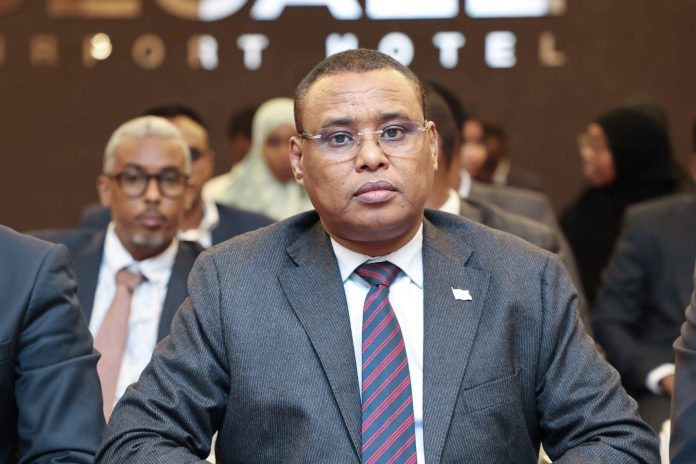
Ra’iisul wasaare Xamze oo magacaabay Hoggaamiyaha KMG-ka ah ee Koofur Galbeed

Apr 01(Jowhar)-Ra’iisal wasaaraha xukuumadda Federaalka Soomaaliya Mudane Xamze Cabdi Barre ayaa wareegto uu caawa soo saaray ku magacaabay hoggaamiyaha KMG ee maamulka Koonfur Galbeed, kaas oo sii wadaya shaqada muhiimka ah ee ka socotay maamulkaas.

Dual Dutch-Irish citizen charged in UK over firearms offences

Dual Dutch-Irish national faces gun charges in UK
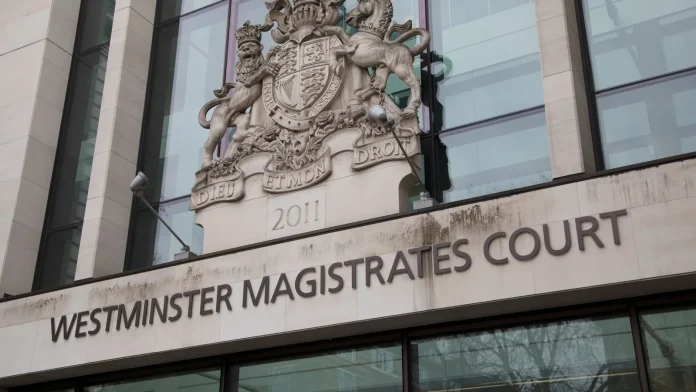
Khalid Ahmed is due to at Westminster Magistrates' Court

Hidden in plain sight: guns, a Dover ferry and an ordinary man at the centre of an extraordinary case

At first glance it was an everyday crossing: a grey vehicle rolling off a ferry from Calais into the bright, bracing air of Dover, tyres hissing on wet tarmac, passengers stretching after the Channel crossing. Then officers stepped forward, a routine stop turned into something that smelled, unmistakably, like something darker.

On a chilly afternoon last week, counter‑terrorism police at the Port of Dover say they found ten self‑loading pistols stashed behind the seats of a car. Some of those guns were reportedly loaded. The man driving the vehicle — 24‑year‑old Khalid Ahmed of Ealing, who holds both Dutch and Irish nationality and who was born in Amsterdam — has been remanded in custody, accused of trying to smuggle weapons into the UK.

From ferry deck to magistrates’ bench

Ahmed appeared at Westminster Magistrates’ Court, where he did not enter pleas to ten counts of possession of a prohibited weapon and a charge of possessing ammunition. He has been remanded until a hearing at the Central Criminal Court on 24 April.

“We treated this as a serious matter as soon as the vehicle was stopped,” a senior police officer involved in the operation told me. “The fact that some weapons were loaded raised immediate concerns about public safety. Investigations are ongoing.”

Such scenes — a vehicle intercepted at a busy port, police pulling back a seat to reveal weapons — have an almost cinematic quality. But the reality behind them is granular, procedural and urgent. The Port of Dover is one of Europe’s busiest cross‑Channel gateways, handling millions of passengers, freight trucks and cars every year. For the authorities, the challenge is to keep daily life flowing while also catching those who would use that flow to move contraband.

A local snapshot: Ealing and Amsterdam

To neighbours in west London, Ahmed’s story reads like the outline of a life many would recognise: a construction worker, early twenties, with a rhythm marked by shifts and commute. “He kept himself to himself,” said a neighbour who asked to remain anonymous. “I’d see him up early in the morning, heading off with his tools. It doesn’t feel like him — but we don’t know what goes on behind closed doors.”

His Amsterdam birthplace is a reminder of how European lives now crisscross borders with ease. Dual nationality, foreign roots, seasonal work travel — they can all be innocent hallmarks of modern life. But those same patterns also create spaces where organised smugglers — and lone operators — can attempt to exploit transit hubs.

Why this matters beyond one car and one port

This isn’t merely about a single arrest. It is a flashpoint that touches on larger questions: how porous are our borders to illegal arms? How do nations balance the free movement of people and goods with the imperative of preventing violence? And what does this incident say about the networks — or the vulnerabilities — that allow ten pistols to cross from Calais into Kent?

“The discovery of multiple firearms at a major port increases the likelihood that this wasn’t an impulsive act by an isolated individual,” said Dr. Marianne Lowe, a criminologist who studies arms trafficking in Europe. “Smuggling of weapons often involves networks; even if an individual is acting alone, they’re usually tapping into existing logistical routes.”

Historically, the UK has one of the lowest rates of firearm homicide in the developed world. Stringent laws have been tightened since high‑profile mass shootings in the late 20th century — notably the handgun bans after the 1996 Dunblane tragedy — and prosecution for possession of prohibited weapons carries heavy penalties. But a low baseline doesn’t mean zero risk. Small numbers can still have catastrophic consequences.

Numbers and enforcement — the landscape

  • Handguns were effectively banned in mainland Britain in the aftermath of the 1996 Dunblane massacre.
  • Ports like Dover are routine checkpoints for customs and border security, processing millions of passengers and vehicles annually; this volume makes selective searches necessary but also challenging.
  • Even in countries with strict gun controls, illicit markets persist, and the interception of multiple weapons frequently points to wider smuggling attempts rather than isolated possession.

Voices from the ground

At the Port of Dover, a port worker who has spent decades loading ferries described the rhythm of crossings. “You get the same faces, the same trucks, the same cars,” she said. “But every so often something jars. You learn to notice the little things — a nervous driver, a vehicle that doesn’t match the manifest. That’s when you flag it.”

Legal experts cautioned against jumping to conclusions about motive. “Being charged is not the same as being convicted,” said Aisha Rahman, a defence solicitor. “We will want to see the evidence. The court process exists to test those allegations — whether this was part of a larger supply chain or an ill‑judged move by an individual will be central to the case.”

The human element: fear, bewilderment, responsibility

Think for a moment about the household in Ealing where someone now sits behind bars. Neighbours whisper. Family members recalibrate their lives. A young man’s future veers into the uncertain. Stories like this crack open a simple, unsettling question: how do ordinary lives become linked to extraordinary risks?

“I’m worried for our community,” said Fatima, who runs a small grocery in the area. “We want safe streets. But we also want the truth to come out. If someone has been led into danger, we should understand how.”

Policy, prevention and the long view

The incident raises policy questions about cross‑channel security and intelligence sharing. Effective interdiction rests on timely information sharing between agencies across borders — what to search for, who to profile, how to target the networks rather than simply the symptoms.

“In our interconnected continent, criminal activity crosses jurisdictions as easily as legitimate trade,” Dr. Lowe added. “That makes international cooperation and targeted intelligence all the more critical.”

What to watch next

The case will return to the Central Criminal Court on 24 April. Until then, a few facts are worth tracking: the evidence that led officers to stop and search the vehicle; whether investigators link the weapons to a wider network; and how prosecutors frame intent. Each will add clarity — or complexity — to what began as a routine port stop and has now become a legal drama with potential national implications.

And for readers: what do you think? Do you trust that ports and borders strike the right balance between openness and scrutiny? Are our legal systems equipped to untangle cross‑border criminality without sweeping up ordinary travellers? These are not easy questions. But every incident — even one that starts on a ferry ramp beneath the gulls — pushes us to rethink them.

For now, the scene at Dover is frozen in the public mind: ten pistols, a detained man, a courtroom date on a calendar. Behind those facts are communities, questions about enforcement and the uneasy awareness that the things we assume are safely out of reach can sometimes be closer than we imagine.

Millions of Arabs on the brink of starvation if Iran war continues

Apr 01 (Jowhar)-The US and Israeli attacks on Iran and their impact on the Middle East have severely damaged Arab countries, with millions of people expected to be pushed into poverty, according to the United Nations.

BBC Aware of 2017 Police Investigation Into Scott Mills

Police closed Scott Mills probe due to lack of evidence
Scott Mills was sacked by the BBC over allegations related to his personal conduct

The Sound of a Silent Microphone: What the BBC’s Decision Means Beyond a Presenter’s Exit

On a weekday morning, an empty Radio 2 studio can feel strangely like a stage with its lights dimmed—familiar, intimate, and suddenly, curiously vacant. For millions of listeners who tuned in to hear the warm, conversational cadence of a long-serving host, that silence was a jolt: a public figure abruptly off air, an explanation thin on detail, and a corporation promising decisive action.

This is the scene that unfolded last week when the BBC announced it had terminated the contracts of one of its most recognisable voices. The broadcaster confirmed it had been aware, as far back as 2017, of a police inquiry that was later closed in 2019 without charge. But it said new information arrived in recent weeks—and on Friday 27 March the decision was taken to cut ties.

More than a Personnel Move

To many, the story is about a single presenter and his fate. But step back and it becomes a vignette about institutional memory, public trust, and the messy work of accountability inside an organisation that reaches tens of millions every week.

“This isn’t just personnel policy,” says Dr. Amina Hussain, a media ethics scholar. “It’s a test of whether a public broadcaster can truly align its daily decisions with the cultural commitments it announced after independent reviews and public scrutiny.”

The BBC, one of the world’s largest public service broadcasters with a workforce of more than 20,000 and services that reach global audiences, has been intensely focused in recent years on improving workplace culture. Last year, following an independent review, it set out clearer behavioural expectations for everyone who works with or for the organisation—and warned action would follow if those standards weren’t met.

What the Corporation Said—and What It Didn’t

A BBC spokesperson told journalists: “Scott had a long career across the BBC, he was hugely popular and we know the news this week has come as a shock and surprise to many.” The statement added: “In recent weeks, we obtained new information relating to Scott and we spoke directly with him. As a result, the BBC acted decisively in line with our culture and values and terminated his contracts on Friday 27 March.”

But the statement also acknowledged complexity: “We were made aware in 2017 of the existence of an ongoing police investigation, which was subsequently closed in 2019 with no arrest or charge being made. We are doing more work to understand the detail of what was known by the BBC at this time.”

That last line—“we are doing more work”—is where public curiosity and scepticism meet. What does “more work” mean in practice? Who knew what, and when?

Voices in the Crowd: Reactions from Listeners and Colleagues

Outside the studio, listeners offered a chorus of reactions. “I used to drive with his show on every day,” said Ellen, a teacher from Leeds. “To wake up and find that silence felt very personal. But I also want a trustworthy broadcaster. It’s complicated.”

Former colleagues were measured but pointed. “It’s painful when someone you’ve worked alongside for years is removed from a platform without fuller transparency,” said a producer who asked not to be named. “But the BBC has to balance staff welfare, legal constraints and public interest. Those tensions are not new.”

Legal experts were quick to underline a critical fact: the police investigation cited by the BBC was closed in 2019 with no arrest or charge. That means criminal proceedings were not pursued. Yet, as Professor Julian Moreno, a specialist in workplace investigations, explains, “Organisational decisions operate on different thresholds. Employers can act on a broader set of concerns—behavioural expectations, reputational risk, safeguarding responsibilities—without criminal charges being present.”

Context: A Media Landscape Remaking Itself

The BBC’s move sits within a wider global moment. Since the #MeToo movement, media institutions from Hollywood to national broadcasters have been forced to reckon with allegations of misconduct, sometimes long-buried. That reckoning has prompted new policies—but also criticisms about inconsistency, secrecy, and double standards.

Listeners and viewers are asking sharper questions: Should organisations disclose more? Do staff and the public deserve the full picture? Or does transparency sometimes jeopardise legal processes and privacy?

Timeline: Key Moments at a Glance

  • 2017: The BBC says it was made aware of an ongoing police inquiry involving the presenter.
  • 2019: Police close that investigation with no arrest or charge.
  • Weeks before 27 March: The BBC says it received new information and spoke directly with the presenter.
  • 27 March: The BBC terminates the presenter’s contracts, citing its cultural expectations and the new information obtained.

Local Colour: Why Radio Voices Matter

For many in Britain and beyond, breakfast radio is a ritual. A presenter’s banter becomes the soundtrack to morning commutes, school runs, and kitchen routines. That intimacy is part of why headlines about presenters land hard—listeners feel ownership, a kind of kinship.

“You don’t realise how big a part someone’s voice plays in your life until it’s gone,” said Samir, a barista in Birmingham. “It’s not just about entertainment. It’s companionship.”

Questions to Hold—And To Ask

As readers, what do we want from institutions that serve us? Is it fuller transparency, even when details are legally sensitive? Or do we accept that some matters must remain confidential to protect those involved? There are no easy answers, but there are clear imperatives: fairness to individuals, safeguarding for potential victims, and—crucially—accountability for institutions.

“We must resist the binary—innocent versus guilty—that social media sometimes forces on us,” Dr. Hussain urges. “A healthy public conversation recognises complexity: organisational duty, legal process, and the lived experience of listeners and staff all deserve attention.”

What Comes Next

The BBC has pledged to “do more work to understand the detail” of what was known internally in 2017. That review—if thorough, independent, and public—could set an important precedent for other institutions wrestling with legacy allegations and new standards.

For listeners who have tuned in for years, March’s events are a reminder that the voices guiding our mornings are part of a larger ecosystem—one that requires care, scrutiny, and transparent values aligned with practice.

So, what should you expect from public institutions going forward? Greater transparency balanced with due process. Better record-keeping. Clearer channels for complaints. And perhaps most importantly, institutions that are willing to be judged by the clarity of their actions, not only by the press releases they issue.

Radio will keep playing. Voices will return to the airwaves. But the quiet that follows a sudden exit invites us to listen more carefully—for what is said, what is withheld, and what an organisation chooses to learn from its past. Are we ready to hold them to that standard?

Sightseers flock to witness history as Moon launch draws near

Tourists gather to 'witness history' ahead of Moon launch
The lunar mission - the first of its kind in more than 50 years - will see the first person of colour, the first woman and the first non-American embark on a journey to the Moon

A Night at the Beach, Waiting for the Moon

The sun slid low over Cocoa Beach like an orange coin, and the air smelled of salt, sunscreen and the faint tang of hot tar from the waterfront parking lots. Families lounged on towels; teenagers chased the sudden gusts of wind that made their kites skitter. Children pointed at a distant white tower that was, for a few hours at least, the most famous thing on Earth.

For vacationers who’d come to surf and to sleep late, the arrival of a rocket on the horizon was an unexpected punctuation mark in their holiday. For others it was the reason they’d booked a room months ago. Either way, anticipation hummed through the crowd: tonight was launch night for Artemis II, NASA’s long-awaited mission that will carry astronauts farther from Earth than any human has travelled in more than half a century.

Witnessing a Turning Point

“We were supposed to be here for baseball,” said Alyx Coster, a 38-year-old mom from Minnesota, folding up the beach umbrella as the light thinned. “But the kids are beside themselves. They kept saying, ‘Mom, we’re actually going to see history.’ They mean it.”

Jason Heath, a shipbuilder from northeastern Maine who brought his family down for a winter escape, stared at the sea as if trying to spot a trajectory in the waves. “There’s a weird pride in watching humans push a boundary again,” he said. “Whatever happens tonight, you’re part of the moment. You feel it in your bones.”

They’re not alone. Local officials have braced for a crowd that could swell to some 400,000 people across the Space Coast, according to regional newspapers and county estimates. Hotels reported heavy bookings, restaurants extended hours, and small vendors hawked T‑shirts printed with rockets and moon motifs. The economic ripples of a launch—ticketless, free to the public but priceless in effect—are felt up and down the strip.

Not Just a Launch: A Mirror of Our Times

Artemis II is more than a technological spectacle. It’s a statement about who goes to space now. The crew—three Americans and one Canadian—represents a departure from the homogeneity of the Apollo era. For the first time, a woman and a non‑American are slated to travel that far from Earth; the mission may also include the first person of colour to enter lunar distance. For many, that is as momentous as the rocket itself.

“Representation matters,” said Dr. Aisha Mensah, a space policy scholar at a university in Washington. “When kids see themselves in astronauts—girls, children of colour, young people from outside the U.S.—it changes what they imagine possible. That has long-term cultural and economic benefits for the STEM pipeline.”

How Far Are We Going?

Artemis II is expected to eclipse the distance humans reached during the Apollo missions. The farthest recorded human distance from Earth—roughly 400,000 kilometres—was set during the Apollo 13 free-return trajectory. This mission will push that boundary further, following a looping course that will take the crew well beyond low Earth orbit and into cislunar space, a realm where Earth‑Moon gravity plays out like an intricate dance.

“Technologically, it’s a huge step,” said Marcus Alvarez, an aerospace engineer who flew out to watch the launch. “We are testing the Orion capsule’s systems with a crew aboard, and that experience will inform everything from life-support redundancy to navigation in deep space. These are the building blocks for sustained presence at the Moon and, eventually, Mars.”

Between Nostalgia and New Narratives

Not everyone here remembers the Apollo launches, but some do—and their memories are a lens through which they view tonight. Melinda Schuerfranz, 76, who placed a folding lawn chair at the dune line alongside her husband, recalled the first moonshots like a family heirloom.

“Back then you could feel the whole country leaning in. Radios, schoolrooms—everyone watched. There was a hum of national purpose,” she said. “Tonight feels different—more crowded, more informal—but it’s still exciting in its own way.”

Her husband John, a retired mechanic, added, “The space race gave us a cause that felt shared. Now there are more players, more private companies, more countries. That makes it messier, sure, but also richer.”

Why So Few People Know

Despite the scale of the mission and a steady media rollout from NASA, many Americans admitted they’d only learned of the launch by accident. A fragmented information environment—endless streaming choices, a 24/7 news cycle that prioritises some stories over others, and the constant churn of social media—means even headline-making events can slip past large swaths of the population.

“I work nights, I don’t follow the news much,” said Carlos Medina, a lifeguard who spends his days scanning the surf. “I heard someone talking about it and thought, ‘Wow, that’s nearby.’ But it’s not like the old days when you knew the schedule and tuned a radio.”

Local Life, Global Questions

Near Jetty Park and the launch viewing pads, small businesses hum with last-minute sales: coffee shops sell thermoses with astronaut patches, a surf shop posts a launch livestream on a television, and a taco truck offers “moon tacos” with a wink. But the excitement is threaded with practical strain—traffic snarls hours before lift‑off, roads turned into viewing arteries, and volunteers coordinating water stations for the crowd.

The spectacle raises larger questions, too. What does the return to lunar exploration mean for a world facing climate crises, geopolitical tension and unequal access to resources? How do we justify public expense while education, housing and healthcare strain budgets? For many, the answer lies in a balance between inspiration and accountability.

“Spaceflight is expensive,” Dr. Mensah said. “But it’s not just fireworks. Investments in the Artemis program have driven innovations in materials, sensors and medicine. The key is ensuring those benefits reach people who are not at launch sites or in boardrooms.”

Facts to Keep in Mind

  • Launch window: Wednesday at 6:24 p.m. local time (about 10:24 p.m. Irish time).
  • Estimated crowd: Up to 400,000 people across the Space Coast region, per local reporting.
  • Temperature at the beach: Approximately 25°C as evening approached.
  • Distance milestone: Artemis II aims to travel beyond the Apollo-era human distance record of roughly 400,000 km from Earth.
  • Program scale: Artemis is an international and commercial endeavour involving billions of dollars in investment and partnerships across agencies and private companies.

What Will You Tell Your Children?

As the first stars blinked awake and the crowd tightened, a woman near me turned to her partner and said, “When they ask where we were the night humans went farther than before, we’ll tell them we were right here, sand between our toes.” It was a simple, tender thought—but it cut to the heart of why so many of us gather for launches.

Do we come for science, for national pride, for the souvenir T‑shirts and the beachside atmosphere? Yes. But we also come to be reminded that, in the midst of ordinary days, humans still choose to risk and to dream. We come to be part of a story that extends beyond us, one that asks us to imagine a future where more people—of more genders, ethnicities and nationalities—get to look back at Earth and see home with fresh humility.

So as you scroll past the livestream tonight, or find a clip on social media tomorrow, consider pausing. Imagine the hush as the engines ignite, the flash that turns the ocean into a mirror, the way a child clutching a foam rocket might decide that anything is possible. What story will you tell when your grandchildren ask, “Where were you when the new chapter began?”

Qaar ka mid ah Agaasimayaasha Guud oo xilalka loo kala wareejiyay

Apr 01(Jowhar)-Ra’iisul Wasaaraha Xukuumadda JFS Mudane Xamsa Cabdi Barre ayaa magacaabis isweeydaarin ah ku sameeyay agaasimeyaasha Guud ee qaar ka mid ah wasaaradaha xukuumadda Dan Qaran si loo dardargaliyo hawlihii socday.

EU pushes sweeping reforms to carbon emissions trading system

EU proposes changes to carbon emissions trading system
Industries pay for permits to emit greenhouse gases under a cap system

When the Price of Heat Starts to Dictate Climate Policy: Inside the EU’s Carbon Conundrum

There are moments when a policy that once felt abstract — a line on a spreadsheet, a stack of permits traded in the quiet of the markets — becomes painfully, immediately real. This spring, across kitchens in Naples, factories in Poland, and trading floors in Amsterdam, families and businesses have been feeling that shift in their gas bills. And in the marble corridors of Brussels, policymakers are scrambling to respond.

At the centre of this scramble is the European Union’s Emissions Trading System (ETS), the continent’s flagship mechanism for cutting greenhouse gases since 2005. For years it worked like a slow, steady surgeon: cap emissions, sell permits, incentivise cleaner choices. But now, as turmoil in the Gulf has tightened global gas supplies and pushed prices sharply higher, European leaders are debating whether to change the operating theatre on the fly.

What the Commission has proposed

In late proposals that feel part technical fix and part political salve, the European Commission is asking member states and MEPs to approve an adjustment to the ETS. At its heart: an end to the automatic cancellation of surplus carbon permits. Instead of permanently deleting these excess allowances when supply exceeds demand, the Commission wants to park them in a newly beefed-up reserve — a buffer that can be released when carbon prices spike.

“This is about smoothing volatility,” a Commission official told me over coffee in a cramped office near the European quarter. “When a geopolitical shock drives gas prices up, carbon prices can follow. If that spikes energy bills for ordinary people, you need a tool that buys breathing space without scrapping the whole system.”

Today the ETS has a so-called Market Stability Reserve that cancels surplus permits when they exceed 400 million. Under the new plan, those surpluses would be kept in the vault instead — a safety cushion intended to calm the market when panic sets in. Between 2005 and 2024, some 3.2 billion excess permits were cancelled; the proposal would mean fewer coupons thrown away and more ready to be called back into play.

Why the change matters — and why it’s controversial

To many industrial managers and ministers in gas-dependent nations, this feels practical. “When your kilns, your hospital boilers and your homes depend on gas, a runaway carbon price becomes a social and economic emergency,” said an Italian ministry adviser in Rome. “We aren’t asking to ditch climate action. We are asking for prudence.”

Italy and several other governments have publicly urged for at least a temporary suspension or re-tooling of the ETS, arguing that spike-driven carbon costs can double or triple the pain felt by consumers and manufacturers already squeezed by higher gas prices. Analysts estimate those gas costs have risen by as much as 70% in recent months as shipping lines divert and insurance premiums rise after attacks and tensions in the Gulf — including reports of disruptions around the Strait of Hormuz and infrastructure in the region.

Yet for many climate advocates and green economists, blunting the ETS feels like taking a step backward. “The ETS is the core price signal that pushes utilities and factories into cleaner choices,” said Dr. Linnea Sørensen, a climate policy expert at a European university. “If you make it easier to buy your way out of expensive emissions, you risk disincentivising long-term investments in renewables and electrification.”

A balancing act: protecting consumers without derailing decarbonisation

This is where the Commission’s reserve plays the role of a compromise — a mechanism designed to hold the system together while giving policymakers room to manage turbulence. The idea is not to permanently lower ambition, but to manage short-term affordability while remaining on track for long-term emission cuts.

To understand the stakes: more than 10,000 power plants and industrial facilities across the EU buy ETS permits. Since 2013, the scheme has generated over €175 billion that flows back to member states, often earmarked for renewables, energy efficiency upgrades, and climate adaptation projects. According to Commission figures circulated with the proposal, carbon emissions from electricity generation fell 24% in 2023 and a further 11% in 2024 — a trajectory officials say must be preserved.

Local stories, larger implications

Walk through the industrial belts of Lombardy or the wind-sculpted coasts of Galicia and you hear the same refrain: uncertainty. “Last winter we paid more than we planned,” says Giulia, a plant manager at a ceramics factory outside Modena. “We are switching to electric kilns where we can, but the up-front cost is huge. We need time and predictable prices.”

In a market trader’s office beside the Port of Rotterdam, screens throw up flashing numbers. “A little volatility in carbon can cascade,” a gas trader said, not wanting his name used. “If traders see prices spiking, they hedge. Hedging pushes prices further. The reserve is a circuit breaker.”

These ground-level anecdotes matter because the ETS is not just a climate tool; it is a fulcrum where energy security, industrial competitiveness, and social policy intersect. How the EU handles it will ripple beyond its borders. The continent’s Carbon Border Adjustment Mechanism (CBAM), introduced at the start of this year, is designed to prevent companies simply importing carbon-intensive goods from countries with laxer rules — a companion policy intended to protect European industry while pushing global decarbonisation.

  • Key numbers to keep in mind: over €175 billion raised since 2013 through the ETS;
  • Around 10,000 installations across the EU participate in the system;
  • 3.2 billion surplus permits cancelled between 2005 and 2024;
  • Member states have set ambitious targets, including a shared aim to reduce emissions by 90% by 2040 against 1990 levels.

Politics in the corridors

Proposals like this one must clear the twin hurdles of the Council of Member States and the European Parliament. Political horse-trading is inevitable. Countries like Poland, heavily reliant on coal today but under pressure to decarbonise, watch the debate closely. So do Germany and France, balancing industrial exposure with climate ambition.

“This isn’t merely a technical tweak — it’s a test of the EU’s ability to combine resilience with ambition,” said an MEP on the environment committee. “If we go too soft, we lose momentum. If we go too rigid, we risk social backlash.”

Questions for the reader — and the future

So where does that leave us? Is it responsible to protect consumers from price shocks by loosening a carbon market, even temporarily? Can Europe design a safety valve that keeps the long-term incentive to decarbonise intact? And what does this balancing act tell us about the future of climate policy in an age of geopolitical instability?

These aren’t academic questions. They are the kinds of decisions that will shape energy bills, factory floors, and coastal communities for years to come. As you read this, policymakers will be counting permits, economists will be running models, and everyday people will be paying their next bill. The ETS isn’t just a policy instrument — it’s a thermometer for how societies choose to share the burdens and rewards of the energy transition.

In the end, the proposed reserve is an attempt at stewardship: to keep the system functional under stress while preserving the path to cleaner energy. Whether it will succeed depends on the craftsmanship of the proposal and the political courage to match immediate relief with uncompromising long-term planning. The next chapter of this story will be written in Brussels’ committees, in national capitals, and in the choices of companies and households that stand to gain — or lose — from the outcome.

Dutch-Irish dual national arrested on gun charges in the UK

Dual Dutch-Irish national faces gun charges in UK
Khalid Ahmed is due to at Westminster Magistrates' Court

At Dover’s Gates: A Quiet Crossing, a Sudden Arrest, and a Bigger Conversation

The white ferry slid into Dover as it always does—familiar, steady, a metal promise across the Channel. Travelers shuffled toward the port, tired commuters, families with suitcases and a handful of drivers who had chosen to take their cars across from Calais for the weekend. For most it was just another crossing. For one 24-year-old man from west London, the journey ended under the flashing blue of counter‑terrorism markings.

On a damp Thursday last week, Khalid Ahmed, a resident of Ealing and a dual Dutch‑Irish national, was stopped by officers as he rolled off the ferry. Police say that when his vehicle was searched, several self‑loading pistols were discovered—enough, the authorities allege, to prompt ten counts of possession of prohibited weapons and an additional charge for prohibited ammunition. He has been formally charged and is due to appear at Westminster Magistrates’ Court.

What Happened at the Border?

Border crossings at Dover are a choreography of routine: lorries, cars, foot passengers, all filtered through passport control, customs, and sometimes, more intrusive checks. In this case it was counter‑terrorism police—an arm of the Metropolitan Police that has responsibility for the capital and for threats that reach beyond everyday criminality.

“We intervene where there is reason to believe that items that could pose a significant risk are being carried into the country,” said Commander Helen Flanagan, head of Counter Terrorism Policing London. “Our priority is to protect the public. At present, while numerous enquiries continue, we have not identified any immediate threat linked to this arrest.”

Her words were measured, a deliberate calm designed to steady public nerves. Yet for residents and commuters who rely on Dover’s ports, the news prickled. How do we square a city famed for its White Cliffs—and the quiet life of its small cafes—with sudden reminders of global flows of people and goods that can also carry danger?

Local Voices: Surprise, Concern, and a Search for Context

In Ealing, a neighborhood of tree‑lined streets, busy markets and a strong sense of community in west London, the name prompted astonishment.

“You don’t expect this here,” said Miriam Patel, who runs a bakery near Ealing Broadway. “We have kids playing in the park, people queueing for curry. To hear someone from our area arrested with guns — it’s worrying. But I’m also trying not to jump to conclusions. He’s charged; the court will decide.”

Another neighbor, Jamal O’Connor, added: “I see a young man with two passports and I think of the decisions people make when life is split between places. There’s a complicated story behind every arrest. We hope for answers.”

A Uniform Response from Authorities

Police messaging focused on reassurance. They emphasized that the arrest was the result of targeted checks and that investigations were ongoing. “Given the criminal proceedings, it’s important to avoid speculation,” Commander Flanagan added, underscoring the legal principle that charges are not convictions.

That call for calm is familiar in Britain, where the memory of past attacks and high‑profile seizures exists alongside statistics that show a very different landscape from many other countries: Britain’s strict firearms laws, sharpened by the 1996 Dunblane school shootings and subsequent bans, mean that gun‑related homicides are relatively rare compared with other nations.

Broader Picture: Guns, Borders, and the Challenge of Smuggling

What this arrest highlights are two enduring realities: first, that ports like Dover are frontline infrastructure in an era of increased cross‑border movement; second, that the illegal movement of weapons—whether to fuel street crime or more sinister plots—remains a persistent challenge.

Experts point out that most illegal firearms in the UK are not manufactured domestically but imported or converted from legal devices. “There’s a market online and in Europe where components can be purchased and assembled,” says Dr. Aisha Khan, a criminologist who studies weapon trafficking. “The problem is transnational. One country’s gap becomes another country’s supply line.”

The presence of dual nationality complicates travel patterns too. “People with multiple passports often move fluidly between jurisdictions, which is perfectly lawful,” Dr. Khan said. “But that mobility can also challenge police checks, requiring coordinated intelligence and effective border cooperation.”

What the Law Says — And What It Means

In the UK, possession of prohibited firearms and ammunition is treated with grave seriousness. The legal framework—centred on the Firearms Acts and a suite of amendments—restricts ownership of handguns and certain semiautomatic weapons. Convictions can lead to significant custodial sentences and long criminal records that alter futures.

  • Possession of prohibited firearms typically leads to serious criminal charges under UK law.
  • Counter‑terrorism units are often involved when there are concerns about the potential use or intent behind weapons being carried into the country.
  • Arrests at ports like Dover follow intelligence‑led operations as well as random and targeted searches.

But legal consequences are only one part of the story. There are social and psychological repercussions—for neighbors, for families, and for communities trying to reconcile local normalcy with headlines that suggest international intrigue.

Questions for the Reader — and for Policy Makers

So what should we take away? Do we double down on stricter border controls? Invest more in intelligence‑sharing across Europe? Focus on community interventions that deter young people from turning to weapons in the first place?

Each option has costs and trade‑offs. More intrusive checks could slow commerce and travel. Better intelligence requires funding and trust between agencies. Community programs require time and long‑term commitment.

Conclusion: Patience, Scrutiny, and the Slow Work of Justice

Khalid Ahmed now faces the slow machinery of the courts, and the public waits for facts to be tested in open court. While authorities continue their investigation, the case is a reminder of how global flows—of people, goods and, at times, illicit items—arrive at our doorsteps with little fanfare.

For those who live near ports, who work in customs, who police the streets or walk them with children, the episode will prompt reflection. How do we maintain openness and mobility while keeping communities safe? What do we owe each other in the face of threats that are both international and intimately local?

These are not questions with quick answers. But they are worth asking, together.

Israeli occupation of south Lebanon 'very dire', says MP

MP warns Israeli occupation in southern Lebanon has become ‘very dire’

0
In Southern Lebanon, Homes Become Frontlines — Voices from a Region Holding Its Breath The sky over southern Lebanon has settled into a kind of...
US, Iran search for American pilot after warplane downed

U.S. and Iran hunt for missing American pilot after warplane shot down

0
Skyfall: When the Night Became a Hunt — Two US Jets Downed, a Pilot Missing, and a Region Holding Its Breath The Gulf night stank...
As it happened: US fighter jet shot down over Iran

Live: US fighter jet shot down over Iranian airspace

0
When the Sky Broke: A Jet Falls and an Old Rivalry Reignites The sun had not yet finished its climb when the news came in:...
Iran shoots down US fighter jet, pilot rescued - report

US fighter jet downed by Iran; pilot reportedly rescued

0
Smoke over the desert: an American warplane falls, and a region holds its breath There are moments when the desert seems to inhale, as if...
Family says man held in Iran faces possible execution

Family Warns Detained Man in Iran Could Face Execution

0
They Called Him a Criminal on TV. His Family Calls Him a Son, a Friend, a Believer. On a chilly Dublin morning, Sama Sabet sits...