Home Blog Page 44

Trump Leaves Door Open to Deploying U.S. Troops to Iran

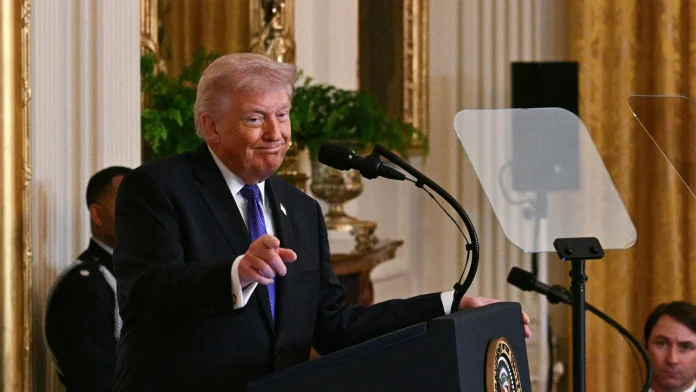
Trump doesn't rule out sending US troops into Iran
US Defense Secretary Pete Hegset sais the war is not an effort to build democracy in Iran

The sky as a scoreboard: how an aerial campaign reshaped a region overnight

There are moments when the world tilts, when the map feels smaller and the air carries a different kind of weight. In those hours, headlines are not enough. You want to know what it smells like on the ground, what people whisper over church and mosque, what the air force’s flight paths look like from a child’s rooftop.

That is where we are now: a conflict that began with an orchestration of missiles and bombs that Washington describes as surgical and swift, and that Tehran calls an apocalyptic insult. President Donald Trump has framed the operation in blunt, unmistakable terms—threatening a new “big wave” of attacks and refusing to categorically rule out the age-old, politically freighted option of putting boots on the ground.

“I don’t have the yips with respect to boots on the ground,” Mr. Trump told reporters in comments that felt equal parts admission and warning. “Every president says, ‘There will be no boots on the ground.’ I don’t say it.”

A war of missiles and messages

So far, the fighting has been fought from the sky. U.S. and allied forces—cooperating closely with Israel, Washington says—have struck “hundreds” of targets inside Iran, hitting missile stocks, naval installations and command-and-control nodes that military briefings say were legitimate military objectives.

The human toll is already visible. Four U.S. service members have been announced killed, and three U.S. fighter jets were lost—officials say to tragic friendly fire. Iran has answered with missile salvos at Israel, U.S. facilities across the region, and, in a move that surprised many, strikes that reached into Bahrain, Jordan, Kuwait, Qatar and the United Arab Emirates.

“We haven’t even started hitting them hard. The big wave hasn’t even happened,” Mr. Trump told CNN, adding, with characteristic theatricality, “The big one is coming soon.” Whether that means more aerial bombardments, expanded targets, or the stepped-up involvement of proxy forces remains the subject of fevered debate among analysts and diplomats alike.

The White House calculus

Within the West Wing there seems to be a two-part framing: military action as necessity, and a limit to political ambition. “This was our last, best chance to strike… and eliminate the intolerable threats,” Mr. Trump said, invoking a sense of grim finality. Yet he also echoed a timetable that has floated in briefings—four to five weeks—a window that suggests a contained campaign rather than an open-ended occupation.

That timetable is partly salesmanship and partly a hedge. “We’re already substantially ahead of our time projections,” the president said, allowing for the possibility that the campaign could last “far longer than that.” For a White House that campaigned on ending costly entanglements, the balancing act is political as well as military.

From the Pentagon podium

Defense Secretary Pete Hegseth has been explicit about the administration’s strategic boundaries: “No stupid rules of engagement, no nation-building quagmire,” he said, aiming to reassure a domestic audience tired of long wars in Iraq and Afghanistan. “We fight to win and we don’t waste time or lives.”

General Dan Caine, the U.S. military’s top officer at recent briefings, declared that air superiority has been established over Iran, a claim meant to underscore control of the battlespace and to reassure U.S. forces and allies.

Voices from the neighborhoods and bazaars

If strategy is a chessboard, everyday lives are the pieces most easily knocked off. In Tehran, a carpet merchant named Amir stood outside his shuttered shop midmorning, hands stained with yarn and disbelief. “My daughter asked me if the sky was angry,” he said. “I told her the sky is always the mirror of those who have the power to break it.”

On the southern coast, down where fishermen mend nets and coffee is brewed dark and sweet, a woman named Fatemeh spoke in quieter terms. “We came to the roof when we heard the noise,” she recalled. “Neighbors lit candles because the power cut out. You think of the children. You think of the old men. War is not numbers on a briefing—it is someone’s grandson.”

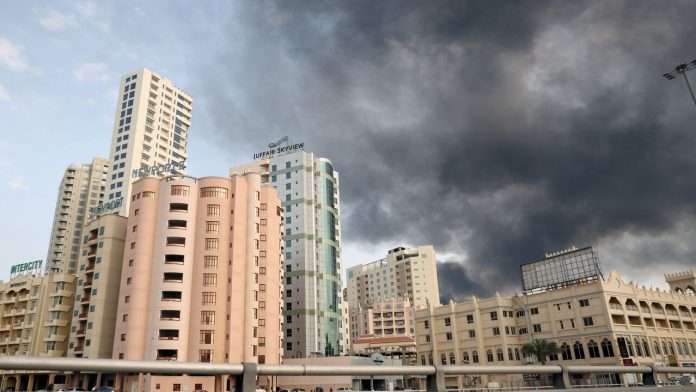
Across the Gulf, in a dusty suburb outside Manama, a Bahraini taxi driver named Hassan complained about the ripple effects. “Petrol prices go up, flights get delayed, our peace of mind gets taxed,” he said. “We do not want to be a battlefield for others.”

What the logistics say—and what they don’t

Analysts have raised practical questions that strain past platitudes about military supremacy. Can even the world’s most powerful military sustain a high-tempo aerial campaign for months? Where will the ammunition come from? How many precision munitions can be expended before pressure builds at home and fractures appear among allies?

One defense analyst, who asked not to be named to speak candidly, told me, “It’s not just about having planes. It’s about missiles, sensors, spares, fuel, and the political will to accept collateral damage. Air campaigns are hungry beasts.”

These logistical questions are not academic. In the last two decades, shortages and stretched supply chains have forced militaries to ration capabilities or change tactics mid-campaign. If the U.S. intends to “go far longer,” as the president suggested, those realities will quickly come into focus.

Regional and global fault lines

Beyond tanks or pilots sits a wider terrain: the contest between great-power influence, regional security architectures, and the long shadow of nuclear proliferation. Iran’s missile programme and suspected nuclear ambitions have been at the center of international concern for years; this confrontation risks accelerating paths toward escalation, whether through proxy groups in Lebanon and Yemen or through miscalculation at sea.

Moreover, the spectacle of a U.S. president—who campaigned on withdrawing from “dumb” nation-building wars—now promising a potentially extended campaign raises questions about the political logic that drives modern interventions. Is the threshold for engagement shifting? Are domestic political incentives reshaping foreign policy in ways that make restraint harder to sustain?

Questions we should all be asking

This is not a time for easy certainties. It is a time to ask hard questions: What is the endgame? How will civilians be protected? What mechanisms are in place to de-escalate—diplomatic backchannels, third-party mediators, humanitarian corridors? And, perhaps most important for global citizens, how will this reshape regional alliances and the norms of state behavior?

War writes itself into the fabric of ordinary life. It changes a child’s play, a market’s rhythm, the way voters count costs. We should be listening to the negotiators and watching the strategists, yes—but also hearing the voices from kitchen tables, roof terraces, and coffee stalls.

There will be official briefings and expert analyses in abundance. There will be maps and timelines and statistics. But if you want to feel what this moment truly is, look and listen where people live: in shadowed alleys, in lit living rooms, in the hush that settles after a siren fades.

What would you do if the sound of the sky changed where you live? How close is the line between security and escalation? The answers we find may shape not just a campaign’s duration, but the kind of world we leave to the next generation.
Passengers Left Stranded as Global Aviation Faces Widespread Disruptions

Passengers stranded, disrupted in global aviation 'mess'
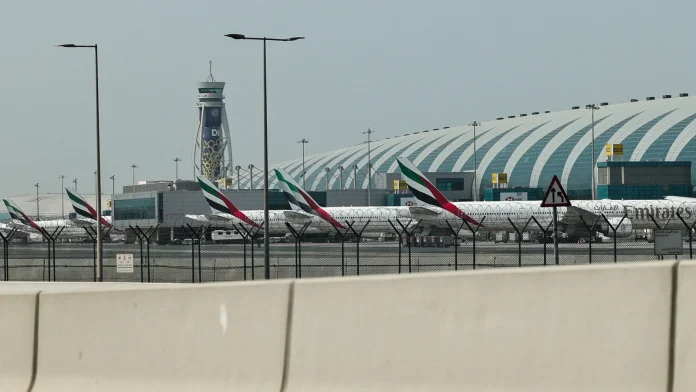
Emirates airline planes parked on the tarmac at Dubai International Airport

When the Sky Shuts: How a Middle East Airspace Closure Sent Shockwaves Through Global Travel

There are moments when the world shrinks to the size of a terminal gate. You watch the departures board flicker from green to red, hear the airline desk click into emergency mode, and suddenly the carefully stitched plans of thousands of people unravel.

That is the image unfolding this week as a sudden closure of key Middle Eastern airspace — and the grounding of hubs in Dubai, Doha and Abu Dhabi — ripped a hole through global flight routes. The disruption is not a blip. It is a sprawling, messy rerouting of people, schedules and supply chains that has left hotels full, prices jittery and passengers asking whether the era of ultra‑efficient hub travel has a brittle underbelly.

Not just a few flights — a cascading problem

Look at the numbers and the scale becomes chillingly clear. Analysed flight data showed that, on one day alone, 1,579 of 3,990 flights planned to operate to the Middle East were cancelled — roughly 40 percent. Of those cancellations, some 747 flights were destined for the United Arab Emirates and 285 for Qatar. Dublin’s airport authority, daa, estimates 5,000–6,000 passengers have already felt the impact locally — and that’s only the opening act.

“Dublin’s a hub airport; we normally operate a dozen to 14 daily connections to the Gulf,” Graeme McQueen, head of media relations at the daa, told national media. “When those hubs stop, passengers either stay, pivot or are stranded. It’s been chaotic.”

Half a million travellers a day pass through Dubai, Doha and Abu Dhabi under normal circumstances; with those arteries closed, east–west flows — the flights that knit Europe to Asia and Australia — have been severely constricted. “We’ve not seen this level of regional hub disruption outside of a global pandemic,” said one aviation analyst. “The Gulf carriers are central to modern long‑haul travel.”

Inside the terminals: humanity and inconvenience

Walk into any major hub and you would see a shared tableau: people camped on luggage, small children wrapped in blanket jackets, conference travellers staring at screens searching for alternate routings, and airport staff juggling phone calls into the night. A woman from Dublin, stranded in Doha, described the sound of distant explosions and the tingle of uncertainty. “It felt like the whole room held its breath,” she said. “We were all just waiting for the next message.”

Elsewhere, at a makeshift information desk, a hotel concierge helps rebook a family of four who were due to fly to Melbourne for a holiday. “We’ve rearranged rooms twice in 24 hours,” she sighed. “People are tired but polite; they know it’s bigger than any one airline.”

Airport culture and the human details

There are cultural threads woven into the chaos. A retired Irish couple sheltering at Dublin Airport passed around a thermos of tea, offering quiet solidarity. At an overflow hotel near Dubai International, an expat chef pivoted his usual menu to offer simple porridge and flatbreads for stranded passengers, turning his kitchen into a small island of calm. Security staff — multilingual, patient, exhausted — became the unsung translators of worry into action.

Where the airlines stand

The response from carriers has been a patchwork of cancellations, reroutes and flexible rebooking policies. Major operators altered schedules across the region:

  • Air France and KLM suspended or warned of disruption on Middle Eastern routes, with some cancellations stretching into early March.
  • British Airways opened rebooking windows and refunds for passengers with travel through affected countries.
  • Etihad confirmed all commercial flights to and from Abu Dhabi were grounded while Qatar Airways paused operations into Doha.
  • Other airlines such as Lufthansa, Singapore Airlines and Turkish Airlines listed multiple suspensions spanning the Middle Eastern network for days ahead.

For many passengers the alternatives are thin. Analysts point out that direct flights from Europe to Southeast Asia or Australasia — the routes that could absorb diverted passengers — are already heavily booked. “There’s simply not a great deal of spare capacity,” said an aviation consultant. “Even where alternatives exist, they’re premium or full.”

Economic tremors: stocks, oil and tourism

Markets responded instantly. Travel shares fell in sympathy: TUI slid roughly 8.5 percent, Lufthansa around 6.5 percent and IAG, British Airways’ parent, near 4.8 percent. Cruise and hotel stocks also retreated as the prospect of prolonged disruption set in.

Fuel prices, too, tightened the screw. Brent crude spiked by around 7 percent, touching levels not seen in months — a reminder that geopolitics at altitude has consequences on the ground, from ticket prices to airline margins.

Major events, small mercy

Not every calendar item is collapsing. Organisers of the Australian Grand Prix, for example, expressed confidence the race would go ahead despite staff scrambling to rearrange travel. “We’re adapting; contingency plans are in place,” one official said. It’s a small solace for fans and workers who must still thread new itineraries through a thinning web of flights.

What travellers can do now

If you’re scheduled to travel to or through the affected hubs, here are some practical steps gleaned from airline staff, airport reps and veteran travellers:

  • Check your airline’s website first — they often update rebooking and refund policies online before calling centres catch up.
  • Consider travel insurance that covers cancellations tied to political unrest or airspace closures; read the fine print.
  • Stay flexible: overnighting near the airport or choosing a longer, multi‑stop routing might be the only way forward.
  • Expect longer queues and delays — build extra time if you must move between airports or change airlines.

What this means for the future of global travel

There is a deeper question here. We’ve built a travel ecosystem that prizes speed and efficiency — the hub-and-spoke model that concentrates millions of passengers through a handful of mega-hubs. That model is marvelously efficient until the hubs are closed.

Will airlines diversify routes? Will governments invest in redundancy? Or will passengers, burned by the experience, demand more resilient, direct connections? These are not only business questions; they are about how we keep the world connected in an increasingly volatile geopolitical climate.

As you read this, someone is repacking a suitcase, switching a phone number to voicemail, or choosing between sleeping on a terminal bench and a cramped hotel room. They are part of a ripple that began in the skies above the Gulf and reached around the planet. How we respond — with compassion, better planning, and clearer communication — will determine whether this week’s chaos is a one-off or the beginning of a new normal.

Where were you when the departures board went dark? How would you plan differently if the sky could close for days? The answers will shape travel for years to come.

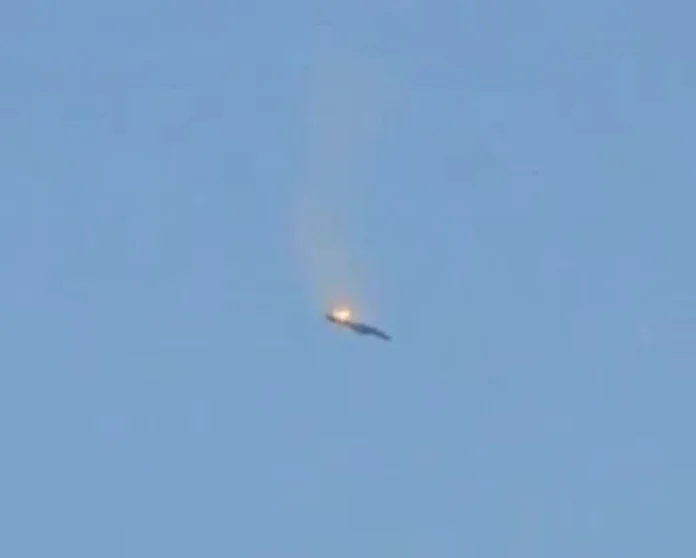
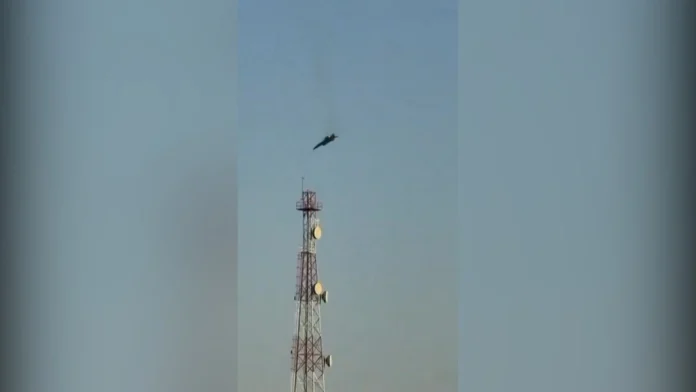
Video shows US military aircraft plummeting from sky over Kuwait

Watch: US military plane plummets from sky in Kuwait

The Sky Over Al Jahra: A Sudden, Surreal Moment

The clip appears before you: a streak of metal cutting the pale desert light, a burst of smoke, and then — impossibly — a parachute blossoming against the flat Kuwaiti horizon. For a country used to the hush of oil fields and the dignity of old palm groves, Al Jahra’s clear air filled with the physics of modern war.

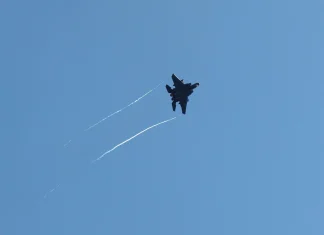
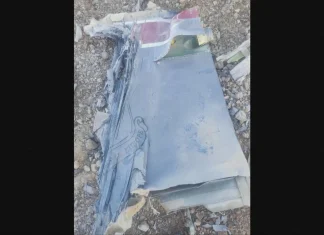
What happened in those few, breathless seconds is being pieced together by officials on all sides. U.S. Central Command has confirmed a dramatic loss: three U.S. F-15E Strike Eagles came down over Kuwaiti territory during active combat operations. In the chaos — amid Iranian aircraft, ballistic missiles, and swarms of drones — CENTCOM said, Kuwait’s air defences mistakenly engaged the American jets. All six aircrew reportedly ejected and were recovered safely after a coordinated effort between Kuwaiti and U.S. forces.

Kuwait’s Ministry of Defence also acknowledged the crashes in a brief statement carried by the state wire. Iran’s state media, for its part, relayed a different line: the Islamic Revolutionary Guard Corps claimed Iranian forces had struck a U.S. plane that later crashed in Kuwait. In the fog of war, competing narratives arrive almost as fast as the ordnance.

What We Saw — And What It Means

Images of a pilot drifting under a parachute are arresting not just because of their visual drama, but because they condense a dozen uncomfortable truths about twenty-first-century conflict. First: crowded skies are dangerous skies. Add into that mix artillery, missiles, drones, and the rapid pace of decision-making, and the door opens for tragic mistakes, even among close partners.

“This is the kind of error that haunts air commanders,” said a retired U.S. Air Force pilot who reviewed the footage and asked to remain anonymous. “You have split-second identifications to make. Friend-or-foe systems help, but they are not infallible. Once missiles and drones are in the air, the margin for error evaporates.”

Friendly fire has been part of warfare as long as armies have existed. But the tools have changed. The battlefield is now three-dimensional, filled with autonomous systems and fragmented command-and-control networks. It is messy, and that messiness can have geopolitical consequences when mistakes happen in allied airspace.

Why Al Jahra Matters

Al Jahra sits west of Kuwait City, a place where desert meets the urban fringe — date palms and low-rise buildings punctuated by the hum of trucks and the occasional rooftop terrace. The sight of parachutes over its district is the kind of jarring image that transforms abstract reports into something local and immediate.

“I saw something falling,” a witness in Al Jahra told reporters in the hours after the crash. “At first we thought it was a drone. Then the parachute — it looked like a person. People ran into the streets. Children were crying.” The human scene is simple and scaled: an aircraft, a chute, neighbors offering water and a blanket to someone who had just come down from ten thousand feet.

Voices in the Storm

Officials on both sides moved quickly to manage the narrative. CENTCOM’s terse explanation framed the incident as an accident during “active combat” operations, noting the involvement of Iranian aircraft, missiles, and drones in the same airspace. Kuwait’s defence ministry confirmed recovery efforts and said it was coordinating closely with U.S. forces.

Regional security analysts are already parsing the account for deeper meaning.

“The incident underlines how tightly wound the region has become,” said a security analyst based in Amman. “Any engagement now risks cascading into something bigger. Misidentification in the air is an old problem made more dangerous by new tools. This could have been a headline about catastrophe; instead, it’s a near-miss with a lot of questions attached.”

And then there is Iran’s reaction. Tehran’s media lines — particularly those coming from the Islamic Revolutionary Guard Corps — framed the episode differently, asserting responsibility for hitting a U.S. aircraft. Whether that claim reflects on-the-ground reality, strategic posturing, or a mix of both remains to be seen.

Quick Facts

  • Aircraft involved: U.S. F-15E Strike Eagles (three reported downed)
  • Crew: Six aircrew ejected and reportedly recovered safely
  • Location: Al Jahra area, Kuwait
  • Actors in the airspace: U.S. aircraft, Iranian aircraft and missiles, drones, Kuwaiti air defences

Beyond the Footage: The Wider Questions

When a friendly system shoots down its partner, who answers the phone? Who takes responsibility? And how do allies manage the political fallout when the battlefield is also a diplomatic arena?

Military planners will comb through radar logs, communications tapes, and weapons-release data. They will look for the point at which identification failed, and for the procedural breaks that allowed a contact to be classified improperly. But the problem is not only technical. There are deeper policy questions about rules of engagement in complex, multi-actor environments — and about trust between partners.

“We need joint training and interoperable systems, yes, but we also need humility,” the retired pilot said. “Everyone assumes their systems are speaking the same language. They often are not.”

Humanity in the Middle of Strategy

For people in Al Jahra, the politics are secondary to the immediate scene: people coming down from the sky, helicopters circling, medics and soldiers coordinating responses. For families of the aircrew, there are phone calls, prayers, and long waits. For commanders, there is the calculus of escalation and the dread of unintended consequences.

And for the rest of the world, the episode is a stark reminder that regional crises are not abstract. They land in neighborhoods, they interrupt lunches, they produce images that travel faster than clarifications or apologies.

What Comes Next?

Expect investigations and statements. Expect regional capitals to parse the event for signs of intent, and for tactical adjustments: changes to identification friend-or-foe procedures, revised flight corridors, and perhaps stricter rules of engagement. Expect political leaders to talk about de-escalation — even as militaries on all sides prepare for the next time the sky fills with danger.

But one question lingers more quietly: as warfare becomes more technologically dense, how do we protect the basic human life at its center? How do we ensure that pilots parachuting into a neighborhood become less frequent images and not more?

We will be watching. Will you be watching too — not merely for the spectacle, but for the answers that must follow?

Zelensky Confirms Ukraine Peace Talks Still Expected This Week

Ukraine peace talks still expected this week - Zelensky
Switzerland or Turkey have been proposed as potential new locations for peace talks, Volodymyr Zelensky said (file image)

On the Edge of Dialogue: A Fragile Pause Between Bombs and Hopes

There is a strange hush that falls across Ukraine’s towns after the sirens die down, a brittle quiet that feels like the world holding its breath. In the kitchens of Pavlohrad, in the rubble-strewn lanes of Kramatorsk, and in the makeshift shelters where families press their faces into winter-worn scarves, people talk about two things at once: the next missile and the next meeting.

This week was meant to be a moment of rare diplomatic focus: a US-brokered round of talks between Kyiv and Moscow had been penciled in for March 5–6 in Abu Dhabi. The plan, however, has become another casualty of a region that refuses to stay still. After weekend strikes across the Middle East — which rippled through global security calculations — Ukrainian President Volodymyr Zelensky told reporters that the talks had not been called off, even if their location was in flux.

“No one has canceled the meeting,” Zelensky said in a briefing, adding that Turkey or Switzerland could host should Abu Dhabi be deemed unsafe. “We will definitely support any of these three venues.” It was a calibrated mix of insistence and realism: the will to negotiate is present, he implied, but so is an awareness of the hazards that follow war into every room where men and women try to broker peace.

Talks continue, but distance remains

From Moscow, Kremlin spokesman Dmitry Peskov struck a similar chord of cautious optimism. “It is in Russia’s interest to continue talks,” he said, repeating Moscow’s stated preference for a diplomatic settlement even as the guns — and the missiles and drones — keep talking for them.

That rhetorical alignment masks a far wider gulf. After three years of fighting that began with Russia’s full-scale invasion in February 2022, Kyiv and Moscow remain stubbornly apart on fundamentals — territory, security guarantees, and the shape of any post-war future. The public, meanwhile, watches for signs that bargain and blood can ever coexist in the same room.

Winter’s endurance and the looming summer of strikes

On the ground, Ukrainians say they have weathered the harshest part of the year. “We survived the cold,” says Olena, a teacher who evacuated her elderly parents to Dnipro last month. Her hands folded in her lap as she recounted nights without heating, when families huddled by gas stoves and hummed old songs to keep each other awake. “But surviving winter is not the same as being safe.”

Zelensky himself warned that Russia may be preparing a new campaign of attacks focused on infrastructure, logistics and water supplies. Such strikes, experts warn, are not just aimed at military targets; they are designed to strain governance and break the will of civilians dependent on electricity and running water.

“We’re seeing a shift toward systemic targeting of lifelines — power, water, transport nodes — intended to sap morale and sustainment,” said Dr. Elena Kovalenko, a Kyiv-based analyst who studies modern conflict logistics. “Air defense remains the most immediate need for Ukraine to blunt those strikes.” She added that, beyond hardware, training and spare parts are often the invisible currency that determines whether a system works when it is needed most.

Air defenses: the bottleneck in a long fight

Ukraine’s leaders have been candid about limits to what they can accept. Zelensky reiterated that Kyiv will not cede the roughly 20% of Donetsk region that remains Ukrainian — land that, for many, is not negotiable without guarantees that are, today, nonexistent. At the same time, he acknowledged a pragmatic reality: prolonged fighting will stretch the pool of air-defense systems allies can spare.

“A long war changes supply chains,” he said. “We understand that intensity of fighting will affect the amount of air defense equipment we receive.” The types of systems Ukraine has sought publicly — from medium-range systems like NASAMS and IRIS-T to longer-range systems such as Patriot batteries — require continuous supplies of interceptors, radar maintenance and skilled crews. That’s a pipeline that can be throttled by politics, production capacity and competing crises around the globe.

Casualties underline the urgency

Even as diplomacy whimsically chases available hotel conference rooms, the violence grinds on. Ukrainian authorities reported that overnight strikes killed at least five people: three in Kramatorsk, one body found under rubble in Dnipropetrovsk region, and another death in Chernihiv. Local officials said the city of Kramatorsk, a bastion of Ukrainian control under pressure from Russian advances, bore the brunt of the attack.

“We are tired of counting the dead,” said Pavlo Hryhorenko, head of a temporary shelter in Pavlohrad where families arrive with backpacks and blank stares. “People ask whether talks will stop the next rocket. We cannot promise them that. We can only promise we will try.”

Those numbers — small in a day but vast in lives — are threaded into larger, grim totals from the conflict’s third year: tens of thousands of combatants and civilians have been killed, and millions displaced, creating one of the largest humanitarian crises in Europe since World War II. The precise figure varies by source; but the human toll is indisputable and immediate at kitchen tables and field hospitals.

Local color and global stakes

Walk through a Ukrainian town now and you sense the crosscurrents of ordinary life and geopolitics: babushkas in woolen headscarves arguing over the price of potatoes, teenagers snapping selfies in bombed-out courtyards, volunteers cycling crate after crate of chargers and canned food into the night. In cafés that still hang on, patrons balance talk of the future with an unspoken ledger of loss.

“We talk about peace like a distant relative coming to visit,” a volunteer named Maksym jokes, then corrects himself with a softer note. “We want her to come, but only on our terms. We have learned the difference between a peace that frees you and a peace that erases you.”

The broader question these conversations raise is not simply whether two delegations can agree on a list of concessions. It is whether a global system — one that supplies arms, mediates interests, and musters humanitarian relief — can respond quickly enough and wisely enough to prevent the next humanitarian catastrophe while still asking the right moral questions.

What comes next?

For now, the plan is to try. Abu Dhabi remains on the table, but Turkey and Switzerland are being weighed as alternatives. The negotiating rooms will be small, the security tight, and the stakes enormous. Each side will bring conditions that feel essential to survival.

And the rest of us — readers, thinkers, policymakers — must ask ourselves: when a war reaches into our living rooms through streaming feeds and satellite images, how do we balance urgency and patience, pressure and principle? What price are we willing to pay for a ceasefire that is generous in words but stingy in guarantees?

In Ukraine, where people still bake bread in basements and light candles when the grid fails, the answer will be lived long before it is negotiated. The coming days will tell whether talks are the start of a genuine thaw or merely another interlude between thunderstorms.

Soomaaliya oo weerar culus ku qaaday Iran, lana safatay dalalka Khaliijka

Screenshot

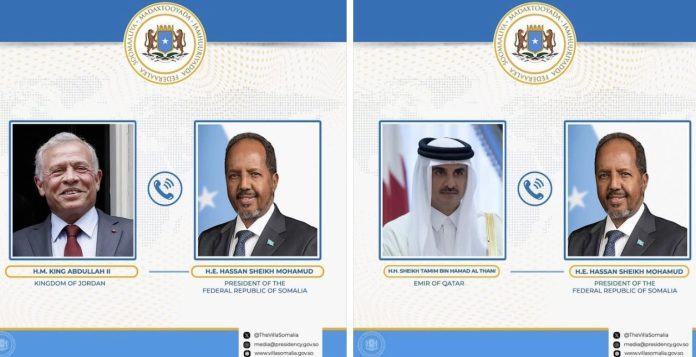
Mar 02(Jowhar)-Madaxweynaha Jamhuuriyadda Federaalka Soomaaliya Mudane Xasan Sheekh Maxamuud ayaa dhanka telefoonka kula hadlay Boqor Cabdalla binu Al-Xuseen, Boqorka Urdun iyo Sheekh Tamiim binu Xamad, Amiirka Dowladda aan walaalaha nahay ee Qatar.

US shooter reportedly voiced support for Iran’s regime

US gunman had expressed 'pro-Iranian' regime sentiment
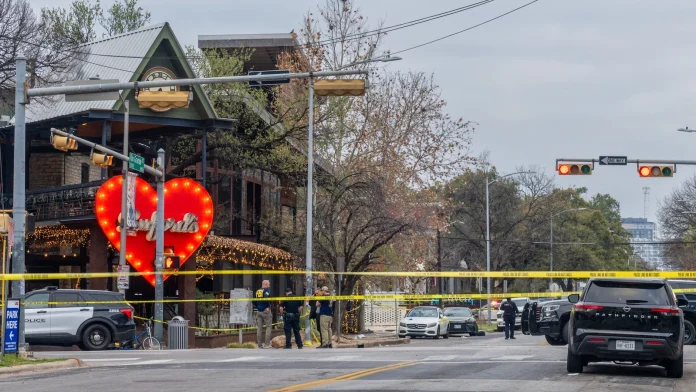
Members of the FBI and local law enforcement investigate after a mass shooting outside of Buford's bar in downtown Austin, Texas

Nightfall in Austin: A Quiet Street, A Burst of Violence, and the Echoes That Follow

There are cities that sleep with music in their bones. Austin is one of them—sixth‑street neon, a drumbeat of live bands, tattooed bartenders wiping down brass taps, and late‑night laughter that slides down alleys like warm air. So when the stillness of a humid Texas night was shattered by gunfire just after 2am, it landed like a blow to the city’s collective chest.

According to local authorities and monitoring agencies, a gunman opened fire near Buford’s Backyard Beer Garden in downtown Austin, killing two people and wounding fourteen others before officers returned fire and killed the suspect. The shooter has been identified by the SITE Intelligence Group as Ndiaga Diagne, a U.S. citizen of Senegalese origin; officials say social media activity suggested “pro‑Iranian regime sentiment.”

“We responded as quickly as humanly possible,” Austin police chief Mr Davis told reporters at a tense, late‑night briefing, his voice tight with fatigue. “Three of our officers engaged the suspect after he emerged from his vehicle and fired on civilians. Our first priority was stopping the threat and getting victims to safety.”

A terrifying sequence

Witnesses described a surreal, horrifying sequence: a pistol firing from inside a car at people seated at outdoor tables, then the vehicle pulling over, its driver stepping out with a rifle and spraying bullets at passersby.

“One moment we were listening to this band, the next there’s popping—like fireworks, but not right,” said Marisol Hernandez, 28, who escaped with minor injuries. “People were screaming, ducking under picnic tables. I’ll never forget the sound of shoes on the pavement, everyone running.”

Three victims remain in critical condition, officials said. Emergency crews worked through the night to treat the wounded and secure the scene. The FBI’s Joint Terrorism Task Force has joined local investigators. FBI special agent Alex Doran warned that while a definitive motive is not yet established, “there were indicators on the subject and in his vehicle that indicate a potential nexus to terrorism.”

Context: a charged atmosphere and the global tinderbox

For those trying to make sense of the violence, it helps to see it against a broader, more febrile backdrop. American cities have already been on heightened alert after reports of U.S. and Israeli air strikes against Iranian targets—strikes that, according to some official statements and media reports, killed Iran’s supreme leader and several senior officials. Whether those reports will stand up under independent verification, and what they mean for a volatile Middle East, is still being argued in diplomatic rooms and on social media.

“When tensions spike overseas, they ripple here,” explained Dr. Leila Haddad, a counterterrorism researcher. “People watch, they interpret, and sometimes that interpretation is channeled through violence. We’ve seen cases where foreign policy actions are used as justification—or apparent justification—for attacks on U.S. soil.”

How often does that happen? Precise numbers are hard to pin down; terrorism‑related incidents in the U.S. are comparatively rare, yet they carry outsized impact. For decades, the U.S. has grappled with the twin realities of frequent gun violence and intermittent politically or ideologically motivated attacks. The statistics are sobering: in recent years, roughly 40,000 Americans have died annually from gun‑related injuries, a mix of homicides, suicides, and accidents. Mass shootings—while representing a tiny fraction of those fatalities—loom large in public attention and policy debate.

On the ground: voices from downtown Austin

Downtown Austin the morning after looked like a city trying to shake off a nightmare. Crime‑scene tape fluttered from lamp posts. Nearby bars posted messages on their windows: “We love our community.” Paramedics and detectives moved with quiet purpose. Locals, still in pajamas and sandals, gathered near portable coffee carts, whispering, mourning, incredulous.

“I walk these streets every night—this is where my neighbors are,” said Daniel Mbaye, who runs a late‑night sandwich truck across from Buford’s. “I’m scared today. Not just of the shooting, but of being seen as something else, of people jumping to conclusions about who we are.” Mbaye is of Senegalese origin, like the man authorities have named. “I love Austin. My customers are my friends.”

Buford’s owner, who wished to remain anonymous, wiped a tear from a coffee‑stained face. “We’ve always tried to be a safe, joyful place—live music, community nights. Tonight that joy was broken. Families come here. It’s not supposed to end like this.”

Questions that won’t go away

If we peel back the immediate horror, several larger questions unfurl. How do local police and federal agencies coordinate when ideology and firearms intersect? What role does online radicalization play, and how can it be detected without trampling civil liberties? How should communities balance vigilance against scapegoating minorities?

“There’s a delicate balance between proactive investigation and preserving constitutional rights,” said Prof. Aaron Seidel, a civil liberties scholar. “We need robust intelligence work—but we also have to ensure that whole communities are not treated as suspect because of one individual’s alleged actions.”

And then there is the perennial American question: why are guns so lethal here? Public health experts point to a combination of high firearm availability, social stressors, and gaps in mental‑health services. “We can have all the situational awareness in the world,” said Dr. Haddad, “but unless policy addresses underlying access to weapons, these kinds of scenes will continue to appear on our streets.”

Timeline (as pieced together by authorities)

  • ~2:00am: Shooter allegedly opens fire from vehicle near Buford’s Backyard Beer Garden.
  • Shooter exits vehicle, reportedly armed with a rifle, and continues shooting at pedestrians.
  • Responding officers engage; three return fire, killing the suspect.
  • Multiple victims transported to area hospitals; three in critical condition.
  • FBI Joint Terrorism Task Force joins local investigation; SITE Intelligence Group reports alleged social media indicators.

How to grieve, how to act

In the immediate aftermath, grief takes many forms. There are floral piles and candles, of course. There are also the quiet ways communities absorb trauma: counselors at local churches, emergency mental‑health hotlines being set up, and city officials promising transparent investigations.

“We will get answers,” Mayoral spokesman Rachel Ortega told reporters. “But answers don’t erase pain. We stand with the victims, their families, and everyone affected.”

What can readers—here, now, meters from the scene or oceans away—do? Stay informed through credible sources. Support local organizations helping survivors. Resist the urge to leap to attribution based on social media snippets. And ask your representatives about policies that address both violent extremism and the ease of access to assault weapons in this country.

In the end, the image that lingers is painfully intimate: people seeking refuge under a picnic table, a bartender’ s hand steadying a bleeding stranger, a city waking up to a hole where a normal night used to be. The questions are as much about public safety as about how we hold each other—how we mourn, how we protect, how we live together in fraught, connected times.

Can a city known for its music, food trucks, and open‑armed culture heal quickly from an act meant to terrorize it? The answer will be written in weeks and months—in courtrooms and hospital wards, in neighborhood meetings, in the way Austin remembers and rebuilds. For now, the wound is fresh, the questions raw, and the search for truth underway.

Diyaarado dagaal oo laga soo ridey ciidamada Maraykanka

Mar 02(Jowhar)-Qaar ka mid ah diyaaradaha dagaalka Maraykanka oo aan la sheegin noocooda ayaa ku soo dhacay magaalada Kuwait ee dalka Kuwait.

Israeli airstrikes in Lebanon kill at least 31, sources say

At least 31 killed in Israeli strikes on Lebanon
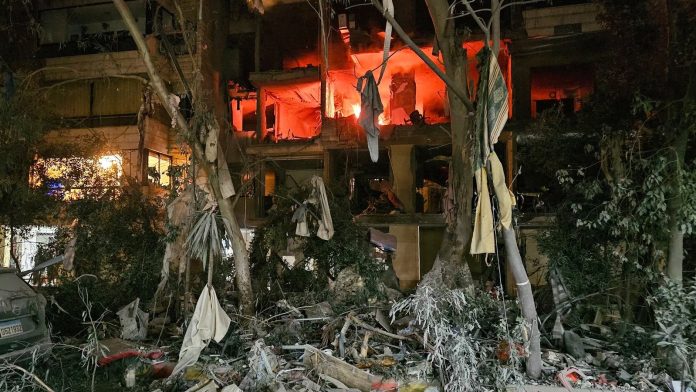
A fire is seen in a damaged building after an Israeli airstrike in Beirut

Smoke over Beirut, Sirens across the Region: A City Wakes into War

By dawn, the southern neighborhoods of Beirut—once a jumble of laundry lines, lemon trees, and late-night street cafés—looked as if someone had swept a dark hand across them. Black smoke coiled into the sky, and families shoved suitcases into cars, helmets on the back seats, children clutching pets and toys as if their small comforts could anchor them to home.

“We fled with nothing but the clothes on our backs,” said Mona, a schoolteacher from the Dahiya district, her voice raw with exhaustion. “My students used to hide under their desks during drills. Today, the drills were real.”

Lebanon’s health ministry released an initial toll: at least 31 dead—20 in Beirut’s southern suburbs and 11 in the country’s south—and 149 wounded after a wave of Israeli air strikes. The strikes came in response to an unprecedented rocket and drone barrage fired by Tehran-backed Hezbollah, which the group said was retaliation for the death of Iran’s supreme leader.

The Immediate Flashpoint

The morning’s violence was not an isolated flare but a snap in a much more frayed thread. Hezbollah—whose fighters and political leaders have long been entwined with Lebanon’s social fabric in the south and across Beirut’s suburbs—said it had struck an Israeli army site south of Haifa “with a barrage of high-quality missiles and a swarm of drones”. In military terms, it was the most overt claim of responsibility since a fragile ceasefire brought a halt to more than a year of cross-border hostilities in late 2024.

“Hezbollah chose the Iranian regime over the State of Lebanon and initiated an attack on our civilians… they will pay a heavy price,” Rafi Milo, head of the Israeli military’s Northern Command, declared in a statement that promised increased intensity of strikes. Hours later, the Israeli military said it had “precisely struck” senior Hezbollah figures in Beirut and the south, and issued evacuation orders to around 50 towns and villages in Lebanon — places where Hezbollah’s presence is deeply rooted.

Voices from the Ground

An aid worker who had been coordinating ambulances at a hospital near the southern suburbs described a scene of improvisation. “We ran out of blood bags by mid-afternoon. Mothers were carrying infants, fathers were trying to call relatives, and we kept getting reports of new strikes,” she said. “This is not how a city should breathe.”

Lebanese Prime Minister Nawaf Salam condemned the rocket fire as “irresponsible” and pledged to “stop the perpetrators and protect the Lebanese people.” President Joseph Aoun warned that allowing attacks from Lebanese territory risked dragging the country into a wider regional conflict—a resonant fear in a nation still stitched together after years of political turmoil and an economy on the edge.

From Tehran to Tel Aviv: An Escalation that Spreads

The night’s violence did not confine itself to Lebanon. Air raid sirens flared across Israel, including in Tel Aviv and Jerusalem, after state media in Iran said another wave of missiles was being launched toward “enemy locations.” Tehran reported explosions near its own intelligence ministry, and international witnesses described blasts heard as far afield as Dubai and Doha.

The US and allied forces, already engaged in a sweeping campaign against Iranian military infrastructure across multiple fronts, said their own operations had struck more than 1,000 Iranian targets since the outset of major hostilities. The cost has not been only strategic: US officials confirmed the first American casualties of the campaign, with three service members killed in an attack at a base in Kuwait.

“This is a conflict of telescoping consequences,” said Miriam Haddad, a Middle East analyst based in Amman. “Local strikes become national, national operations slip into regional clashes, and regional clashes ripple into the global economy.”

Collateral Shockwaves

Global commerce felt the tremors. Dubai’s airport—one of the world’s busiest international hubs—was briefly closed, grounding flights and sparking one of the most significant disruptions to air travel in recent memory. Shipping lanes also shifted as hundreds of vessels, including oil tankers, dropped anchor farther from the Strait of Hormuz, a critical chokepoint for global energy supplies.

The economic echoes were immediate: Asian airline stocks tumbled, some by over 5%, and commodity traders braced for a likely uptick in crude oil prices. “Every missile and every strike has a price that someone, somewhere, eventually pays,” Haddad said.

Politics, Public Opinion, and the Weight of Leadership

Back in Washington, President Donald Trump framed the campaign as ongoing and resolute. “Operation Epic Fury continues unabated,” a senior White House official said, echoing the president’s warning that military strikes would persist until objectives were achieved. A Reuters/Ipsos poll suggested public appetite for continued operations was thin—only about one in four Americans approved of the campaign.

“There will likely be more casualties,” Mr. Trump said in a pre-recorded video tribute to fallen American service members, urging Iranians to rise up against their rulers and offering immunity to those who surrendered. Iran’s temporary leadership council, however, signaled no eagerness to negotiate. Voices within Tehran’s inner circle, like former adviser Ali Larijani, dismissed the notion of talks with the US, calling such overtures delusional.

So What Now? The Broader Pattern

Ask yourself: when a fire spreads from a match to a forest, is the blame purely on the spark, or on the centuries of drought? In the Middle East, decades of proxy battles, unaddressed grievances, and brittle governance have created tinderbox conditions. The return to open conflict between Israel and Hezbollah—a pair that has repeatedly flirted with war—underscores how quickly local disputes can cascade into regional crises.

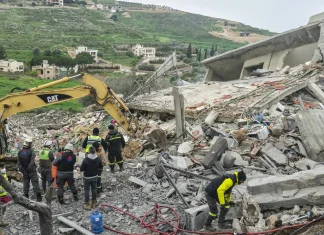
Humanitarian organizations are already warning of mounting needs. Hospitals strained, food supplies disrupted, and civilians displaced—these are the predictable outcomes. The political calculus is less immediate but no less consequential: a prolonged campaign could reshape domestic politics in several countries and leave long-term scars on an already fragile regional order.

Small Stories, Big Consequences

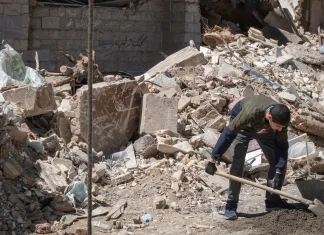
In a narrow alley off the main road in the southern suburbs, an elderly grocer named Hassan swept glass from his doorway. “We have lived with sirens before,” he said, voice steady though hands trembled. “But every time, it feels like the first time. The children ask when they can play again. What do I tell them?”

His question hangs in the air like the smoke: who offers the answer? Military victory or strategic gain are abstract to the family whose home is rubble. For them, the calculus is immediate—shelter, safety, the chance their children will dream without the taste of fear in their mouths.

Where Do We Turn from Here?

There are no tidy exits. Diplomacy, when it returns, will have to navigate not just the demands of states and militias but the daily reality of communities caught between them. International actors face choices: reinforce a fragile balance, push for de-escalation, or double down on military means with all the risks that invites.

For readers watching from afar, consider the human texture beneath every headline: the mother in Beirut, the naval crew in the Gulf, the airline passenger stranded in Dubai. Conflicts are often presented as chess matches between high-level actors. But the pawns are neighborhoods, grocery stores, schools, and market stalls—the fragile infrastructure of ordinary life.

As the region holds its breath, the question remains: can a broader regional ceasefire be stitched together before the fire becomes an inferno? Or will each retaliatory move redraw maps of loss for another generation? The answer will depend not only on leaders and missiles, but on the quieter, harder work of preserving the lives and dignity of those who live nearest the smoke.

Gudoonka labada Aqal ee BFS oo amray laamaha amaanka in xildhibaan safri karo jirin

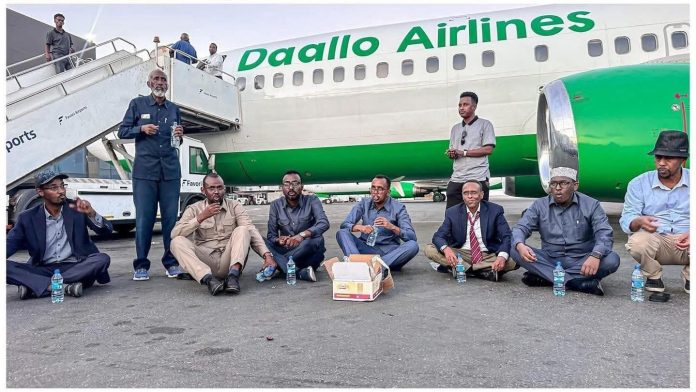
Mar 02(Jowhar)-Qaar ka mid ah xildhibaannada ka soo jeeda Puntland ee shalay dib loogu soo celiyay Muqdisho, kuwaas oo qorsheynayay inay saakay mar kale safraan, ayaa sheegay in laga hor istaagay inay ka dhoofaan Garoonka Diyaaradaha Aadan Cadde.

Wararkii u danbeeyay dagaalka Israel iyo Mareykanka ku qaadeen Iiraan iyo Qarxyo cusub

Mar 02(Jowhar)-Israel: Qaraxyo culus ayaa laga maqlay bartamaha Israa’iil. Taliska Ciidanka Israel ayaa sheegay in qiimeyn xaaladeed lala yeeshay hoggaanka kaddib gantaallo laga soo tuuray Lubnaan. Qorshaha weerarrada marxaladaha xiga waa la ansixiyay.

Second Turkish-owned ship crosses Hormuz strait

Second Turkish-owned vessel passes through the Strait of Hormuz

0
Another Turkish-owned vessel has successfully passed through the strategically significant Strait of Hormuz, marking the second such passage in recent weeks. The vessel, carrying...
Israeli occupation of south Lebanon 'very dire', says MP

MP warns Israeli occupation in southern Lebanon has become ‘very dire’

0
In Southern Lebanon, Homes Become Frontlines — Voices from a Region Holding Its Breath The sky over southern Lebanon has settled into a kind of...
US, Iran search for American pilot after warplane downed

U.S. and Iran hunt for missing American pilot after warplane shot down

0
Skyfall: When the Night Became a Hunt — Two US Jets Downed, a Pilot Missing, and a Region Holding Its Breath The Gulf night stank...
As it happened: US fighter jet shot down over Iran

Live: US fighter jet shot down over Iranian airspace

0
When the Sky Broke: A Jet Falls and an Old Rivalry Reignites The sun had not yet finished its climb when the news came in:...
Iran shoots down US fighter jet, pilot rescued - report

US fighter jet downed by Iran; pilot reportedly rescued

0
Smoke over the desert: an American warplane falls, and a region holds its breath There are moments when the desert seems to inhale, as if...