

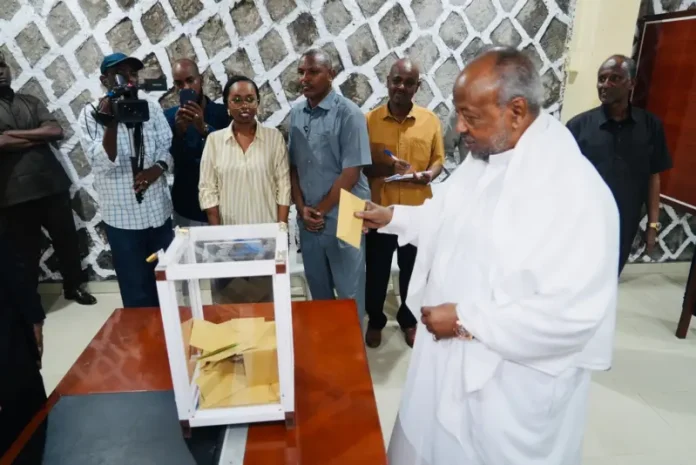
Apr 10(Jowhar)- Shacabka dalka Jabuuti ayaa maanta u dareeray goobaha codbixinta si ay u doortaan madaxweynaha xiga, iyadoo hogaamiyaha xilka haya Ismaaciil Cumar Geelle uu markale ku guuleysto doorashada.
Madaxweyne Xasan oo la kulmay Wasiirka Tamarta iyo Kheyraadka Turkiga
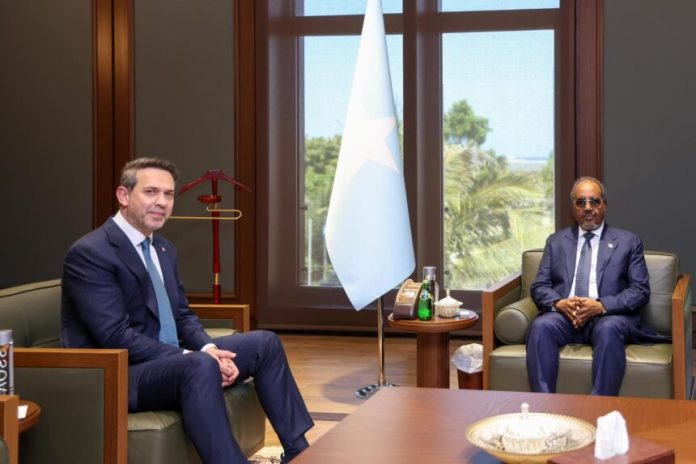
Apr 10(Jowhar)-Madaxweynaha Jamhuuriyadda Federaalka Soomaaliya Mudane Xasan Sheekh Maxamuud ayaa maanta Madaxtooyada Qaranka ku qaabilay wafdi ballaaran oo ka socday Jamhuuriyadda aan walaalaha nahay ee Turkiga oo uu hoggaaminayey Wasiirka Tamarta iyo Khayraadka Dabiiciga ee dalkaas Mudane Alparslan Bayraktar.
Artemis crew aims to reveal hidden health hazards of spaceflight
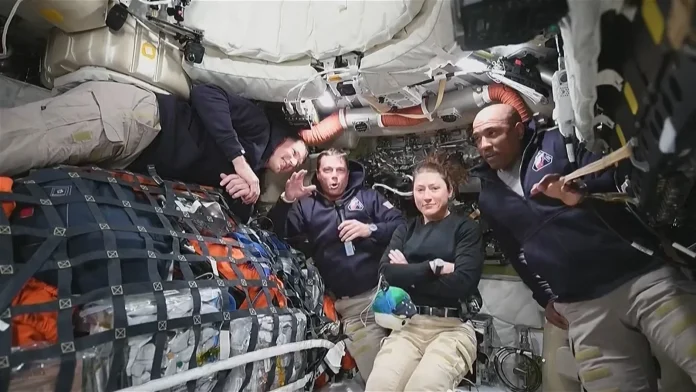
Beyond the Blue: What Artemis II’s Moonward Hush Reveals About Space, Radiation and the Human Body
There is a peculiar kind of silence beyond low Earth orbit — not the cinematic quiet of spacewalks, but a clinical hush, the hum of equipment and a muted conversation among five human hearts: four aboard Orion and the millions of lives watching from a planet that looks impossibly small through a porthole.
On the surface, the Artemis II voyage was a triumph of engineering and imagination: four people carried farther from Earth than any human in living memory, skimming the Moon and swinging back toward home. But tucked beneath that simple story of distance is a complicated, urgent question—how does the body fare when it’s stripped of the planet’s soft, invisible armor?
From Magnetosphere to Moonlight: Leaving the Shield Behind
The International Space Station orbits some 400–420 kilometers above Earth, snug within the protective cradle of the magnetosphere. That magnetic cocoon deflects many of the charged particles that streak through space. The Artemis II crew crossed a boundary. They traveled a distance more than a thousand times that between the Earth and the ISS, where that shielding thins and vanishes.
“Once you step outside that cloak,” says Dr. Steven Platts, chief scientist with NASA’s Human Research Program, “you start seeing a different signature of radiation—particles that come from deep space, from ancient supernovae, and a very different threat profile than what we live with in low Earth orbit.”
That signature is dominated by galactic cosmic rays (GCRs), high-energy particles that penetrate tissue, damage DNA and can seed long-term health consequences. Solar particle events add bursts of intense radiation when the Sun erupts, and both are part of the puzzle that mission teams hope to decode.
Counting Particles, Counting Pulses
NASA packed Orion with instruments and protocols that read like a medical thriller. Radiation sensors mapped the flux of incoming particles in real time. Blood samples were taken from the crew before launch, and more samples awaited them on return. Saliva was sampled during the flight, and crew-worn smartwatches tracked heart rate variability and sleep—simple metrics that can give early clues to stress and physiological change.
But the agency did something stranger and more intimate with modern technology: it placed tiny living systems—organ-on-chip devices—inside the capsule. Built to mimic bone marrow, these microchips replicate one of the human tissues most vulnerable to radiation. Bone marrow spawns blood cells; damage there can ripple through immunity, oxygen transport, healing.
“We want to see not just how many particles hit the hull, but how tissue-like systems respond in a matter of days and weeks,” Platts told me. “It’s a bridge between counting events and understanding biology.”
Not Just Cancer: The Full Reach of Radiation
When most of us hear “radiation,” our thoughts snap to cancer. That’s a real, dread-worthy possibility. But the human body is complex, and radiation’s fingerprints show up in other, subtler places: the brain, blood circulation, immune response.
“Radiation isn’t only a future cancer risk,” says Dr. Maria Kovac, a neuro-radiobiologist at a leading research university. “We know that even moderate exposures can spark inflammation in the brain, disrupt neural signaling and increase vulnerability to neurodegenerative conditions over time. That’s not an immediate headline, but it matters for mission planners thinking decades ahead.”
The Artemis II mission was relatively short—about ten days—so the immediate risk window is small. Yet for future lunar habitats, for weeks- or months-long stays, and for dreams of sending humans to Mars (a journey that could take six to nine months one-way), the math changes. Exposure accumulates. So do the unknowns.
How NASA is Measuring the Unknown
Onboard and on the ground, NASA and its partners set a defensive perimeter of data. They are measuring:
- Radiation dose rates and particle types inside and outside Orion
- Blood chemistry changes pre- and post-flight
- Immune markers and stress hormones from saliva and wearable devices
- Responses of organ-on-chip models that simulate bone marrow function
“This is no longer exploration on instinct,” says Bruce Betts, chief scientist at the Planetary Society. “We have microelectronics, advanced biochips, continuous monitoring. The datasets from Artemis II will be orders of magnitude richer than Apollo’s—fifty years of technology compressed into ten or twelve days of concentrated observation.”
Inside the Capsule: The Human Cost of Compact Living
Beyond radiation, there’s another threat—one of the mind and the everyday spirit. Compare the ISS to Orion and you have a startling contrast. “It’s like going from a six-bedroom house to a camper van,” Platts says. That’s not a flippant metaphor. It’s about privacy, personal space, and the small rituals—making coffee, taking a walk around a module—that stitch together a human day.
Psychologists warn that confinement, monotony, and distance from home can erode resilience. Sleep disorders, interpersonal tensions, depressive symptoms, and cognitive fog are issues that could escalate on longer missions. The stakes feel intimate: what do you do when your teammate is also your only window to normalcy?
“We study crew dynamics the way sociologists study small communities,” says Dr. Kavita Rao, a space behavioral health specialist. “Food, humor, rituals, the way people share a cramped table—these are not trivial. They shape mission success.”
What This Means for the Future
Why does any of this matter to you, on your street, in a city far from launch pads? Because these questions reach into public health, ethics, and the economics of a new frontier.
If we decide humanity should live beyond Earth—mining, manufacturing, science, survival—how do we protect the people who go there? What are acceptable risks? Who signs that waiver? Nations and private companies are already racing to build a lunar economy; but the medical, legal and moral frameworks lag behind.
And there are spillover benefits. The same organ-on-chip technologies and continuous-monitoring approaches being refined for astronauts could revolutionize remote medicine on Earth, in rural clinics or in disaster zones. The data may also help us understand how prolonged low-grade stress affects cognition and immunity in aging populations worldwide.
Questions That Stay in Orbit
As Orion streaked back toward Earth, carrying bodies that had been shielded from the vacuum but exposed to an invisible storm of particles, the mission left us with more than telemetry. It handed us a ledger of questions:
- How do we design habitats that balance radiation shielding with human comfort?
- What medical countermeasures are feasible for deep space—drugs, shielding, new materials?
- Who decides acceptable risk, and how do we protect the most vulnerable crew members?
“Exploration has always been an ethical negotiation,” Betts told me. “We weigh risk against reward, curiosity against cost. With Artemis II, the negotiation becomes clearer, and the ledger is full of data that will inform policy, medicine, and design for decades.”
So look up tonight. The Moon sits, patient and luminous, a neighbor that doesn’t bother itself with our questions. We are the ones who must decide how to visit, how long to stay, and how to keep the fragile machines of our bodies humming in a place that does not want us.
Will we go carefully, with science and empathy guiding every choice? Or will ambition outpace prudence? The answers will matter not only for astronauts, but for all of us who imagine leaving the blue behind. What kind of explorers do we want to be?
European Union and Arab States Urge Israel to Cease Airstrikes, Source Says
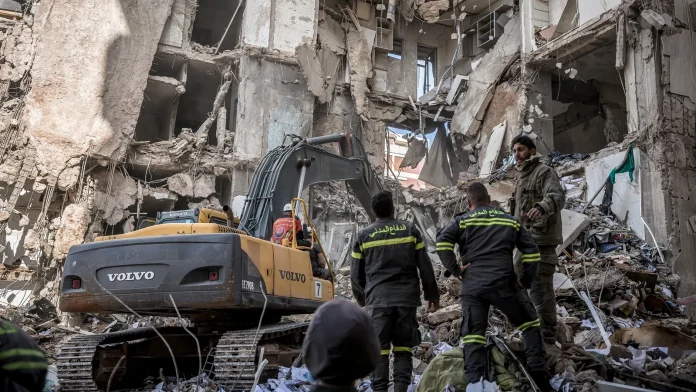
Beirut’s Smoke and Silence: When Diplomacy Scrambles to Hold Back the Rain of Fire
There is a particular kind of quiet that follows an air strike—the kind that is not peaceful but stunned. In Beirut, that silence has been threaded with sirens, the clumped footsteps of volunteers, and the low, persistent hum of generators powering hospitals that have become front-line sanctuaries.
In the days after a devastating wave of strikes that Lebanese authorities say killed more than 300 people, the city feels like a wound being tended in public. Streets that were once full of the clatter of cafes and children’s games now host makeshift triage tents, and a plume of smoke still curls over neighborhoods in the south. “We are exhausted but we are not defeated,” said Samar, a volunteer from the Jnah district, wiping soot from her hair. “We carry the dead like we carry the groceries—one at a time, because there is no other way.”
Pressure from All Sides
Behind the scenes, diplomats from Europe, the Gulf states and Egypt have been quietly—but urgently—pressing Israel to refrain from further strikes on Beirut, according to a Western diplomat involved in the conversations. “It’s not a simple phone call,” the diplomat said. “It’s an intense stream of messages: the hospitals, the civilians, the airport road—everybody keeps repeating the same plea.”
Those pleas follow warnings issued by the Israeli military that large, densely populated southern neighborhoods could face renewed strikes. The threat sent a wave of panic through communities and targeted strategic arteries: the road leading to Beirut’s only international airport, and areas that house major hospitals.
“We have been assured by several foreign missions that access to the airport and the road will be maintained,” said Fayez Rasamny, Lebanon’s public works minister, a note of both relief and caution in his voice. “But assurances do not always keep shells from falling.”
Hospitals on the Edge
Rafic Hariri University Hospital, the country’s largest medical facility, was among the buildings that received explicit assurances it would not be targeted. Mohammad Zaatari, its director, described the scene as controlled chaos. “We have around 450 patients across Rafic Hariri and Al-Zahraa hospitals in the southern districts,” he told aid groups. “Forty of those are in intensive care. Moving them is not simply a matter of carrying a stretcher down a corridor.”
The World Health Organization publicly urged Israeli forces to call off evacuation warnings for the Jnah district, stressing that the district hosts critical medical infrastructure and hundreds of vulnerable patients.
Lebanon’s Southern Front: Fire and Response
Beyond Beirut, the night has been long for villages in southern Lebanon. Small towns like Habbouch, near Nabatiyeh, showed the physical cost: gutted buildings, scorched facades and firefighters scraping at smoldering rubble. An AFP photographer who visited the site captured scenes of volunteers passing buckets of water and rescuers searching for those still missing under the debris.
On the opposing side, Hezbollah has claimed rocket launches into northern Israel and strikes against advancing forces along the border. “We were forced to react,” said a Hezbollah spokesperson in a terse audio statement. “We will protect our people and our land.”
Displaced and Disoriented
Roughly one in five Lebanese residents in affected areas have fled their homes since the conflict escalated—an abrupt, bitter displacement that has reawakened memories of past wars. Families cram into relative’s apartments, municipal halls, and school gymnasiums made into temporary shelters. “We take what we can carry—our children, the telephone charger, and the old photograph albums,” said Karim, who left a burned-out home in the south. “Everything else is ash or memory.”
The Strait of Hormuz: A Chokehold on Global Energy
While the bombardment in Lebanon has drawn the world’s eyes, another consequence of the regional conflict is playing out on the high seas. The Strait of Hormuz—through which about one-fifth of the world’s seaborne oil usually passes—remained effectively closed in the immediate aftermath, a chokehold that sent shockwaves through global markets.
Normally, some 140 ships transit the strait each day. In the first 24 hours after a fragile US-Iran ceasefire took hold, only a single oil products tanker and five dry bulk carriers made the passage. That scarcity pushed some refineries, especially in Europe and parts of Asia, to pay spot prices approaching $150 per barrel for immediate crude delivery—levels that reverberate quickly into markets and household pump prices.
U.S. President Donald Trump publicly chided Iran’s handling of the maritime agreement, calling it “not the deal we had,” even as Tehran insisted the truce should apply to Lebanon as well. The competing interpretations of the truce underscore how local battles can scramble international accords, and why crises in the Middle East ripple outward into consumer wallets worldwide.
Diplomacy under Lockdown: Islamabad Hosts Fragile Talks
Against this backdrop, representatives from Washington and Tehran were due in Islamabad for what diplomats called the first direct talks since the conflict began. Pakistan turned its capital into a fortress: a 3km “red zone” around a luxury hotel, a hurried public holiday, and an air force escort planned for the incoming Iranian delegation led by Parliament Speaker Mohammad Baqer Qalibaf.
“This is a test of whether words can actually stop bullets,” said Dr. Leila Mansour, a political analyst based in Beirut. “Both sides come carrying grievances and a litany of demands. Whether the talks can rise above transactional bargaining and tackle root causes remains to be seen.”
What’s at Stake Beyond the Headlines
At issue are not only territorial or military gains. Iran has reportedly demanded the lifting of long-standing economic sanctions and a formal acknowledgement of influence over strategic waterways—moves that would redraw regional power lines. The U.S. insists on limits: forgoing further enrichment of uranium, giving up long-range missile capabilities, and cutting support to proxy groups such as Hezbollah.
Experts note the long shadow of previous negotiations. “These are not new issues,” said Jonathan Keane, a senior fellow at an energy and security think tank. “What’s different is the integration of kinetic warfare with economic warfare—blockades, sanctions, and the use of energy chokepoints as leverage.”
And then there is the most human ledger: lives lost, homes leveled, hospitals strained, children missing school. These are numbers that don’t show up in market reports but will shape politics for years to come.
Why Should You Care?
Because the turmoil of a single region can destabilize markets, create migration waves, and test the capacity of international institutions to keep civilians safe. Because a closed strait means higher prices at the pump in cities half a world away. Because the images from Beirut—soot on hands, a mother’s whisper over a sleeping child in a makeshift bed—are a stark reminder that wars are always lived at the level of street and home.
What would it take, you might ask, for diplomacy to outrun the guns? For now, the answer rests in fragile agreements, hurried meetings, and the weary persistence of people who stay to stitch their communities back together.
“We need more than promises,” Samar the volunteer told me, as she prepared another tray of tea for exhausted medics. “We need corridors, medicine, and a map that shows a future where our children sleep without sirens.”
As the smoke clears and negotiators gather, that simple wish—quiet, safety, and a return to ordinary days—remains the clearest measure of whether diplomacy will heal as war has harmed.
Five key takeaways from US-Iran talks in Islamabad
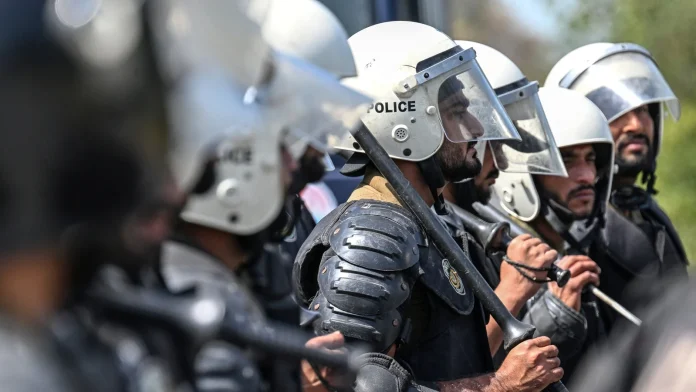
Islamabad’s Quiet Storm: Pakistan Hosts the Highest-Level US–Iran Talks in Years
In a city of low hum and careful glances, Islamabad has become, for the moment, the world’s living room for a fraught conversation. Streets that usually spill with office workers and schoolchildren have been thinned to a polite hush. Security checkpoints sit like punctuation marks on every major avenue. The Serena Hotel—its fountains stilled and its lobby lit for a different kind of guest—asked visitors to leave, and the capital moved almost imperceptibly into a state of pause.
This is not a scene anyone expected. Pakistan—better known on global front pages lately for economic strain and internal security challenges—has quietly assumed the role of broker between two adversaries whose conflict has rippled across markets, capitals and coastal chokepoints. The task: turn a brittle two-week ceasefire into something more durable, and with it, steady the world’s oil markets and the nerves of millions.
Why Islamabad?
To outsiders, Pakistan’s emergence as mediator might look improbable. Dig a little deeper and the logic is clearer. Islamabad sits at a rare regional intersection: a Sunni-majority country with deep cultural and historic ties to neighbouring Iran, and longstanding strategic relationships with the United States, Saudi Arabia and China.
“Pakistan has one foot in each room,” said Dr. Farah Ahmed, a Lahore-based analyst who studies South Asian diplomacy. “That gives it a credibility others don’t have—especially right now, when trust is the scarcest currency.”
Iran was one of the first countries to extend recognition to Pakistan after 1947. The two share a border of roughly 900 kilometres, overlapping histories and substantial people-to-people ties. Inside Pakistan live an estimated 20 million Shia Muslims—one of the largest Shia communities outside Iran—adding social and religious links to the political calculus.
At the same time, Islamabad has invested heavily in relations with Beijing and cultivated ties with Washington. Pakistani officials say Chinese diplomacy played a catalytic role in persuading Tehran to accept a temporary halt in hostilities; Chinese Foreign Minister Wang Yi publicly endorsed Islamabad’s mediation. Whether Beijing or Islamabad did the heaviest lifting is a debate diplomats will have over tea for months to come.
The stakes: Strait of Hormuz and a shaken energy market
The immediate urgency is clear and measurable: the Strait of Hormuz. That narrow, glimmering thumb of water is, by some counts, the maritime valve through which roughly one-fifth of the world’s seaborne oil supplies pass. When missiles and diplomacy collide there, the consequences show up quickly at pump and port.
“When traffic through Hormuz was curtailed earlier this month, spot prices jumped and traders started pricing in long-term premiums for risk,” explained Leila Moreno, an energy analyst at the International Petroleum Institute. “Even a short closure can reverberate across markets for weeks.”
What’s at issue is not simply the flow of oil. The negotiators confront divergent, existential demands. Washington’s reported proposal—described in media accounts as a multi-point plan—targets restrictions on uranium enrichment, limits on long-range missile programs, concrete sanctions relief contingent on verifiable steps and guarantees for unobstructed navigation in international waters.
Tehran’s counter, according to sources briefed on the talks, isn’t a mirror image. It includes a demand for greater regional influence—control, or at least security assurances, over strategic waterways—an end to foreign military operations in neighbouring countries, and sweeping sanctions relief. Lebanon’s fate, especially in light of continuing attacks on Hezbollah targets, has become an unexpected and explosive sub-plot.
Who sits at these tables—literally and figuratively?
The two delegations will likely not meet in the same room. Officials say Pakistan will shuttle proposals back and forth, a method familiar from years of Oman-mediated indirect talks. On the American side, reports name Senator J.D. Vance as a senior political lead alongside diplomatic figures; on Iran’s side, parliamentary and foreign ministry heavyweights are said to be present. Pakistani ministers and security officials will be the host interlocutors.
“These are not ordinary conversations,” said retired Ambassador Tariq Hussain, who served in Tehran in the past decade. “They are layered—with public posturing, domestic politics, regional alliances and personal reputations all moving at once. That’s why neutral venues matter.”
Islamabad on the edge: life inside the Red Zone
For residents, the talks are a mix of spectacle and inconvenience. The capital’s Red Zone—home to the foreign ministry and government offices—has been locked down. Soldiers in crisp fatigues patrol with the same composure of men who have done this many times before. Traffic diversions turn commute times into riddles. Small businesses near diplomatic enclaves tape up shopfronts; a tiny chai stall by the Margalla Road hums nonetheless, serving men in uniform and diplomats alike.
“We make the same tea whether there’s a summit or a funeral,” said Aslam, a teahouse owner whose shop has served embassy drivers for years. “People need warmth. They need a place to think.”
Local shopkeepers talk about mixed feelings—pride that Pakistan is being trusted with such delicate work, and anxiety about what might happen if negotiations falter. “We want peace,” said Ayesha Khan, who runs a boutique selling embroidered shawls. “More than anything, we want normalcy—for our markets, our students and our children.”
What to watch for
- Whether the ceasefire is extended beyond the scheduled expiry—an immediate barometer of progress.
- Concrete language on the Strait of Hormuz: guarantees, patrol arrangements, or joint monitoring proposals.
- How Lebanon and Hezbollah are treated in any final document—this could make or break Iranian buy-in.
- Sanctions relief mechanics: will they be phased and verifiable, or an all-or-nothing demand?
Do you believe a neutral state can broker peace between rivals whose mistrust is older than many modern states? It’s a question diplomats will answer in whispers over days and weeks, and it’s a question citizens around the world already feel in their wallets and on their screens.
The broader picture here is about more than oil and territory. It’s about whether the architecture of regional diplomacy—small, discreet mediations, backed by regional powers and neutral hosts—can still work in an age of public, rapid spectacle. It’s about whether countries can choose negotiation over escalation when national pride and domestic pressures pull them toward brinksmanship.
For now, Islamabad waits. The fountains will begin again, the markets will return to their rhythms, and the city’s tea stalls will keep a pot warm for anyone who needs to talk. What matters most may not be the headlines of the next 48 hours but whether a fragile pause begins to harden into something more lasting—a negotiated order that keeps the lights on and ships moving, and that, in time, brings home those who have lost too much already.
Artemis astronauts ready to conclude historic Moon mission
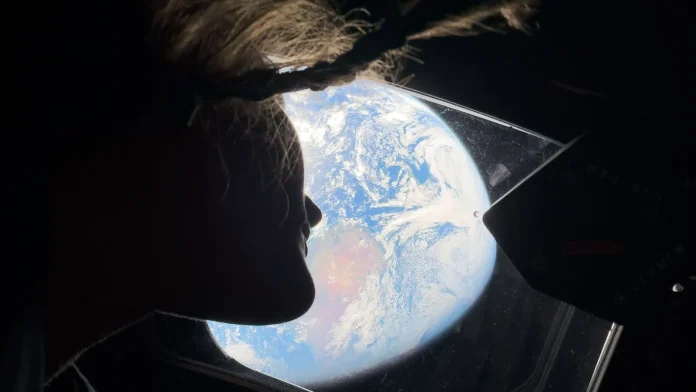
Riding a Fireball: Four Humans, One Capsule, and the Long Road Back from the Moon
There are moments in exploration when the world seems to hold its breath—when distance is not just a number but a story. This week, four astronauts aboard an Orion capsule became the most distant people in human history, looping around the far side of the Moon and beginning the long, incandescent arc back to Earth. They have a splashdown to make off the coast of Southern California, and a re-entry that will transform their tiny spacecraft into a meteor for minutes at a time.
Imagine, for a moment, sitting in a small cabin with three colleagues, 405,554 kilometres from home, watching nothing but black punctured by a perfect, pale moon. Imagine the silence that distant light brings—and then the weight of what comes next: a plunge toward an atmosphere that will heat the spacecraft to temperatures measured in the thousands as friction turns speed into sheer incandescent noise.
Who They Are — and What They Carried
The quartet inside Orion is an odd and luminous mix: a pilot who has been thinking about re-entry for years, a commander who jokes through the hard parts, a scientist with a steady hand and a smile, and a Canadian astronaut whose quiet courage grew louder as the mission unfolded. Their names—Victor Glover, Reid Wiseman, Christina Koch, and Jeremy Hansen—are now stitched into a new chapter of human exploration.
“I keep flashing back to the day we got assigned,” Glover told a conference call from orbit, his voice threaded with both levity and gravity. “Entry is the part you train for until it lives in your bones. But even with that, none of us have fully unpacked what just happened up here.”
They launched from Florida last week, the rocket’s roar falling away and leaving them under a canopy of stars. They are part of NASA’s Artemis series—a multibillion-dollar sequence of missions designed to bring humans back to the lunar surface within the decade, build sustainable infrastructure, and, if all goes to plan, point the way to Mars.
A Relic and a Relay
To the astronauts, the mission has felt less like a final destination than a handed baton. “We brought physical batons to orbit,” Koch said with a laugh during a transmission recorded for mission control. “It was kind of silly—until we realized every time we move, someone else is going to pick it up.”
This relay metaphor is apt. Artemis II is a bridge—testing systems, rehearsing rendezvous, and returning human eyes to the Moon in an era when most lunar knowledge has been inferred through orbiters and robotic landers. For a brief six-hour window, these humans became mobile observatories, describing textures, shadows, and strange pitted craters in real time to scientists listening over a quarter of a million miles away.
Record-Breaking Distance—and the Numbers That Matter
On Monday, the crew pushed farther out than any human before them, reaching approximately 405,554 km from Earth—a little over 6,400 km farther than the Apollo 13 record that stood for 56 years. Such numbers are not just trivia. At these distances, communications lag, contingencies feel different, and the thinking that shaped Apollo gives way to new engineering and new questions about how humans function in deep space.
When Orion re-enters Earth’s atmosphere, the capsule will be traveling at staggering velocity—up to 38,365 kilometres per hour. That translates to intense heating on the heatshield as kinetic energy becomes thermal energy. Every millimetre of that shield is therefore a small, literal difference between home and oblivion.
Mission Timeline—Milestones to Watch
- Launch from Cape Canaveral, Florida: last week
- Farthest distance from Earth: ~405,554 km, breaking a 56-year record
- Duration in space: nearly ten days
- Planned splashdown: off San Diego, California, around 8pm ET
- Peak re-entry speed: up to 38,365 km/h
Voices from the Capsule and the Ground
Inside Orion, laughter and tears have mingled. Wiseman described two brief video calls each crewmember made to their families—”small pockets of oxygen,” he called them—that let them feel the gravity of home while floating farther from it than anyone alive. “Hearing my kids laugh,” he said in one transmission, “felt like a tether back to Earth.”
On the other end, Mission Control in Houston has been a cathedral of concentration. Dozens of lunar scientists, engineers, and students sat in adjacent rooms, scribbling notes and debating interpretations as streams of data and audio came in. “There is a primal quality to watching human perception join remote sensing,” Dr. Elaine Mercer, a planetary geologist, said. “Robots send back pixels; people send back stories.”
And then there are the quieter, human gestures that feel like small lamp posts along a long road. As the capsule peeked near the moon’s surface, Hansen—who grew up watching Northern Lights in Saskatchewan and carries a Canadian flag in his flight suit—offered an idea: name a newly seen crater after Commander Wiseman’s late wife. “Those moments matter,” Wiseman later said, holding back his own emotion. “It’s hard to explain to someone on Earth standing in a crowd. Up there, the universe simplifies what’s important.”
Culture, Context, and the Moon’s Pull
There is a local color to every corner of this mission. In Florida, citrus groves once filled the corridor the rocket rose above; in Texas, barbecue smoke lingers in the parking lots outside mission centers where engineers trade jokes and worry. In San Diego, beachfront watch parties will gather tomorrow night to see the capsule return to sea—families with folding chairs, kids pointing telescopes at the sky, veterans with NASA patches on their jackets.
But beyond spectacle, the Moon carries symbolic freight: it is both a scientific archive and a mirror. “The Moon is a fossil of the early solar system,” Koch said before launch. “It tells us about impacts, early chemistry, and the migration of planets. It helps us understand how Earth itself came to be.” Scientists hope the samples, eyes, and instruments of Artemis missions will refine our models of solar system formation and, perhaps, unlock resources for long-duration human presence.
Why It Matters—Locally and Globally
At first blush, a splashdown off the coast of California might seem like a regional event with a lot of pomp. But the implications ripple globally. The Artemis missions are part technological testbed, part geopolitical statement, and part inquiry into what a human future off-Earth could look like. For countries watching—China, members of the European Space Agency, and emerging space nations—the mission is a signal: the Moon is again a stage where capability, cooperation, and aspiration will be displayed.
Think about the choices we make now: investment in science, in international partnerships, in training a generation that will live with long-duration spaceflight. These decisions will determine whether the Moon becomes a backyard for humanity or a chessboard for competition. Which path do we prefer?
Questions to Carry with You
As the crew prepares to re-enter—knowing the capsule will turn into a blazing streak and that the heatshield must do its job without fanfare—ask yourself: What stories do we want to carry forward? Whose voices are at the table as we sketch out a foothold on another world? And what does it mean, in this year and this decade, to see humans again leave the cradle of Earth?
Tomorrow, at around 8pm ET, the seas off San Diego will take a small, soot-streaked capsule back into the arms of humanity. For a brief moment, those four people will be very far away, then very close. In their hands they hold not just logs of data and samples, but a set of torches, lit for the next crew. How we choose to pass that light matters.
Zelensky urges reimposition of sanctions on Russian oil exports
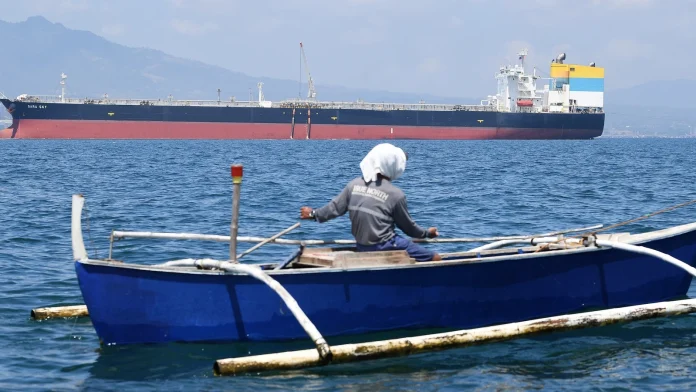
Easter smoke, oil smoke: A fragile pause and the politics of energy in a world at war
There was a hush in Kyiv on Holy Thursday — the kind that comes when church bells drown out the distant thunder of artillery and people move through the city with candles cupped against the cold. In Lviv, soldiers sat side by side at a long table, fingers stained with wax as they decorated pysanky, those egg-shell canvases of red and black and sunflower yellow that carry prayers as much as color.
It was in that season of ritual and uneasy peace that Ukraine’s president made a stark request: reinstate full oil sanctions on Russia now that a US-brokered ceasefire with Iran has eased immediate pressure on the Strait of Hormuz. “We cannot watch the battlefield be reshaped by petro-dollars,” said a senior adviser in Kyiv. “If the waterway reopens, so will the money flows. That funding buys bullets. It pays for tanks.”
Where the world’s oil meets geopolitics
The Strait of Hormuz is no mere line on a map. Roughly one-fifth of the world’s seaborne crude and condensate threads through its narrow throat every day, binding the markets of Tokyo, Rotterdam and Mumbai. When earlier clashes in the Middle East drove tanker insurance premiums and crude prices skyward, Washington temporarily loosened restrictions that had kept some Russian oil off the market — a limited waiver allowing shipments already at sea to be sold until 11 April.
That reprieve was small in bureaucratic terms but large in consequence. Higher oil prices since the opening of conflict in the Middle East have done what sanctions, blockades and years of war could not: fatten Russia’s treasury. Kyiv contends the cash is ploughing into Moscow’s war machine. “We saw the spike in prices and immediately heard from partners: ‘Can you pause strikes on energy infrastructure?’” a Ukrainian defence official told me. “That request didn’t come out of compassion for Moscow. It came from fear the global market — and poorer countries — couldn’t bear another price shock.”
Partners, pressure and the choice to strike
Ukraine has intensified attacks on Russian logistical nodes over the past weeks, striking refineries, fuel depots and, repeatedly, the Baltic ports of Ust-Luga and Primorsk — arteries for Moscow’s oil exports. The logic is brutal in its simplicity: choke the revenue, diminish the capacity to wage war. But now, with oil prices dovetailing with diplomatic manoeuvres in the Gulf, Kyiv says it received direct requests—from “political to military levels”—to temper its long-range attacks on energy targets.
“We were asked, politely but firmly, to consider the broader effects of our operations,” said a member of Ukraine’s strategic planning team. “We weighed the lives saved by denying revenue to Moscow against the global pain of another energy shock. There are days when every choice looks like a loss.”
From drones to deserts: Ukraine’s quiet export of know-how
Beyond tanks and artillery, one of the war’s stranger by-products is the spread of counter-drone expertise. Ukrainian crews — hardened by years of battling Iranian-made Shahed drones over Kyiv, Kharkiv and the Donbas — have been quietly deployed to the Middle East. Dozens of anti-drone specialists were sent to at least four countries to help shore up defences after tit-for-tat strikes between Israel, the US and Iran sparked a wave of retaliatory drone attacks.
“This was not a parade of trainers; these were rapid-response teams,” said a commander who returned from the region. “We didn’t go to run drills; we went to stop aircraft from raining down on hospitals and markets. Yes, they were shooting down Shaheds. That technology is ugly, cheap, and ubiquitous — and we learned how to fight it very quickly.”
One hospital worker in a coastal city, speaking on condition of anonymity, described the relief when a Ukrainian team helped install detection systems. “It felt like someone had turned the lights back on,” she said. “You stop checking the sky every five minutes. You sleep a little better. That’s invaluable.”
A 32-hour truce — and the human cost that makes it necessary
For 32 hours this Easter, guns fell silent. Russia announced a ceasefire from 16:00 on April 11 until the end of April 12 “in connection with the approaching Orthodox feast of Easter.” Kyiv said it had put a truce proposal via the United States and was ready to reciprocate.
The pauses in fighting have been brief and brittle for the past four years, and both sides are quick to accuse the other of breaches. Still, the scenes under the domes of St Michael’s and other cathedrals were real: families lighting candles, the scent of incense, soldiers leaning without their helmets to sign the names of the fallen in prayer books. “For a few hours, people were not frontline commanders or displaced women,” said a volunteer who ferried food to border shelters. “They were just people who remembered what peace feels like.”
The grinding, costly calculus of four years of war
This is Europe’s deadliest conflict since World War II: hundreds of thousands of lives lost and millions uprooted. Fighting that once surged across wide swathes of territory has settled into a costly stalemate in many sectors of the front. Analysts at the US-based Institute for the Study of War observe a slowing of Russian advances since late 2025, attributing part of that deceleration to disruptions in communications that once helped Moscow coordinate drone attacks. The ban on access to certain satellite services and restrictions on messaging platforms have had unpredictable battlefield effects.
Still, the map is uneven. Russia controls just over 19% of Ukraine’s territory — much of it captured in the opening months of the invasion — and threatens cities such as Kramatorsk and Sloviansk in Donetsk oblast. Negotiations aimed at ending the fighting have repeatedly faltered. “Concessions demanded by Moscow are tantamount, in our view, to surrender,” President Volodymyr Zelensky told EU envoys this week. “We will not trade sovereignty for temporary calm.”
Why this matters to you — and to the global economy
When world leaders bargain over sanctions and ceasefires, ordinary people feel the aftershocks in their wallets, in buses that stop running because diesel is scarce, in families that can’t heat their homes. The tension between blocking a belligerent’s revenue stream and keeping global energy markets stable is raw and political. Developing economies are especially vulnerable when supply routes groan under the weight of geopolitics; richer nations can absorb price shocks more easily.
So ask yourself: if you had to choose between higher fuel bills for a while and potentially prolonging a war, which would you pick? Would your answer change if your neighbour’s child had been killed by a shell funded with oil money?
Lines of continuity — drones, dollars and the slow work of peace
Two images linger. One is simple: an elderly woman in a Kyiv church tying a red thread to a pysanka and whispering a name. The other is strategic: a tanker threading slowly through Hormuz, an invisible artery pumping capital into a conflict thousands of miles away. Between them sit diplomats, generals and people like you and me — all trading in risk and hope.
“Wars don’t end in the headlines,” a peace activist who works with returned soldiers said. “They end in kitchen tables, in rebuilding towns, in the slow return of schools. Ceasefires give us time for that small, monumental labor.”
The ceasefire for Easter might be a 32-hour pause or it might be an inflection point. Reimposing energy sanctions, continuing the fight against drone proliferation, and seeking ways to thread humanitarian corridors into broader peace talks — these are choices that will define the next year. For now, the candles burn. The shells are quiet. For a little while, people reclaim what everyone on a map wants: the ordinary rhythms of life.
US and Iran ceasefire pact frays ahead of crucial negotiations
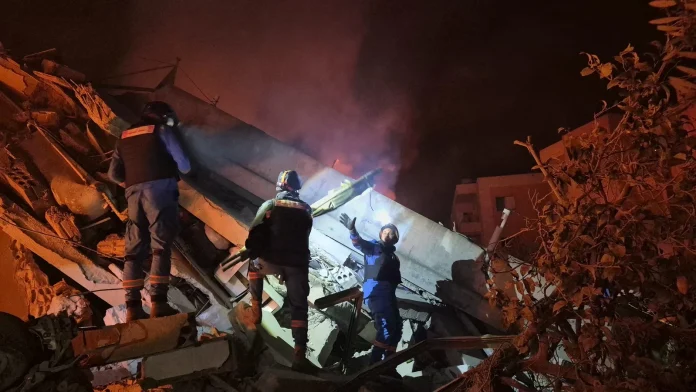
The Strait in Shadow: A Fragile Truce, Heavy Skies and the Price of Chokepoints
The sun rose over the Strait of Hormuz with an almost cruel normality — a pale line on the horizon, the slow silhouette of tankers that once threaded this narrow throat like beads on a necklace. From the tiny fishing piers of Bandar Abbas to the coffee stalls of Fujairah, people moved as if the world had not been rearranged overnight. But the silence in the shipping lanes tells a different story.
For decades the Strait of Hormuz has been one of the stagehands of the global economy: a narrow corridor less than 60 miles across at its widest that channels roughly one-fifth of the world’s seaborne oil and liquefied natural gas. Ships that used to pass in droves — some 140 vessels a day in calmer times — are now scarce. In the first 24 hours of the ceasefire, announced by the United States, only a single oil products tanker and five dry bulk carriers transited the waterway. That drop-off is not just a statistic. It is a living, immediate disruption felt at docks, refineries and kitchen tables around the planet.
Promises and Pushback
What began as a tentative two-week pause in hostilities immediately showed signs of strain. Washington accused Tehran of failing to fulfill a central element of the truce: reopening the strait. “That is not the agreement we have!” President Donald Trump wrote on a social media platform, adding later that Iran was doing a “very poor job” of allowing oil to pass through — a bluntness that underscored a mix of impatience and the high stakes involved.
Iran, for its part, pointed to what it called an unaddressed escalation elsewhere: Israel’s strikes inside Lebanon. In Tehran, hardline media and spokespeople insisted the ceasefire could not be separated from events in Lebanon and the wider “axis” of allies that Tehran considers integral to its regional posture. “If you squeeze one end of a rope, the other end tightens,” said a Tehran-based analyst who requested anonymity. “Tehran sees Lebanon as part of the same fabric. To them, peace in one place without peace in another is hollow.”
Closer to the Ground: Voices from the Region
At a tea shop perched above a scruffy Bandar Abbas quay, Mohammad, a fisherman of 28 years, thumbed a cigarette and watched the empty horizon. “My father taught me to read the sea. Empty lanes mean empty nets,” he said. “We were told a truce would let the ships move. But truce for whom and from what? Oil is big talk, but for us it is bread.”
On the Lebanese coast, in areas pockmarked by the recent heaviest strikes of the war, the air smelled of diesel and burnt timber. Laila, 42, who had fled her apartment block with paperwork stuffed in a plastic bag, spoke with an economy of anger and fatigue. “They talk about ceasefires in Islamabad and Washington,” she said. “But what matters to me is that my son can sleep at night.”
Across the border in northern Israel, sirens and intercepted missiles have become daily punctuation marks. The Israeli military said it struck several launch positions in response to rocket fire from Lebanon, and that air defenses had intercepted incoming projectiles. Militants aligned with Iran, including Hezbollah, have staged retaliatory strikes and have said that infrastructure in Haifa and other northern urban centers are legitimate targets.
Disagreements Over the Map of a Truce
The core of the friction is a mapping dispute: does any pause in fighting include Lebanon, where Israel has conducted a parallel campaign against Hezbollah? The United States and Israel have publicly maintained that the latest ceasefire did not extend to Lebanon. Pakistan, which mediated the agreement, together with Iranian officials, asserts that Lebanon and Tehran’s network of allies are part of the deal — a claim that immediately set the parties on divergent tracks.
“In negotiations, the devil lives in the margins,” said Dr. Amina Rahman, a conflict resolution specialist at a university in Islamabad. “If the mediators and the principals have different mental maps of what a ceasefire covers, you get sequential violations — each side sees the other as the violator.”
What Was on the Table — and What Remains
Iran presented a ten-point proposal that, in broad strokes, sought an end to military operations, recognition of Iran’s right to enrich uranium, lifting of sanctions, and maintenance of control over the Strait of Hormuz. American officials, by contrast, had been moving with urgency toward a meeting in Pakistan between U.S. and Iranian delegations, hoping to turn a two-week breathing space into something more durable.
In Tehran, statements threaded together resolve and grievance. Iran’s supreme leader warned of retribution for attacks on Iranian soil, promising accountability “for every single damage inflicted.” In the corridors of power in Washington, talk turned quickly to logistics: how to translate paper promises into safe corridors for vessels, clear rules of engagement, and monitoring mechanisms that both sides could trust.
Why the World Is Watching — and Why It Should Care
It is tempting to see the ordeal of the Strait as a distant game between governments. But energy markets, fragile supply chains, and everyday consumers feel the effects almost instantly. When a chokepoint that carries roughly 17–20 million barrels per day of petroleum is constricted, markets jitter. Insurance rates for tankers spike. Shipping routes elongate as captains detour around the Cape of Good Hope, adding time and expense. For importing nations in Europe, Asia and beyond, disruptions can translate into higher fuel prices and pressure on inflation already strained by other global shocks.
Beyond economics, there is the peril of escalation. A single miscalculated strike, a misfired missile, or a rogue actor could shatter a delicate balance. “These are not abstract risks,” said an American diplomat involved in the talks, speaking on condition of anonymity. “One missile in the wrong place can set off a chain reaction we cannot easily control.”
Small Stories, Big Signals
On the pier, a tea seller named Fatima wrapped her hands around a chipped mug and watched a lone bulk carrier crawl past. “They say the ships will come,” she said. “But we measure peace in cups of tea and in the weight of fish we manage to pull ashore. The politicians measure peace in statements. That is why we do not believe easily.”
Her words echo a broader truth: grand deals and high-level communiqués are only useful when they redeploy into the ordinary lives of people. For now, the truce is a fragile bridge between belligerents, one that must be rebuilt every few hours with diplomacy, transparency and the hard mechanics of verification.
Choices Ahead
As negotiators prepare to meet, as mediators from Pakistan and elsewhere shuffle proposals and red lines, the world faces a question that is both strategic and moral: how do we secure chokepoints without militarizing them, how do we end wars while honoring national security concerns, and how do we refocus attention on rebuilding the lives of people caught in the crossfire?
Will diplomats turn a two-week pause into a roadmap for a longer détente? Or will ambiguity — about Lebanon’s inclusion, about the definition of safe passage, about who enforces what — turn the truce into nothing more than a pause before the next round?
For the sailors who watch for buoys at dawn, for the Beirut mothers tallying the days since their children last slept through the night, and for markets that trade on certainty, the answers cannot come soon enough. The Strait waits, patient and unforgiving. The question is whether the world will accept a brittle calm — or demand, and deliver, something more enduring.
Global development aid drops 25% in 2025, raising alarm
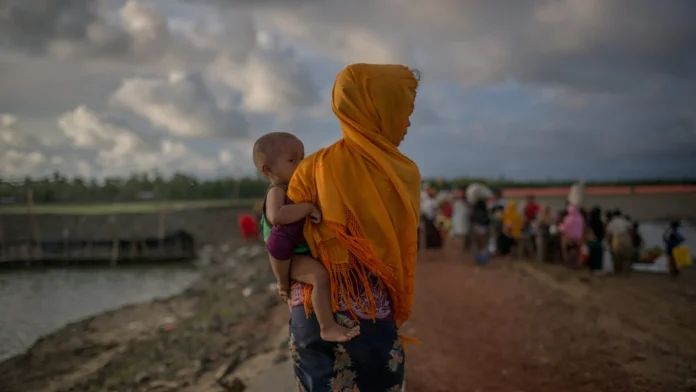
A Quiet Unravelling: When the World’s Safety Net Comes Apart
On a blistering afternoon in a small clinic on the edge of Lake Malawi, a nurse named Josephine wipes sweat from his brow and counts dwindling vials of antimalarial medicine. “Last year we would send two boxes to the far villages,” she says. “Now we ration one dose at a time.” His voice is small but not surprised; this is the rhythm of life when support frays from afar.
What Josephine feels in her hands has a name in Paris: a historic contraction in international aid. The Organisation for Economic Cooperation and Development’s preliminary figures show a 23.1% real-terms drop in official development assistance (ODA) last year — a decline that the OECD called the largest annual contraction in the history of its Development Assistance Committee.
What the Numbers Reveal
Those numbers are stark and uncompromising. Member countries’ ODA reached $174.3 billion last year, representing just 0.26% of their combined gross national income — a long way from the widely quoted 0.7% target that many nations promised decades ago.
The decline was broad: 26 of 34 DAC members reduced their aid budgets. But the fall was concentrated in a few places. The five biggest donors — France, Germany, Japan, Britain and the United States — accounted for 95.7% of the drop. And the United States alone drove three-quarters of the decline: its ODA fell 56.9%, the single largest reduction by any provider in any year on record. Even Germany, which cut aid by 17.4%, became the largest donor by default because of the scale of the American pullback.
These are not abstractions. When budgets fall, planes stop delivering vaccines, wells go unbuilt, and clinics like the one where Josephine works run out of essential supplies. The nonprofit Oxfam and other analysts warn of grim consequences if the trend continues. The Institute of Global Health in Barcelona, cited by campaigners, estimates that cuts of this magnitude could result in the deaths of hundreds of thousands — and, if sustained, potentially more than nine million people by 2030.
Voices from the Ground
“We’re not asking for charity,” says Amina, a schoolteacher in coastal Senegal whose students’ school lunch program was scaled back after aid funding dropped. “We’re asking for a chance to learn and to be healthy. When the meals stop, children miss class. When they miss class, the whole village misses a generation.”
In a refugee settlement in Lebanon, a UN field officer named Karim speaks bluntly about shifting priorities. “Humanitarian needs are rising — climate shocks, conflict, displacement — yet the money is retreating,” he says. “That mismatch is not an economic footnote. It’s a political choice.”
Back in Europe, a finance ministry official who asked not to be named described the decisions as painful trade-offs: “Budgets are under pressure from inflation, defense commitments and domestic politics. Governments are prioritizing perceived immediate interests.”
Why This Matters Beyond Borders
It’s tempting to view these numbers as the dry arithmetic of distant capitals. But aid is woven into a global ecosystem: health systems, education, food security, climate resilience, and migration pathways. When one strand snaps, the rest strain. Outbreaks of preventable disease can cross borders. Economic shocks can destabilize regions. Human suffering in one place can fuel displacement and insecurity elsewhere.
Ask yourself: what is the moral ledger by which nations count their obligations to strangers who wake up with fewer options? How does a global community reconcile urgent domestic pressures with responsibilities that are boundless by definition?
Local Color and Everyday Realities
In Josephine’s clinic, the walls still carry faded posters about childhood immunizations and mosquito nets. A hand-painted calendar marks international donation days like they are holy festivals. “People used to come from miles for the vaccine caravan,” says Josephine. “Now the van comes less often.”
In urban Accra, market vendors talk about the invisible threads that aid programs once provided — microloans that helped women buy sewing machines, subsidized seedlings for small farmers, community health workers taught through donor-funded training programs. “It’s not charity,” says Esi, a vendor who learned sewing through one program. “It’s the chance to start business and take care of my children.”
Where the Money Could Come From — and Why It Doesn’t
Critics argue that the sums needed to shore up aid are not astronomical in a global economy awash with wealth. Didier Jacobs, a development finance lead at Oxfam, points to staggering levels of private wealth parked in tax havens — an estimate put at $2.84 trillion. “There are other ways to find tens of billions of dollars,” he says. “Tax dodging and secrecy are political choices that cost lives.”
Solutions suggested by experts range from closing tax loopholes and enforcing transparency to innovative financing mechanisms and rethinking spending priorities. Yet every option bumps against political realities: voters’ impatience with foreign spending, rising nationalism, and the ebb and flow of geopolitical conflict.
Possible levers to restore aid and resilience
- Crack down on tax havens and require public country-by-country reporting for corporations.
- Recommit to international aid targets and embed long-term funding for health and climate adaptation.
- Scale up debt relief and restructure loans to free up fiscal space in low-income countries.
- Mobilize private capital responsibly with safeguards so communities retain control.
What Can Be Done Now: Practical Steps
There is no single fix. But small, strategic moves can blunt the worst effects and buy time for more systemic reforms.
- Reinstate emergency funding windows for critical health and humanitarian programs.
- Prioritize preventative measures — vaccines, water and sanitation, and climate-resilient agriculture.
- Increase transparency and conditionality to ensure aid supports local priorities and builds capacity.
“Aid is not always neat,” says Dr. Maria Alvarez, a global health researcher. “It can be misdirected. But when targeted correctly, it prevents crises that are far costlier than the initial investment.”
Final Reflection: A Choice Between Scarcity and Solidarity
Walking away from investment in other people’s futures is a choice that echoes. It speaks to a shrinking imagination about what we owe one another in an interconnected age. Choices about budgets are choices about lives. They determine whether clinics run, whether children learn, whether communities withstand storms.
So here’s the invitation: look past the headline figure and imagine the faces behind it. Think of Josephine rationing medicine, of Amina’s students missing lunch, of farmers unable to plant for the season. Ask: what kind of world do we want to defend — one that fences wealth behind borders, or one that invests, however imperfectly, in shared resilience?
The statistics are the alarm bell. The response will be political, moral, and — if we hope for better outcomes — collective. Will nations hear it? Will citizens demand their leaders do more than choose the short-term comfort of austerity over the long-term safety of global solidarity? The answer is not just in Paris or Washington; it’s in marketplaces, clinics, and small leadership decisions across the world. And it’s, ultimately, in our hands.
Netanyahu pushes for talks with Lebanon amid fraying ceasefire
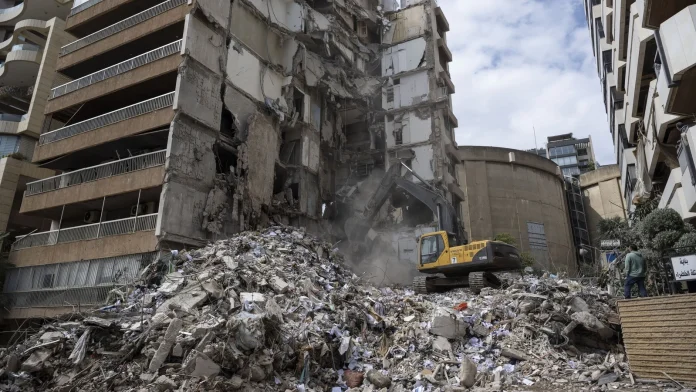
After the Blast: Beirut’s Streets, a Fragile Truce, and the Long Shadow of the Strait
In the gray light of another ruined morning, Rafik Hariri University Hospital looks like a map of a city under glass—corridors jammed with stretchers, the smell of antiseptic mixing with the acrid tang of smoke, and families who walk in as if in a trance, searching for names on lists they hope are not there.
“We bring bodies in pieces,” said a rescue worker who asked to remain anonymous. “Whole families are split across different wards. We used to count survivors. Now we count fragments.” His voice was flat, weary, as if it had been stretched to breaking by a week that felt like a year.
That is the human geometry of the moment: a pause in one place, a blast in another, and the rest of the world watching a geopolitical clock tick toward either wider calm or fresh violence. A US-brokered ceasefire, announced abruptly by President Donald Trump late Tuesday, promised respite. In reality, the first 24 hours looked like a street that had been told to breathe but kept coughing.
The ceasefire and its invisible lines
The declaration in Washington looked simple on paper: a halt to large-scale strikes between the United States and Iran after six weeks of tit-for-tat destruction. But the lines of the truce were drawn in shadow and contradiction.
In practice, the Strait of Hormuz—through which some 20 percent of the world’s oil and liquefied natural gas once flowed—remains nearly sealed. Where 140 vessels a day threaded the narrow waterway before the war, the first day of the truce logged a single oil products tanker and five dry-bulk ships. That figure is not just a statistic; it is an economic heartbeat slowed.
“When the chokepoint closes, everything behind it stutters—power stations, factories, even the gas in your car,” said Dr. Mira Soliman, a maritime economist in London. “This isn’t a localized shutdown. It’s systemic.”
Diplomacy on the move—Islamabad, Washington and whispered corridors
Talks are being convened in unlikely places. Pakistan, its capital under tight security, is preparing to host the first round of US-Iran negotiations. Islamabad’s usually bustling streets felt like a city waiting for a verdict—shops shuttered, checkpoints manned, diplomats moving in guarded convoys.
“We are trying to make a room where both sides can be heard,” a Pakistani official involved in the talks told me. “Safe spaces are the first gestures toward trust.”
Yet even as diplomats gather, there is a gash in the truce: Washington and its regional partners maintain that Lebanon was never part of the ceasefire. Tehran and several mediators insist the opposite. Within that gap lie the rockets and the bodies.
Beirut’s plea and Netanyahu’s volte-face
Lebanon woke to the worst bombardment since the conflict began, and grief swept like a third front through cities and villages. Lebanese officials declared a national day of mourning after deadly strikes in Beirut’s southern suburbs tore through dense residential neighborhoods.
Outside the hospital, people queued in long lines—some for blood donations, many simply to look for relatives whose phones had stopped answering. A volunteer named Samar, 28, with soot-streaked hands and a hoodie flecked with dust, summed up a strange, brittle hope.
“People here want two things,” she said. “We want the bombs to stop. And we want to know who will protect the ones who are left.”
Into that air stepped Israel’s Prime Minister Benjamin Netanyahu. After previously rebuffing offers of direct negotiation, he announced instructions to begin talks with Beirut “as soon as possible” with a clear agenda: disarm the Iran-aligned militant group Hezbollah and secure a formal peace.
“We are ready to talk, and the talks will be about disarming Hezbollah and establishing peaceful relations between Israel and Lebanon,” Netanyahu said in a televised statement. The words landed like a hand offered to the wounded—with equal parts sincerity and strategic calculation.
Lebanese President Joseph Aoun indicated a parallel diplomatic track was in motion and felt cautiously optimistic. “Diplomacy must be exhausted before more blood,” he said. “The international community has a role. We are asking for space to breathe.”
Hezbollah, the army, and the paradox of disarmament
But those breathing spaces are contested. Under a US-mediated 2024 accord, Lebanon agreed that the state alone should carry arms—an agreement that, on paper, implies the full disarmament of Hezbollah. In reality, disarming a political-military movement embedded in communities is like trying to unpick a sweater without tearing the fabric.
“We will not enter talks that ignore the reality on the ground,” said Hezbollah lawmaker Ali Fayyad. “If the Lebanese government comes to the table, there must first be a clear and immediate ceasefire. Anything else is theatre.”
The Lebanese army attempted a disarmament push last year but came up short. For many Lebanese, Hezbollah is both protector and problem—an armed actor that has defended against invasions but also entangled the country in wider regional wars.
Voices from the water and the corridors of power
On state television in Tehran, an attributed statement from Iran’s Supreme Leader declared that Tehran was not seeking a wider war—but that it would “not forfeit its rights” and would take “the management of the Straits of Hormuz into a new phase.” The sentiment was part warning, part claim of victory.
“We are not after civilisation-ending conflict, but neither will we abandon our defensive capabilities,” the read statement said, according to state media. Whether that posture leads to negotiations over commercial navigation or more brinkmanship remains to be seen.
Yet both Tehran and Washington publicly claimed success of different kinds: the Americans pointed to a reduction in immediate attacks, while Iran framed the truce as validation of its regional leverage. Both claims were factious and incomplete; neither side fulfilled the other’s ultimate objectives.
“What we are seeing is a classic pause, not a resolution,” said Professor Hisham al-Karim, a scholar of Middle Eastern security. “If underlying grievances—arms, governance, economic deprivation—aren’t resolved, the pause simply stores up pressures for another explosion.”
Why this matters to you
This is not just a local story. When the Strait of Hormuz constricts, gasoline prices ripple across continents. When Lebanon convulses, a diaspora of millions holds its breath. When ceasefires are ambiguous, markets and families pay the price of that ambiguity.
Ask yourself: how should the international community balance the urgency of immediate protection with the harder business of long-term political solutions? Can diplomacy truly work when its boundaries are disputed and its participants move with such uneven trust?
No one in Beirut, Washington, Tehran, or Islamabad will be satisfied with tidy answers tonight. But the survivors and the wounded—those who count body parts and those who count the ships that don’t come through—will live with the consequences.
Quick facts
- First 24 hours of the ceasefire: 1 oil products tanker and 5 dry bulk carriers passed through the Strait of Hormuz, versus about 140 ships per day before the conflict.
- Lebanon’s Health Ministry: death toll since March 2 risen to 1,888 with more than 6,000 wounded.
- Ceasefire brokered amid talks hosted by Pakistan; Washington and Tehran disagree on whether the agreement covers Lebanon.
In a world that keeps insisting on binary narratives—victory or defeat, war or peace—the truth is usually dustier and more human. For the families in Beirut gathering under tarps and in hallways, there is no elegant diplomacy that replaces a lost child, a shattered home, or a quiet neighborhood turned field hospital. There are only choices to be made now: who will talk, who will listen, and who will finally step forward to help the living rebuild what the guns have taken away.

Retrial Set for U.S. Lawyer Convicted in Wife and Son Murders
When the Scales Waver: The Overturning of the Murdaugh Murder Conviction
There are moments when a courtroom ruling sounds less like a verdict and more...
Corbyn says Starmer is unlikely to survive as prime minister
A Party at Sea: Why Corbyn Thinks Starmer’s Premiership May Not Last
There are moments in politics that feel less like a slow boil and...
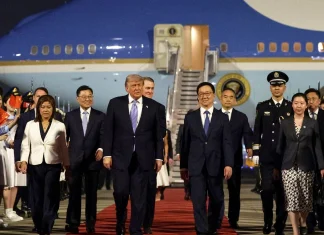
Trump declares he can end Iran conflict without Beijing’s assistance
Air Force One, a Red Carpet and the Long Shadow of Two Giants
The engines had hardly cooled when the cameras began to hunt for...
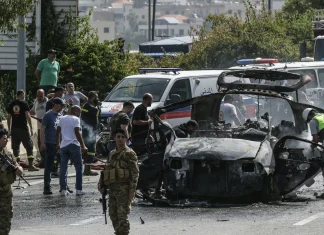
Lebanon reports Israeli vehicle strikes kill 12 civilians
In the shadow of Washington: strikes, funerals and fragile diplomacy on Lebanon’s southern shore
On a coastline where lemon trees meet the Mediterranean and cars...
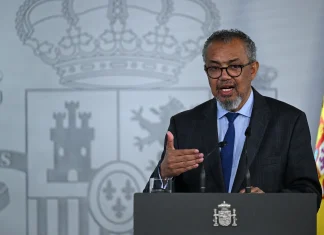
WHO chief: Efforts continue after the hantavirus evacuation
At Sea, Between Fear and Protocol: The MV Hondius and the Quiet Threat of Hantavirus
The image is cinematic: a sleek expedition ship, the MV...