

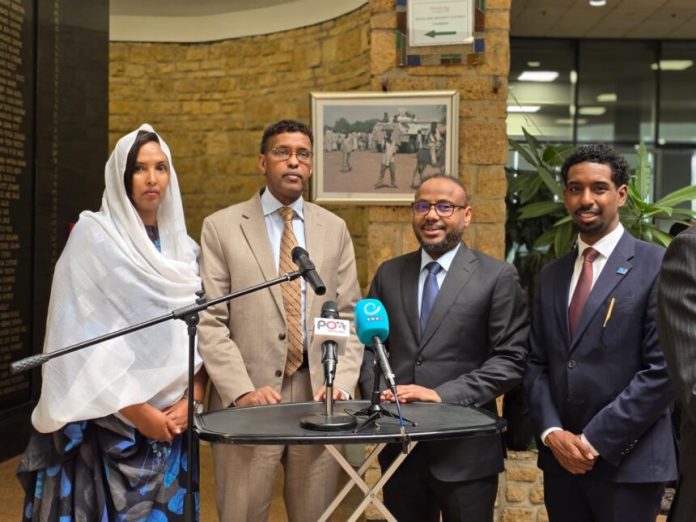
Apr 07(Jowhar)-Soomaaliya ayaa maanta markii ugu horreysay taariikhda la wareegtay kursiga Golaha Nabadda iyo Amniga ee Midowga Afrika, tan iyo markii la aasaasay sanadkii 2003, iyadoo ka mid noqonaysa 15-ka dal ee hadda golahan ku jira.
Could JD Vance’s Hungary Visit Save Viktor Orbán’s Political Future?
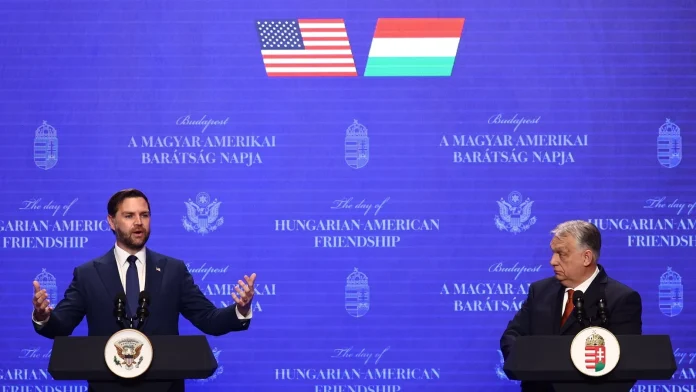
The Guest, the Incumbent and the Polls: A Morning in Budapest That Felt Like an Election in Miniature
Budapest woke up like it always does—tram bells, the distant clatter of dishes in cafés, the sweet, smoky tang of chimney coffee—but there was an extra electricity in the air the day US Vice‑President JD Vance stepped onto Hungarian soil. Flags fluttered, cameras gathered beneath the statue of a statesman no one could agree on, and the question that has been tugging at this city for weeks—who will run Hungary after 16 years of Fidesz rule?—hovered like morning mist over the Danube.
On the surface, the visit was billed as a routine diplomatic stop: two days in Budapest to “bolster ties.” Underneath, the choreography was unmistakable. The real purpose was political theatre—an American vice‑president lending muscle to a beleaguered ally, Prime Minister Viktor Orbán, as Hungarians queued at the ballot box for perhaps the most consequential election in recent memory.
Why This Moment Matters
For 16 years Fidesz has been the dominant force in Hungarian politics, winning four consecutive parliamentary elections and shaping the country’s institutions in its image. But the political landscape has shifted. Polls published this week put Orbán’s party about nine percentage points behind the main centre‑right opposition, the Tisza coalition, led by 44‑year‑old lawyer Péter Magyar—an ex‑insider who has recast himself as the anti‑corruption candidate the fatigued electorate has been craving.
Nine points might not sound like an insurmountable chasm on the page, but in a country where CV‑building national campaigns move like tightly wound clockwork, it’s a gulf. With only days left to sway undecided voters, every handshake, every televised endorsement, every carefully worded compliment carries extra weight.
Words, Warmth and a Political Endorsement
At a joint press conference in Budapest, Vance left little to interpretation. “The President loves you, and so do I,” he said to Orbán, in words that landed like a benediction to the prime minister’s supporters and a provocation to his critics. He called Orbán “one of the true statesmen in Europe,” a leader capable of speaking with Washington one day and Moscow the next.
“This is more than diplomacy,” said Dr. Anna Kovács, a political scientist based in Budapest. “This is signal‑sending: to voters here, to leaders in Brussels, and to the American conservative base that has long admired Orbán’s style of governance.”
Beyond the Rhetoric: Economy, EU Cash and Voters’ Concerns
But compliments cannot conceal the hard arithmetic of an economy that, by many measures, underperforms its Central European neighbors. Jobs have been created, yes—but growth has lagged behind Poland and the Czech Republic, and the EU’s decision to withhold roughly €18 billion in cohesion and recovery funds has been a double blow. Those funds, frozen over concerns of rule‑of‑law backsliding, were intended for infrastructure, hospitals, and development projects—projects the public notices when they don’t arrive.
“My grandson could’ve finished that school in Debrecen if the money had come,” said Erzsébet Kovács, a retired teacher, as she shaded her eyes in a square lined with election posters. “We’re tired of promises and missing sidewalks.”
Péter Magyar’s emerging coalition has seized on this fatigue. His platform centers on transparency, anti‑corruption measures, and a promise to mend fences with Brussels—an appealing message in a country where many worry their children’s futures are being mortgaged to political patronage.
Fear as a Campaign Tool
Fidesz is fighting back with its own vivid narrative. The party has made opposition to the government in Kyiv a centerpiece of its campaign, painting the Tisza coalition as a potential tinderbox that could drag Hungary into the war in Ukraine. It’s a tactic designed to tap into a deep, conservative wariness of instability—old fears dressed in new frames.
“They tell us: ‘Vote for us or you get war,’” said Bálint, a 32‑year‑old IT worker who’s leaning toward Magyar. “It’s heavy—fear is heavy—but I want someone who will fix corruption more than someone who tells me to be afraid.”
International Chessboard: Russia, the US and the Making of Alliances
Orbán is one of the few European leaders who still speaks to Moscow with a direct line. Since Russia expanded its invasion of Ukraine, Orbán has met President Vladimir Putin multiple times, and he has courted a posture of pragmatic engagement that appeals to voters uncomfortable with confrontation. It’s the same trait that drew praise from segments of the American right: in 2024 former US President Donald Trump called Orbán “a truly strong and powerful leader” in a video message to CPAC Hungary.
That kind of transatlantic affinity matters. A win for the Tisza coalition would not just be a domestic upset; it would reverberate through Western capitals. The United States, under the current administration’s tilt towards populist allies, has invested political capital in Orbán. For Washington, the stakes are both ideological and strategic—retain a friendly voice in central Europe, or accept the loss of an ally who has bridged east and west on his own terms.
Voices on the Street
“I remember voting for stability back when my children were small,” said István, a factory foreman in his fifties. “But stability cannot be a word if our hospitals are falling apart. I don’t love all of the opposition’s plans, but I do want someone who won’t treat Hungary like a personal fiefdom.”
A young café owner, Anna, wiped a spoon and said: “We read foreign news, we travel. We want respect in Europe and money here at home. If Brussels won’t give the funds because of how politics are running, maybe the politics need to change.”
What This Election Means for Europe and for Us
Globally, the Hungarian ballot is a mirror. It reflects longstanding tensions about the meaning of liberal democracy, the tradeoffs between sovereignty and European integration, and the persistent appeal of nationalist narratives in times of economic unease. It also demonstrates how foreign endorsements—enthusiastic or reserved—can inflame domestic contests. When a visiting vice‑president praises a leader with the gusto of a campaign surrogate, it begs the question: where is diplomacy and where does campaigning begin?
Are democracies enhanced when external actors cheer from the sidelines? Or does international praise for controversial figures further erode public trust?
After the Ballots Are Counted
There are reasons to think the visit might not be enough to tilt the outcome. A nine‑point deficit with only days remaining is steep. The math is unforgiving. Still, the spectacle of a US vice‑president standing shoulder to shoulder with Orbán shows how far some in Washington are willing to travel, politically and geographically, to defend ideological kin.
Whatever happens on election night, one thing is clear: Hungarians have spent weeks deciding not just who will run their country, but what kind of Europe they want to be part of—one stitched tightly to Brussels’ rule‑of‑law norms or one that charts a wilder, more independent course toward alliances with Moscow and other powers.
So, reader: when you look at this small country by the Danube, what do you see? A cautionary tale? A crucible for the future of democracy in Europe? Or something more complicated, messy and human? The answer will unfold in ballots, in café conversations, and in the slow, stubborn work of rebuilding trust—no matter which flags fly tomorrow.
Trump warns entire civilization could perish without an Iran-US deal
Nightfall Over the Strait: A Region on the Edge
The sky over the Gulf turned from a bruised orange to a cold steel within hours, as if the horizon itself were bracing for a verdict. Street vendors in Bandar-e Mahshahr tied down umbrellas. Drivers in Doha slowed and listened to foreign broadcasts. In Tehran, a thin, stubborn queue formed outside a bakery that had been there for generations, people exchanging whispers instead of news.
By late evening the world had been given a deadline: an ultimatum that read like an old, terrible play—one act left, the curtain about to fall. A president’s words, posted where he speaks to millions, promised ruin unless Iran opened the Strait of Hormuz, the narrow maritime choke point through which roughly one-fifth of the world’s traded petroleum and liquefied natural gas typically moves.
Orders were not just geopolitical; they were engineering equations. Cut the power grid, said the message, and whole cities would go dark. In a matter of hours, the language of diplomacy gave way to the language of the switchboard and the transformer.
The Countdown and the Targets
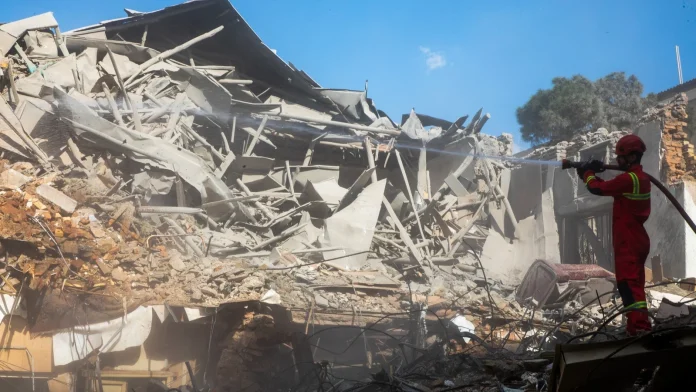
The clock to the deadline ticked down against a backdrop of strikes that escalated through the day. Railway bridges, road overpasses, a suburban airport, and a petrochemical complex were reported hit. Kharg Island—long the symbol of Iran’s capacity to put oil on tankers—was targeted by coalition forces, according to military statements. For many here, the island’s name conjured images of black gold loaded into steel-hulled tankers under the blaze of noon sun; to others, it was a choke point that could be seized or snuffed out.
“They struck what feeds our economy,” said Hassan, a former dockworker from Bushehr who lost a cousin in an earlier maritime incident. “Kharg is not only pipelines and storage; it is where people worked, where families were fed.” His voice was low. “Now we don’t know if the engines will run tomorrow.”
In Tehran’s western suburbs, a strike on transmission lines plunged parts of Karaj into darkness. In a city that has always lived in the margin between ancient and modern, the lights go out and the old rhythms rush back: diesel generators cough to life, children sleep early, radios become the only window to the outside.
Beyond Kinetic Strikes: The Threat to Civilization
Words can be blowtorches. The president’s post—its phrasing stark and apocalyptic—was read around the globe as an ultimatum with existential heat. “A whole civilization will die tonight, never to be brought back again,” it said. For many observers, the line crossed from tough diplomacy to something darker.
“Under international criminal law, language that threatens mass destruction of civilian life can be interpreted as a genocidal threat,” said Brian Finucane, a former US State Department legal adviser now with the International Crisis Group. “Whether that legal threshold is met would depend on intent and context, but the rhetoric is alarming.”
Alarming, yes, but also bluntly strategic. Target a nation’s grid and you do not simply damage power lines; you starve hospitals of refrigeration, strip water pumping stations of the energy needed to deliver clean water, and make desert megacities uninhabitable in days. The ripple effects would cascade—not just across Iran but through its neighbours and global commodity markets.
Retaliation and the New Rules of War
Iran’s response was swift and unequivocal. The Revolutionary Guards declared that restraints had been lifted. A senior Tehran source told mediators in Islamabad that Iran would no longer spare the infrastructure of Gulf neighbours—evoking the reality that today’s conflicts are as much about power stations and pipelines as they are about tanks and missiles.
“We told them: we can make your desert cities unlivable,” one Iranian official said on condition of anonymity. “Not because we want to punish civilians, but because the balance of deterrence must be understood. If you take away our sea lanes, we can take away your ability to live in those cities.”
Video surfaced—smoke and fire at a giant petrochemical complex in Jubail, one of Saudi Arabia’s key downstream industrial sites where international oil majors operate multi-billion dollar refineries and plants. Tehran’s guards said the action would “deprive America and its allies in the region of oil and gas for years.” Whether they can enforce such a claim remains to be seen; infrastructure repair and the resilience of multinational energy firms complicate any simple tally.
Collateral Cracks: Synagogues, Schools, and Streets
Amid the strategic language lay human, fragile detail. A synagogue in Tehran was reported destroyed after an overnight strike; Torah scrolls were reportedly left under rubble. “Our building was a small, stubborn thing,” said Homayoun Sameh, who has represented Iran’s Jewish community. “It stood for decades. We took weddings and funerals there. Now it’s dust.”
Small and stubborn—two adjectives that could describe the region’s civilian fabric as much as the shrine-strewn streets of Tehran or the oil-stained docks of Kharg. Power outages in Karaj left hospitals running on backup and patients worrying about continuity of care. In a city that serves as a commuter belt for the capital, the outage felt like a civic wound.
Diplomacy’s Frayed Thread
Even as strikes intensified, Pakistan stepped into the role of mediator. Islamabad relayed a proposal for a temporary ceasefire: Iran would lift pressure on the strait; the coalition would pause attacks and discuss a more permanent settlement. Tehran’s publicly stated demands were far broader—a ten-point package that would require an end to hostilities, lifting of sanctions, reconstruction aid, and a new governance mechanism for passage through the strait.
“We are not asking for the moon,” said Reza Amiri Moghadam, Iran’s ambassador to Pakistan, through a translator. “We want security for our shipping and for the livelihoods that depend on it. We want guarantees that the past will not repeat itself.”
Those guarantees are not just diplomatic niceties. The Strait of Hormuz is, by any sober measure, a physical manifestation of 21st-century interdependence. A disruption there ripples from ports in South Asia to refineries in Europe, from shipping costs to the petrol pump in a small town far from the fighting.
What Comes Next?
Markets hesitated, newsrooms stayed open, and ordinary people adjusted. For those living in Gulf metropolises, the prospect of losing reliable water and power is no abstraction. For global consumers, it is a reminder that energy security is entwined with geopolitics—and that a tweet can be a fuse.
So where do we look now? To cooler heads, certainly. To engineers who can fortify grids. To diplomats who can negotiate facesaving exits. To citizens asking whether it is possible to build a system of international waterways that can’t be held hostage by force.
And to you, the reader: how do we balance the need to deter aggression with the ethics of targeting infrastructure that sustains life? When a nation’s pipeline is a lifeline for others, when a grid failure means hospitals stop breathing—what is legitimate and what is ruin?
The night will pass. The sun will rise somewhere over the Gulf, though where it finds light—and where it finds blackened towns—may be the most consequential question of all. In the meantime, families pack a few essentials into bags; engineers log into control systems around the clock; mediators whisper in corridors. The scene is at once ancient and uncomfortably modern: diplomacy played out against generators and transformers, with civilization itself hanging in the balance.
Dabley hubeysan oo weerartay Qunsuliyada Israil ee Istanbul
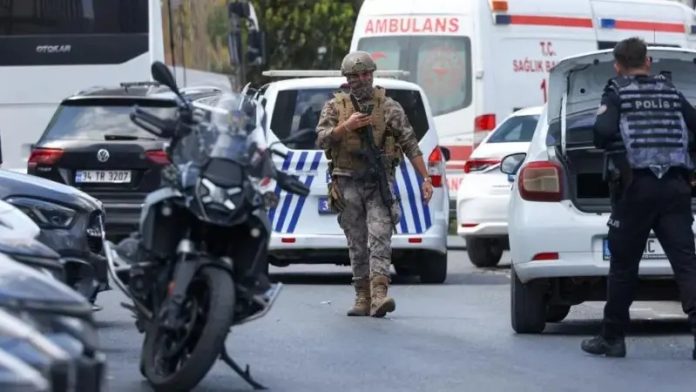
Apr 07(Jowhar)-Hal ruux ayaa ku dhintay labo kalena waa ay ku dhaawacmeen israsaaseyn ka dhacday meel u dhow qunsuliyadda Israa’iil ee Istanbul, taasoo madaxweynaha Turkiga Recep Tayyip Erdogan uu ku tilmaamay fal argagaxiso.
Nine killed as Russia, Ukraine trade deadly drone strikes
At the bus stop in Nikopol: the ordinary interrupted
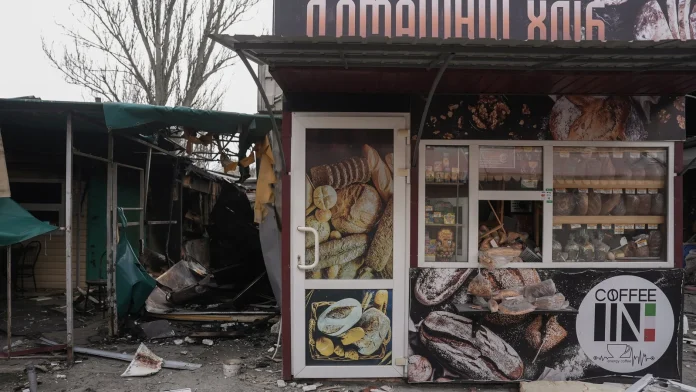
It was a late-spring morning in Nikopol—shopkeepers sweeping the crumbs from doorsteps, the air smelling faintly of diesel and fresh bread, the clatter of a city that has learned to keep moving despite the war. Then, as a city bus slowed to let people on, the world contracted to a single, terrible point: an FPV drone slammed into the vehicle and the crowd at the stop.
“Three people were killed and another 12 injured,” Oleksandr Ganzha, head of Dnipropetrovsk’s military administration, posted on social media. “The enemy attacked a city bus with an FPV drone right in downtown Nikopol. It was pulling up to the stop—there were people both on board and at the stop.”
Witnesses describe a scene that could be lifted from any modern war diary: smoke curling up between pastel apartment blocks, shards of glass scattered across the pavement, a child’s shoe by a bench. “There was a woman who had been waiting to go to work,” said Mykola, a local baker who gave his name and then fell silent for a long moment. “I tried to help. We wrapped a blanket around someone and carried them to the pharmacy. There was blood on the asphalt. I still can’t believe it.”
Wider ripples: more victims, more grief
The carnage was not confined to Nikopol. In the southern city of Kherson, regional officials reported three elderly residents killed and seven wounded after Russian shelling struck residential areas. In the Vladimir region of Russia, governor Alexander Avdeev said a drone strike on a residential building left three dead, including a 12-year-old boy. “Two adults and their son were killed,” Avdeev wrote on Telegram, adding that the couple’s five‑year‑old daughter was hospitalized with burns.
In Dnipropetrovsk, authorities said an 11-year-old boy died and five others were wounded when a house caught fire after a strike. Across both countries, children—those too young to understand geopolitics and too old to be spared its consequences—became part of the latest body count.
These incidents are the latest in a steady drumbeat of attacks that have come to define this conflict: nightly missile and drone strikes, unpredictable and deadly. Russia’s Defence Ministry told state media that it had shot down 45 Ukrainian drones overnight. In turn, Ukrainian officials say Russian drones struck “four districts of the region more than ten times,” according to Ganzha, sparking fires, knocking out power lines and damaging an administrative building.
On the ground, in the lines
Where statistics and statements end, the human detail begins. An ambulance driver in Nikopol named Oksana wiped her eyes and said, “You feel helpless when you see a grandmother holding her purse and you know you’ll take her to the hospital, but she won’t come back the same.” A volunteer with a white headband and paint-splattered boots handed out bottled water from the back of a van. “This is what we do now,” he said. “We carry the living and bury the dead, and we keep the lights on as best we can.”
Energy as a battlefield: pipelines, ports and geopolitics
As the human cost mounts, another front has intensified: energy. Ukraine’s recent strikes on Russian energy infrastructure, Kyiv says, aim to choke a major source of revenue for Moscow at a moment when global oil prices have been nudged upward by conflict in the Middle East.
Russia countered with a claim that Ukrainian forces struck facilities at the maritime transshipment complex in the port of Novorossiysk—damage that Moscow said affected a mooring point and sparked fires at four oil product reservoirs. The target is sensitive: the Caspian Pipeline Consortium (CPC) terminal, located southwest of Novorossiysk, handles roughly 80% of Kazakhstan’s crude exports.
“The work of our oil sector is stable and CPC exports continue to be stable,” Sungat Yesimkhanov, Kazakhstan’s deputy energy minister, told reporters. For a country whose economy leans heavily on hydrocarbons, stability at the CPC is both an economic need and a geopolitical lifeline.
To put the volumes into perspective, the Tengiz–Novorossiysk pipeline’s throughput rose to about 70.5 million tonnes last year—roughly 1.53 million barrels per day—up from 63 million tonnes the year before, a material increase in flows that global markets notice. Major energy companies, including Chevron and ExxonMobil, are among the CPC’s shareholders, binding Western commercial interests to a corridor that runs through the murk of regional politics.
Why a pipeline matters to someone in London or Lagos
When a storage tank burns in a Black Sea port, it ripples outward: traders watch supply expectations, refiners change their nominations, and retailers in faraway cities adjust prices at the pump. Oil is not just a commodity; it is the bloodstream of industry, logistics and personal mobility. Interrupt it, and you feel it in heating bills, supermarket shelves and government balance sheets.
“Attacks on energy infrastructure are a form of economic coercion,” said Dr. Elina Petrov, an energy analyst who studies Eurasian pipelines. “They’re not purely military targets. They alter the calculus of markets and of allies. The CPC outage would be felt as both an immediate supply shock and a signal that the war can touch the arteries of the global economy.”
What drone warfare tells us about modern conflict
We have, in a sense, outsourced the dirty work of frontline violence to small, hard‑to-detect machines. FPV drones—tiny, fast, guided by the operator’s viewpoint—offer plausible deniability and tactical surprise. They are cheap enough to deploy in numbers and precise enough to hit soft targets in crowded urban spaces.
“The psychological effect is disproportionate,” an international humanitarian expert, Mark Sutherland, told me. “People can live with a distant missile threat, but something that buzzes into a bus stop is intimate, invasive. It changes how people move through cities.”
Those buzzing machines also complicate the laws of war. When the line between military and civilian targets blurs, the legal and moral responsibility grows heavier—and so does the chance of miscalculation.
Where do we go from here?
There are no easy answers. Emergency services will dig survivors out of the wreckage. Diplomats will trade condemnations. The markets will try to price in the disruptions. Meanwhile, families will bury their dead and volunteers will knit temporary communities out of the raw material of loss.
What should alarm us is not only the increasing reach of violence into everyday life, but the way warfare now extends into economic arteries. If a port or pipeline can be weaponized, what becomes sacred? What remains off-limits?
As you read this, think of the people on the bus in Nikopol—workers, students, elders—whose lives intersected on an ordinary morning and were altered in a single instant. Think of the children who will grow up with the sound of drones in their memories. What obligations do distant consumers, investors and policymakers owe to them?
For now, the trains keep running and the ambulances keep answering calls. The news cycle will move on; the grief will not. If this conflict has taught us anything, it is that modern war slides fast from battlefields to bus stops, and from storage tanks to supermarket shelves—touching everyone, everywhere.
Wasiir Jaamac oo noqnaya xildhibaan ka tirsan baarlamaanka Soomaaliya

Apr 07(Jowhar)-Wasiirka Dekedaha JFS, Mr.Jaamac ayaa noqonaya xildhibaan Golaha Shacabka JFS, iyada oo mudanihii ku fadhiyey kursigaasi uu noqonayo Xildhibaan Koonfurgalbeed isuna sharraxayo Guddoomiyaha Baarlamanka KGS.
Trump oo sheegay in caawa halis weyn ay ku dhaceyso Iran
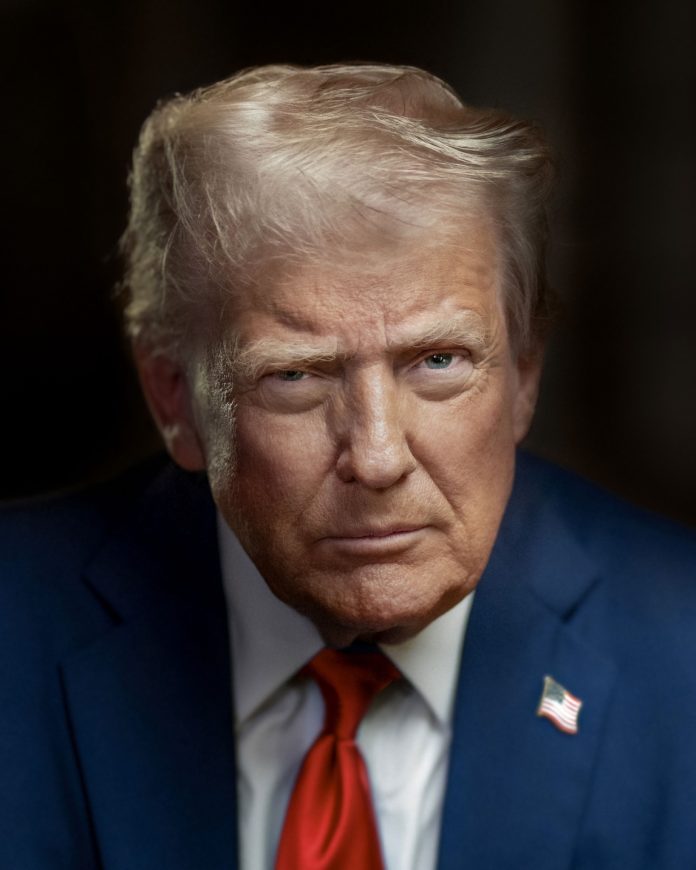
Apr 07(Jowhar)-Donald Trump ayaa sheegay in xaalad halis ah ay caawa ka dhici karto Iran, isagoo ka digay in “ilbaxnimo dhan ay baabi’i karto caawa”.
U.S. moves to curb settlement agreements safeguarding transgender students’ rights
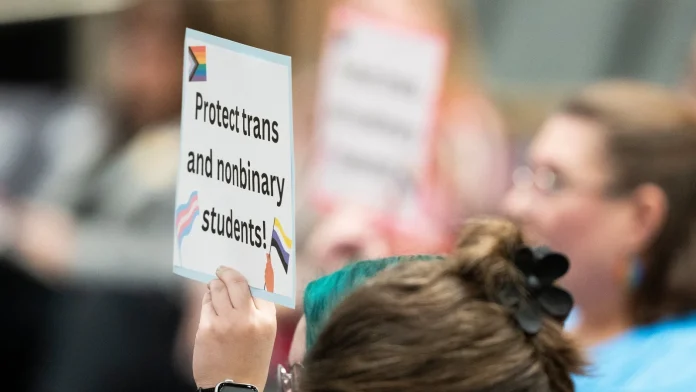
The Quiet Undoing: What the Education Department’s Move Means for Transgender Students
On a sunlit playground in Sacramento a few weeks ago, a small cluster of first-graders traded marbles and stories beneath an old sycamore. One of them — wearing a bright purple jacket and a crown of freckles — laughed louder than the rest, skipping rope with a fluency that suggested she belonged there. Her teacher, Ms. Alvarez, watched from a bench, phone tucked away, eyes steady. “She knows where the swings are,” Ms. Alvarez said. “She knows who will stand up for her. That doesn’t have to be complicated.”
But last month that uncomplicated canvas of childhood was pulled into a national tug-of-war when the U.S. Education Department announced it would terminate six resolution agreements that had been negotiated with school districts to protect transgender and gender-nonconforming students. The agreements — reached under previous administrations — were designed to ensure equal access to education, consistent with Title IX’s prohibition on sex-based discrimination. In an instant, classrooms and counseling offices across the country felt a little less certain.
Who’s affected?
The department’s move targeted six districts and a community college: Sacramento City Unified School District (California); La Mesa-Spring Valley School District (California); Taft College (California); Cape Henlopen School District (Delaware); Fife School District (Washington); and Delaware Valley School District (Pennsylvania). Administrators in some districts said the policies and protections they’d put in place remain intact; others warned the decision sows confusion.
- Sacramento City Unified School District — officials reiterated their “commitment to the support of our LGBTQ+ students and staff.”
- La Mesa-Spring Valley — said the agreement had already been implemented, and anticipated no immediate change.
- Cape Henlopen, Fife, Delaware Valley, Taft College — all named in the termination notices.
The Education Department’s Office for Civil Rights (OCR) said it would no longer monitor or enforce those particular settlements. Kimberly Richey, an OCR official, framed the decision as a rollback of what she called “unnecessary and unlawful burdens” placed on schools by prior administrations in pursuit of what she described as a “radical transgender agenda.”
What are resolution agreements, and why do they matter?
Resolution agreements are not ceremonial. They are legal settlements between the federal government and educational institutions to correct violations of civil-rights laws — in this case, agreements intended to ensure transgender students could use restrooms, participate in sports, access locker rooms, and be free from harassment on the same terms as other students. To families and advocates, they are a safeguard. To proponents of the recent change, they were an overreach.
Title IX, passed in 1972, is straightforward on paper: educational programs and activities cannot discriminate on the basis of sex. How that principle applies to gender identity, access to facilities, and sports has been the subject of intense debate, legal fights, and administrative shifts over successive presidencies. The termination of these agreements is the latest flip in a policy Rubik’s cube.
Voices from schools and communities
“We didn’t make rules to be controversial,” said Dana Morales, a middle-school counselor in Sacramento, voice low and weary. “We made rules because kids were hurting. Because a student was terrified to change for gym. Because a parent thought their child’s name would be respected.”
Parents’ reactions have been raw and varied. “I feel like we’re backtracking,” said Marcus Lee, whose 13-year-old uses they/them pronouns and plays soccer for a district team. “My kid wants to play. My kid wants to be safe. When the rules change, what happens? Do coaches get confused? Do the kids who bully get a green light?”
At the other end of the spectrum, local PTA member Carol Jenkins applauded the department’s move. “Schools should focus on teaching, not social policy,” she said. “This keeps decisions closer to home.”
Experts weigh in
Legal scholars and civil-rights advocates warned the termination could have ripple effects beyond the six named settlements. “This is not a narrow administrative tweak,” said Dr. Renee Patel, a professor of education law. “It signals a broader retreat from federal oversight in cases where students’ gender identity is central. When federal clarity erodes, local policies can vary wildly — creating a patchwork that often leaves vulnerable students exposed.”
Advocates for LGBTQ+ youth point to real-world consequences. Studies and surveys over the past decade have repeatedly shown that transgender and nonbinary young people face higher rates of bullying, homelessness, and mental-health challenges than their cisgender peers. Advocates argue that stable, enforceable protections in schools are among the most effective preventative measures.
Where this fits in the bigger picture
The Education Department’s action is not an isolated event. It sits within a broader moment in which questions about gender, identity, and the role of public institutions have become central battlegrounds. From state legislatures passing restrictions on gender-affirming healthcare and sports participation, to university campuses grappling with speech and protest, policy shifts are being made at every level of government.
Why does this matter beyond the U.S.? Democracies around the world are watching how questions of minority rights and institutional responsibility are being handled. The move raises a universal question: how should pluralistic societies balance majority preferences with protections for vulnerable groups? When the law retreats from enforcing equality, who assumes that role?
Questions to sit with
Consider these: Should the federal government be the final arbiter of how civil-rights laws apply in classrooms? Can protections be both consistent nationwide and responsive to local communities? And finally, how do we reconcile the urgency of protecting young people’s wellbeing with deeply held and divergent beliefs about sex and gender?
These are not rhetorical exercises. They are choices that will shape the daily lives of children like the freckled girl on the playground — a child who might someday look back and recall the day adults decided whether schools were places of sanctuary or arenas for contested politics.
What comes next?
For now, many districts say their policies remain in place. Parents keep emailing principals. Counselors keep their doors open. Advocates are preparing legal strategies; some are promising to bring new complaints should incidents occur. The communities named in the terminated agreements are watching closely and, in many cases, organizing.
“We can argue about policy,” Ms. Alvarez told me as the recess bell rang and kids streamed back inside, “but there’s one rule I’ll never budge on: show up for kids. They’re not collateral in an argument. They’re the reason we’re here.”
As readers around the world, what would you expect from institutions charged with educating the next generation? How do you balance local values with universal rights? The answers will shape schools, families, and futures — and they deserve more than a headline.
Gudoomiyihii Baydhabo ee horey u raacay Lafta-gareen oo manata ku laabtay Baydhabo
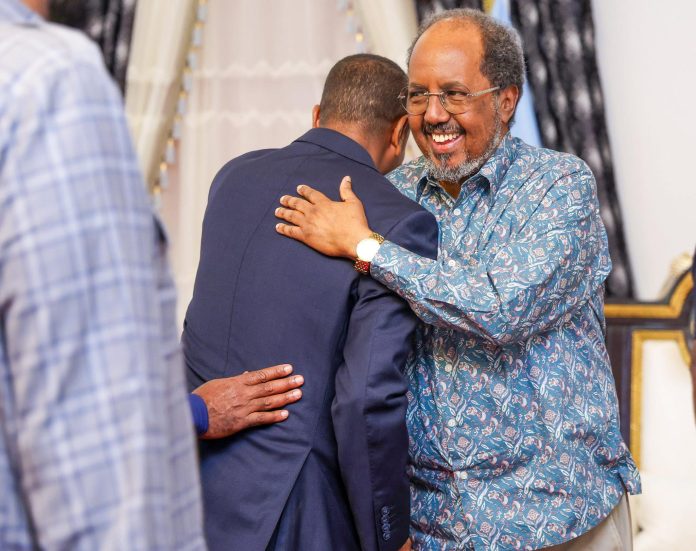
Apr 07(Jowhar)-Madaxweyne Xasan Sheekh ayaa maanta Xarunta Madaxtooyada Koonfur Galbeed ku qaabilay C/llaahi Cali Watiin oo ah Guddoomiyaha degmada Baydhabo ahna Duqa Magaalada.
Artemis astronauts reach farthest distance ever traveled by humans

When Humankind Stretched a Little Further
There are moments that feel like they belong to everyone at once: a sudden hush, a collective intake of breath, the soft fizz of radio static turning into words that stitch thousands of miles into something intimate. Late on April 7, 2026, that hush happened again. Four people aboard a silver capsule called Orion—Commander Reid Wiseman, pilot Victor Glover, mission specialists Christina Koch and Colonel Jeremy Hansen—cut a new furrow through human history by traveling farther from Earth than any human beings in half a century.
For a few hours they were not simply astronauts on a mission log; they were an urgent, live reminder that exploration still changes the way we understand ourselves. When Houston’s Mission Control re-established radio contact after about a 40-minute blackout behind the Moon, Christina Koch’s first words carried more than relief: “It is so great to hear from Earth again.”
Breaking the Record—and What It Feels Like
The headline is simple: Artemis II surpassed the distance record set by Apollo 13 in 1970. The new milestone—roughly 406,778 kilometres from Earth, some 6,606 km farther than the Apollo-era benchmark—was not just a number on a telemetry screen. It was a line in a story that stretches from the first footprints at Tranquility Base to the next generation of missions that will linger in lunar orbit, build new outposts and perhaps, one day, host long-term settlers.
“We will always choose Earth, we will always choose each other,” Koch said, a small ceremony of solidarity framed by the black infinity beyond the capsule windows. Colonel Jeremy Hansen, representing Canada aboard the mission, put it another way: “This moment is to challenge this generation and the next, to make sure this record is not long-lived.”
The Blackout: Alone Behind the Moon
Passing behind the Moon temporarily severs line-of-sight communications with Earth. In practical terms it was a roughly 40-minute blackout—time measured by computers but felt by humans as an almost tangible solitude. “It’s a weird kind of quiet,” a flight director at Mission Control later said. “Not silence so much as the sound of people listening harder to one another.”
In that silence, crew and capsule became both fragile and fiercely human. The Orion was on a free-return trajectory—an elegant, passive arc that uses lunar gravity to swing the spacecraft around and send it home, an old but reliable trick of orbital mechanics. With the Moon between them and Earth, the crew did what people who understand risk and wonder tend to do: they looked.
The Terminator: Where Night Meets Day on the Moon
Victor Glover’s voice, crackling through speakers, painted a lunar landscape with the urgency of a poet and the specificity of an engineer. He described the terminator—the ragged edge where lunar night becomes day—as “the most rugged that I’ve seen it from a lighting perspective.” Kelsey Young, lead scientist for the Artemis II observations, responded aloud in Mission Control: “You just really brought us along with you.”
There’s a reason scientists yearn for human eyes and human descriptions. Robotic cameras can map craters in excruciating detail, but a person in a window transmits scale, texture and the movement of light over time. “Those little pinprick highlights in the craters? They aren’t just bright pixels,” Koch said. “They’re like a lampshade with tiny holes, letting light through.” It’s a description that made engineers smile and poets nod.
Names on a Blank Canvas
Exploration is also an act of memory. Moments after breaking the distance record, the crew suggested naming two previously unnamed lunar craters. One would honor their ship’s nickname—Integrity—and another, more personal and tender, would be named Carroll, after Commander Wiseman’s late wife.
“It’s a bright spot on the Moon,” Colonel Hansen said, his voice thick. “And we would like to call it Carroll.” The embrace that followed, shared among four individuals traveling farther from home than any humans before them, felt like a small, private rite made public by radio waves.
NASA will submit these proposals to the International Astronomical Union, which governs the formal naming of celestial features. Whether or not the IAU approves, the gesture itself—fitful, human and immediate—marks how spaceflight stitches human stories onto the planetary canvas.
Firsts and Faces
Artemis II is heavy with symbolism as much as with instruments. Victor Glover is the first person of color to fly around the Moon; Christina Koch the first woman to do so; Jeremy Hansen is the first non-American crew member to make the lunar flyby. Those “firsts” matter. They break the stale template of who belongs at the frontiers of knowledge.
“We’re trying to open the story of space to more people,” an international space policy analyst said. “It’s not just about who can go; it’s about who gets to be seen going.”
Why This Moment Matters to You
Is it merely a stunt? A PR milestone? Look closer. Artemis II is a rehearsal for systems, a test of international partnerships and a deep breath before longer stays on the Moon. The free-return trajectory, the careful observation of the terminator, the emotional labor of naming—each is a stitch in the broader tapestry of a program that aims to return humans to the surface, build lunar infrastructure and use the Moon as a springboard to Mars.
Consider these facts:
- Artemis II is the first crewed lunar flyby in more than 50 years.
- The mission reached about 406,778 km from Earth, surpassing Apollo 13’s record from 1970 by roughly 6,606 km.
- The Orion capsule is on a free-return trajectory that will bring the crew home in about four days.
Beyond the figures, there is a second-order effect: seeing Earth from beyond its thin atmosphere changes how people think about planetary stewardship. Lookouts and astronauts alike speak about “the overview effect”—a shift in perspective that emphasizes our shared fate on a small, fragile planet. When the crew spoke of choosing Earth and choosing each other, that’s the echo of that same insight.
What We Take Back Down
When Orion swings back toward home and re-enters the thin, noisy envelope of Earth’s radio chatter, it will bring more than data. It will carry stories, images, and a renewed argument for exploration that includes grief and joy, precision and poetry. It will remind the world that human beings still look up and, sometimes, go farther than before—partly to prove we can, partly to honor those we have loved, and partly to see our own blue planet with fresh, reverent eyes.
So let me ask you, the reader: when you imagine standing at the rim of a lunar crater named for a person you love, does it feel distant or strangely near? How do you think history should remember this generation of explorers? The answers—personal, shared, contested—are already in motion, like radio waves threading the dark between two worlds.
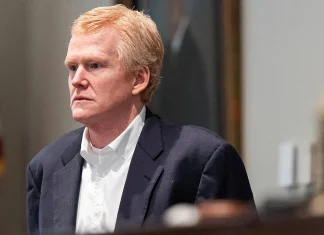
Retrial Set for U.S. Lawyer Convicted in Wife and Son Murders
When the Scales Waver: The Overturning of the Murdaugh Murder Conviction
There are moments when a courtroom ruling sounds less like a verdict and more...
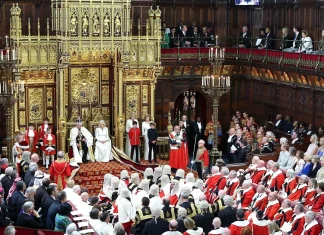
Corbyn says Starmer is unlikely to survive as prime minister
A Party at Sea: Why Corbyn Thinks Starmer’s Premiership May Not Last
There are moments in politics that feel less like a slow boil and...
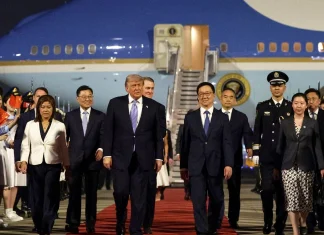
Trump declares he can end Iran conflict without Beijing’s assistance
Air Force One, a Red Carpet and the Long Shadow of Two Giants
The engines had hardly cooled when the cameras began to hunt for...
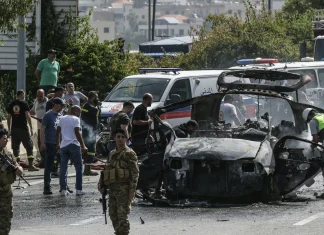
Lebanon reports Israeli vehicle strikes kill 12 civilians
In the shadow of Washington: strikes, funerals and fragile diplomacy on Lebanon’s southern shore
On a coastline where lemon trees meet the Mediterranean and cars...
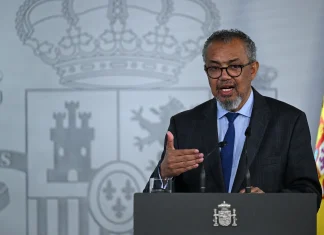
WHO chief: Efforts continue after the hantavirus evacuation
At Sea, Between Fear and Protocol: The MV Hondius and the Quiet Threat of Hantavirus
The image is cinematic: a sleek expedition ship, the MV...