Home Blog Page 50

Israel’s military warns Iranians to avoid using train services

Israeli military tells people in Iran to avoid trains

When a Warning Crosses Borders: The Night Phones Told Iranians to Avoid Trains

It was a warm evening in Tehran — the kind where the city exhales under the weight of summer, and the station lights at Rah Ahan gleam like constellations close to the ground. Commuters drifted toward the platforms with disposable cups of tea and backpacks slung over shoulders. Vendors hawked simorgh-shaped cookies. And then, for many: a ping, a pulse, a message that made people look up from their phones with the same suddenness as a siren.

“Avoid trains,” read the notification. “There is a credible threat to rail transport.”

Who sent it? The message claimed to come from the Israeli military — a jarring twist in a long, fraught relationship across a border that, on some maps, is thousands of miles away but in geopolitics feels painfully close.

A small alert, a large ripple

At first, people assumed it was a hoax, the sort of viral prank that circulates on messaging apps. Then television anchors interrupted programming. State radio urged calm. Passengers scanned each other’s faces. Train windows reflected the confusion back at them — small, private storms of worry.

“We laughed, then we didn’t,” said Sara, a teacher who had planned to take the evening express to visit family. “I thought, who would do that? Then I thought, what if? I stayed home.”

This is the ordinary human consequence of a modern security dilemma: a brief message, and schedules are rewritten, businesses rattled, trust frayed. Public transport — the veins of everyday life for a city of nearly 9 million people — is suddenly theater for geopolitics.

Why trains?

Rail systems are tempting targets in asymmetric conflicts. They move people in predictable streams, support economies by moving goods, and when disrupted, inflict grief and delay that ripple far beyond a single platform.

“Attacks or warnings aimed at transport infrastructure are designed for maximum disruption with minimal resources,” explains Dr. Lena Schwartz, a cybersecurity analyst who studies attacks on critical infrastructure. “Even a false warning can achieve the strategic aim: to sow fear, undermine confidence in authorities, and strain social cohesion.”

That’s not hypothetical. Globally, transport networks have been in the crosshairs of cyber and hybrid operations for years. In recent times, municipal transit systems, freight logistics, and airline reservations have all faced disruptions linked to state and non-state actors. The result is an uneasy new rule: if your city’s trains go quiet, somewhere politicians and strategists are paying attention.

Messages and methods

How would an Israeli military message reach Iranian citizens? The digital contours of modern life make such cross-border nudges possible in many ways: hijacked social media accounts, targeted ad buys, hacked billboards, or fake SMS messages masquerading as official alerts. In other instances, messages have been amplified by bots or foreign-language channels that reach diasporas and domestic audiences alike.

“We have seen a surge in ‘influence operations’ — a hybrid of cyber intrusion and psychological tactics,” says Omar Haddad, a Middle East analyst based in Amman. “They often test the boundaries of what’s permissible, and they do so on civilians. The objective isn’t only to damage infrastructure; it’s to change behavior.”

The human cost and the politics of warning

Local voices capture the texture of the moment better than any strategic analysis. A retired railway guard, Ali, said he watched as commuters drifted away from the platforms, some deciding to drive instead, clogging Tehran’s already congested streets.

“People are tired of being told what to fear,” Ali said, leaning against a column. “If it’s real, we need to know. If it’s not, why do they do this to us?”

Iranian officials were swift in their denouncement. State media labeled the alert “an act of psychological warfare,” urging citizens to follow official channels and warning that false information would be punished. The state’s rapid response to reassert control is familiar: in a world where rumors can become mass movements, authorities often prioritize calming the public.

But calming the public is not simply a matter of issuing rebuttals. Trust erodes faster than it can be rebuilt. When people begin to doubt the neutrality of the media they rely on — or suspect that foreign actors can phone in fear — the social fabric destabilizes in small, cumulative ways.

A global pattern

Consider the wider context: across regions, infrastructure and communications have become theaters of competition. Whether it’s the disruption of energy grids in Europe, interference with voting infrastructure, or misinformation campaigns ahead of elections, the pattern is clear. Civilians are rarely the intended final audience; they are the instrument through which pressure is applied.

And that raises ethical questions that should concern everyone, not only diplomats and generals. What responsibility do states have when using methods that rely on civilian disruption? When does an informational warning cross the line into coercion? And how should international law adapt to shield everyday people from becoming collateral in these campaigns?

What now? Practical steps and deeper conversations

For commuters and city planners, the immediate fix is practical resilience: diversify channels for official alerts, harden communications infrastructure, and invest in public education so people can make informed choices when alarms appear on their screens.

At the strategic level, the episode invites a negotiation about norms. “There has to be a conversation about red lines,” says Dr. Schwartz. “Not every competitive tactic is wise or ethical. When messages deliberately target civilians’ daily routines, they’re ratcheting up the stakes.”

  • Invest in verification: Official channels need verifiable authentication so that citizens can distinguish legitimate safety alerts from disinformation.
  • Strengthen civil resilience: Communities trained in emergency protocols are less likely to panic and more likely to make rational choices under uncertainty.
  • International dialogue: Diplomatic mechanisms — even among adversaries — can create norms about what kinds of informational tactics are unacceptable.

Where do we go from here?

On the platform, the trains eventually resumed. Ticket counters reopened. Some commuters boarded with a shim of unease, others with an intensified appreciation for the small, reliable motions of daily life.

But the episode lingers. It raises questions about the new geometry of power: not only where borders lie, but how far a message can travel, how quickly it can unsettle, and how little it can cost the sender to do so.

What would you do if your phone buzzed with an urgent warning from an unfamiliar source? Who would you trust? In a world where notifications can jolt whole cities, perhaps the most important conversations are not about missiles or tanks, but about trust, verification, and the invisible infrastructures that keep societies functioning.

Because while a train delay is a minor inconvenience, a breach of trust is harder to repair — and it travels farther than any express line.
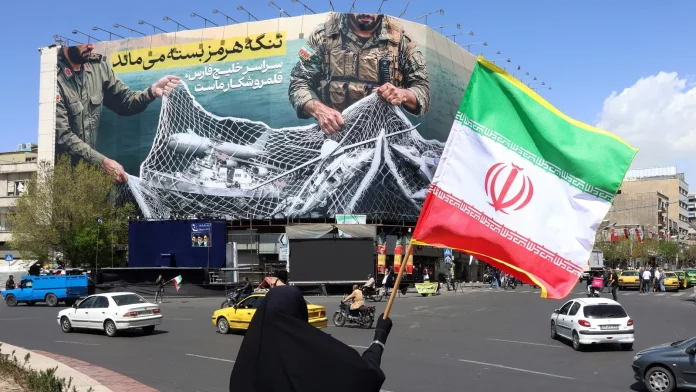
Iran Refuses to Back Down as Trump’s Ceasefire Deadline Looms

Iran defiant on eve of Trump's ceasefire deadline
Tehran has refused to reopen the Strait of Hormuz and accept a ceasefire deal

The Midnight Deadline: A Strait, a Threat, and a World Holding Its Breath

By the time dawn bled pale over the Persian Gulf, a strange hush hung over ports that usually thrummed with activity. Cranes stood idle like sleeping giants. Fishing boats bobbed in the oily light, their nets uncast. The Strait of Hormuz — a narrow throat through which roughly one-fifth of the world’s oil and natural gas once flowed — had become the fulcrum of a crisis that felt, in the small hours, both impossibly large and painfully intimate.

Inside Tehran, the mood was the opposite of calm. Streets were full of small, urgent conversations. In a bakery near Valiasr, Fatemeh, whose hands still smelled of cardamom and yeast, folded a scarf around her head and said, “We are used to sanctions, to shortages. But this is different. The talk of bridges and power plants being ‘decimated’ — it makes you think of your own children.”

What’s at Stake

The immediate trigger was a deadline set by U.S. President Donald Trump: an ultimatum to Iran to reopen the Strait of Hormuz and accept a ceasefire arrangement. If Tehran refused, the president warned of a campaign so devastating that “the entire country can be taken out in one night.” Within minutes, those words ricocheted across diplomatic channels, social media, and markets.

Oil traders reacted before diplomats could finish their coffees. Brent crude hovered near $110 a barrel, spooked by the possibility that a lasting closure of Hormuz — through which about 20% of the world’s oil and gas used to be shipped — could choke global energy supplies. For consumers thousands of miles away, this was no abstract geopolitical drama; it was a prospect of higher bills at the pump and more inflation at the supermarket.

Negotiations that Unraveled

Behind the headlines was an attempt, brokered by Pakistan, to thread the crisis back to calm: an immediate ceasefire, a reopening of the Strait, and negotiations on a broader settlement within a few weeks. Iran rejected that proposal. According to sources familiar with Tehran’s response, the government’s counter-offer consisted of ten demands: an end to regional conflicts, a formal guarantee for safe passage through Hormuz, the lifting of sanctions, and funds for reconstruction among them.

“We didn’t say no to peace,” said an Iranian foreign ministry official in a low, weary voice. “We laid out conditions that must be part of any durable arrangement. Empty assurances aren’t enough.”

Voices on the Ground

Ali, a fisherman from Bandar Abbas, banged a palm on the pier as he spoke. “Hormuz is our lifeline and our prison,” he said. “If it opens, our gas and oil flow. If it stays closed, we have to worry every day about missiles, about returning home.”

In Tel Aviv, a different anxiety played out in public squares. Anti-war protesters gathered outside the U.S. Embassy, chanting and holding signs that read “No More Nightmares” and “Talk, Don’t Bomb.” “We’re not against Israel,” said Rachel Cohen, a schoolteacher, “we’re against the kind of decisions that send planes and missiles into the night. War is for politicians; it’s our children who pay.”

Escalation: Strikes, Intercepts, and Human Cost

In the early hours, the Israeli military announced a series of airstrikes on sites it described as Iranian government infrastructure in and around Tehran. Iran responded with ballistic missiles and drones, some aimed at Israeli territory and others at U.S. forces in the region. Air defenses roared to life — missiles streaked across the sky and left trails of smoke that residents later described as “writing in the heavens.”

Saudi Arabia reported intercepting projectiles aimed at its eastern oil regions, with debris falling dangerously close to energy facilities. The kingdom, along with the UAE and Bahrain, issued public safety alerts, and authorities said that hundreds of Iranian-fired missiles and drones have been launched since the conflict began on February 28 — most intercepted, but some causing damage and casualties.

Casualty figures are grim. Human rights groups on the ground estimate thousands killed across the region: more than 3,500 in Iran and nearly 1,500 in Lebanon, where Israeli strikes have targeted the Iran-backed Hezbollah militia. Thirteen U.S. service members have died since the conflict escalated, and a downed F-15E earlier in the week — with one airman stranded deep in hostile territory — nearly pushed the crisis over the edge before a daring rescue mission brought him back.

“Every life is a story,” said Dr. Mona Hafezi, a Tehran-based physician volunteering at overwhelmed hospitals. “These numbers are not statistics on a page; they are parents, students, carpenters. We stitch wounds and bury the rest.”

Law, Threats, and the Language of War

President Trump’s rhetoric sharpened the stakes. He warned that if Iran did not comply, U.S. forces would target bridges, power plants, and other infrastructure “burning, exploding, and never to be used again.” Iran’s UN envoy responded with fury, calling the remarks “direct incitement to terrorism” and evidence of an intent to commit war crimes under international law. Tehran’s leadership, meanwhile, urged citizens to form human chains at power stations, turning sites of vulnerability into symbols of resistance.

“Threatening to wipe out civilian infrastructure crosses a threshold,” said Captain Sarah Mitchell, a retired naval strategist now teaching at a university in London. “It’s not just about military advantage; it’s about the civilian population’s future. Under international conventions, attacking purely civilian objects is illegal — and it puts the attacker on dangerous moral ground.”

Beyond the Strait: Global Ripples

This conflict is not contained to the Gulf map. Energy markets twitch when Hormuz clutches shut. Supply chains with components from Asia to Europe feel the tremor. Refugee flows, already pressured by climate and instability, may swell. Geopolitically, regional fault lines are deepening: the emboldening of proxies, the erosion of multilateral institutions, and the normalization of hyperbolic rhetoric as policy leverage.

“We’re watching the unspooling of another era of geopolitical risk,” said Javier Ortega, an energy analyst in Madrid. “If you combine military strikes with sanctions and trade disruptions, the global economy doesn’t respond linearly. It’s nonlinear — you get tipping points.”

Questions for the Reader — and the World

Ask yourself: How willing are we to accept civilian suffering as collateral for strategic goals? When leaders threaten entire nations, where does responsibility lie — with the commander in chief, with international courts, with bystanders who watch on screens? And what price are we willing to pay for short-term security over long-term stability?

Back on the pier in Bandar Abbas, Ali tied a new knot on his nets and stared toward the narrow mouth of the Strait. “We have always navigated between storms,” he said. “But this is a storm made by people on another map. Sometimes I feel the world is smaller — because our fear is shared — and sometimes it feels so big I cannot reach it.”

What Comes Next

At the moment, there is no tidy ending. The proposed ceasefire remains rejected. The deadline has come and gone in political and public discourse, replaced by a longer arc of diplomatic horse-trading, back-channel discussions, and the terrible arithmetic of risk. But in markets, hospitals, and kitchens across the region, people are composing lives that refuse to be mere footnotes in strategic statements.

In the days ahead, watch for three things: whether diplomatic mediators can reframe the deal in terms that address Iranian security concerns; whether international law bodies raise the heat on any threats against civilian infrastructure; and whether communities on both sides of the conflict can begin to tell different stories—stories that move from obliteration to rebuilding.

Because before any map, before any resource, before any trophy of power, there are human beings — making tea, mending nets, teaching, protesting — and their stories are the ones that will, in the end, define what this moment becomes.

Trump oo ka fiirsanaya dib u dhigista weerarro ka dhan ah Iiraan

Apr 07(Jowhar)-Madaxweynaha Mareykanka, Donald Trump, ayaa la sheegay inuu ka fiirsanayo dib u dhigista weerarro militari oo lagu beegsan lahaa kaabayaasha Iiraan, haddii ay muuqdaan calaamado dhab ah oo muujinaya in xal diblumaasiyadeed la gaari karo. Warbixintan ayaa waxaa baahisay shabakadda Axios.

Iran Holds Firm Ahead of Trump’s Imposed Ceasefire Deadline

Iran defiant on eve of Trump's ceasefire deadline
Tehran has refused to reopen the Strait of Hormuz and accept a ceasefire deal

On the Edge of Midnight: A Strait, a Deadline, and the Taste of War

There are moments when the world seems to hold its breath — when a single choke point, a terse ultimatum, and a few incendiary words can bend markets, unsettle cities, and rewrite human plans. This morning was one of those mornings. The Strait of Hormuz, that narrow artery through which roughly one in five barrels of the world’s oil flows, remained effectively closed. A deadline set by a U.S. president loomed; a counter-offer from Tehran arrived in the form of a handwritten-sounding, ten-point response. And across the region, people went about their days as sirens, screens, and whispered rumors rewired normality.

“If you stand where I stand, the sky looks like a scoreboard,” said Miriam, a café owner near Tel Aviv’s Jaffa port, as she watched the news scroll on a phone propped between espresso cups. “Everyone counts the seconds and the chances. We make coffee anyway.”

Diplomacy, Declined

In recent days an uneasy diplomatic shuttle carried a U.S. proposal — reportedly brokered with Pakistan as intermediary — offering Iran an immediate ceasefire and the lifting of its effective blockade of Hormuz, followed by talks aimed at a broader settlement within two to three weeks. According to a source familiar with the plan, Tehran answered not with a yes or no but with a list: ten clauses that read like a list of national priorities — an end to regional conflicts, a written protocol guaranteeing safe passage through Hormuz, the lifting of sanctions, and commitments toward reconstruction.

“We submitted conditions, not capitulation,” said one Iranian official quoted by state media. “Our people have paid a heavy price; any agreement must restore dignity and safety first.”

Across the ocean, a different voice thundered. The U.S. president set a hard deadline: open the strait by a specified hour or face devastating strikes targeting critical infrastructure. “The entire country can be taken out in one night,” he told reporters, adding grim specifics about power plants and bridges. “That night might be tomorrow night.” He later brushed aside questions about the legality of such threats.

Words that Push and Pull

Rhetoric is combustible. For millions of people in the region, the words were not abstract; they were the prelude to blackouts, evacuation drills, and prayers. Iran’s deputy sports minister urged artists and athletes to form human chains around power stations — a call mixing symbolism with civic defiance. The Iranian U.N. envoy described the threats as “direct incitement to terrorism” and warned of international-law consequences.

“When leaders speak of ‘taking out’ an entire country’s infrastructure, it’s not a metaphor for most of us,” said Dr. Rania Haddad, a researcher on conflict displacement. “It’s a very real fear of loss — of hospitals, of water, of lifesaving electricity.”

Fighting and Fallout

Combat did not wait for diplomacy to conclude. The Israeli military reported strikes targeting what it described as Iranian government infrastructure in Tehran and beyond, while it activated air defenses to intercept projectiles launched in its direction. Saudi Arabia said it intercepted ballistic missiles aimed at its eastern provinces, with debris falling near energy facilities.

Authorities in the Gulf — Saudi Arabia, the United Arab Emirates, and Bahrain — issued simultaneous public-safety alerts. Meanwhile, the Iranian semi-official Mehr news agency reported heavy damage to a synagogue in central Tehran after a projectile struck the area, underscoring how fragile civilian life has become amid state-on-state exchanges.

Casualty figures reported by rights groups stitch a grim tapestry. U.S.-based HRANA counted more than 3,500 deaths in Iran and nearly 1,500 fatalities in Lebanon, where fighting has pounded communities as Israel targets forces it ties to Iran. Thirteen U.S. service members were reported killed since hostilities flared; a downed F-15E and a daring rescue deep inside Iranian territory briefly pushed Washington to the brink of a larger escalation before special forces extracted a stranded airman.

The Global Price of a Narrow Passage

Markets listen when ships stop moving. Oil hovered around $110 a barrel as the deadline approached — a number that translates directly into higher pump prices, strained household budgets, and renewed inflationary pressure in economies still recovering from pandemic shocks. The Strait of Hormuz is not just a ribbon of water; it is a lever on the global economy.

“When supply routes falter, every face at the gas station pays the cost,” said Javier Alvarez, an energy analyst in Madrid. “Even nations far from the Gulf will feel this in manufacturing, shipping rates, and power bills.”

Local Color: Streets Beyond the Headlines

In Tehran, a fruit vendor named Soraya wrapped her remaining pomegranates in newspaper and shrugged at customers who asked what will happen next. “We talk, then we sell,” she said. “My grandson’s school closed today. He asked if the lights will still work. I told him we will light candles if we must.”

In Tel Aviv a line of protesters gathered outside the U.S. embassy, holding signs that read “No More War” and “Sanity Before Arsenals.” “We came because our children are tired of sirens,” said Yosef, a father with a stroller. “This is not a prophecy; this is our living room.”

Legal, Moral, and Strategic Fault Lines

Lawyers and historians watching demand clarity. Deliberate attacks on civilian infrastructure — especially power plants that sustain hospitals and water systems — raise stark legal questions under international humanitarian law. “The principle of proportionality exists for a reason,” said Professor Miriam Klein, an international-law expert. “Targeting civilian infrastructure as a punitive tool risks criminal liability if it cannot be linked to legitimate military objectives and if the expected civilian harm is disproportionate.”

Strategists, meanwhile, warn that what begins as targeted strikes can cascade into broader conflagrations. Proxy dynamics in the Middle East, arms proliferation, and the intertwining of local grievances mean that conflict lines are rarely clean or predictable.

What Comes Next?

We are left with open-ended questions: Will the Strait reopen? Will a fragile ceasefire lead to lasting talks? Can sanctions, reconstruction, and guarantees be stitched together fast enough to convince people that peace is more than a promise?

“Negotiations fail when they ignore the human ledger,” a former diplomat observed. “Anyone who thinks they can paper over the losses without addressing truth, compensation, and safe passage is betting on another cycle of violence.”

For people on the ground, the abstract contours of high diplomacy mean practical choices: whether to refill medicine cabinets, whether to send children to school, whether to board a ship through a disputed channel. For readers far from the Gulf, the consequences are less immediate but real: the cost of goods, the stability of markets, the ethical weight of global alliances.

How Will You Watch?

As journalists, citizens, and neighbors of a shared planet, our task is not only to track headlines but to hold the human stories at their center. Whose lights will go out if power plants are destroyed? Which school will close first? Whose voice will be the last to speak at a funeral?

What do you think should be done next — more diplomacy, tougher deterrence, a humanitarian corridor, or something else? I’d love to hear your perspectives. Leave a comment, share a story from your own community, or simply sit with this discomfort: decisions made in capital rooms travel fast, and they land hardest on ordinary people with ordinary lives.

For now, the strait remains narrow, the deadline ticks, and the world watches — waiting to see whether the worst words of this weekend will become the worst night in our recent memory, or whether cooler heads will, at the last possible minute, redraw a path toward calm.

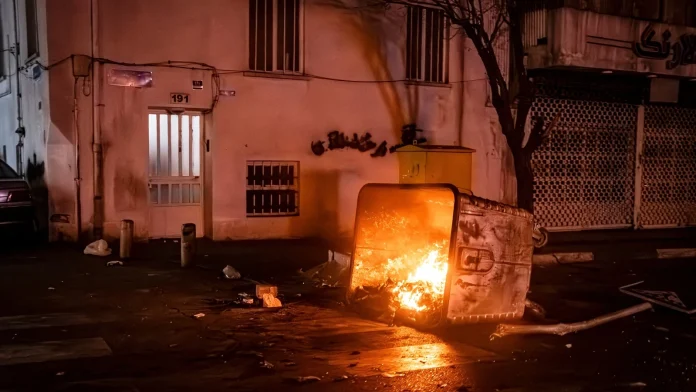
Iran’s wartime executions escalate after protester killed during unrest

Iran wartime executions mount with protester's killing
Several men have been executed over the protests which erupted in Iran in January

On a Quiet Street in Tehran, the State’s Quietest Violence Continues

There is a particular hush that falls over parts of Tehran after dark these days — not the silence of peace, but the thin, watchful quiet of people who have learned to measure their words. Shopkeepers roll down metal shutters a little earlier. Neighbours exchange news in hushed tones. A man rides by on a motorbike, his face half-hidden beneath a scarf; he pauses, looks at the sky as if searching for a reason, and then keeps going.

It is in that atmosphere that the Iranian state carried out another execution this week: 23-year-old Ali Fahim was put to death after being convicted, authorities say, of taking part in an attack on a Tehran base of the Basij — the paramilitary volunteer arm of the Islamic Revolutionary Guard Corps — during nationwide protests in January.

His death was confirmed by official outlets and tracked by international rights groups. It is not an isolated act. In the last eight days alone, the Norway-based Iran Human Rights (IHR) reports that ten people considered “political prisoners” have been executed — four connected to the January protests, six on charges of membership in the outlawed People’s Mujahedin of Iran (MEK). Seven men were originally sentenced to death over the Tehran base incident; four have now been executed, including Fahim, leaving three at imminent risk, advocates say.

What the Courts Say — and What Critics Say Back

The judiciary’s Mizan Online website portrayed Fahim in stark terms: “one of the enemy elements in the terrorist riots,” a shorthand the state often uses to frame protesters as foreign-backed subversives. It said the supreme court had approved the original verdict.

Human rights activists and legal observers contest that narrative. The IHR has alleged that Fahim and his co-defendants were “subjected to torture and denied access to legal counsel” and tried in what it called a “grossly unfair” fast-track trial presided over by Judge Abolqasem Salavati — a judge who was sanctioned by the United States in 2019 and widely nicknamed the “Judge of Death” for his frequent use of capital punishment.

“These executions are part of the Islamic republic’s strategy of survival — waging war against its own people under the shadow of external conflict,” said Mahmood Amiry‑Moghaddam, director of IHR. “The international community must respond with urgency. The situation of prisoners and the regime’s systematic use of the death penalty must be made a central condition in any negotiations or engagement with the Islamic republic.”

Amnesty International, too, has been blunt: the executions represent a judiciary that functions as a “tool of repression, sending individuals to the gallows to spread fear and exacting revenge on those demanding fundamental political change.” That sentiment echoes on Tehran streets, where people talk about reprisals and the chilling effect of public punishment.

Numbers that Refuse to Stay Abstract

Facts and figures can numb us — until you attach names to them. Iran is, according to multiple rights organisations, one of the countries with the highest rates of execution in the world. In the rolling litany of recent days, the names are painfully specific: Mohammad‑Amin Biglari, 19; Shahin Vahedparast, 30; Amir Hossein Hatami, 18 — all executed in connection to the same case.

These are young lives, with birthdays and mornings and small acts of defiance that led them, by the state’s account, to a rope. Whatever the charges, the swiftness of the process and the frequency of executions make them feel less like isolated sentences and more like a pattern — an instrument of deterrence and retribution.

Voices from the Ground

“We are afraid to talk openly,” said a tea seller near Azadi Square, whose name I do not publish for safety. “Every family knows someone who has been taken, or who has been called into a station at night. When the men from the neighbourhood park their vans across the road, people step inside their houses and draw the curtains.”

A woman who identified herself as a cousin of a young man on death row described the anguish in simple, heartbreaking detail. “He called me twice from prison,” she said. “The second time he whispered, ‘If anything happens to me, tell my mother I loved her.’ You cannot undo those words. We keep living, but parts of us are already gone.”

An academic in Tehran, speaking on condition of anonymity, framed the executions in strategic terms. “When you face external pressure — conflict at borders, sanctions — autocratic governments often turn inwards. They try to rally supporters by spelling out a clear, brutal cost for dissent. It’s a sad, predictable logic.”

Local Colour, Global Consequences

Walking through Grand Bazaar this week, I noticed everyday life continuing alongside a palpable grief. A fruit seller quoted the price of pomegranates while his eyes remained distant. A small poster calling for prayers for the dead was stuck on a telephone pole. In a city that has always been a mosaic of histories and hopes, grief now layers itself over ritual: the tea, the prayers, the slow recitation of names.

For many inside Iran, the slogans that have echoed since the unrest — especially the chant “Woman, Life, Freedom” that entered the international lexicon with the women’s rights protests — are a constant reminder that this is about more than single incidents. It is about a deeper contest over dignity, rights, and what the future of the country might look like.

How Should the World React?

Governments and international bodies now face an uncomfortable calculus. Should diplomatic engagements with Tehran be conditioned on human rights performance? Do sanctions and public condemnations save lives — or do they harden the state’s resolve?

Mahmood Amiry‑Moghaddam urged immediate action. “This is not merely about law; it’s about humanity,” he said. “If the world continues to treat the regime as a strategic actor only, without accounting for its domestic brutality, then we are complicit in the erasure of young lives.”

Many foreign policy analysts point out a paradox: the same geopolitical tensions that make Tehran a pivotal player on the regional stage — conflict with Israel, fractious relations with the United States — also provide the regime with the pretext to clamp down at home. External conflict can, in effect, become cover for internal repression.

The Human Toll and the Long View

Numbers, slogans, legal terms: they are all useful, but what lingers is the human shadow. Every execution reverberates outward — through family networks, through communities, through the sense of possibility for those who had once dared to imagine change.

So ask yourself: what does justice look like in a world where the instrument of death is wielded in the name of order? When does the pursuit of stability become the perpetuation of injustice? And if you live beyond Iran’s borders, what responsibility do you feel when a state uses the finality of execution to silence its critics?

There are no easy answers. But there are ways to act: supporting independent journalism, pressing elected representatives to prioritize human rights in foreign policy, and backing organizations working to document abuses and assist victims’ families. These actions may not undo what has already happened, but they keep the story from disappearing into the fog of geopolitics.

Back on the street where I began, the quiet persists. People still buy tea and bread; children still run past parked cars. But in their faces, and in the conversations that happen a little more carefully now, there is the knowledge that state violence is not only about bodies removed from the public square. It is about the way that fear reshapes everyday life, one hush at a time.

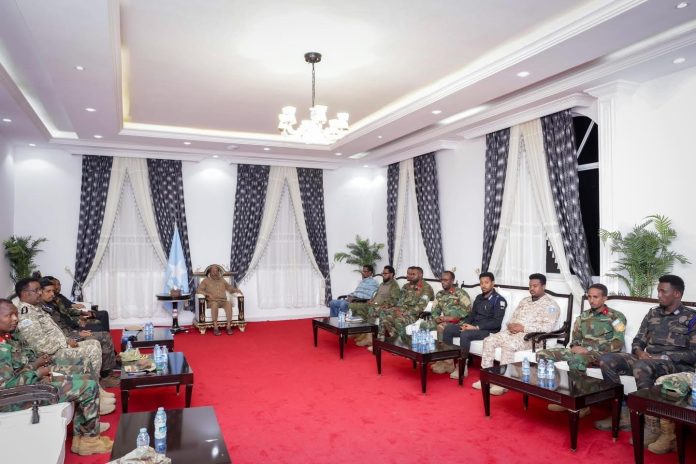
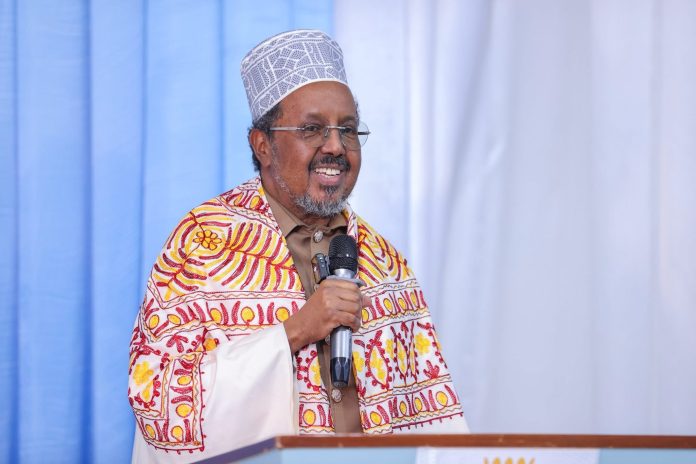
Madaxweyne Xasan Sheekh oo guddoomiyey shirka amniga Koonfur Galbeed

Apr 06(Jowhar)-Madaxweynaha Jamhuuriyadda Federaalka Soomaaliya, ahna Taliyaha Guud ee Ciidamada Qalabka Sida, Mudane Xasan Sheekh Maxamuud ayaa guddoomiyey Shirka amniga Dowlad Goboleedka Koonfur Galbeed, kaasi oo diiradda lagu saaray xaaladda amniga deegaanka, maareynta isbeddelladii amni iyo maamul ee dhawaan  dhacay iyo xaqiijinta hannaan caddaaladeed oo loo simanyahay.

Three killed by Russian strike in southern Ukraine

Russian strike kills three in south Ukraine
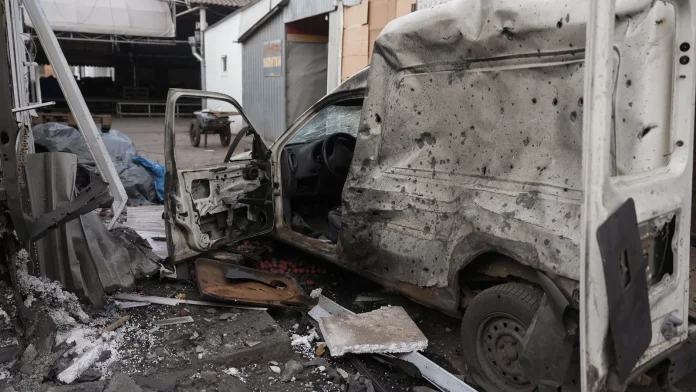
A destroyed van is seen amid debris after a market was hit during a Russian air strike on Nikopol, Ukraine, at the weekend

Night over the Black Sea: a port city mourns, and the hum of drones keeps scoring the horizon

There are nights in Odesa when the sea hushes, and the city seems to breathe. Last night was not one of them.

Shortly after midnight, a strike shook the southern port—the blast slicing through the late spring air, ripping a family from sleep and leaving the city with a small and terrible tally: three people killed, including a child. Sergiy Lysak, head of Odesa’s military administration, put the number starkly on Telegram the next morning: “Three fatalities confirmed, among them a child.” Two others were hospitalised with serious injuries.

The particulars of bereavement are intimate: a neighbor describing the sound of glass like rain, a volunteer who held a child’s hand and found it cold. “You carry the smell of smoke, and the silence afterward is the worst,” said Olena, a seamstress who lives near the strike zone, her voice trembling. “We stayed awake all night listening for anything. Every knock, every car is a drum.”

Odesa — with its layered history of sailors, silk traders, cafés that spill out onto sun-bleached sidewalks, and catacombs beneath the hills — has become a nightly witness to a modern terror: waves of drones that Moscow has launched repeatedly since the conflict escalated in February 2022. For four years now, ordinary routines—shopping for bread, returning home from work—have to jostle with air raid alerts and the calculation of whether to run for a shelter.

Ports under pressure: Novorossiysk and the geopolitics of oil

While Odesa counted its dead, on the eastern side of the Black Sea, explosions and falling debris painted a different pattern. Russian authorities in Novorossiysk said at least eight people were injured — two of them children — as residential buildings took damage during Ukrainian drone operations. The mayor of Novorossiysk, Andrei Kravchenko, said debris struck a high-rise. “Windows and balconies are damaged; people were frightened,” he told regional reporters.

Novorossiysk is not a random coastal city. It is one of Russia’s largest export gateways on the Black Sea and a hub for oil shipments — including activity tied to the Caspian Pipeline Consortium, which moves oil from Kazakhstan to world markets. The terminal is a knot in a global network: international firms, including major U.S. energy companies, have been linked to shares in those export channels.

Ukraine’s campaign against energy infrastructure has lately become sharper, deliberate. Kyiv argues that hitting the economic arteries that pump revenue into Moscow’s war machine is both tactically necessary and morally fraught, because the reverberations fall on civilians as much as on military balance sheets. “We are trying to strike where it hurts materially, where it will limit their ability to buy weapons,” an unnamed Ukrainian commander told local media last month. “But we do not want to harm ordinary people.”

That calculus plays out across an uneasy geography. When alerts sound over the terminals, operations often pause. Crews shudder in the silence of halted machinery while tens of thousands of barrels of oil wait like quiet beasts, unable to move.

Electricity, delay, and the strain on daily life

On both sides of the conflict, the lights have flickered and gone out. Russia’s military reported shooting down 148 Ukrainian drones over the course of a three-hour barrage, and officials said emergency crews were working to restore power to nearly half a million households after outages linked to air strikes.

In Russian-held Donetsk and Makiivka, the Russia-installed regional head, Andrei Chertkov, said repair crews had restored power to the two cities after earlier attacks on energy infrastructure; he had earlier reported that nearly 500,000 households were without electricity. Work continued where outages persisted, according to regional bulletins.

“We boiled water on a hotplate, lit candles, and told the children stories,” recalled Pavlo, a teacher in Zaporizhzhia now living in a makeshift shelter, describing the improvisations families make when the fragile infrastructure fails. “But it’s not just comfort. No power means no water, no refrigeration for medicine, no heat in winter — it’s a slow erosion of life.”

People, places, and the human geography of a four-year war

From graves in village cemeteries to the rubble of high-rise blocks, the war has remade landscapes. Belgorod — a Russian border region frequently targeted by Ukrainian forces — reported a civil defence volunteer killed yesterday by a drone strike. Elsewhere, repairs are underway across Zaporizhzhia and other occupied territories where power grids and civilian infrastructure have been damaged in recent days.

Walking through Odesa in daylight, you can still find the city’s seaside soul: fishermen mending nets, café tables cluttered with cups and sunflower-seed shells, a child chasing pigeons near the Duke de Richelieu monument. At the same time, armored personnel carriers idle along promenades, and shelters are stamped into the urban routine. The shock is cognitive — a city that feels both eternally alive and precariously close to collapse.

“People here carry two calendars: one for the ordinary things—birthdays, markets, the rhythms of the sea—and another calendar that counts the nights of air alerts,” said Dr. Katia Morozova, a sociologist at a university in Odesa who studies conflict and civilian life. “That layering of normalcy and threat alters how communities bond and how fear is transmitted from adults to children.”

Why oil, and why now?

If you ask an energy analyst why Kyiv is focusing on export terminals and pipelines, the answer is blunt: money fuels war. Russia’s economy remains heavily dependent on oil and gas revenues as a source of foreign exchange and budget funding. Disrupting exports not only creates immediate logistical headaches but can also channel longer-term economic pressure.

“Damaging export capacity constrains revenue flows, raises insurance and shipping costs, and forces Moscow to reallocate scarce resources to repair and security,” explained Dr. Elena Petrov, an energy economist in Kyiv. “It is not a silver-bullet strategy, but it can be effective in limiting the adversary’s fiscal space.”

At the same time, these strikes risk international spillovers: damage at terminals that move Kazakh oil, for example, can ripple through global markets, nudging up freight costs and insurance premiums and prompting debates in boardrooms from London to Houston.

What do we owe one another in a world where civilian lives and global economies collide?

Reading the morning reports — three killed in Odesa, eight injured in Novorossiysk, hundreds of thousands temporarily without power — it’s natural to ask: are we numb yet, or are we finally listening?

This conflict is not only a map of military movements; it is a ledger of human loss and adaptation. It raises questions about the ethics of modern warfare, the protections due to non-combatants, and how intertwined our global systems are. A strike on a seaside apartment in Odesa echoes in shipping manifests, in a fisherman’s ruined season, and in a family’s grief. A drone over a Russian port ripples through financial markets and supply chains across continents.

“We wake, we tend the wounded, we bury our dead, and then we go to work,” said Maria, a volunteer who ferried water and blankets to shelters after the Odesa strike. “That is how people survive. But survival is not the same as peace.”

What will break the cycle? Military analysts will argue over tactics and strategy. Diplomats will speak of sanctions and negotiations. For ordinary people like Olena, Pavlo, and Maria, the answer is more immediate: stable power, safe schools, and a night without sirens. Can the world’s political tools answer those needs quickly enough?

  • Confirmed fatalities in Odesa: 3 (including one child)
  • Injuries reported in Novorossiysk: at least 8 (including two children)
  • Russian military claim: 148 Ukrainian drones downed during one three-hour window
  • Reported outages affecting almost 500,000 households in parts of Russia and occupied Ukraine
  • Strategic concern: damage to oil export terminals such as the Caspian Pipeline Consortium affects international energy flows

As night returns to the Black Sea coast, the lamps in many homes are being lit by portable batteries, candles, and sheer stubbornness. The war’s rhythm continues to be set by where, and when, the next blip of heat will bloom on a screen. In the steady, human stories behind those graphs and headlines, grief and courage sit side by side—proof that the true cost of any strategy is measured in the small, incandescent details of daily life.

So I ask you, reader: when you turn on your lights tonight, will you think of the networks that keep them burning, and of the hands that work to keep them on? What responsibility do global consumers and policymakers bear when the pipes and terminals that feed world markets sit amid front lines? The answers will shape what comes next, for ports and people alike.

UK abolishes two-child benefit cap, restoring support for larger families

Two-child benefit cap comes to an end in the UK
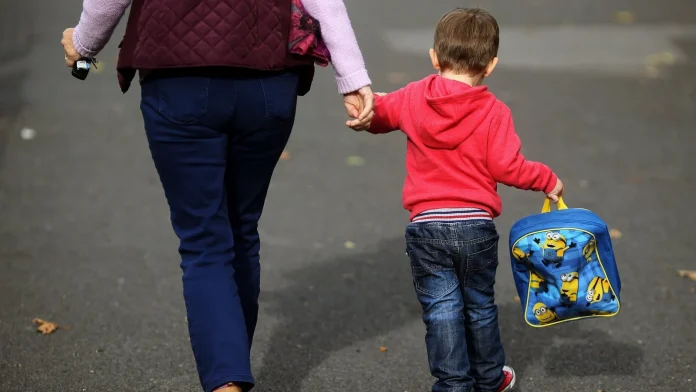
The two-child benefit cap in the UK was introduced by the Conservatives in 2017 (Stock image)

When the Two-Child Rule Fell: A Day That Felt Like a Little Less Winter

On an overcast morning in a northern market town, a mother paused by a stall of bruised apples and wrapped beans, phone pressed to her ear. She had been following the headlines—another policy shift, another tweak in a long line of government measures meant to blunt the edges of a cost-of-living crisis that has felt eternal to many.

“It’s a weight off my chest,” she told me, voice low and quick. “It doesn’t fix everything. But knowing the youngest won’t be the reason we go cold this year—that counts.”

The government’s formal decision to end the two-child cap on child-related benefits comes with that kind of everyday relief. Introduced in 2017, the cap limited child tax credits and universal credit to a household’s first two children. From 6 April, the policy will officially be lifted—an administrative reversal that, according to government estimates, will lift around 450,000 children out of poverty.

What’s changing, exactly?

The end of the two-child limit is the headline, but it arrives amid a bundle of measures rolling out at the same time. They include reforms intended to shore up families and workers against rising prices and unstable incomes. Key elements taking effect:

  • Restoration of benefits for children beyond the second in most households, reversing a policy first enacted seven years ago.
  • Day-one paternity leave rights, enabling new fathers and partners to take time with a newborn without waiting periods.
  • Reforms to statutory sick pay, embedded in broader employment rights legislation.
  • An uprating of the state pension—officials say a new claimant could see up to £575 extra in their annual income.
  • Uprating to some means-tested supports including housing benefit and personal independence payments.

“This was always about more than counting children,” said Jen Clark, Amnesty International UK’s economic, cultural and social rights lead. “However welcome the lifting of the two-child limit is, it fails to go far enough to help the vast majority of children living in poverty in the UK. The government urgently needs to make changes to the social security system to make it fairer, particularly given the growing cost-of-living crisis.”

Politics at the counter: what the debate looks like now

On one side of the argument, Labour ministers frame the move as rectifying an inequality baked into the welfare system. The announcement, delivered as part of the autumn budget and due to take effect next April, followed months of pressure from Labour backbenchers and campaign groups who argued the cap forced parents into impossible choices.

Opposition voices, however, see a different problem. Conservative leader Kemi Badenoch branded the move as favouring those on state support over working people. “While working people struggle with rising fuel costs and food prices, Keir Starmer is giving another handout to those on benefits,” she said, arguing the cap should be reinstated and the savings redirected to defence priorities.

The clash is familiar: fairness versus incentive, compassion versus fiscal prudence. But for many families walking through the turnstiles at a children’s centre or queuing at a breakfast club, it’s less about ideological framing and more about whether there will be enough to buy milk next week.

Voices from the ground

“I had to choose between the nursery or the groceries,” said Aisha Khan, a single mother of three from Bradford, who admitted she nearly cried when she read the announcement. “For two years, I thought having a third child meant extra paperwork and shame. Now I don’t have to explain why my family exists.”

At a community foodbank on the city’s edge, a volunteer who has worked there for seven years watched the policy debate with a weary sort of hope. “We see the fallout of policy every day—school holidays where the kids are home and meals drop off, families skipping heating to pay for prescriptions,” he said. “This won’t end that overnight, but it will ease those weeks where parents have to choose.”

Not all reactions were celebratory. “It’s like moving one sandbag on a flood wall,” said Dr. Ian Mercer, a social policy researcher. “The cap’s removal undoes a punitive measure, yes, but cost-of-living inflation, insecure work, and housing costs remain the bigger tide. If the aim is to secure long-term stability, policymakers need a package: childcare, decent wages, and a benefits system that is responsive and predictable.”

Why this matters beyond the headlines

When welfare policy changes, the consequences ripple. A child’s likelihood of staying in education, a parent’s ability to accept flexible work, a family’s chance to recover from an illness—these are all affected. Ending the two-child cap is symbolic: it says to families that having more children is not assumed to be a problem to be penalised by the state.

But symbols, while powerful, are not substitutes for structural fixes. Human rights groups argue that other policies—like benefit caps and sanctions—continue to keep people trapped in insecurity. The call from campaigners is clear: this reversal must be the start, not the finish line.

Questions we should ask

When a government reverses a policy, what does that signal about the political consensus on welfare and family life? Will the move change public attitudes toward benefit recipients, or will it simply reshuffle resources? And critically—how will local services be funded to meet any increased demand that policy change produces?

“Policy is a conversation, not an edict,” Dr. Mercer said. “If we’re honest, we need cross-party frameworks that buffer families against shocks. Otherwise, we’ll be back here in a few years debating the next emergency.”

Looking ahead: what to watch

Implementation will matter. Will uprated benefits flow quickly enough to bridge the winter months? Will local councils receive sufficient resources to help families navigate new entitlements? Will employers adapt to the day-one paternity rights in practice, not just on paper?

For the parents I met, the answer is already personal: a brighter morning this week, a slightly fuller shopping basket, an eased worry at bedtime. For campaigners, it’s a step in the right direction. For policymakers, it’s a moment to prove that safety nets can be both compassionate and sustainable.

So, reader—what do you think? Is reversing the two-child cap the sign of a kinder state finding its feet again, or a partial fix that risks distracting us from the larger work of reducing inequality?

Whatever the view, for the families waking to the news this morning, there is one practical truth: tomorrow’s cooker timer will ring the same as it always did, but for some households the meal at the table might finally be a little more certain.

Madaxweyne Xasan “Koofur Galbeed waxa ay noqon-doontaa dowlad goboleedka ugu horreeya ee laga hirgaliyo doorashada qof iyo cod”

Apr 06(Jowhar)-Madaxweynaha Jamhuuriyadda Federaalka Soomaaliya, Mudane Xasan Sheekh Maxamuud oo uu wehliyo Hoggaamiyaha KMG ah ee Dowlad Goboleedka Koonfur Galbeed Soomaaliya, Mudane Jibriil C/rashiid Xaaji ayaa ka qayb galay munaasabad ballaaran oo ay Haweenka Dowlad Goboleedka Koonfur Galbeed ku muujiyeen taageeradooda ku aaddan hirgelinta doorashooyinka Qof iyo Cod.

Artemis astronauts prepare for lunar flyby on fifth mission day

Artemis astronauts for Moon flyby on fifth mission day
The Orientale basin, sometimes known as the Moon's 'Grand Canyon' can be seen on the right edge of the lunar disk in this image taken by Artemis II astronauts (Photo: NASA)

A Quiet Corner of the Sky, Loud with Human Hope

There is a peculiar hush that falls over places when people gather to watch something larger than themselves. In living rooms, classrooms, coffee shops and on the lawns outside space centers, eyes tilt upward not toward fireworks but toward a tiny white capsule that will soon cross a boundary humans have felt rather than crossed in half a century.

On day five of their ten-day voyage, the four astronauts aboard Orion—Christina Koch, Reid Wiseman, Victor Glover and Jeremy Hansen—are on the verge of a moment that will feel cinematic and intimate at once: the spacecraft is slipping into the Moon’s greater pull. NASA’s live telemetry showed Orion roughly 346,000 kilometres from Earth and about 105,000 kilometres from the Moon as the crew prepared for the transition into the lunar “sphere of influence.”

Morning on a Ship Between Worlds

Imagine waking up while the blackness outside the window is edged in a silver disk you have only seen through photographs. That was the mood aboard Orion as the crew stirred for the fifth day—some with an astronaut’s practiced calm, some with the childlike awe that visits even the most experienced spacefarers.

“Waking up and looking through the porthole, it felt like someone had opened the world,” one of the crew later told Mission Control. “Everything else—the training, the tests—was preparation for the moment the Moon goes from a map to a place.”

There was a ceremonial, almost generational handoff to set the tone for that morning. Charlie Duke, who left his footprints on the Moon during Apollo 16 in 1972, phoned in the wake-up call. “Below you on the Moon is a photo of my family,” the 90-year-old said. “I pray it reminds you that we in America and all of the world are cheering you on.” His voice threaded the Apollo heritage to Artemis—an intergenerational blessing for a program meant to build a lasting human presence in lunar orbit and on the surface.

The First Human Gaze at an Ancient Scar

From the capsule, the crew photographed a sight that, until now, had been the province of orbital cameras and robotic spacecraft: the Orientale basin. A colossal bullseye on the Moon’s limb, Orientale is a multi-ringed impact basin roughly 930 kilometres across—one of the most well-preserved scars on the lunar surface.

“This is the first time the entire basin has been seen with human eyes,” NASA said when releasing the photograph. It is a reminder that even in this era of satellites and probes, human vision—unmediated, direct—retains a power of perception and meaning.

Closer Than Ever: The Lunar Sphere of Influence

Technically, entering the Moon’s sphere of influence means the Moon’s gravity will tug on Orion more strongly than Earth’s gravity does. The boundary is not a hard line etched in space but a shifting threshold roughly tens of thousands of kilometres from the lunar surface—an invisible marker of a new phase in the mission.

“We’re all extremely excited for tomorrow,” said Lori Glaze, deputy associate administrator for NASA’s Exploration Systems Development Mission, during a pre-flyby briefing. “Our flight operations team and our science team are ready for the first lunar flyby in more than 50 years.”

Once Orion is under the Moon’s dominant pull, the crew will conduct hours of observation: naked-eye views, targeted photography, and live science experiments. Kelsey Young, lead scientist for a suite of mission observations, reminded reporters that the human element is the wild card in exploration. “We don’t always know exactly what they’re going to see,” she said. “That’s precisely why we send people.”

How Far Can We Go?

Part of the drama is not just the view but the readout: at some point during the flyby, the four crew members may travel farther from Earth than any human in history. Apollo-era missions set records that have stood for decades; Artemis II could nudge that boundary a little farther out, stretching the human envelope once again.

Orion Under the Microscope

Beyond the poetry of the Moonrise, Artemis II is a practical, workmanlike endeavor. This mission is, above all, a systems test—a dress rehearsal of life-support, navigation, and spacecraft operations that will underpin future human landings.

“We’re focused very much on the ecosystem—the life support system of the spacecraft,” a NASA flight engineer told me. “This is the first time astronauts have ever flown on this particular vehicle. Gathering that on-orbit data is crucial.”

The crew has already completed manual piloting demonstrations and run through their flyby checklist. On day five they practiced donning and pressurizing the bright orange “survival” suits—the garments for launch and re-entry and for emergency scenarios such as cabin depressurization. The sequence included leak checks, simulated seat entries and real-world assessments of mobility: could they eat, drink, and work while in the suit?

  • Suit operations: donning, pressurization, leak check
  • Mobility tests: simulated seat entry, mobility, eating/drinking
  • Systems monitoring: life support, telemetry, avionics

Simple tasks in a gravity well gain complexity in microgravity. A spilled drink, a stiff glove, even the angle of a helmet camera can change the flow of an operation. That is why this mission is invaluable as a testbed for Artemis 3, currently planned to return crewed landings, and missions beyond.

On Earth: Reactions, Rituals, and Small Joys

Back on Earth, the mood ranged from reflective to raucous. In Titusville, Florida, families clustered outside a diner near the launch complex, sharing coffee and stories of their own—some of which reached back to Apollo-era memories. “My father watched Apollo 11 from our front porch,” said Maria Alvarez, who brought her teenage son to see the mission updates. “We told him this morning and he wept a little. It’s like visiting a house you never thought you’d see again.”

In Toronto, a group of university students gathered in a late-night study room, pausing their exams to watch the live feed. “There’s a hum in the room like we’re all connected to something bigger,” one of them said. “It makes the long hours feel worth it.”

Why This Matters—Beyond Distance and Photographs

Artemis II is not just an exercise in nostalgia. It’s an investment in infrastructure: testing the Orion capsule, validating crew procedures, and building confidence for future surface missions that promise scientific returns—as well as strategic partnerships with international and commercial partners.

It also raises philosophical questions: What does it mean for humanity to resume an intimate relationship with our nearest celestial neighbor? How do we balance exploration, science, and stewardship of off-world environments? And who gets to be part of that story?

“Exploration changes us,” said a veteran planetary scientist. “It shifts our perspective—on Earth and on ourselves. Artemis is building more than hardware: it is building a new ecosystem of collaboration, skills, and aspiration.”

What to Watch For

In the coming hours the crew will trace a path behind the Moon and back into an Earth-centric orbit—the far side will be their temporary sky. If you want to follow along, NASA’s public dashboards and live broadcasts will provide a steady stream of images and commentary. Listen for the small things: a laugh through the headset, the soft clatter of a tool, a gasp at a view that no human eyes have taken in before.

Have you ever wondered what it feels like to be on the edge of the familiar and the unknown? To stand at a shoreline and watch a tide that’s been patient for billions of years? This mission offers a rare chance to contemplate those questions on a planetary scale.

And when Orion completes its loop, when those who watched in parks and pubs and laboratories file home with the echo of a wake-up call in their minds, we will have taken one more step—not back to the past, but forward along a path that will one day lead to sustained human presence on the Moon and, perhaps, beyond.

Trump says he does not need China's help to end Iran war

Trump declares he can end Iran conflict without Beijing’s assistance

0
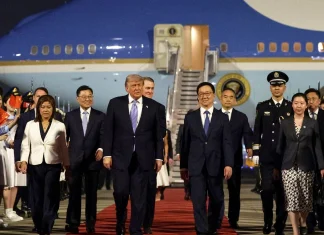
Air Force One, a Red Carpet and the Long Shadow of Two Giants The engines had hardly cooled when the cameras began to hunt for...
Lebanon says Israeli strikes on cars kill 12

Lebanon reports Israeli vehicle strikes kill 12 civilians

0
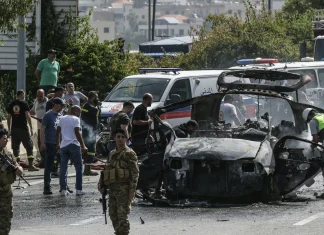
In the shadow of Washington: strikes, funerals and fragile diplomacy on Lebanon’s southern shore On a coastline where lemon trees meet the Mediterranean and cars...
'Work not over' after hantavirus evacuation - WHO chief

WHO chief: Efforts continue after the hantavirus evacuation

0
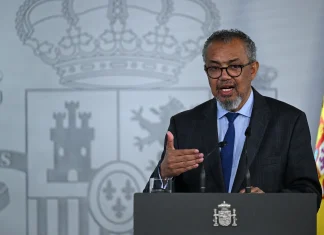
At Sea, Between Fear and Protocol: The MV Hondius and the Quiet Threat of Hantavirus The image is cinematic: a sleek expedition ship, the MV...
Starmer meets rival Streeting amid leadership revolt

Starmer holds talks with challenger Streeting amid mounting leadership revolt

0
Downing Street at Dusk: A Party in Turmoil and a Country Holding Its Breath The lamps along Downing Street threw long, sober pools of light...
Ex-Zelensky aide says corruption allegations 'unfounded'

Former Zelensky aide rejects corruption accusations as groundless

0
In the Dock and on the Frontline: Ukraine’s Two Unfinished Stories The courtroom clock clicked like a metronome over a country that has learned to...