

A Fifteen-Day Ultimatum: Washington’s Clock, Tehran’s Uncertainty
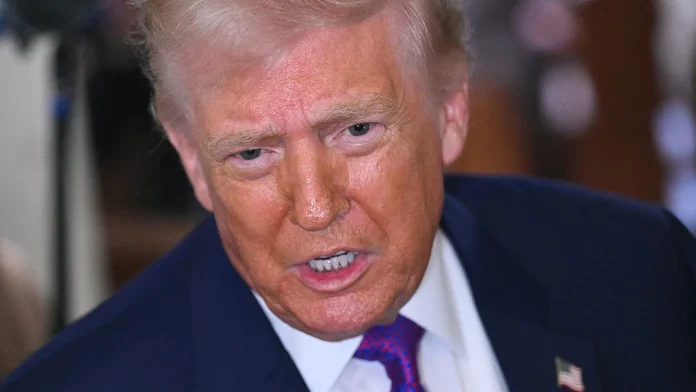
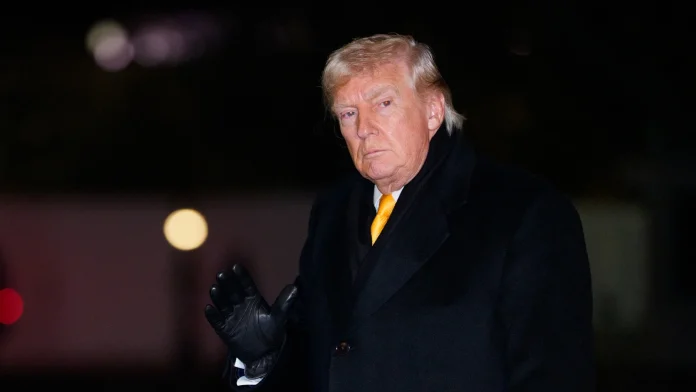
There are moments in geopolitics that feel less like news and more like weather warnings: the skies darken, alarms sound, and everyone waits to see if the storm will pass or land with force. Last week, aboard Air Force One, President Donald Trump put a stopwatch on the latest chapter of U.S.–Iran tensions, saying bluntly that Tehran had “ten, 15 days, pretty much maximum” to reach a deal—or face consequences.
“We’re either going to get a deal or it’s going to be unfortunate for them,” he told reporters, then added, with chilling brevity, that the United States “may have to take it a step further” without an agreement. “You’re going to be finding out over the next probably ten days,” he said—words that landed like pebbles in a still pond, rippling far beyond the White House lawn.
What’s at Stake: More than a Nuclear Countdown
At face value, the ultimatum centers on Iran’s nuclear program—an issue that has dominated Middle East diplomacy for decades. But this is not just a technical argument about centrifuges and enrichment levels. It’s a knot of domestic repression, regional rivalry, global non-proliferation fears, and the personal politics of leaders facing pressure at home.
Iran has rebuilt parts of its nuclear infrastructure since the 2015 agreement known as the JCPOA unraveled, enriching uranium to levels far higher than the pact allowed. International Atomic Energy Agency (IAEA) reports over recent years flagged enrichment that reached as high as 60% purity, a worrying technical leap much closer to weapons-grade material than the 3–5% used for civilian power. Experts say that such advances shorten what analysts call “breakout time” — the period it might take a country to amass fissile material for a weapon — from many months to potentially a matter of weeks.
But the clock ticking in Washington also measures something else: political will. “An ultimatum is an instrument of pressure, not a plan,” said Rana Mahmoud, a regional security analyst based in Amman. “If you set a 10–15 day deadline, you need credible diplomatic options that don’t end in fire.”
Back Channels and Geneva Coffee
Diplomacy, oddly enough, still moves in whispers and detours. The president’s own friends and envoys have been prowling the margins of formal talks: Jared Kushner and developer-turned-envoy Steve Witkoff were reported to have engaged indirectly—via intermediaries—in Geneva with senior Iranian diplomats. Officials close to the conversations suggested both sides were probing whether an off-ramp exists.
“We’re testing signals,” said a U.S. official who agreed to speak on background. “Not giving anything away, just trying to see if anyone wants to step back from the brink.”
In Tehran, the reception to any overture is colored by recent trauma. Last month, security forces brutally suppressed nationwide protests, an upheaval that human rights organizations say was met with lethal force. Estimates of casualties vary widely; some rights groups speak of hundreds killed, others of higher tolls. For many Iranians, any talk of external deals is inseparable from the memory of bodies in hospital corridors and families who remain unaccounted for.
“You can’t ignore what happened here,” said Leila, a teacher in Shiraz who declined to give her last name. “We are under siege at home—how can our leaders make deals that might trade away our future without asking us?”
Local Color: The Soundtrack of Anxiety
Walk through Tehran’s bazaars, through the electric clutter of Tehran’s neighborhoods, and you hear a mixture of cynicism, fear, and weary humor. Shopkeepers trade jokes about fuel shortages and credit lines. Younger Iranians, who went to the streets in droves last year, speak in short, intense bursts about freedom. Older men sip tea and watch satellite news from Turkey or the Gulf, switching channels for a fuller picture.
“The country is resilient,” said a taxi driver near Haft-e-Tir square. “But people are tired—tired of sanctions, tired of promises. When the leaders make deals, they must think about bread as well as prestige.”
Voices from the Region: Allies, Rivals, and the Fear of Escalation
Across the region, leaders are watching closely. Israel has long viewed Tehran’s nuclear ambitions as an existential threat. In Washington, Senator Marco Rubio—an influential voice on Republican foreign policy—was slated to travel to Israel for consultations with Prime Minister Benjamin Netanyahu, who has advocated a hard line on Iran for years.
“Our goal is deterrence, not war,” said an Israeli security advisor, speaking on condition of anonymity. “But deterrence requires clarity—if clarity is a deadline, then it must be followed by realistic pressure and international cooperation.”
Even allies worry that a unilateral timetable risks unintended consequences. The U.S. carries with it the most powerful military in the world, but geography and public opinion complicate any choice to use force. A conflict with Iran would ripple across global oil markets, threaten shipping lanes in the Gulf, and risk a cascade of proxy clashes in Lebanon, Syria, and Iraq.
Experts Weigh In: Is a Deal Possible in Two Weeks?
Two weeks is a long time for a vacation, and a blink for diplomacy. “You can’t stitch together a comprehensive, enforceable nuclear deal in 10–15 days,” said Dr. Miriam Cole, a non-proliferation scholar at an American university. “What you can do is set terms for immediate confidence-building measures—limited inspections, a freeze on certain enrichment activities, or humanitarian carve-outs. But such steps require trust, and trust is precisely what has been eroded.”
Other analysts argue that deadlines can be useful for creating political urgency. “Sometimes a hard line cuts through indecision,” said Thomas Alawi, a former diplomat. “But it’s a risky tactic. If the other side calls the bluff, the consequences can be catastrophic.”
Choices, Consequences, and the Larger Picture
So what happens next? The possibilities stretch from skilled diplomacy to unwanted conflict. The United States could extend negotiations, rally international partners, and use sanctions and incentives to shape Tehran’s behavior. Or it could move toward military options—a dangerous path where miscalculation is almost guaranteed. The international community, including the European Union, China, and Russia, will watch and react in ways that could either restrain or accelerate the cycle.
There is also a human story beneath the summitry: families who fear conscription, women who demand freedom, and a generation of Iranians who want to be part of the global economy rather than locked into a perpetual standoff. How much of that human reality will factor into decisions made in ornate rooms and secure briefing centers?
What Would You Do?
This is where you, the reader, should feel the weight. If you were an adviser in the Room, would you press for immediate military options to stop a perceived threat, or would you champion patient bargaining and international coalitions—knowing the risks both carry? Would a two-week deadline galvanize action, or accelerate disaster?
Everyone involved is answering that question in real time. The air is thick with fear and possibility. In the coming days, as leaders issue statements and envoys shuttle between capitals, we will see whether diplomacy finds a narrow lane—or whether the narrative turns toward a confrontation that could reshape a troubled region for years to come.
Quick snapshot: what to watch in the next 10–15 days
- Any agreed confidence-building measures (inspections, freeze on enrichment).
- Movement of envoys—direct or indirect—between Washington, Geneva, Tehran, and regional capitals.
- Public statements from Israel, Gulf states, and European partners indicating either support for negotiation or pressure for action.
- On-the-ground developments in Iran, particularly related to civilian unrest and human rights monitoring.
What we’re witnessing is not only a diplomatic standoff but a story about how nations measure risk, how leaders balance bravado and caution, and how the lives of ordinary people become entwined with decisions made in distant rooms. Ten, fifteen days: for some, a deadline; for others, an urgent call to choose between escalation and the patient, painstaking work of peace.


Macron urges Meloni to refrain from commenting on activist killing
When a City’s Quiet Morning Became a Mirror for Europe’s Divisions
On an ordinary morning in Lyon—where the scent of coffee drifts from narrow bouchons and students weave through the city’s stone passageways—the world tilted a little. A political demonstration outside a university turned deadly when 23-year-old Quentin Deranque was beaten so severely that he died of head injuries. The shock of that loss has rippled far beyond the Rhône, stirring old wounds and new arguments across Europe.
For anyone who knows Lyon, the contrast is striking. This is a city of silk merchants and film festivals, of hilltop views from Fourvière and riverside promenades where joggers pass under plane trees. The idea that violence of this kind could erupt there—near lecture halls and cafés where young people debate late into the night—felt like a betrayal to many who live here.
The Incident
According to investigators, Deranque, 23, was attacked by at least six people on the sidelines of a far-right demonstration at a university. Eleven people—eight men and three women—have been taken into custody and questioned. A source close to the inquiry says most of those detained are linked to far-left movements. Prosecutors have asked judges to charge seven men with intentional homicide and to keep them in custody, citing the risk of further disturbance to public order.
“We have asked for the strongest possible measures,” a prosecutor said at a press briefing, underscoring the seriousness with which the judiciary is treating the case.
Facts at a Glance
From Lyon to Rome to New Delhi: Political Reverberations
The killing landed in the middle of a political storm. Italy’s Prime Minister, Giorgia Meloni, spoke publicly—expressing shock and solidarity—prompting a sharp retort from France’s President Emmanuel Macron while he was on an official visit to India. Macron told reporters that foreign leaders should refrain from commenting on the internal affairs of other countries. The exchange, brisk and pointed, illuminated how a single tragic event can be refracted through national politics and international sensitivities.
Rome’s foreign minister weighed in too, invoking painful chapters of Italian history: a reminder, he said, that violence has its ghosts and that Europe must guard against a return to dark times. “There have been many Quentins in our history,” he wrote, alluding to the violent “Years of Lead” that haunted Italy for decades.
Back in Paris, officials emphasized that France cannot tolerate movements that embrace violence. “Nothing justifies violent action—neither on one side nor the other,” a presidential aide said, echoing a plea for calm and a measured legal response.
On the Ground in Lyon
Walk through the university quarter where the attack occurred and you’ll hear the city speaking in hushed, urgent tones. A first-year literature student, who asked not to be named, said she felt a new fragility. “We used to argue loudly about politics over cheap wine and croissants,” she told me. “Now when people gather, there’s always someone checking exits.”
A nearby café owner, whose family has run the place for three generations, wiped tears when she spoke about Quentin. “He would come sometimes to study,” she said. “Young, loud, always sure of himself. This is not the city we want to be.”
Local councilors likewise sounded worried about the climate of confrontation. “This is not an isolated incident. It’s a symptom,” one told me. “Social media sharpens everything; allegiances harden; young people get swept up in fights that have echoes from other countries.”
Voices and Reactions
Not all reactions were the same. Quentin’s family, through their lawyer, called for restraint. “The family condemns any call for violence. Any form of political violence,” their lawyer said in a public statement, urging that grief not be weaponized by political factions.
At the same time, far-right leaders saw the killing as proof of their warnings about the radical left. “This attack shows where the violent fringe ends and society begins to fracture,” a National Rally spokesperson said, framing the death as a political fault line. On the other side, grassroots activists argued that the focus must be on a fair investigation rather than immediate politicization. “We need justice, not headlines,” a left-wing organizer told me quietly, tired from days of interviews.
Why This Matters Beyond France
Think about the image of universities as spaces for debate and discovery. When campuses become flashpoints for violence, the loss is not merely individual—it’s civic. It affects how young people see politics, how communities trust institutions, and how neighbors discuss safety and belonging.
Across Europe, elections and governance are being tested by surging polarization. In France, municipal elections are approaching, and the 2027 presidential race looms large—two moments when social fractures can widen into political chasms. When parties frame incidents like this through partisan lenses, they risk amplifying tensions rather than letting institutions handle the facts and the law.
Public safety statistics show that politically motivated violence, while a small fraction of overall crime, has disproportionately large effects on political discourse, draining public trust and accelerating cycles of retribution. Experts warn that social media accelerants—echo chambers, viral outrage, and performative solidarity—can turn crimes into causes overnight.
Questions We’re Left With
How should democracies respond when the line between protest and violence blurs? Can a society hold both a full-throated defense of free speech and a steadfast refusal of brutality? And how do we stop grief from being harnessed into further conflict?
These are not merely French questions. They are European—and global—questions about how communities process trauma, how justice systems respond without being politicized, and how political leaders choose rhetoric that cools or inflames.
Looking Forward
The judicial process will move at its own pace. The investigation is ongoing. Prosecutors have asked for severe charges and continued custody for the suspects. Meanwhile, politicians will continue to spar. Citizens and families will continue to grieve. And Lyon will continue to live, to argue, to feed its students and mend its streets.
“We cannot let fear become the new normal,” a local schoolteacher told me, tying the personal to the civic. “If we do, then those who profit from division will have won.”
As you read from wherever you are—whether in a city of canals, in a village, or on another continent—ask yourself: when a tragedy happens in a place far from home, what responsibility do we have to listen without deciding too quickly? How do we stand in solidarity without hijacking someone else’s pain for our own agendas?
For Lyon, for Quentin, and for communities everywhere, the answers will matter. The danger is not only in a single violent act, but in what we, collectively, make of it.