

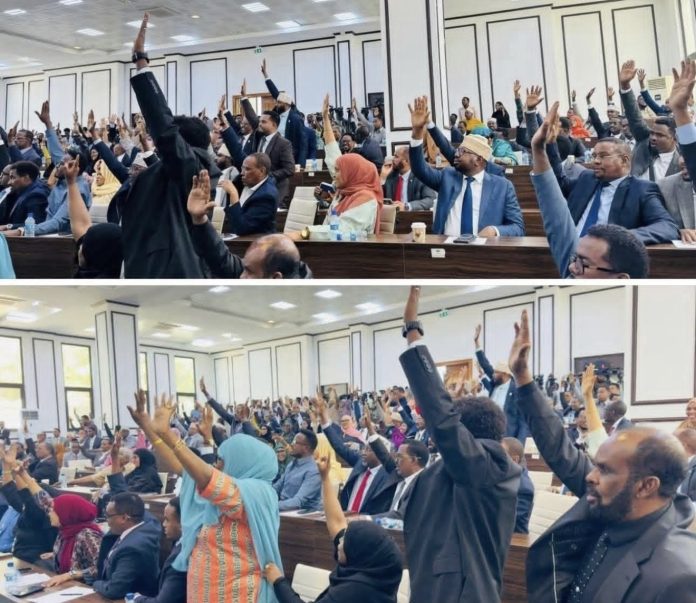
Apr 14(Jowhar) Baarlamanka Federaalka Soomaaliya ee kow iyo tobnaad ayaa maanta uu u idlaaday muddo-xileedka loo doortay ee afarta sanno, halka ay muddo bil ah u hadhay MW Xasan Shiikh, inkasta oo DFS meelmarisey Dastuur cusub oo ‘muran ka taagan yahay’ kaa oo muddo-xileedka hey’adaha dowladda ka dhigaya shan sanno.
Ukraine and Russia Resume Drone Attacks Following End of Easter Truce
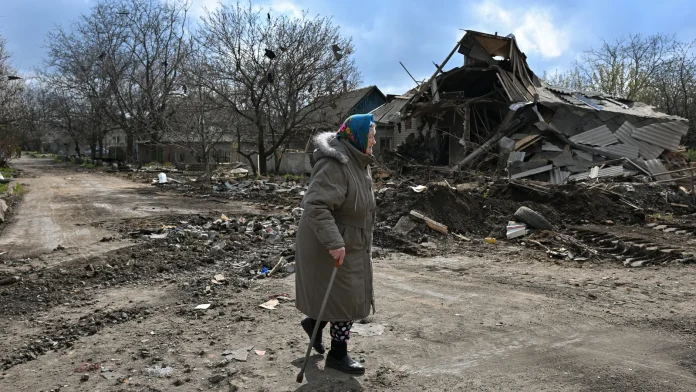
Easter’s Quiet That Wasn’t: Drones, Blessings and the Fragile Pause on Europe’s Longest Front
On a cold Easter morning in a pine-scented clearing somewhere near Kharkiv, a handful of soldiers stood in wool coats and balaclavas, holding small woven baskets of paska and decorated eggs while a priest in a cassock moved down the line with a silver bowl of holy water.
There was laughter, a few tears, and, for an hour or two, the ordinariness of a festival reclaimed amid extraordinary violence. “For a moment we were not soldiers,” said Lieutenant Colonel Vasyl Kobziak, brushing snow from a plastic wrapper where a loaf of bread lay. “We were people who wanted to feel warmth. That mattered.”
By nightfall, the fragile pause was over.
The Numbers That Shout
As the 32-hour Orthodox Easter truce expired, both Kyiv and Moscow reported renewed waves of unmanned aircraft over the battlefield. Ukraine’s air force said Russian forces launched roughly 98 drones overnight, and its defences shot down about 87. Russia countered with its own tally—claiming the destruction of 33 Ukrainian “aircraft-type” unmanned aerial vehicles.
Such statistics can read like dry columns on a stoic briefing slide. But each figure is the echo of trajectories in the sky: small, cheap, and increasingly lethal tools that have reshaped the way this war is fought.
Claims, Counterclaims, and the Fog of a Ceasefire
The ceasefire itself was a study in contradiction. Kyiv reported more than 10,000 violations during the period—mostly near-frontline skirmishes—while also noting that for the truce there had been no long-range Shahed strikes, no guided aerial bombings, and no missile strikes. Moscow, for its part, catalogued nearly 1,971 alleged breaches by Ukrainian forces, listing hundreds of artillery rounds, more than a thousand first-person-view (FPV) drone attacks and scores of dropped munitions.
“Numbers become weapons in their own right,” said Dr. Elena Markov, a conflict analyst who tracks battlefield trends. “Both sides use statistics to shape narrative—who is the aggressor, who is the respecter of sacred moments. The truth is often in the slices between those claims.”
On the Ground: Tiny Rituals, Big Risks
Across the frontline the scene was quietly defiant—baskets blessed, eggs shared, soldiers trading jokes about recipes and hometowns. In the Kursk region of Russia, the mood was scarred and anxious instead. Local officials there said a drone strike hit a petrol station in Lgov, injuring three people, including a baby.
“When you hear a child has been hit, everything changes,” said Olga Petrovna, a volunteer nurse from a nearby village who rushed to the makeshift clinic. “It is not about lines on maps anymore. It is about small lives and grocery lists.”
The human detail is important: Ukrainian soldiers spoke about the blessing of “paska” and the tradition of “pysanky” eggs, small acts that stitch continuity into a life under fire. In one foxhole, a soldier tucked a painted egg into his helmet—a talisman and a memory of home.
What This Truce Does—and Doesn’t—Reveal
Short pauses like this are not new: informal or ceremonial truces punctuate conflicts, offering breathing room for repair, religious observance, or humanitarian corridors. But repeated attempts to turn these moments into lasting calm have faltered.
Ukrainian President Volodymyr Zelensky appealed for an extension of the truce. The Kremlin’s spokesperson, Dmitry Peskov, responded that Moscow would only extend any halt to fighting if Kyiv accepted what he called Russia’s “well-known” conditions—language the Kremlin often uses to refer to territorial and political demands Kyiv rejects.
“You cannot expect a long-term pause without addressing the core questions of the war,” Peskov said in state media, reasserting Moscow’s red lines. Zelensky, for his part, insisted that Kyiv had put forward a proposal; he framed the request as an opportunity to save lives and allow repair of essential infrastructure.
The Drone Era and the New Frontlines
What’s striking about the latest flare-up is the preponderance of unmanned systems. Shaheds, FPV drones, and other loitering munitions have proliferated, offering a low-cost way to target supply lines, power stations and massed troops. Ukraine faces nightly waves; its defence apparatus has adapted, shooting many down, but defenses are not perfect.
“Drones democratize strike capability,” said Samuel Reyes, a military technology expert in Madrid. “They make it easier for weaker forces to inflict damage at scale, but they also create a new arms race—countermeasures, jamming, kinetic interceptors. The sky has become a contested domain in micro and macro ways.”
Diplomacy in the Shadow of New Wars
Attempts at negotiated settlement have stalled for months. US-brokered talks have failed to convert into peace, and the international spotlight has shifted amid fresh crises in the Middle East—drawing diplomatic bandwidth away from Ukraine. Even at the negotiating table the core issue remains unresolved: territory.
Ukraine has proposed freezing the conflict along current lines; Russia insists on recognition of larger territorial claims, notably parts of the Donetsk region. Neither side has yet bridged that canyon of mutually exclusive demands.
The Human Cost and the Wider Frame
The war, which began with Russia’s February 2022 invasion, remains Europe’s deadliest since the last century’s world wars. It has cost hundreds of thousands of lives and forced millions to flee their homes—both inside Ukraine and beyond its borders.
Russia today controls a little more than 19% of Ukrainian territory, most of it taken in the opening phases of the invasion. But territorial control has not translated into strategic calm; if anything, the fighting has calcified. Losses in manpower and material are high, and the ebb and flow of the frontlines has become a long grind.
Questions to Sit With
What does a ceasefire mean when both sides can launch hundreds of drones in a single night? How do you broker peace when the instruments of war become cheaper and more accessible by the year? And how should the international community prioritize its attention when multiple conflicts demand urgent diplomacy?
These are not merely academic queries. They touch the reality of families who wake to sirens, children who grow up counting drone silhouettes instead of birds, medics who stash blessed breads between bandages and rations.
Where We Go From Here
For the soldiers who prayed in the forest clearing, the truce was a small mercy; for civilians in besieged towns, it was a brief promise. For the diplomats at distant tables, it was one more reminder that ceasefires can be both an opening and a snare.
“We are tired of losing time,” said one teacher from a frontline town, packing chalk and a loaf of bread into a rucksack. “We want an answer. Not tomorrow, now.”
As the drones circled and the bells fell silent, the landscape of the conflict kept its uncertainty. The choices made in the next months—about diplomacy, weapon controls, and humanitarian access—will shape whether these fleeting pauses ever become more than whispered hopes.
Will the world learn to listen to the small rituals—shared bread, blessed eggs, a baby’s cry—that reveal what peace might look like? Or will the next truce be yet another headline swallowed by the next wave of strikes?
Trump-Vatican clash deepens as Pope Leo embarks on Africa trip
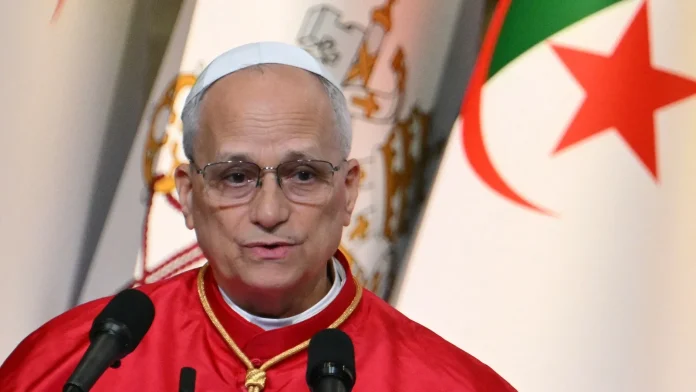
A Pope, a President, and a Continent: When Moral Authority Meets the Age of Outrage
The papal plane dips low over the Mediterranean, and below the glinting ribbon of Algiers’ coastline the scent of jasmine and diesel mingles in the air. Journalists crane their necks, cameras clicking like anxious hearts. For Pope Leo XIV—Chicago-accented, fluent in half a dozen tongues, and newly installed in the ancient office that has survived empires—the landing here is more than a travel itinerary. It is a test.
Not just of his message, or of the fragile art of interfaith engagement in a Muslim-majority country. A test, too, of whether the moral voice of the Vatican can withstand the combustible currents of modern politics: social media fury, celebrity-style presidential denunciations, and the partisan tug-of-war across the pews and the ballot box.
The public quarrel that followed him onto the tarmac
What began as a measured sermon about the sin of war metastasized overnight into front-page fodder. When the Pope criticized the bellicose rhetoric surrounding a potential strike on Iran—calling the notion of total annihilation “a delusion born of power”—he expected resistance. He probably did not expect the blistering rebuttal to land via a presidential social-media rampage: a terse dismissal of the pontiff’s credibility and a tweet-thread accusing the Holy See of being “soft” on national security and crime.
“I respect the office,” one senior Vatican aide said privately, “but we do not—and cannot—become a branch office of any administration.” That line has become a lodestar for many inside the curia: moral independence, even when it hurts.
Closer to home, the reaction has been raw and personal. “I grew up in a Chicago parish where the priest knew my family by name,” said Maria Delgado, a schoolteacher in suburban Naperville who still carries a rosary in her pocket. “When the Pope speaks like that, it lands. When the president calls him weak, it feels like an insult to my whole upbringing.” Across the United States there are roughly 50 million people who identify as Catholic—an electorate large enough to be swept up in both spiritual and political crosswinds.
Why this matters beyond the headlines
The clash is not merely between two men. It is a collision of roles: an elected president who governs by mandate and a pontiff whose power is moral rather than legal. The Pope relies on persuasion, ritual, and centuries of theological weight; a modern president relies on polls, pundits, and instant rebuttal. When these two currencies of influence collide, the exchange is noisy.
“Popes have always spoken against war,” explains Dr. Lina Hariri, a scholar of religion and international affairs. “From encyclicals to pastoral letters, the Vatican’s toolbox isn’t tanks or sanctions—it’s conscience. In a world where public opinion can be weaponized in seconds, that slow, steady moral voice is both more necessary and easier to vilify.”
The stakes extend even further. The Vatican’s message is heard in capitals from Rome to Kinshasa; its pronouncements can shape diplomatic atmospheres and nudge warring parties toward talks. And with about 1.3 billion Catholics spread across the globe, the pontiff’s words carry weight in embassies and refugee camps alike.
Algeria: A deliberate first step
It is no accident that Leo XIV chose North Africa for his first major tour. Algeria—Arabs and Berbers, a history of colonization and revolution, the winding alleys of the Casbah and the solemn Monument des Martyrs—offers a different kind of audience than Washington. Islam is the fabric of public life here. Christianity is a small, patient thread.
“We welcomed Pope Paul VI in 1969 and we remember,” said Imam Ahmed Bouzid outside the Great Mosque of Algiers, offering tea to passing reporters. “This visit speaks to the possibility of living together. We do not want sermons from each other; we want hands joined in service.”
That quiet, pragmatic tone contrasts with the noise coming from the Atlantic. In Algiers, the pontiff can rehearse a different argument: that peace is not merely a policy preference, but a moral duty anchored in daily gestures—hospitals rebuilt, neighborhoods cooled by dialogue, families not shattered by airstrikes.
Local color, global resonance
At a makeshift market near the presidential palace, a woman named Fatima sells roasted almonds and braided scarves. “We are proud when someone speaks for peace,” she says, tucking a coin into a child’s hand. “But we are suspicious of grand speeches from afar.” Her skepticism, grounded in everyday life, is a reminder that high diplomacy must translate into local relief to have meaning.
Inside the cathedral that still hosts a tiny Christian congregation, Father Karim—an Algerian who learned Latin as a child—smiles when asked about the Pope’s insistence on dialogue. “We must listen harder,” he says. “Not to change our faith but to understand how to live with those who worship differently. That is the work of saints and citizens alike.”
The wider pattern: faith in the political age
What is unfolding between the Vatican and the White House is a theatre of a broader global pattern: institutions that once carried automatic authority now must justify that authority in public. Churches, universities, and international organizations are being asked to prove their relevance amid digital echo chambers.
“We are seeing a new taxonomy of power,” says Elias Donovan, a foreign-policy analyst in Brussels. “Soft power—moral suasion, cultural influence—matters, but only if it can be communicated persuasively. The Pope’s rhetorical skill and his American background give him tools. But so does the president’s ability to mobilize outrage. The collision is inevitable.”
And there are real consequences. Young Catholics and Muslims watching these headlines judge not only the words but the character behind them. They decide whom to trust with their future, their taxes, their conscription papers. They decide whether institutions are guardians of justice or relics of a bygone era.
Questions for the reader
So what should we, as global citizens, expect from our leaders when war drums beat? Do we prefer a measured, centuries-old moral voice or the blunt, rapid responses of contemporary politics? Can both exist without one undermining the other?
These are not abstract musings. They are the questions mothers ask when a son does not come home, the queries refugees whisper as they cross borders, the calculations voters make when they choose who will hold the levers of power.
What comes next?
Pope Leo XIV will walk the streets of Algiers, shake hands, pray in mosques and cathedrals, and deliver a message he has been refining for months: that war is a failure of imagination and compassion. President Trump will tweet, rally, and let domestic politics do its work. Between them, millions of people will parse every sentence, seeking either comfort or fodder.
But for every speech amplified by the media, there are smaller, quieter acts that can reshape destinies: a joint charity clinic in a dusty neighborhood, a mediated conversation between rival community leaders, a refugee child given a single warm meal. If the Vatican and the White House disagree, perhaps the people in the middle can remind both sides what the argument should ultimately be about—keeping human beings safe, whole, and capable of thriving.
When the plane lifts off again, heading to the next stop, what will remain is not a headline but the memory of who spoke, how they spoke, and whether their words moved anyone to act. Will the Pope’s appeal to conscience ripple into policy? Will the president’s rebuke rally his base? Or will the space between them become, for a moment, a room where common humanity can take its first, tentative steps back toward each other?
Tusk calls Hungary vote a major setback for authoritarian rule
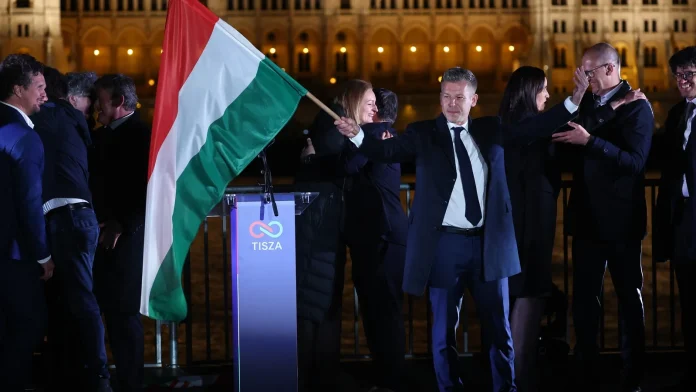
Budapest at Dawn: When the Danube Became a River of Candles
There was a smell of coffee and chimney cake in the air, and the river looked as if someone had strewn tiny lamps across its surface. Tens of thousands had gathered along the Pest embankment, faces still flushed from the night, clutching wax candles and polishing off the last notes of Frank Sinatra’s “My Way” as if that song could somehow stitch the moment into memory.
At the center of the crowd stood Peter Magyar, the leader of the centre-right Tisza party, who had just ended Viktor Orbán’s 16-year tenure. Supporters chanted, children waved hand-drawn flags, and somewhere a tram bell tolled, as it always does in Budapest—reminding everyone that everyday life continues even when history seems to pivot.
“We came here because we wanted to be seen,” said Eszter Kovács, a secondary-school teacher who had waited until midnight to celebrate. “After so long, people wanted their voices back. That’s all—our voices.”
What the Vote Changed
For much of the past decade and a half, Hungary was synonymous in many corners of Europe with a certain style of politics—centralized power, combative rhetoric with Brussels, and policies that critics said eroded democratic norms. Viktor Orbán first governed from 1998 to 2002 and then again from 2010 until now. His Fidesz party dominated the political landscape, reshaping institutions and steering Hungary’s foreign policy toward a more confrontational posture with the European Union and, at times, a warmer tone toward Moscow.
That chapter appears to have closed. Peter Magyar and his Tisza party campaigned on a platform of re-engagement with the European mainstream, promising to repair frayed ties with Brussels and to restore checks and balances at home. The message resonated: turnout was described by election authorities as the highest in recent memory, and the scale of the victory surprised even seasoned analysts.
“This is not just a change of faces,” commented Anna Szabó, a political scientist at Central European University. “It’s an attempt to recalibrate Hungary’s place in Europe. The electorate has signaled that it wants to remain a full participant in the European project—both economically and democratically.”
By the numbers
Hungary is a country of roughly 9.7 million people and has been a member of the European Union since 2004. Viktor Orbán’s long stewardship—particularly since 2010—brought deep changes to Hungary’s political architecture. Now, with Tisza at the helm, Brussels—where disputes over rule of law and conditional EU funds have simmered for years—will be watching closely.
Voices from the Streets and TV Screens
Not everyone celebrated. Outside Fidesz headquarters, small groups gathered, watching their former leader on television with tears and clenched hands. “This is painful,” one elderly man said, wrapping his coat tighter against the chill. “We felt safe. Now it’s uncertain.”
Meanwhile, in cafes and bistros in the Jewish Quarter, young professionals debated the implications for business and travel. “If the new government can unlock delayed EU funds and restore investor confidence, it’s good for everyone,” said Márk, a software engineer who preferred to use only his first name. “But they must act fast. People want bread-and-butter changes.”
Europe Reacts: A Moment of Relief—or A Warning?
Leaders across the continent responded within hours. Poland’s prime minister hailed the result as proof that “Europe is not inevitably drifting toward authoritarianism,” while officials from Slovakia, the Czech Republic, Ireland and Germany offered cautious congratulations and vowed to work with the incoming Hungarian government. For many in the EU capital, the vote is a signal that pendulums can swing back.
“This sends a ripple through the Union,” said a senior European diplomat in Brussels. “It reminds policymakers that democratic backsliding is not unstoppable—if societies mobilize and demand change.”
Yet the win also poses thorny questions. Were voters driven more by exhaustion than enthusiasm? Can Tisza keep its coalition intact long enough to deliver reforms? Will Orbán’s political machine retreat gracefully into opposition, or will it regroup and transform into a potent counterweight?
Why This Election Mattered
There are practical stakes as well as symbolic ones. Hungary has been at the center of disputes over EU conditionality—mechanisms tying some funding to respect for democratic norms. For years, Brussels and Budapest were at loggerheads, slowing the flow of some payments and complicating cohesion projects. Analysts say a renewed alignment with EU partners could free up capital for infrastructure and social programs, and thaw strained diplomatic relations.
“If the new government can demonstrate concrete rule-of-law reforms, Hungary’s frozen EU funds could be unfrozen, which would be a significant economic boost,” said László Horváth, an economist who advises municipal governments. “But expectations should be measured. European bureaucracies are cautious by design.”
Local color and everyday hopes
On the embankment, among the candles and cheers, the conversation drifted to matters both grand and intimate. “I want my parents to feel safe,” said Dóra, a nurse and new mother, as she wiped candle wax from her palm. “I want my son to grow up in a Hungary that’s open and part of Europe.” Nearby, a baker handed out free pogácsa (savory scones) to celebrate. “It’s tradition to share bread in good times,” he grinned.
Looking Ahead: Repair, Reckoning, or Repeat?
Change in politics is messy and incremental. The Tisza government will face urgent tasks: rebuilding trust with the EU, stabilizing investor sentiment, reshaping domestic institutions, and—perhaps most difficult—bridging a deep societal divide. Orbán’s supporters remain a sizable constituency, and their grievances and fears cannot be dismissed.
“You can’t just flip a switch and undo 16 years of political culture,” Szabó warned. “There will be litigation, constitutional tussles, and a long battle over public institutions that were reshaped under Fidesz.”
Still, there is an undeniable feeling of possibility in Budapest’s spring air. Markets may respond within weeks, diplomats within months, but the most important shifts will be measured in everyday life: schools, courts, hospitals, the commons where citizens encounter the state.
Questions for the Reader
What do you expect from a government that promises to “restore ties” after years of confrontation? How should societies balance the urgency of reform with the need for stability? And perhaps most importantly: in an age of polarization, how do nations heal when politics has become identity?
Hungary’s story is now part of a broader European conversation about democracy in the 21st century. Whether this election becomes a turning point or a temporary pause in a longer contest depends on the choices of politicians—and the continued engagement of citizens like Eszter, Márk, Dóra, and the old man by the TV screen.
Final Note
By noon the embankment had mostly emptied. Candles had melted into the cobbles, and the city began to hum with trams and delivery vans. Budapest, like all cities that have been witness to big political moments, settled into a cautious, watchful normal. The question now is whether that normal will bring reconciliation—and whether Europe, watching closely, will find in Hungary’s vote a reason to hope or a reminder of the hard work that democracy demands.
Agaasimhii hay’adda Socdaalka iyo Jinsiyadda Mustaf Dhuxulow oo xilkii laga qaaday
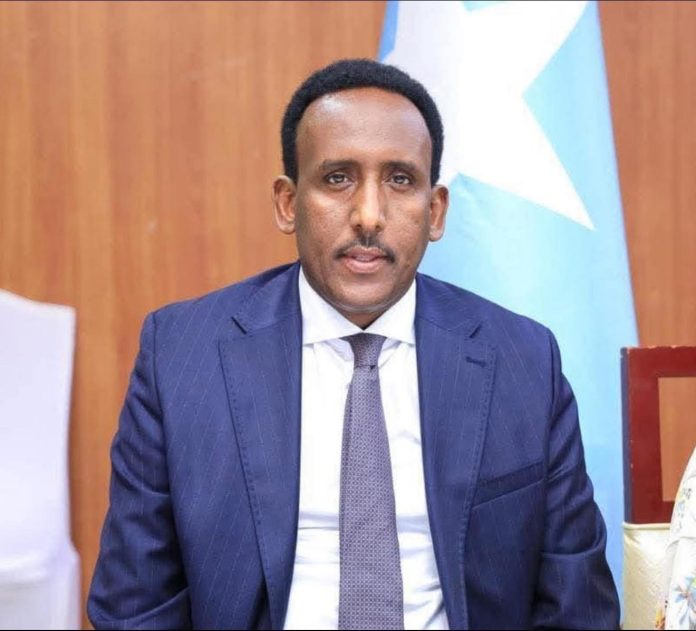
Apr 13(Jowhar) Golaha Wasiiradda Xukuumadda Federaalka Soomaaliya ayaa cod aqlabiyad ah ku ansixiyey magacaabista Agaasimaha Guud ee Hay’adda Socdaalka iyo Jinsiyadda Soomaaliya, xilkaas oo loo magacaabay Mudane Xuseen Qaasim Yuusuf.
Inquiry concludes Southport attack could have been prevented, cites failings
When Warnings Were Whispered and Went Unheard: A Community Trying to Make Sense
On a summer morning in Southport, the smell of sea salt and fried dough can still hang in the air. Families stroll the promenade; children tumble on the playground. It is a place that sells itself as safe, small-town comfortable, a coastal town with an old-fashioned pier and a modern sting of coffee shops. It was, until a routine Saturday workshop turned into the kind of tragedy that bends a town’s spine.
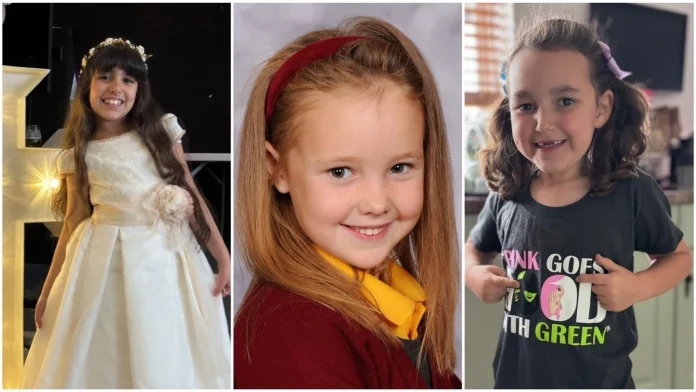
On 29 July 2024, three little girls — nine-year-old Alice da Silva Aguiar, six-year-old Bebe King and seven-year-old Elsie Dot Stancombe — were killed during a Taylor Swift–themed dance class at The Hart Space, a community arts venue. The attacker, then 17-year-old Axel Rudakubana, also wounded several other children and adults. He has since been sentenced to at least 52 years in prison.
That bare chronology, however, misses the terrible arc leading up to that day. A public inquiry has now concluded what many in the town had felt in their bones: this was not a spontaneous act sprung from nowhere. It was the end point of a series of missed signals, muddled responsibilities and failures by individuals and institutions to act decisively.
“He’d shown the danger before”
Adrian Fulford, who chaired the Southport inquiry, described an unrelenting and avoidable pattern. He points to an episode in 2019, when a teenage Rudakubana attacked a pupil at his former school in Formby with a kitchen knife and a hockey stick. That incident led to a referral order — a community sentence — but according to the inquiry, it should have been the watershed moment for everyone involved.
“When someone lights a flare this bright, you don’t put it in a drawer,” said Dr. Nina Patel, a forensic psychologist who reviewed the inquiry documents. “There were concrete indicators of escalating risk: weapons, violent online obsessions and a history of troubling behaviour. These should have triggered a sustained, joined-up response.”
But they didn’t. Between 2019 and 2024, Rudakubana was referred to the anti-terror Prevent programme on three occasions. Each referral was closed. Agencies passed responsibility back and forth in what the report likens to a “merry-go-round” of assessments and hand-offs — until it was too late.
Parents, professionals and the gap between them
The inquiry was unambiguous about the role of parenting. The teenager’s parents, Alphonse Rudakubana and Laetitia Muzayire, who moved to the UK from Rwanda, were described as having created “significant obstructions” to professional engagement, failing to set boundaries and not reporting escalating risk. In a remote testimony, the mother said, “There are many things that Alphonse and I wish we had done differently… For our failure, we are profoundly sorry.”
Local residents expressed a mixture of sorrow and frustration. “We all try to help our kids, but it’s never easy,” said Denise Carter, who runs a nursery near The Hart Space. “Sometimes families need support. Sometimes they need pressure. It felt like neither happened properly here.”
Yet responsibility cannot be placed on families alone. The inquiry found a “fundamental failure” at an organisational level. Schools, social services, mental health teams and counter-extremism programmes often operated in silos. When one agency closed a file, the others assumed the issue was being managed. The result was a boy whose dangerous trajectory went uninterrupted.
Online poison, offline consequences
Perhaps the most chilling detail to emerge from the inquiry was the extent of Rudakubana’s online life. Tablets seized after the attack contained downloads ranging from an Al-Qaeda training manual and histories of Nazi Germany to documents on conflicts in Rwanda, Sri Lanka, Somalia and South Sudan. Police also found purchases of machetes and ingredients for ricin — a lethal poison.
“We are increasingly seeing radicalisation and violent fantasy seeded and nurtured online,” said Professor Michael Grant, an expert in digital extremism. “Young people who are isolated or distressed can slide into echo chambers that normalise violence. The platforms are global, borderless. Our responses remain painfully local and reactive.”
The inquiry recommended that phase two examine whether authorities should have the ability to monitor or restrict a child’s internet access when that child poses a clear risk to others — a fraught suggestion that raises civil liberties questions even as it responds to a stark reality.
At the crossroads of autism, vulnerability and accountability
Rudakubana had a diagnosis of autism spectrum disorder. The inquiry found that, rather than being a lens that sharpened understanding and response, the diagnosis was sometimes used as an excuse to downplay his behaviour. Agencies “repeatedly tended” to attribute his actions to autism, thereby reducing the perceived need for intervention.
“Autism can be accompanied by difficulties with impulse control, understanding social cues, or sensory overload,” said Dr. Sara Mbatha, a child psychiatrist. “But it is wrong and dangerous to allow such a diagnosis to become a blank cheque. We need nuanced assessments that consider neurodiversity while still protecting the public.”
What the report proposes — and what it asks us to reckon with
The inquiry’s two-volume report — 763 pages and 67 recommendations — points to reform. One central idea is creating a single agency or structure to oversee children deemed to be at high risk of serious harm. The goal: no more referrals that evaporate into limbo.
Other recommendations include improved multi-agency communication, earlier and sustained interventions, better training on online radicalisation and a push for families to be actively engaged rather than sidelined. They also press for a national conversation on how to balance children’s rights with public safety when internet access and toxicity are involved.
- Recommendation highlights: establish a single oversight agency for high-risk children
- Strengthen monitoring of online activity for those assessed as high-risk
- Improve cross-agency accountability and information sharing
These are practical steps. But they are also moral questions. When should society override a parent’s wishes? When should privacy give way to protection? Who decides what level of intervention is justified?
Beyond Southport: a mirror for broader trends
Southport’s pain is local, but the reflections are national and global. England and Wales recorded tens of thousands of offences involving knives and sharp instruments in recent years, underscoring a wider knife crime problem. Meanwhile, experts warn that youth mental health pressures, the ease of access to violent content online and fragmented public services create a combustible mix.
“This wasn’t just one boy’s story,” said community leader Jamal Roberts. “It’s the story of when systems let the most vulnerable float between them. We have to stitch those systems together — not for reports, not for headlines, but for the kids in our communities.”
What can readers do — and what should we ask of our leaders?
As you close this piece, ask yourself: how would we act if the warnings were about our child, our neighbour, our school? What structures would we demand? Whose job is it to keep children safe when families falter and agencies fumble?
There are no easy answers. But the inquiry’s stark conclusion — that lives might have been saved with different choices — is a clarion call. It asks for better systems, clearer lines of responsibility, and a willingness to face uncomfortable trade-offs between liberty and safety. It asks, too, for a kinder, more resourceful society that supports struggling families before they hit crisis.
In Southport, there will be memorials and small acts of remembrance. There will also be a pressing test: will the town, and the institutions that failed it, turn grief into genuine change? Or will life return to the promenade’s gentle rhythms while the systemic failures slip back into the background, waiting to be discovered by the next tragedy?
We owe the names of Alice, Bebe and Elsie more than sorrow. We owe them a reckoning — and a better future for the children still here to dance at community halls and dream under a coastal sky.
Maraykanka oo kordhiyay xaaladda degdegga ah ee Soomaaliya
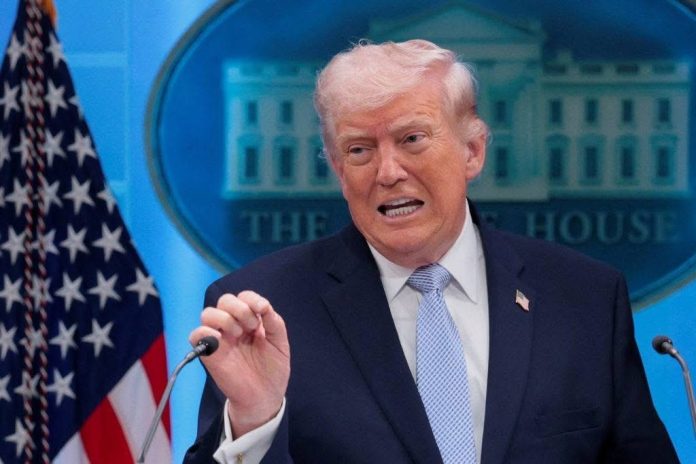
Apr 13(Jowhar)Dowladda Maraykanka ayaa ku dhawaaqday inay hal sano oo horleh ku kordhisay xaaladda degdegga ah ee Soomaaliya, taas oo markii horeba soo socotay tan iyo sannadkii 2010-kii.
How Could a Successor to Orban Unlock Hungary’s EU Funds?
Budapest at Dawn: What Viktor Orbán’s Loss Means for Europe—and for Hungary
The square outside the parliament in Budapest smelled like chimney smoke, coffee and something electric: a civic relief that felt almost audible. Flags flecked the morning light—red, white and green—and people who had learned to speak in clipped, careful sentences about politics were laughing aloud, hugging strangers as if they’d been carrying a weight for a decade and suddenly put it down.
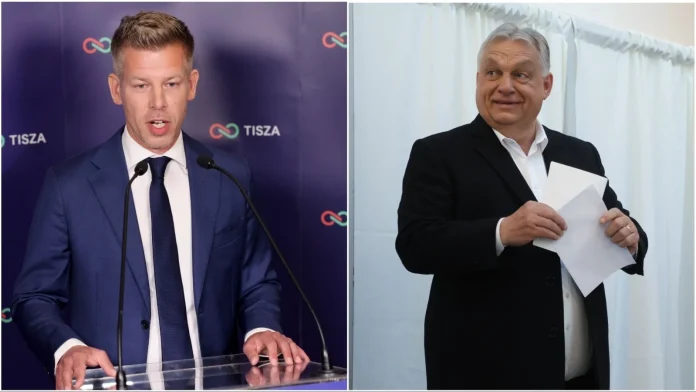
Viktor Orbán’s defeat in the recent parliamentary elections landed like a thunderclap across Europe. For many the mood was less triumphalist than deeply, quietly hopeful—an exhale after years of standoffs, vetoes and bruising rhetoric. Orbán, who shaped Hungary’s political life for more than a decade, leaves behind a country that still bears the imprint of his nationalism, but also a European Union relieved to have one of its most stubborn dissenters walk off the stage.
“It’s not just about one man,” said Anna Kovács, a high-school teacher who voted for change. “It’s about whether the country will choose to join the conversation again. To me, that feels like coming home.”
Five dossiers that Brussels will be watching
European capitals are already making lists. The machinery of the EU will not reset overnight, but Hungary’s new premier, Peter Magyar—a conservative who rose from inside the old guard but campaigned as a reformer—has the chance to peel back several blockages that have stalled EU policy. Here are five dossiers that could move quickly, or not at all, depending on how Budapest chooses to play its cards.
- €90 billion loan to Ukraine
- Sanctions on Russia
- Ukraine’s EU accession process
- Frozen EU funds to Hungary
- The tone at the EU summit table
1. The €90 billion lifeline for Ukraine
Nothing was more emblematic of the last government’s brinkmanship than the decision to hold up a €90 billion EU loan for Ukraine. The veto came after repeated delays and a diplomatic row over a damaged pipeline that had become tangled with nationalist rhetoric. For Kyiv, the money is not an abstract number—it is fuel, salaries, and a buffer for an economy at war.
“We were told this would be a simple procedural step, and then it wasn’t,” a Brussels diplomat said, asking not to be named. “Now we have an opportunity to fix what should never have been fixed in the first place.”
Magyar is not a zealot for immediate full-throttle support of Kyiv—his campaign included cautious language—but he has an opening to signal to Brussels that Hungary will stop using financial dossiers as bargaining chips. If he moves to unblock the loan, he could win goodwill fast. But there’s a second actor in this dance: President Volodymyr Zelensky. Any thaw will require tact around the pipeline dispute and, perhaps, a softening of rhetoric on both sides.
2. Sanctions on Moscow: thaw, stall, or swerve?
Orbán’s Hungary repeatedly delayed EU sanctions against Russia, cultivating relationships in Moscow at a time when many EU capitals hardened their stance. That put Budapest in a lonely spotlight, often prompting whispers that the country was acting as a “Trojan horse” inside summits.
“You can see how these personal ties complicate collective action,” said Márton Székely, who runs a small import business in Debrecen. “But what I want is stability. Businesses want predictability, not geopolitics.”
If Magyar signals a pivot—backing a fresh sanctions package against Moscow—that would leave Slovakia’s Robert Fico more exposed as one of the few EU leaders still flirting with a softer stance toward Russia. Conversely, if Magyar continues to hedge, the EU’s unity on sanctions will remain brittle.
3. Ukraine’s EU membership bid: clusters, referendums and political theater
Horizon-dreaming about Ukraine’s EU membership has been one of the more fraught elements of post-2022 European diplomacy. Orbán vetoed progress on negotiating “clusters” that Brussels says Kyiv was ready to open. Magyar has promised a referendum on Ukraine’s accession—an open invitation to more debate back home.
“Hungary’s full-throated opposition kept other reluctant countries hidden in the shadows,” said an EU official in Brussels. “Now those voices will have to reveal themselves.”
Expect a slow, procedural dance: opening clusters, legal reviews, and political bargaining. Even if Magyar lifts Budapest’s formal blocks, accession remains a long game—years of economic, judicial and administrative alignment. But politically, moving even a little could change the tone of EU-Ukraine relations—and the signal that Europe is, however haltingly, still capable of enlargement.
4. Frozen funds and economic pressure
Here is where Magyar could score tangible, domestic wins. The EU has withheld roughly €18 billion earmarked for Budapest over concerns about democratic backsliding, rule of law issues and controversies over LGBTQ rights. Another roughly €10 billion related to Covid recovery hangs in the balance, with a deadline for reforms approaching in August.
“Imagine walking into a meeting and coming out with €10 billion,” one EU diplomat shrugged. “You don’t need fireworks to win hearts when you can bring home the money.”
For a country of about 9.6 million people, those funds matter—a lot. They pay for highways, hospitals, school refurbishments. Magyar can show voters that mending ties with Brussels produces concrete benefits, not just diplomatic applause.
5. The summit table: gestures that rebuild trust
Beyond money and missiles lies something softer but no less important: tone. Orbán’s summit-style grandstanding eroded trust among EU leaders. He was loud, theatrical and unpredictable—perfect for domestic politics but corrosive for coalition-building.
“I think everyone will welcome Magyar with renewed enthusiasm,” an EU official told me between meetings. “But don’t mistake a smile for submission.”
Magyar has made it clear he won’t be a rubber stamp for Brussels. Expect robust debate—and that’s healthy. EU politics need friction. What they do not need is a member state that treats deliberation as a bulldozer. If Magyar can keep his independence without weaponizing vetoes, the bloc will be stronger for it.
What this moment tells us about Europe
Orbán’s loss is not a final chapter; it’s a turning of the page in an ongoing book. It prompts larger questions: Can the EU reconcile internal differences quickly enough when the continent is facing an active war on its borders? Will eastern and western members find new language to bridge historic mistrust? And at a human level—how does a society emerge from years of polarizing leadership and rebuild civic trust?
“Politics is the art of returning to the table,” said Ildikó Horváth, a civic activist who has organized community dialogues in Budapest for years. “The first weeks are a test: will we choose revenge or repair?”
For readers watching from afar: consider how fragile political compacts can be, and how important small shifts are. A veto lifted here, a tranche of funds released there—these are not just bureaucratic wins. They are pieces of a puzzle that helps democracies function, markets breathe, and neighbors feel less at war.
So what should we watch next? Will Budapest choose compromise and see the money flow back, or will old habits reassert themselves? Will Magyar find a way to speak both to wary Hungarians and to patient Europeans? And perhaps most pressingly—can a Europe shaped by larger-than-life personalities find its footing in the quieter work of rebuilding institutions?
There are no easy answers. But in a Budapest café at dawn, as people traded stories about ballot booths and buses and late-night TV panels, one sentiment stood out: ordinary life—schools, shops, pensions—keeps going, no matter the rhetoric. Politics may change the headlines. But it is the slow, steady work of governance that changes lives.
“We want to be part of Europe again,” Anna Kovács said, stirring her coffee. “Not because Brussels is perfect, but because the rest of Europe has things we need—standards, money, friends. That’s not shameful. It’s smart.”
Viktor Orbán Admits Loss After Hungary’s Election Upset
A Morning of Long Lines and Lofty Hopes: Hungary’s Turning Point
Budapest woke to a sky the color of diluted paprika—clear, bright, and carrying the first heat of spring. Tram bells clattered. Café waiters carried steaming cups of espresso past polling stations where, by mid-afternoon, the lines still stretched around the block. For sixteen years Viktor Orbán’s silhouette had loomed over Hungary; on this day, the country felt like it was holding its breath.
By the time results began to arrive, the moment crystallized: Peter Magyar, the fresh-faced conservative who had once been inside the halls of government and then stepped away, stood poised to unseat the country’s most durable post-communist leader. With roughly half the precincts counted, Magyar’s Tisza party led the field at about 52.49% while Fidesz trailed near 38.83% — figures that pollsters said could translate into roughly 132–135 seats in Hungary’s 199-member National Assembly.
Concession, Congratulations, and a Short Phone Call
“The election results, though not yet final, are clear and understandable; for us, they are painful but unambiguous,” Viktor Orbán said in a brief televised address, acknowledging defeat after 16 years in office. “We have not been entrusted with the responsibility and opportunity to govern. I congratulated the winning party.”
Orbán’s concession came with an immediate, almost ceremonial follow-up: a phone call. Peter Magyar posted that Orbán had rung to offer his congratulations — a spare, almost old-fashioned ritual in a campaign that had sometimes felt very modern and very raw.
The Numbers That Mattered
Turnout was itself a story: record-breaking enthusiasm. At 3pm local time, 74.23% of eligible voters had cast ballots — a substantial leap from 62.92% at the same hour in 2022. Polling stations from leafy Buda to the mosaicked flatlands of the Great Plain recorded long queues, and television cameras captured faces that ranged from resolute to exhausted.
Political scientists watching the tally of precincts cautioned that early leads are not the same as final, certified victories. Still, two well-regarded pollsters — Median and 21 Research Centre — projected that if the momentum held, Tisza could win a solid working majority, possibly even the margin needed to govern with comfort if not the two-thirds supermajority required for constitutional overhaul.
What This Could Mean at Home and in Europe
The potential political ramifications were vast and immediate.
- Inside the European Union, questions about Hungary’s resistance to collective decisions — notably its recent blocking of a proposed €90 billion EU loan to Ukraine — could fade. European Commission President Ursula von der Leyen was quick to celebrate: “Hungary has chosen Europe,” she wrote, adding in Hungarian that “a country reclaims its European path.”
- Brussels could also move to release EU funds that were previously suspended amid concerns about the rule of law in Hungary — a development that would have major budgetary and political consequences for Budapest.
- On the global stage, Hungary’s pivot away from Orbán’s eurosceptic, “illiberal” model would deprive Moscow of a staunch Western interlocutor and might reshape alliances among right-wing movements across Europe and beyond.
Voices From the Polling Places
Walking through neighborhoods, you heard a chorus of reasons for voting that were refreshingly ordinary: inflation, job security, courts, schools, and the weariness of a nation tired of high-stakes politics.
“We need an improvement in public mood,” said Mihály Bacsi, 27, a software tester who had voted for Tisza. “There is too much tension in many areas and the current government only fuels these sentiments.”
Not everyone in line wanted change. “I want the stability we’ve had,” said Zsuzsa Varga, a retired nurse in her sixties. “I am frightened by the war next door. I don’t want anything to rock the boat.”
At a kiosk near the Danube, a small-business owner named László rubbed his knuckles and offered a different calculus: “Three years of little growth and prices going up — that’s what broke it for many of my customers. We voted hoping for better management of the economy.”
Experts Take the Measure
“This is not just a changing of faces,” said Dr. Éva Kovács, who teaches comparative politics at a Budapest university. “It is an expression of fatigue with a political model that concentrated power and blurred public and private interests. But the real test is whether the incoming administration can translate a mandate into institutional reform without polarizing the country further.”
Outside Hungary, reactions were swift. Ireland’s taoiseach, Micheál Martin, rang to congratulate the prime minister‑elect and praised the robust turnout. “I look forward to working with Prime Minister‑elect Magyar to strengthen bilateral relations between Ireland and Hungary,” he said, invoking shared EU values.
The Road Ahead: Reform, Restraint, or Reinvention?
Tisza’s platform promises “system change”: anti-corruption measures, revitalizing the independence of the judiciary, and repairing relations with Brussels. Yet the party faces a narrowed margin for sweeping changes; many of Orbán’s structural legacies are embedded in laws, media ownership, and institutional habits that will not be undone overnight.
Will Magyar pursue rapid de‑consolidation of power, or will he choose a steadier, less dramatic path that prioritizes economic recovery and EU re‑engagement? The difference matters not only to Hungarians but to the neighborhood of nations watching for signs of a renewed European front in support of Ukraine and a resurgent liberal order.
For those thinking about the larger arc of European politics, Hungary’s vote raises urgent questions: Is the age of durable populist incumbency waning? Can Europe reconcile sovereignty concerns with shared democratic norms? And perhaps most poignantly: how do nations heal after long periods of polarized governance?
Small Moments, Big Meanings
As the evening fell and lights came on in the river‑front apartments, a shopkeeper swept the pavement and shook his head. “Whatever happens, we hope the next government makes life more affordable,” he said. “You don’t win a country by fighting all the time. You keep it by making people feel safe and hopeful.”
In the end, this election felt like something intimate and grand at once: a collective exhale, a vote cast not just for policies but for a future. If these first results hold, Hungary has chosen a new path — or at least, chosen to consider one. The next chapters will be written in committee rooms, in the courts, and on the budgets that touch people’s daily lives. The rest of Europe will be watching.
What do you think this shift means for the broader fight over democracy in the 21st century? For a continent balancing security, prosperity, and values, Hungary’s choice is a question as much as a statement — and it will reverberate far beyond the banks of the Danube.
Iran oo kordhisay wax-soo-saarka hubka casriga ah
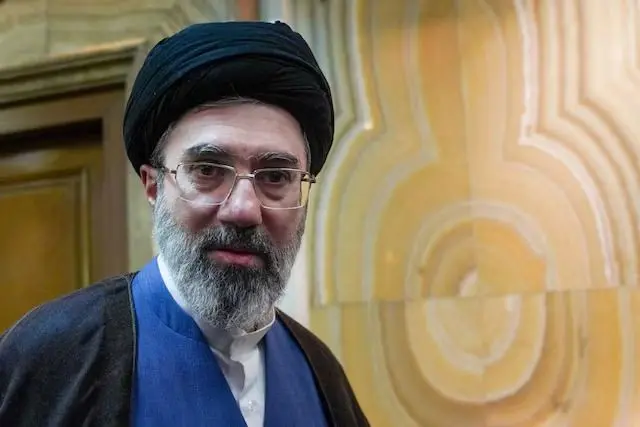
Apr 13(Jowhar)Iran ayaa ku dhawaaqday in ay si weyn u kordhisay wax-soo-saarka gantaalaha balaastigga ah iyo diyaaradaha aan duuliyaha lahayn (drones) ee is-qarxiya, tan iyo markii ay bilaabatay xabbad-joojinta dhowaan la gaaray.
Live updates: Trump claims Iran war agreement is “fully signed”
As the Middle East watches for any sign of a breakthrough, Donald Trump has declared that an Iran war deal is “all signed,” casting...
Eight Killed After B-52 Bomber Crashes in California
A routine test flight ended in catastrophe at Edwards Air Force Base in California when a US B-52 bomber crashed and erupted into a...
Starmer: UK to provide enriched uranium supplies to Ukraine
Britain is sharpening its support for Ukraine on two fronts — energy security and economic pressure on Moscow — with Prime Minister Keir Starmer...
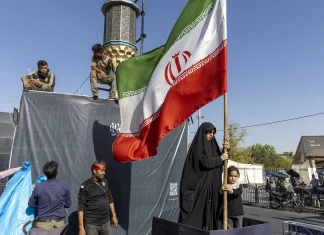
Iran to Begin Permanent Peace Talks With the US on Friday
A fragile truce in the Middle East is set to be tested almost immediately, with Iran and the United States preparing to open a...
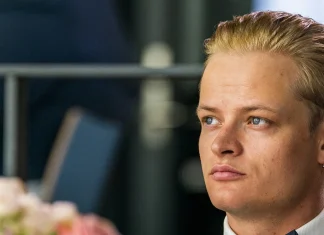
Norway Crown Princess’s Son Convicted in Rape Case, Court Finds
Norway’s royal family has been thrust into an extraordinary legal reckoning after Crown Prince Haakon’s stepson, Marius Borg Høiby, was convicted of rape and...