Under Bamenda’s Sky: A Pope’s Rebuke That Echoed Beyond the Pulpit
The airport runway in Bamenda today felt less like an arrival zone and more like a crossroads of history: prayer flags rubbing shoulders with dust, cell phones lifted like votive candles, and the steady hum of a city that has learned to hold its breath between gunshots.
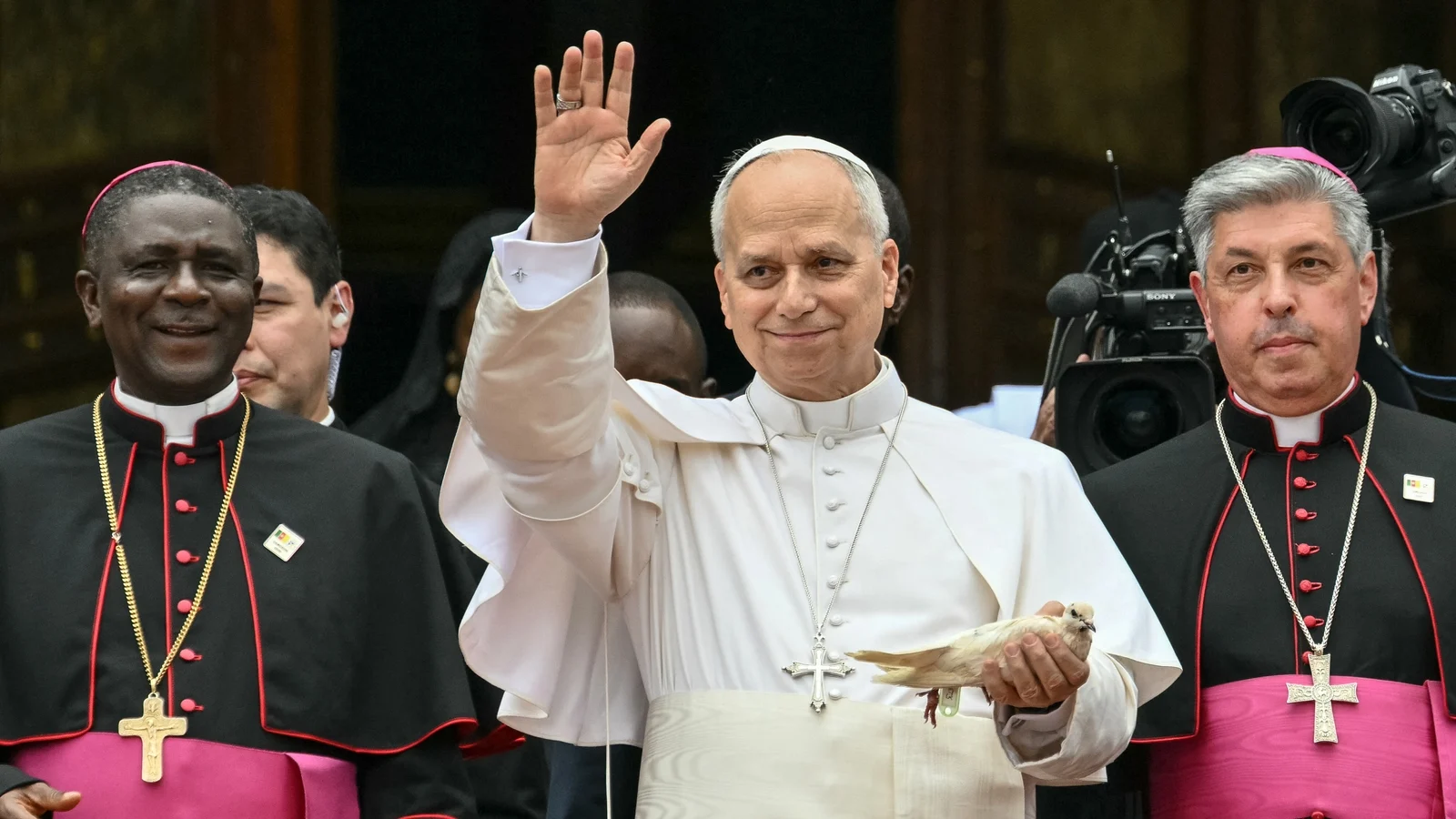
Pope Leo, a figure who has kept a low public profile for much of his brief papacy, stepped from the plane and into an atmosphere charged with expectation. He did not come with platitudes. Instead, he came with words that sounded more like an indictment than a benediction—aimed not only at local actors in Cameroon’s long-simmering anglophone crisis but at leaders everywhere who prioritize bombs over bread.
“The masters of war act as if destruction is effortless,” he told a crowd of roughly 20,000 at the Bamenda airport Mass. “They spend fortunes on instruments of death, and then feign surprise when hospitals, schools and lives cannot be rebuilt.”
His language was sharp. His message, raw: a plea that the resources drained by conflict should be redirected to healing and restoration, to education and to the slow, stubborn alchemy of rebuilding trust.
A Clash of Voices: From Bamenda to a U.S. Social Feed
The visit took place against an oddly American backdrop. Just days earlier, and again during the pontiff’s African tour, former U.S. President Donald Trump had turned to his social media megaphone to call the pope “weak” on crime and foreign policy, a rhetorical shove that landed awkwardly in a region where more than one in five of the world’s Catholics live—roughly 280 million people on a continent reshaping the future of global Christianity.
In Bamenda, the pope declined to retaliate directly. But his sermons were unmistakable rejoinders to anyone who wraps geopolitics in scripture. “Woe to those who manipulate religion and the very name of God for their own military, economic and political gain,” he said, voice ringing over a sea of faces. “Dragging the sacred into darkness must be denounced by every honest conscience.”
Archbishop Sarah Mullally of Canterbury, whose Anglican flock numbers some 85 million worldwide, issued a warm public nod of solidarity: “The pope’s call for a kingdom of peace is courageous and necessary. Faith must bind, never divide.”
Scars on the Ground: Bamenda and the Anglophone Crisis
Bamenda is a city of narrow streets, bustling markets and a patient, wry sense of humor. It is also the epicenter of ten years of unrest between separatist groups in the English-speaking Northwest and Southwest regions and Cameroon’s central government—a conflict born of colonial aftershocks and today fuelled by economic inequality, corruption and identity politics.
International Crisis Group figures place the human toll of this conflict at more than 6,500 killed and over half a million displaced. Churches and mosques, schools and clinics—places meant for refuge—have sometimes become targets. Priests have been kidnapped; in one harrowing account, Sister Carine Tangiri Mangu described being held for three days last November. “They blindfolded me and asked questions about souls,” she told an assembly gathered to hear the pope. “When I prayed, I felt both fear and a strange, fierce hope.”
Imam Mohamad Abubakar recalled the invasion of a mosque during Friday prayers that same month, when three worshippers were killed. “We come to pray, to be seen and heard by God,” he said softly. “When a place of peace is violated, the wounds go deep.”
Three Days of Quiet
For the duration of the pope’s visit, a loose coalition of separatist groups declared a three-day ceasefire—an act some locals called a gesture of respect, others suspiciously tactical. “For once, cars could move. Markets were less jittery,” said Regina, a market vendor whose stall sells roasted plantains and palm oil. “We could breathe and bargain without counting the seconds between noises.”
- Estimated deaths in the anglophone crisis: 6,500+
- People displaced: more than 500,000 (International Crisis Group)
- Cameroon population: approximately 27–28 million
Colonial Ghosts and the Currency of Corruption
Cameroon’s present is haunted by its past. Once a German colony, the territory was partitioned after World War One between Britain and France. The larger French-administered sector gained independence in 1960, and the smaller English-speaking region joined a year later. That partition, and the patchwork governance that followed, is a thread that still runs through grievances today.
Pope Leo’s sermons also addressed what he called the “whims of the rich and powerful”—a clear nod to the foreign and domestic actors whose interests have sapped Africa’s wealth. “Too often, outside hands take what was meant for the common good,” he said, drawing sustained applause. “This is theft as an economic model.”
At 93, President Paul Biya remains a symbol of continuity and stasis—Cameroon’s head of state for decades, a tenure that critics say has fostered entrenchment and corruption. “The pope’s words are blunt but necessary,” said Dr. Emmanuel Ngassa, a political scientist in Yaounde. “They call out the comfortable silence of leaders who prefer the status quo to the discomfort of reform.”
Religion, Politics, and the Global Ledger of Priorities
What does it mean when prayers and missiles meet on the same page? The pope’s critique cuts to an unsettling global trend: the sacralization of power. Around the world, leaders have increasingly used religious language to justify military action. At the same time, global military spending continues to climb—reaching roughly $2.2 trillion in 2023, according to Stockholm-based analysts—while funding for education, primary health care and climate adaptation often struggles for the crumbs left at the table.
“When faith becomes a banner rather than a bridge, it gives permission to break what we should be building,” said Dr. Amina Nyong’o, a scholar of religion and conflict resolution. “Religious language can sanctify compassion—or it can sanctify violence.”
Ceasefires Are Not Peace. But They Are Not Nothing.
The three-day lull in violence was a fragile thing—a reminder that pauses can be political, performative, or precious. For ordinary people, it was an opportunity to visit relatives, to make repairs, to let children sleep without the sound of cords hammering the sky.
“I lit a candle in the church and I prayed for my son,” said Alphonse, a farmer from a village outside Bamenda whose teenage son fled months ago. “I don’t know if he’ll come home. But these days, with the pope here, I imagine a different ending.”
Diplomats will watch whether the papal visit translates into sustained mediation, whether Christian and Muslim leaders can be shepherds of dialogue rather than fodder for factionalism. The pope himself offered a cautious optimism: that the crisis “has not degenerated into a religious war” and that shared faith might yet be a language for peace.
What Will We Do With Our Outrage?
So what do we do with the images of a world burned and a pope pleading for repentance? Do we let it be another story that warms timelines for a day and cools into the feed? Or do we allow those words—about money spent on killing while hospitals crumble—to change how we think about security, about charity, about investment?
As readers, as citizens, as people of faith or none at all, perhaps the question is not whether leaders like Pope Leo should speak out, but what we will do after we hear him. Will we demand that the “masters of war” be held to account? Will we insist that money is measured not only by the weapons it can buy, but by the schools and clinics it could build?
In Bamenda, a market vendor folded her umbrella and smiled, the kind of small, stubborn smile that has kept this city going through the worst of times. “We are tired,” she said. “But tired people still have hands. We will keep working, and we will keep praying. If the world listens, maybe the work will get easier.”
Will the world listen? That, perhaps, is the most urgent question the pontiff left behind.