A Fragile Pause: Ten Days That Could Change a Border’s Rhythm
There is an odd stillness at dusk in the towns that fringe the Israel-Lebanon line — a hush that feels less like relief and more like someone holding their breath, waiting to see if the next exhale brings fire or just the ordinary clatter of life.
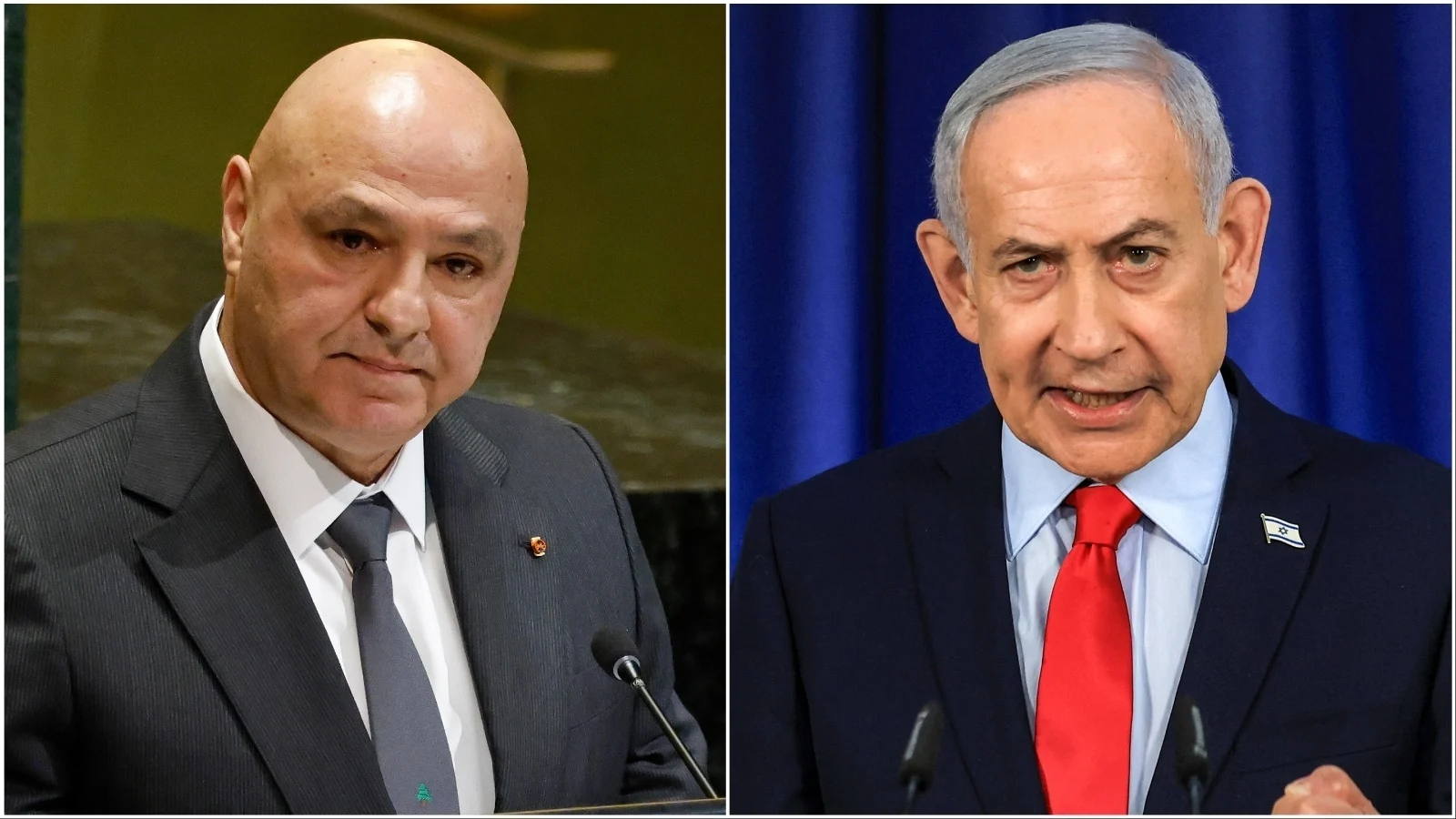
On a brisk evening when the horizon over the Mediterranean was a sheet of bruised blue and pink, an announcement crackled through social feeds and state broadcasters alike: a 10‑day ceasefire between Israel and Lebanon. It was delivered not in a dimly lit chamber in Geneva but on Truth Social by US President Donald Trump, who said he had spoken with Israeli Prime Minister Benjamin Netanyahu and Lebanon’s leader Joseph Aoun and that both had agreed to the pause to “achieve PEACE.” The ceasefire, he said, would begin at 5pm EST — 10pm Irish time — and be followed by talks at the White House.
The rhythm of a border on pause
For residents in towns like Metula, Marjayoun and the fishing ports of southern Lebanon, the news landed as if from two worlds: the diplomatic promises of faraway capitals and the immediate, stubborn reality of soldiered checkpoints, shattered roads and families who have learned to measure life in intermittent power cuts and the frequency of sirens.
“We’ve had many false dawns,” said Amal Haddad, a shopkeeper in Tyre who has lived through waves of escalation. “A day without shelling is not peace — it’s a chance to bury the children we lost, to fetch water, to try to sleep. Ten days could be everything or nothing. It depends who keeps their hands quiet.”
On the Israeli side, an elderly kibbutz resident, Yael Cohen, brewed tea and watched the hills with binoculars. “Hope is stubborn here,” she said. “We try to trust words because we have no choice. But every ceasefire has had footnotes, and those footnotes are usually bullets.”
What the announcement actually said — and what it left unsaid
President Trump said he would invite both leaders to Washington for what he termed the “first meaningful talks between Israel and Lebanon since 1983” and that he would task a small US team — Vice‑President JD Vance, Secretary of State Marco Rubio and Chairman of the Joint Chiefs of Staff Dan Caine — to help turn a temporary pause into something more permanent.
Notably, his post did not mention Hezbollah by name, even though the Iran‑backed group has been the principal actor on the Lebanese front. Hassan Fadlallah, a senior Hezbollah lawmaker, said the organisation had been briefed on the prospect of a short pause by Iran’s ambassador to Beirut and that adherence would hinge on Israel halting “all forms of hostilities.”
“Everything depends on whether there is a real halt,” Mr Fadlallah told a local television reporter. “We will not enter into a truce that is only on paper.”
On the ground: a fragile reality
Despite the diplomatic flurry, violence did not instantly evaporate. Senior Lebanese security sources reported that an Israeli strike severed the last bridge linking southern Lebanon to the rest of the country, a blow that isolates communities and complicates humanitarian access.
State media reported one civilian killed by an Israeli strike on a car traveling a road that connects to Syria; the Israeli military did not immediately comment. Such incidents underscore the razor‑thin line between a tactical ceasefire and the continuation of hostilities in other forms.
Across the region, people are using the pause to check on the practicalities. Farmers are repairing irrigation lines. Fishermen are mending nets that were pushed aside when launches and landings became too dangerous. In small cafés on Beirut’s corniche, conversations turned from anxiety to bargaining: who will get fuel first, how will displaced families be sheltered, can aid convoys get through?
Voices from aid workers and analysts
“Ten days is enough to move a lot of food, medicine and medical evacuations,” said Leila Mansour, a logistics coordinator for an international NGO operating in southern Lebanon. “But it’s not long enough to rebuild trust. For that, you need months — and guarantees backed by institutions.”
Market reactions reflected cautious relief. Global stock indices rallied on the expectation that a de-escalation could keep trade routes and energy supplies more stable — pushing equities past recent highs — while oil prices ticked up modestly as traders weighed the durability of the ceasefire and potential disruptions to the wider region.
“Markets are pricing in a short breathing space,” said Omar Khaled, a Middle East analyst at a London hedge fund. “Risk appetite is returning, but with a premium. If the pause holds, you see calm; if it collapses, prices spike again.”
Bigger diplomatic threads: Tehran, Islamabad and a cautious optimism
Beyond the Israel‑Lebanon front, the announcement sits within a wider tapestry of negotiations and back‑channel diplomacy. Iran’s ambassador to the United Nations, Amir Saeid Iravani, told delegates at the UN General Assembly that Tehran was “cautiously optimistic” about talks with the United States aimed at ending broader hostilities. Those talks, mediated by Pakistan, are slated to have a second round after an initial meeting in Islamabad.
“Despite our deep mistrust of the United States, born of repeated disappointments, we entered these talks in good faith,” Ambassador Iravani said, adding that a “rational and constructive approach” by Washington could yield meaningful results.
Whether that cautious optimism translates into concrete changes on the ground depends on numerous variables: the speed and scale of humanitarian relief; the willingness of all armed actors to refrain from provocations; and international guarantees that any pause will be watched and enforced.
What happens if the ceasefire holds — and if it doesn’t?
If ten days of quiet can be transformed into two months, and two months into durable arrangements, the human dividend would be enormous: hospitals could be re‑supplied, schools repaired, and the routines of daily life — which sustain mental health and livelihoods — could begin to be restored.
But if the pause collapses, even after a few days, the social cost will be punishing. The memory of temporary respites that end in fresh violence compounds trauma and makes political settlements harder to forge.
“People are asking, can we plan a wedding, can we reopen a shop, can a child return to school?” said Dr. Rana Salim, a psychologist working with displaced families. “Those small acts are what peace looks like. The rest is diplomacy.”
Questions to sit with as the world watches
As the clock ticks down on this initial window, ask yourself: What does a ceasefire mean to someone whose roof is a tarp? Whose voice will be in the room in Washington if those talks begin? And how do distant markets and diplomatic backchannels translate into the everyday safety of a fisherman returning to shore?
This is not just a bilateral pause between two states. It is a brief, brittle opportunity — for diplomats, for international organisations, for local leaders and for ordinary people — to convert cessation of fire into the hard, slow work of lasting peace. The question now is whether the world is ready to use that ten days wisely, or whether history will mark it as yet another intermission in a long and costly conflict.
- Ceasefire announced to begin at 5pm EST (10pm Irish time).
- US invites leaders to White House for talks; small US delegation named to facilitate discussions.
- Fighting continued in southern Lebanon; bridge severed and one civilian killed in reported strikes.
- Iran expresses cautious optimism about parallel negotiations with the US, mediated by Pakistan.
Keep watching the skies and the streets. Keep listening to the people who live here. Sometimes news is a headline; sometimes it is the slow, painstaking labor of rebuilding trust — one conversation, one repaired bridge, one safe return at a time. Which will this be?