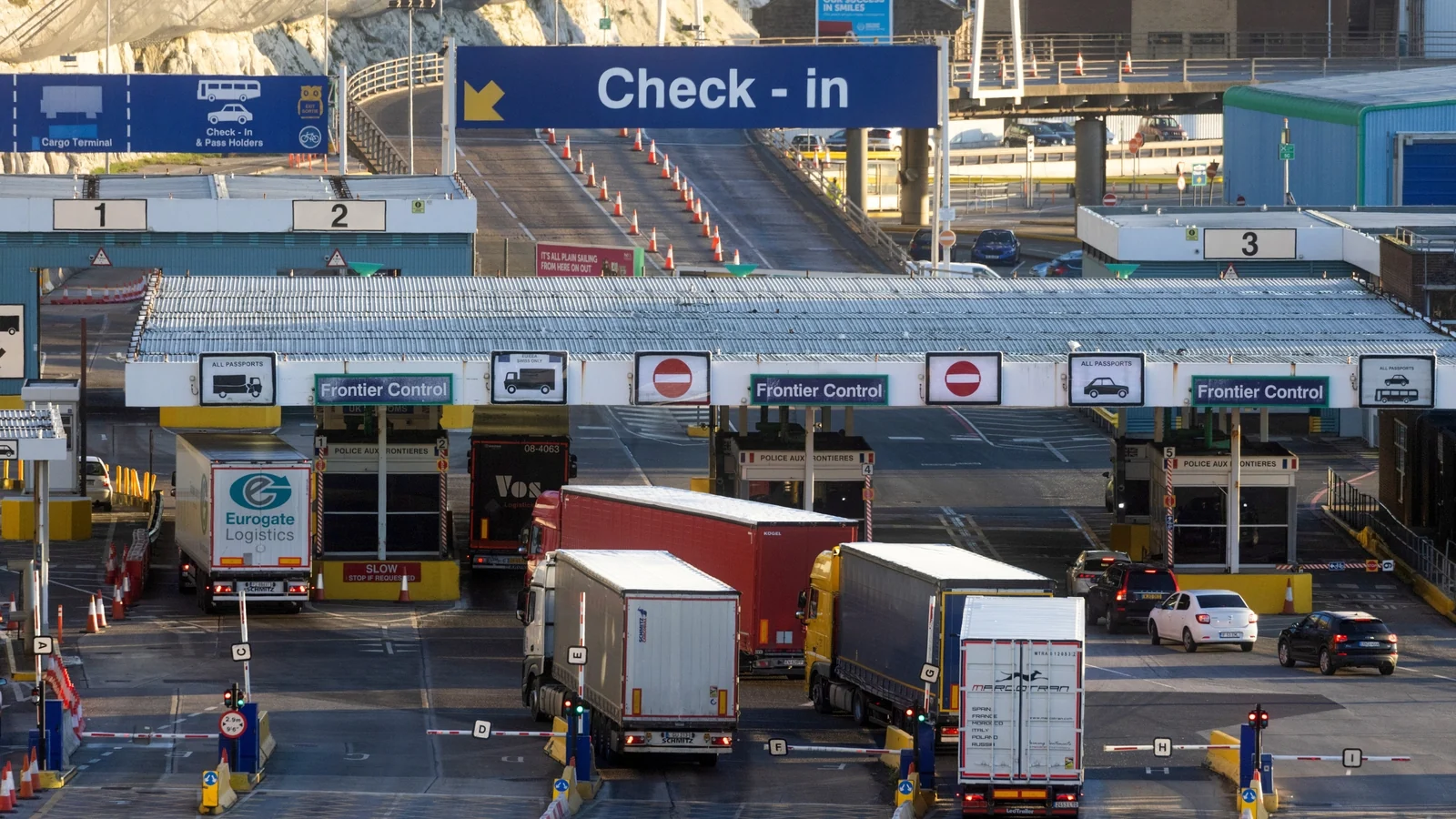
A potential breakthrough in post-Brexit trade has emerged, with Britain and the European Union reportedly agreeing a draft deal aimed at easing the flow of food and agricultural goods.
If finalised, the agreement would supplant the current arrangements that have left British food and agriculture exports to the EU facing expensive veterinary inspections and customs checks.
The changes would be especially significant for Northern Ireland, where they could lessen the effects of the so-called Irish Sea border that has been in place since Britain’s departure from the European Union.
The implications would also stretch across the island of Ireland, where food and agriculture trading patterns have shifted sharply in the wake of Brexit.
Ireland remains the number one market for British food and drink exports.
We need your consent to load this rte-player contentWe use rte-player to manage extra content that can set cookies on your device and collect data about your activity. Please review their details and accept them to load the content.Manage Preferences
According to a BBC report, the UK and the European Commission have settled on draft sanitary and phytosanitary terms under which the EU would remove most of its controls on British food and drink entering the bloc. In exchange, Britain would agree to follow EU laws and regulations governing food and agricultural production.
This approach, described as “dynamic alignment”, was previously ruled out by the Conservative Party under former prime minister Boris Johnson during talks that produced the original Brexit agreement with the EU.
The draft text has reportedly been shared with member state government representatives in Brussels ahead of a meting of permanent representatives tomorrow.
The EU and the UK are scheduled to hold a summit on 20 November, when a package of agreements expected to revise elements of the original Brexit deal is due to be signed.
Burnham: I have not proposed return to EU freedom of movement
Meanwhile, British Prime Minister Andy Burnham said he has not proposed restoring freedom of movement between the UK and the EU.
However, he said the public needed an “honest discussion” about how migration patterns had changed since Brexit, arguing that temporary movement from Europe had given way to higher levels of long-term settlement.
Speaking to ITV, he said: “I do believe that we should have an honest discussion with people about how immigration has changed since the Brexit vote because the shorter term migration of people coming from Europe and then going back has been replaced with long term settlement in bigger numbers, and that was the ‘Boriswave’.”
Additional reporting PA