Lebanon was plunged back into heavy fighting as authorities said Israeli airstrikes killed 47 people, while Israel announced that four of its soldiers had died.
The surge in violence marks the most intense clashes since the sealing of a US-Iran deal aimed at stopping the wider Middle East war — an understanding that was also meant to pause hostilities between Israel and Hezbollah in Lebanon.
Lebanon’s official National News Agency also reported a new Israeli strike on the Jezzine area in the south, coming shortly after a US official said Israel and Hezbollah had agreed to a ceasefire.
An NNA journalist also reported drones flying over the Tyre area, while an AFP correspondent said they heard uninterrupted artillery shelling in the southern town of Nabatieh.
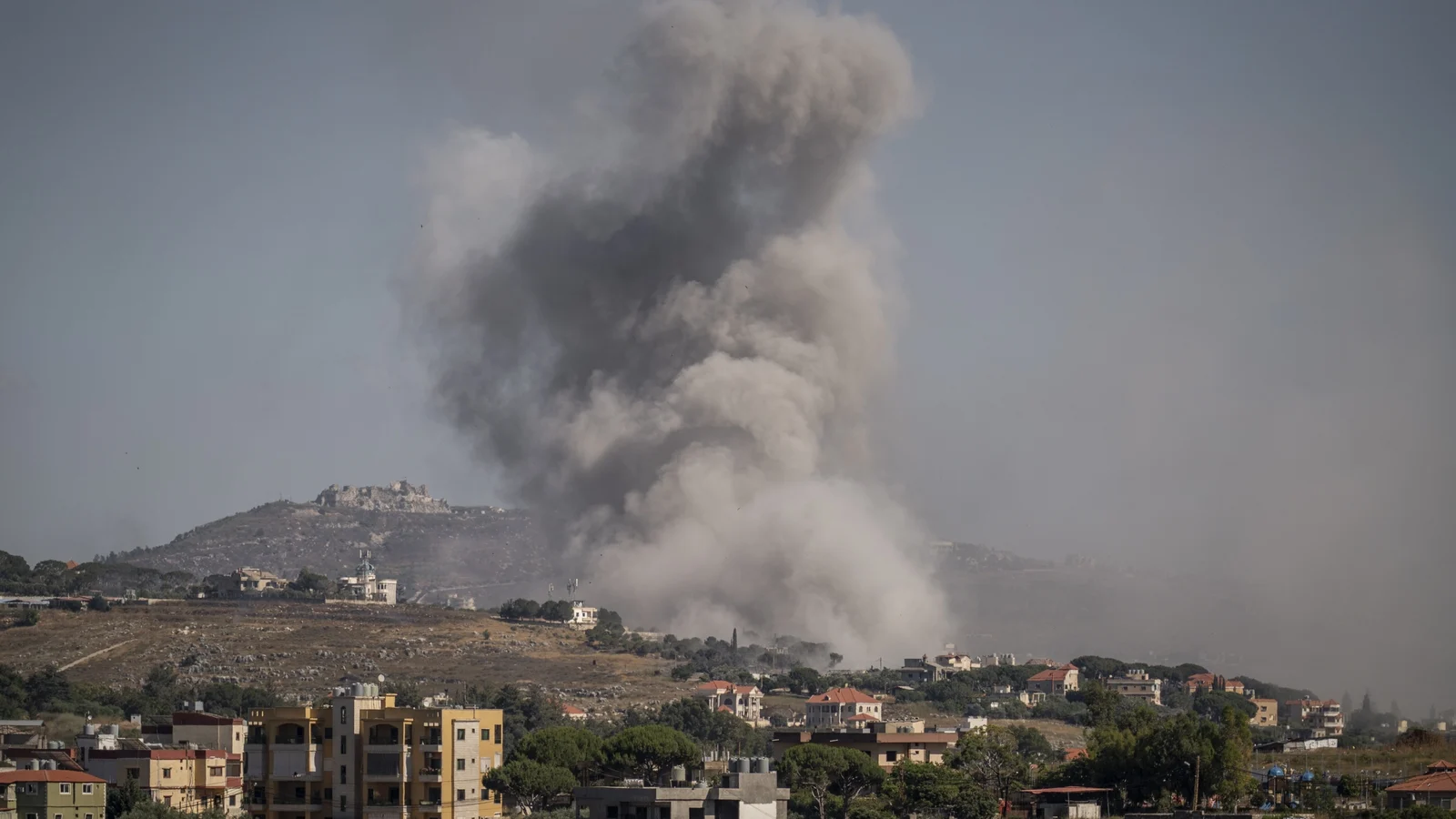
Watch: Smoke billows from southern Lebanon after fresh strikes following truce
Speaking on condition of anonymity, the US official said the truce was brokered by US and Qatari mediators after talks involving Israel and Iran.
A Gulf diplomat later confirmed the ceasefire was brokered by Qatar, the US and Iran.
Israeli Prime Minister Benjamin Netanyahu’s office did not respond to an AFP request seeking confirmation of the ceasefire.
Israeli military spokesman Brigadier General Effie Defrin said: “Everything related to agreements belongs to the political echelon… We will continue to operate according to the directives”.
An earlier truce that was supposed to take effect in April had little impact, with attacks continuing from both sides.
‘Dangerous escalation’
Lebanon’s health ministry said Israeli airstrikes and bombardments killed at least 47 people — including seven women and two children — and wounded 97 others.
Video from AFPTV showed hundreds of vehicles clogging roads in the city of Sidon as residents tried to flee areas in the south.
Israel’s military reported “more than 150 IDF (military) strikes in Lebanon since midnight”.
It said earlier it had “struck more than 80 command centres, terrorists, launch positions and additional terrorist infrastructure sites in the area of Nabatieh and additional areas in southern Lebanon”.
“Dozens of Hezbollah terrorists operating in the command centres were eliminated.”
A woman sits amid the rubble of her destroyed home in Toul, southern Lebanon
Hezbollah, backed by Iran, said it was attacking Israeli forces around Nabatieh.
Israeli strikes also hit the Baalbek region in eastern Lebanon, an area that had largely been spared since the conflict began in March.
Lebanese President Joseph Aoun said Israel’s latest attacks “constitute a dangerous escalation”.
Earlier, the Israeli military said Lieutenant Colonel Dor Gedalia Ben Simhon had “fallen in combat” along with three other soldiers.
Israeli military correspondents reported the four were killed when a tank was struck by “a suspected drone or anti-tank missile”.
The military also said a reserve officer was severely wounded in a drone attack, while four other soldiers suffered light injuries.
‘Mothers must weep’
The soldiers’ deaths triggered an angry reaction in Israel.
Far-right National Security Minister Itamar Ben Gvir said “Lebanon must burn… For every tear shed by an Israeli mother, 1,000 Lebanese mothers must weep”.
Responding, Iranian Foreign Minister Abbas Araghchi accused Israel of seeking “permanent war”.
US officials, including President Donald Trump, have voiced frustration over Israel’s campaign in Lebanon.
But Netanyahu said Friday that Israeli troops would remain in south Lebanon “as long as necessary”.
An Israeli army humvee patrols along the northern border with Lebanon in Upper Galilee
Hassan Tarhini, 57, who was forced to flee the Nabatieh area, told AFP that “we have no problem being displaced once, twice or even 10 times, so long as we return with our heads held high”.
Hezbollah drew Lebanon into the Middle East war in early March by attacking Israel, saying it was acting to avenge the killing of Iran’s supreme leader in US-Israeli strikes.
Israel responded with a major campaign of airstrikes and a ground invasion.