Before the sun was fully up, a string of explosions stitched the horizon
In the pale light before morning, the soft clatter of everyday life in southeastern Ukraine was ripped apart by a new kind of thunder—hundreds of small aircraft hunched low against the sky, and a few, much louder, ballistic missiles arced toward the ground.
By the time the smoke settled, officials said air-defence units had intercepted or neutralised 309 drones. Still, a number of weapons—three ballistic missiles and 13 drones—found their marks across nine different locations, striking port infrastructure, apartment blocks, shops and schools. One person was killed and at least seven were wounded in the barrage.
Numbers, but also faces
Statistics can numb us. So let’s give them texture. A 74-year-old woman was killed in Zaporizhzhia while sitting in a small kiosk—one of those metal-clad neighborhood hubs where you buy bread, breadsticks, a lottery ticket, a little human conversation. Ivan Fedorov, the regional governor, posted photos of a shattered kiosk, broken windows, and dented cars. “Everything that made this street a street is damaged,” a local man who asked to be unnamed told me over the phone, voice low. “There’s a silence now where the vendor’s radio used to be.”
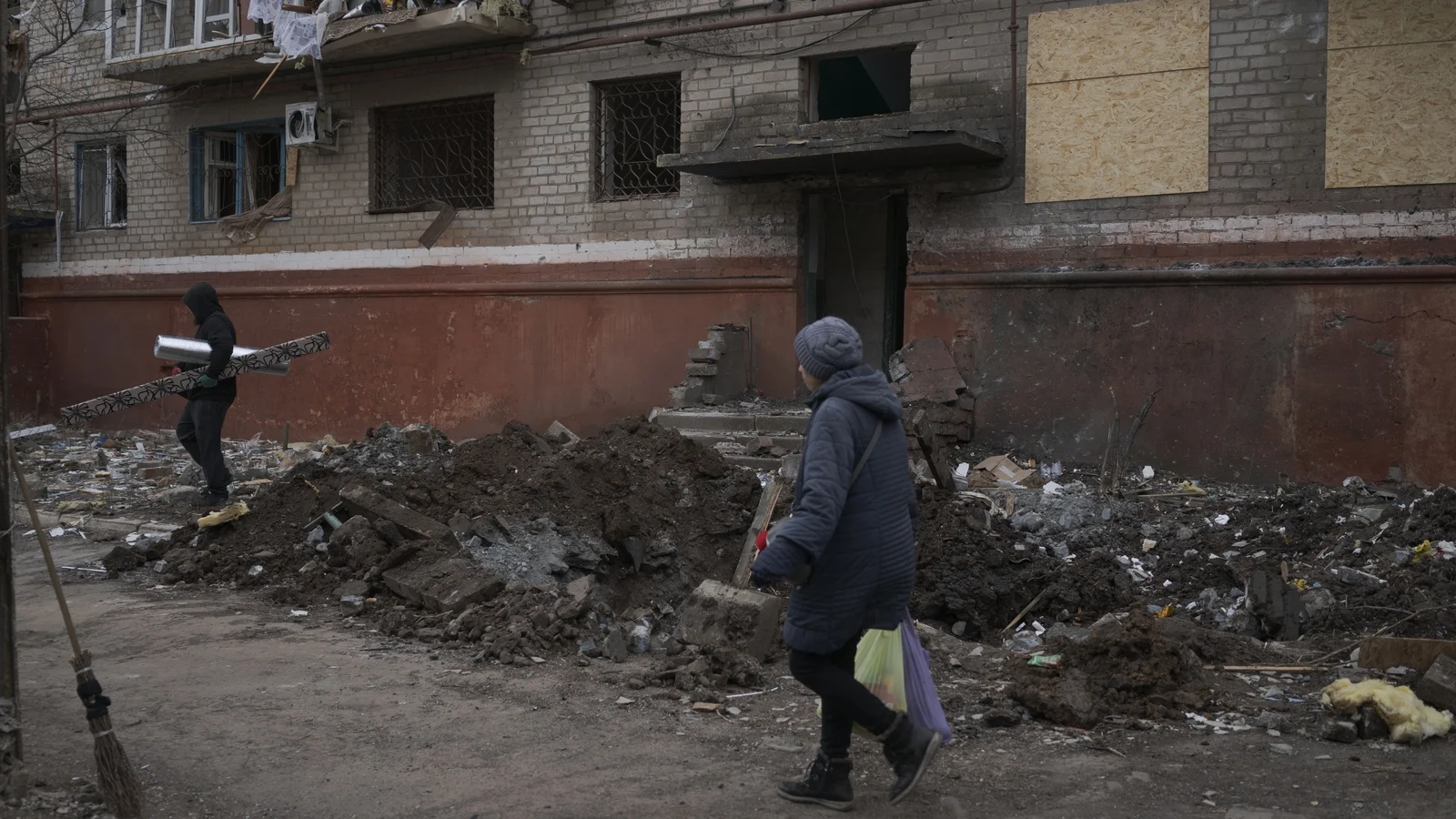
In Dnipro, three people were injured in an overnight drone attack that also punched a gaping hole into a nine-storey apartment building. Oleksandr Ganzha, the regional governor, posted images of the scarred façade; neighbours shared videos of drywall dust still falling like ash. In Cherkasy and nearby regions, dozens of private homes and cars were damaged. An earlier attack this week had already killed an eight-year-old boy there and left other families wounded and reeling.
Ports under fire, but the river keeps moving
Beyond the cities, the Danube’s busy banks in Odesa’s southern region were struck. The Ukrainian Sea Ports Authority reported damage to production and storage facilities and to administrative buildings. At dawn, cranes stood like uncertain sentries; workers reported minor structural damage but said the ports were still operating.
“We will not stop the ships,” a port foreman told me, rubbing his hands against the cold. “The river is how we keep feeding the country.” There’s a stubborn, practical courage in that: make the rails run, keep the barges moving, and try to deny the violence the last word.
What officials are saying
President Volodymyr Zelensky posted on X that the attacks were “brutal,” listing Dnipro, Cherkasy, Kharkiv, Kryvyi Rih, Chernihiv, Donetsk and Zaporizhzhia among the places struck in the past 24 hours. “We need air defence missiles every single day — every day the Russians continue their strikes on our cities,” he wrote, adding that cooperation with partners to strengthen air defences is a priority.
His plea is simple and urgent: as attacks scale up and their tactics evolve—mixing swarms of small drones with heavier missile strikes—the demand for interceptors, radars, and training rises with them.
On the mechanics of modern attacks
Military analysts point to a trend that has become painfully familiar: saturation attacks. A swarm of dozens, even hundreds, of cheap drones can overwhelm defenders who have to choose which threats to engage and which to let through.
“It’s an economy of force that favours the attacker,” said Dr. Lena Horvat, a defence analyst who has been tracking unmanned systems. “Cheap, commercially available airframes, modified warheads, and simple guidance systems have changed the calculus. Defending a city now isn’t about a single missile battery; it’s about layered systems, constant supply of interceptors and the ability to repair and pivot quickly.”
International cooperation and quick fixes
This week, Kyiv reached new defense cooperation agreements with Germany and also announced plans with Norway for domestic drone production. Those are important steps. They promise not just weapons and equipment but training, supply chains, and potentially the industrial capacity to build a more resilient defence posture from within.
But the timeline matters. Interceptors take time to deliver and to train with. Factories take time to ramp up. And families need shelter now.
- Immediate needs include more air-defence missiles, portable counter-drone systems and repair crews for critical infrastructure.
- Medium-term needs include domestic production of key components and robust redundancy in port and logistics systems.
- Long-term resilience will require new doctrines for urban defence, investment in civil protection and reconstruction funding that reaches neighbourhoods, not just highways.
People on the street
Walk through any of these towns and you’ll see the same contradictory mixture: fear and stubborn normality sitting side by side. A woman in Dnipro, clutching a sack of potatoes, shrugged when asked how she slept. “We sleep in shifts,” she said. “If my neighbour is on the balcony, I go down to the basement. But then tomorrow we must go to work. Who will harvest the beets?”
Another resident of Zaporizhzhia, a schoolteacher with flour on her hands from baking bread to calm her class after an air-raid alarm, said, “The children ask why the sky is angry. When I tell them it’s not the sky but people, they don’t understand. They just want to know if their school will have windows tomorrow.”
What this means for the world
There are local stories and then there are ripples. Weaponised drones are cheap to produce, easy to source and increasingly accurate. The lessons learned here will be observed and replicated elsewhere; cities across the globe are taking mental notes. Are we going to build more protective infrastructure? Rethink airspace management? Consider regional pacts for rapid air-defence support? These are policy questions with human answers.
They also raise moral questions: when much of the civilian economy is increasingly vulnerable to low-cost attacks, who pays for the shields? Governments, allied partners, or private insurers? Whose lives are prioritized when interceptors are limited?
A final thought
Today’s tally—309 drones intercepted, multiple cities hit, one confirmed death, dozens wounded—reads like a grim ledger. But every number is a person’s morning turned to rubble, a vendor’s routine erased, a child’s classroom scarred. In the middle of headlines and geopolitics are people trying to live their lives.
So I ask you: when you hear the figure “309,” what do you picture? And what do we, as an international community, owe to those waking up to sirens and shattered windows? The answers will shape responses here, and perhaps the next time another city faces a sky full of drones.