How a Quiet Power Struggle Is Turning the Moon Into an Energy Frontier
Imagine standing on a windswept steppe outside Moscow at dawn, the air thin and metallic, and hearing a retired engineer laugh as she stirs her tea. “They used to say the sky was Russia’s backyard,” she muses. “Now the backyard has a fence and everyone wants the moon key.”
That fence is invisible, but its posts are being driven deeper every year. In recent months, Moscow’s space agency—Roscosmos—announced plans to place a nuclear power plant on the lunar surface by the mid-2030s to fuel a permanent research station. The project, according to the agency, will involve Rosatom, the Kurchatov Institute and the Lavochkin design bureau—names that conjure an old guard of Soviet-era pride remixed with a 21st-century scramble for influence beyond Earth.
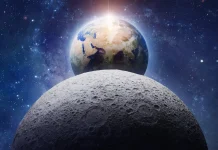
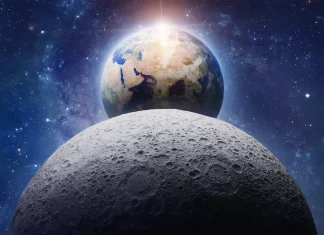
The idea of building a power plant on the moon reads like science fiction, but its logic is stark and pragmatic. The moon is 384,400 kilometres away; sunlight lasts barely half the lunar day, and nights stretch for two solid Earth weeks. To sustain habitats, scientific labs and heavy-duty rovers—and potentially mine rare resources—you need reliable, continuous energy.
The New Lunar Map: Bases, Reactors and Rivalries
We are not witnessing a single nation’s dream. Washington has signalled parallel ambitions: NASA has stated its intent to demonstrate a fission reactor on the lunar surface by the first quarter of fiscal year 2030, part of a broader push to make the moon a staging ground for human missions to Mars and beyond.
“Energy is the currency of permanence,” says Dr. Amrita Singh, an international space policy fellow based in London. “If you want a base, you need power that doesn’t sleep. Solar is great, but it is intermittent on the moon. That gap is precisely where compact nuclear systems show up.”
This competition is not only about flags and prestige. It intersects with science, commerce and geopolitics. Lunar regolith hides elements that are scarce or strategically important on Earth: estimates suggest there could be up to a million tonnes of helium-3, a potential fuel for future fusion reactors, scattered on the maria. Boeing and other researchers have pointed to traces of rare earths—scandium, yttrium and the 15 lanthanides—that underpin everything from smartphones to fighter jets.
- Helium-3: often cited in popular accounts as abundant on the moon—estimates run into the hundreds of thousands to millions of tonnes.
- Rare earth elements: present in lunar soil in varying concentrations; valuable for modern electronics and defense industries.
Whether those deposits are economically exploitable, and under what legal or environmental constraints, remains hotly debated. But the mere presence of such materials has added another dimension to the geopolitical tug-of-war.
From Gagarin to a Crash Landing: Russia’s Long, Bumpy Ride
For Russians the story is particularly bittersweet. The nation that sent Yuri Gagarin into orbit in 1961 wants to reclaim a narrative of technological glory, yet reality has been humbling. The failed Luna-25 landing in August 2023—when an unmanned probe was lost during descent—was a painful reminder of the risks and complexity of lunar work. Meanwhile, private companies like SpaceX have redefined launch economics, taking business once dominated by Russian rockets.
“We’re rebuilding confidence,” a senior engineer at Lavochkin told me over carrot cake and strong coffee in a cramped cafeteria. “We made mistakes—big ones. But humility is not defeat. It’s the starting point for better design.”
Power, Law and the Ethics of Putting Reactors in Space
Nuclear power in space is not unlawful. International treaties ban nuclear weapons in orbit and on celestial bodies, but they do not outlaw energy-generating nuclear systems. There are strict safety protocols and oversight mechanisms intended to protect Earth and space from contamination. Still, the prospect of fission reactors on a foreign body raises fresh concerns.
“There’s a difference between an ICBM and a power plant, but optics matter,” says Professor Luis Mendéz, an expert in space law. “Countries will need to demonstrate transparency, emergency response plans, and long-term stewardship. Otherwise, strategic suspicion will grow faster than any reactor’s coolant.”
And then there is the practical calculus: transporting modular reactors, shielding them, establishing cooling systems in the lunar vacuum—all of this requires technology, funding and a tolerance for risk. Russia’s timeline—building by 2036—is ambitious but not impossible if budgets are maintained and partnerships hold.
Local Voices: Why People Care, Far From the Launch Pads
Out beyond the labs and launch complexes, ordinary people feel the ripple effects. In the port city of Kaliningrad, a former flight controller now running a bakery worries about what the new space push means for her pension and community. “When the country spends on big dreams, my bus route gets delayed,” she says gently. “But I also wake up proud. My son studies engineering because of the rockets. That is something.”
On the other side of the world, a university student in Beijing scrolls through photos of lunar simulations and says, “Whether we mine it or just study it, the moon will tell us who we are. It’s exciting and scary at once.”
Bigger Questions: What Kind of Future Are We Building?
Beyond the hardware and headlines, deploying power stations on the moon forces us to confront larger ethical and practical questions. Who governs a lunar economy? How do we protect a pristine environment that has witnessed four billion years of solar system history? What happens when commercial incentives collide with scientific conservation?
“We need international frameworks as robust as the physics we hope to harness,” Dr. Singh says. “Otherwise we risk turning the moon into a mirror of terrestrial conflicts—a place where scarcity births competition instead of cooperation.”
So ask yourself: do you see these lunar ambitions as an inspiring chapter in human exploration, or a replay of old rivalries under new stars? Perhaps it will be both. Perhaps the moon, like any frontier, will reflect our better angels and our worst instincts in equal measure.
What Comes Next
Expect more announcements, more partnerships and, inevitably, more setbacks. The next decade will tell whether lunar reactors become the backbone of sustained presence or a costly experiment in national prestige. Meanwhile, the moon will keep doing what it has always done—tugging at our tides and at the untidy human heart.
“We are small players on a big stage,” the Lavochkin engineer says as our conversation winds down. “But the rules are new, and so are the players. If we do this right, maybe we can show the world how to build without burning the very thing that lets us look up in wonder.”
That sentence hangs between us like lunar dust—soft, persistent, impossible to sweep away. What would you put on the moon if you had the choice: a telescope, a lab, a reactor—or something else entirely?