Mortar of Morning: Kyiv Wakes to Grief After Deadly Strike
When I arrived at the apartment block, the air smelled of dust and boiled cabbage — ordinary Kyiv scents mixed with the extraordinary. Neighbors stood in slippers, still wearing winter coats though the calendar said spring. Candles flickered against shattered glass. A small girl’s plastic unicorn lay half-buried in the rubble, its painted eye staring at the sky.
Ukrainian authorities now say at least 24 people were killed in the strike on this residential building, including three children. Officials and residents describe it as one of the deadliest single attacks on a Ukrainian city in months. More than 20 different sites across Kyiv were reportedly hit by drones and missiles in the same wave.
There is a strange, mute choreography to these scenes — the hush that follows sirens, the quiet of people making tea with shaking hands, the ritual of laying flowers on concrete like reaching for some human story in a pile of stones.
Faces, Names, and the Small Objects That Tell the Tale
“My mother used to sit on that balcony and knit,” said Olena, 67, wrapping her hands around a thermos. “Now there is no balcony, only a hole in the wall. We are left with the silence she used to fill.”
Inside a makeshift command post, volunteers sorted lists: names to call, apartments to check, donations to move. A young medic pulled off a disposable glove and let out a long breath. “We’ve learned to act quickly,” she said. “But what we cannot learn is how to turn off the sorrow.”
Nearby, a cluster of children — their cheeks flushed from the cold — showed me a drawing. “This is our home,” one of them said, pointing at a crooked house with a bright sun. “This is where we sleep.” Their drawings, ornamented with suns and doves, felt like fragile proof of ordinary life persisting at the edges of catastrophe.
How the Attack Fits Into a Larger Pattern
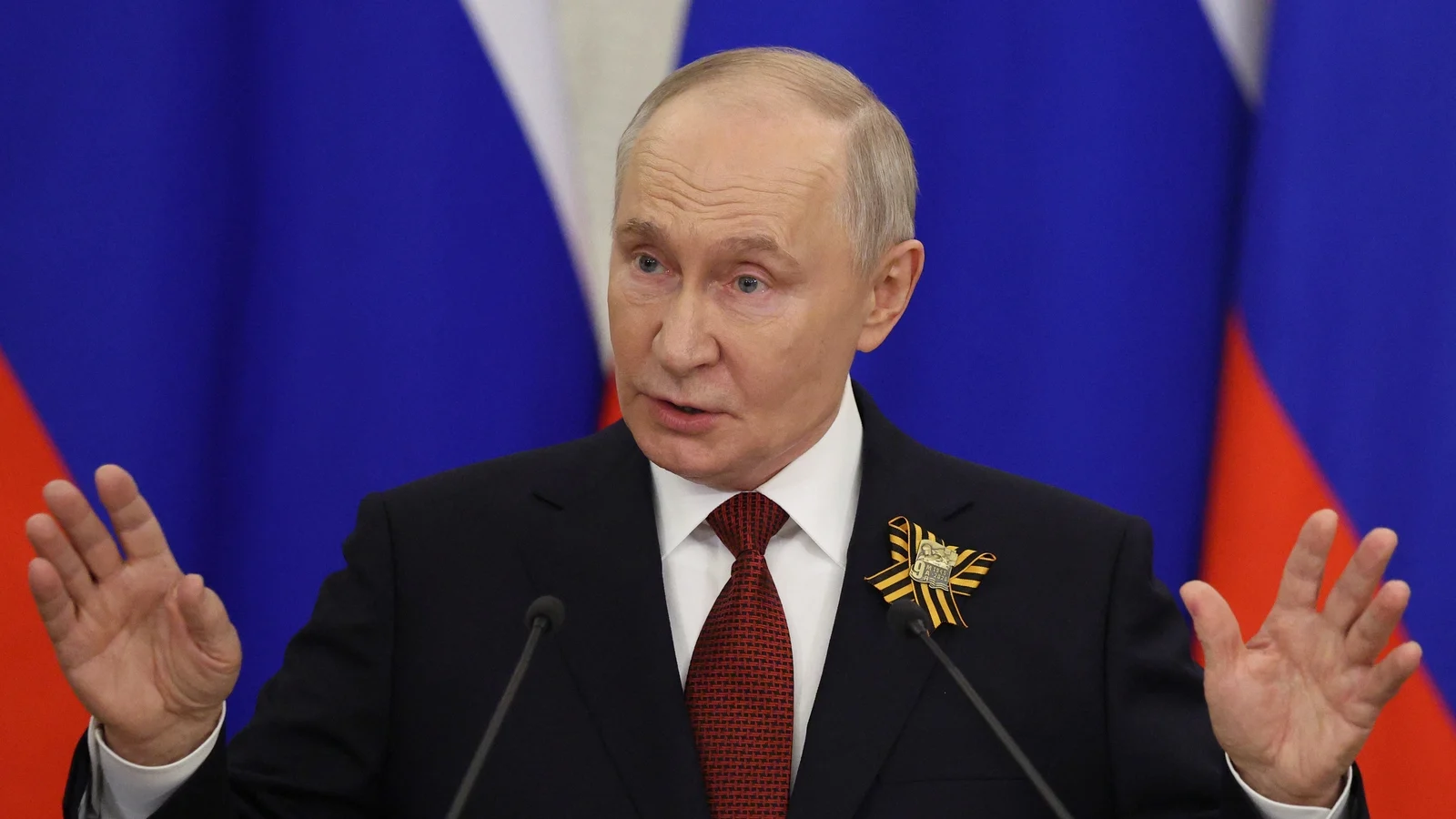
The scale and timing of the strike on Kyiv dovetail with unsettling messages from Moscow. In a recent press briefing, Russian President Vladimir Putin suggested the conflict may be nearing its end and floated the idea of a mediation role for former German chancellor Gerhard Schröder — an offer European capitals were quick to dismiss.
But words from Kremlin corridors have been inconsistent. On one day, officials hint at a de-escalation; on another, the rhetoric snaps back to exclusion and blame. “They speak as if peace is a box to be ticked by the other side,” observed a foreign-policy analyst in Kyiv. “In practice, the pattern remains: negotiations without an end to strikes are just rhetoric.”
Inside Russia: Fatigue, Prices, and Propaganda
Inside Russia, the public mood is complicated. There is weariness. There is worry about rising costs. Official statistics place inflation around 6 percent, but residents and economists say the day-to-day reality — especially food prices — feels much sharper. Lines at grocery stores, the substitution of imported goods with cheaper alternatives, and the prominence of ration-like conversations over coffee all speak to pressure on household budgets.
“People are exhausted,” said a Russian economist who spoke on condition of anonymity. “There’s a cognitive dissonance between the Kremlin’s optimistic messaging and the emptying of wallets at the market.”
The Kremlin’s spokespeople have also framed the narrative as one in which the responsibility to stop the war lies with Kyiv, glossing over the fact of Russia’s invasion in 2022. That line of argument sits uneasily beside images of bodies pulled from apartments and the nightly litany of damaged infrastructure across Ukrainian cities.
Information Wars and the Gordian Knot of Diplomacy
Diplomatic moves and media narratives are intertwined. When leaders propose mediators or announce the prospect of talks, it is not only the content but the audience that matters. “Some statements are aimed less at foreigners and more at domestic viewers,” said Dr. Maria Kovalenko, a Kyiv-based sociologist specializing in conflict rhetoric. “A promise of peace can be a balm even when it’s not accompanied by meaningful action.”
And yet, balm without bandwidth — without a real halt to the bombardment — feels hollow. Europe’s quick rejection of out-of-the-blue mediation proposals reflected a broader skepticism: peace must be negotiated on terms that protect civilians and respect international law, not used as political theatre.
The Human Ledger: Numbers, Names, Memory
Numbers are blunt instruments. They tell part of the story — 24 dead, three children among them; more than 20 locations struck in Kyiv — but they cannot account for the missing cups or the silence on a neighbor’s balcony. They cannot hold the sound of an Orthodox bell calling a city to prayer or the way an embroidered rushnyk is draped over a pile of rubble as an improvised memorial.
Globally, the war has displaced millions, strained energy and food markets, and pushed diplomatic alliances into reconfiguration. But at ground level, the metrics convert into meals missed, schools closed, and anniversaries that families can no longer celebrate together. “We count the killed and the wounded,” a volunteer coordinator told me. “But our daily tally is the lives we try to keep together — the elderly we warm, the children we comfort.”
What Do We Owe Each Other?
As you read this, consider the ordinary things that make a city livable: the bakery on the corner, the municipal tram that rattles at dawn, the neighbor who returns borrowed sugar. Imagine them gone, replaced by a map of detours, by lists of missing names. How should the world answer when such ordinariness is struck down?
There are no easy answers. There is outrage. There are calls for accountability and for renewed diplomatic pressure. There are practical things: medical supplies, power restoration, shelter for the displaced. But there is also a moral ledger: a question we keep asking aloud — to leaders, to institutions, to ourselves — about what constitutes a legitimate path to peace.
“I don’t want revenge,” whispered a woman at the memorial, petals stuck in her scarf. “I want my daughter’s laughter back.”
Closing: A City That Remembers and Keeps Going
Kyiv continues to move — its trams, its volunteer hubs, its bakeries with long lines in the morning. The city plants flowers where it can. It sings, sometimes with a cracked voice. It buries, and then it wakes again. Amid geopolitical chess and public rhetoric, the human work goes on: to rescue, to heal, to remember.
What do we do with knowledge of this? How do we translate it into action that prevents the next strike, the next family lost in their sleep? The answers demand sustained attention, not headlines that flicker and fade. They demand that the world keep looking, keep listening, and above all, keep insisting that peace be measured not in press releases, but in the quiet return of ordinary mornings.