When Power and Proximity Collide: The María Begoña Gómez Case and a Nation’s Quiet Reckoning
Madrid wakes up to the hum of scooters, coffee grinders and, today, the metallic click of a new headline. The case that has threaded through the corridors of power and the cafés of the university quarter landed with the force of a question: what happens when the spouse of a prime minister is formally accused of turning proximity into profit?
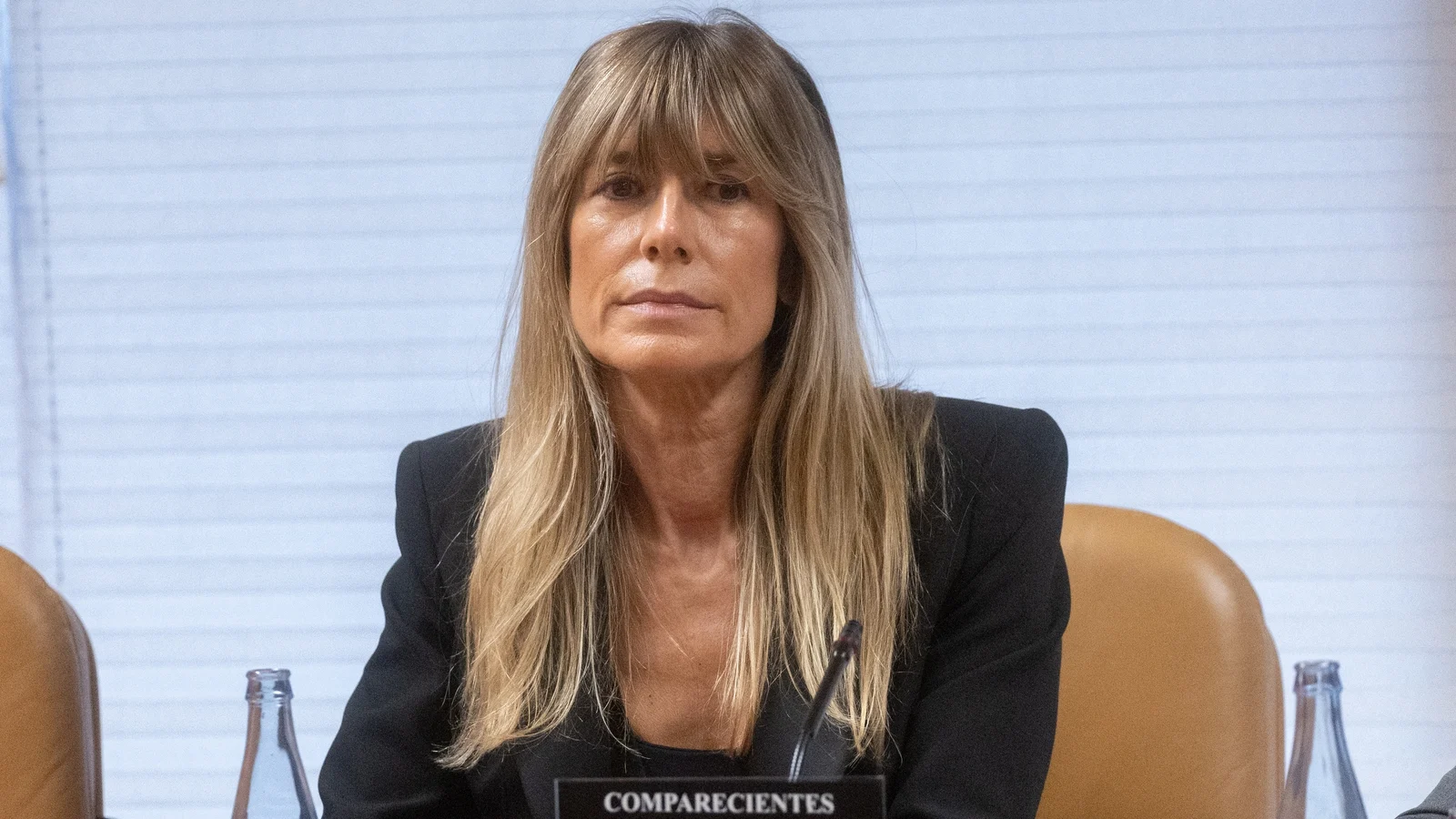
On a spring morning, a court ruling made public a months-long investigation official. Begoña Gómez, wife of Spain’s Prime Minister Pedro Sánchez, has been formally charged with embezzlement, influence peddling, corruption in business dealings and misappropriation of funds. The probe focuses on a university “chair” at Madrid’s Complutense University that Gómez co-directed — allegations that she used the role and her connections for private advancement. The judge’s ruling, dated 11 April and revealed recently, said investigators found enough indications of criminal conduct to warrant charges.
It is the kind of story that does not stay inside court files. It spills into dinner conversations, political manifestos, and the interviews on late-night radio. “People want to believe in institutions,” said Ana López, 62, a retired teacher who walks her dog past the university most afternoons. “When those close to the presidency are accused, it hurts the idea of fairness.” Her voice had a weariness many in Madrid now share.
What the Charges Say — and What They Mean
The formal list of accusations is stark and precise: embezzlement, influence peddling, corruption in business dealings and misappropriation of funds. The allegation centers on how a university chair was created and managed, and whether public resources and personal influence were mobilized to benefit private interests. Judge Juan Carlos Peinado, who opened the inquiry in April 2024, concluded there were sufficient indications to proceed.
Gómez, who was on an official trip to China with Prime Minister Sánchez when the ruling became public, has denied wrongdoing. The prime minister, likewise, has dismissed the case as a politically motivated attack. “This is a smear by those who wish to weaken our democracy,” a government aide told me on condition of anonymity. “We will cooperate with the justice system, and the truth will come out.”
But public opinion rarely waits for a final verdict. Opposition leaders have demanded Sánchez’s resignation, and street protests—small but steady in some neighborhoods—have been staged by groups on both sides of the political spectrum. “It’s not about one person,” said Isabel García, a postgraduate student at Complutense. “It’s about trust. If young people think the system is rigged, they disengage.”
Local Color: A Campus and a Chair
Complutense is emblematic of Spain’s academic history—its leafy courtyards and stone facades are stitched into Madrid’s identity. The word “chair” here denotes an institutional post intended to foster research and academic exchange. But when a chair becomes the center of an inquiry into private benefit, the university’s lecture halls turn into theater for public debate.
“We are not discussing abstracts,” said Dr. Javier Morales, a political scientist who teaches near the chair in question. “The accusation touches on how networks of influence are created. That matters to scholars and citizens alike.”
Ripples: Family, Allies and a Government on Edge
This case is not an isolated tremor. Over recent years, Mr. Sánchez’s circle has been buffeted by multiple legal storms. His brother, David Sánchez, faces an indictment in a separate inquiry into alleged influence peddling linked to a regional government hiring. Former Transport Minister José Luis Ábalos, once a close ally and power-broker within the party, recently went on trial amid allegations related to public contracts.
For a minority coalition that depends on delicate agreements with smaller parties and regional groups, these developments are a political headache. Spain’s governing coalition, cobbled together after fractious elections, relies on fragile parliamentary arithmetic. Every scandal tightens the margin of error.
“Coalition governments survive on trust and good faith—between partners, and between leaders and the public,” said Marta Ruiz, a Barcelona-based analyst. “When allegations appear near the top, it strains the entire system.”
Voices from the Street
In the neighborhood markets of Lavapiés and Malasaña, people swap theories and slogans as easily as they buy oranges. “It’s about who gets to make money from public institutions,” said Alejandro, a market vendor who uses only his first name. “If you’re connected, doors open. That’s what scares people.”
Others warn of the politics of accusation. “Many of these complaints come from groups with clear political agendas,” pointed out Elena Morales, a lawyer for a Madrid watchdog. “That does not mean the allegations are false. But it does mean we must be vigilant about how justice and politics can intertwine.”
Who Filed the Complaint — and Why It Matters
The lawsuit that set the process in motion was lodged by an anti-corruption group, a body with links to far-right actors. That detail has been seized upon by Sánchez’s supporters, who argue the case is part of a broader campaign to undermine his leadership. Critics say the origin should not divert attention from the substance of the claims.
It’s a familiar tension in democracies: the line between legitimate scrutiny and weaponized politics can be thin. The question for Spain—now as the country wrestles with housing pressures, rising living costs and an economy recovering from pandemic shocks—is whether the judiciary will be allowed to pursue the facts without becoming a partisan spectacle.
Bigger Themes: Democracy, Trust and the Role of Spouses in Politics
Beyond Madrid, this story taps into global anxieties about how modern democracies handle conflicts of interest and the informal power of those adjacent to public office. Across Europe and beyond, the spouses of leaders often find themselves in roles that blur private life and public duty—from charity patronage to educational initiatives. That ambiguity raises policy questions as well as judicial ones.
“Institutions must have clear firewalls,” suggested Professor Laura Fernández, an ethics scholar. “If those are absent, even innocent behavior can appear corrupt. Transparency is not just a legal matter; it’s a social promise.”
Questions for the Reader
What should the balance be between robust investigation and protection from politically motivated attacks? How should democracies regulate the activities of those close to power without creating a culture of perpetual suspicion? And perhaps most importantly, can a nation’s faith in its institutions be repaired once shaken?
These are not mere abstractions. They are choices that will shape how Spaniards—young and old, left and right—relate to their leaders and to the rules that bind them.
Where This Goes Next
The courts will decide whether Gómez stands trial. The legal process will be watched closely, debated in cafés and parliament alike, and used as a political cudgel by opponents and defenders. Whatever the outcome, the case has already done its work as a mirror: it reflects fractures in public trust and the fragile architecture that governs power and proximity.
Spain has weathered high-profile corruption scandals before—from banking crises to municipal graft. Each time the country has emerged altered. The question now is how it adapts: with reforms and renewed commitment to transparency, or with deeper polarization and cynicism.
As the sun sets over Madrid’s plazas, people continue with their lives—students study, vendors close up stalls, politicians prepare statements. But in the quiet moments between, you can hear the undercurrent: a nation asking itself how to keep power honest when the office and the family table sit so close together.