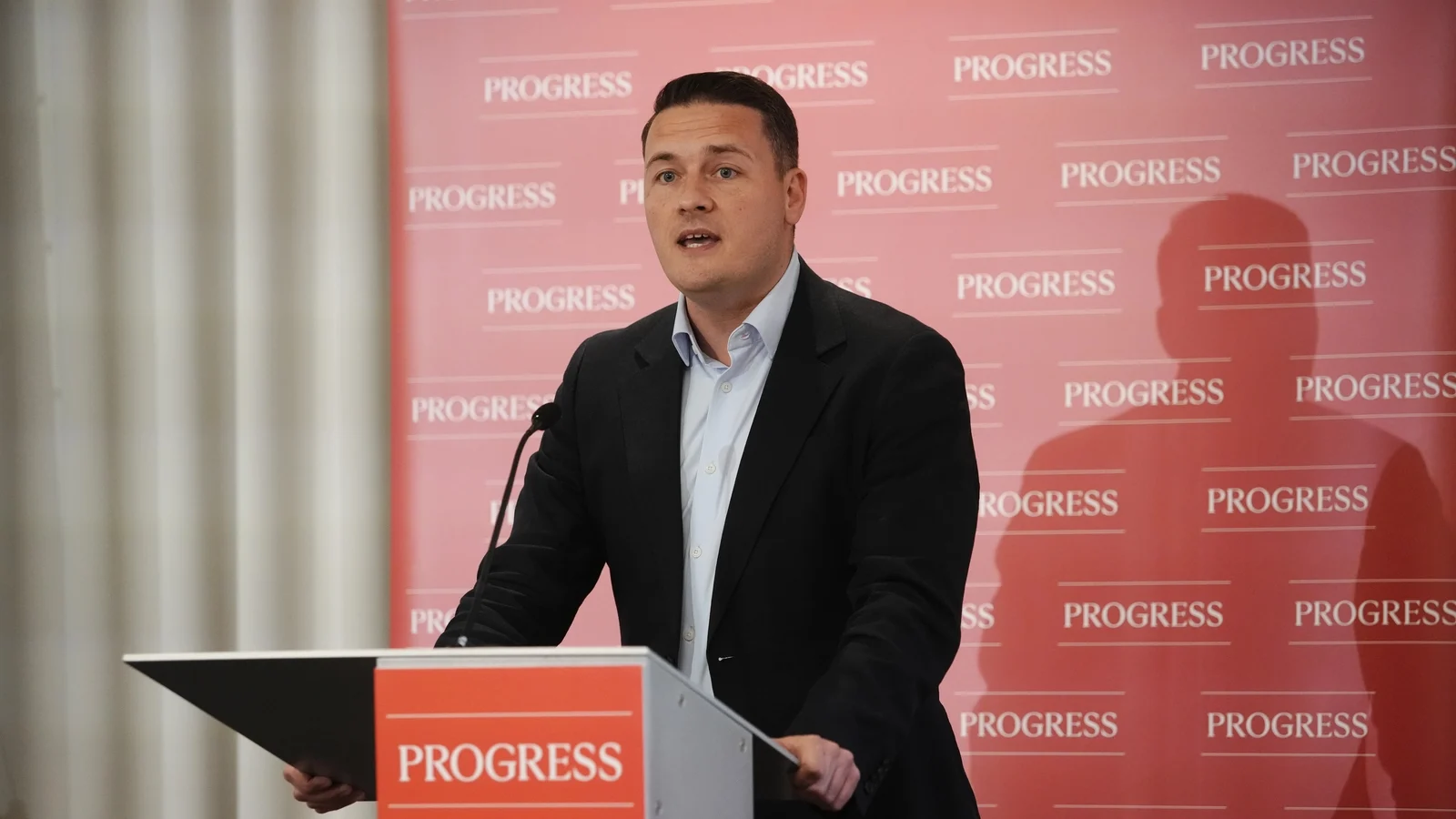
A Party at a Crossroads: The Moment Wes Streeting Said He’d Step Up
On a gray morning in central London, under the polite hum of a conference hall that felt more like a town square than a policy briefing, Wes Streeting stepped forward and made a choice that has the Labour Party—and the country—holding its breath.
“We need a proper contest with the best candidates on the field, and I’ll be standing,” he told reporters, his voice flat with resolve and threaded with the weary cadence of someone who has just made a hard decision. Streeting, who this week resigned as health secretary, framed his announcement as both a personal commitment and a plea for a biennial reckoning: a leadership contest that will test ideas, not personalities.
The moment landed against a backdrop of bruising election results across England, Scotland and Wales—losses that have forced a debate about the party’s direction, its soul and what it should now mean to call oneself Labour in Britain. For many inside and outside the party, that debate is no longer academic.
Why This Feels Different
There is an earnestness to Streeting’s case that is equal parts strategy and sermon. He argued that while he has the support of a swathe of MPs, it would be illegitimate to rush into a contest without giving Andy Burnham—recently cleared to stand in the Makerfield by-election—a fair route back into Parliament. “That might have been the self-interested thing to do for candidates who are in Parliament presently,” he told the Progress think tank, “but it wasn’t in the party’s interest and wasn’t in the national interest.”
That caveat illustrates the tightrope the Labour left is walking: a desire to renew leadership and ideas, and an awareness that the optics of internecine warfare could deepen the crisis rather than resolve it.
Three Ideas, One Vision
In the same speech, Streeting sketched out a triad of priorities he believes should shape Labour’s revival—ambitious, broad and aimed at reconnecting with voters who feel the party has grown distant.
- Re-engaging with Europe: “We need a new special relationship with the EU,” Streeting said, arguing Britain’s long-term future lies with Europe and predicting “one day back in the European Union.”
- Reimagining capitalism: He called for a national debate over what kind of capitalism Britain wants—one that asks who benefits from growth and how the state should shape markets.
- Defending truth in the information age: Invoking the founding of the BBC, Streeting urged action to reclaim public square tools—journalism, public service media—from the corrosive incentives of social platforms.
These are not small ambitions. They speak to global conversations about how center-left parties rebuild after populist surges, about media regulation and about whether modeled social democracy can still offer a convincing route to prosperity and dignity.
Andy Burnham: A Return, or a Reckoning?
Across the Pennines the scene is no less charged. Andy Burnham, the popular former mayor with a formidable personal following in the north west, has been cleared to run in the Makerfield by-election—the seat vacated when Josh Simons stepped down to clear the way. If Burnham wins, many expect him to mount a formal challenge to Keir Starmer’s leadership.
“I’m focused on winning,” Burnham told Channel 4 News, stressing that returning to Parliament to represent people in his patch is his primary goal. “I’ve made a whole career fighting for people in this part of the world… I will carry on taking that fight to the highest level.”
There is a compelling human logic to Burnham’s candidacy. He remains a figure who, at least in polls, connects with everyday voters: Ipsos surveys cited in recent coverage showed him with a net favourability of about 24% in the north west—considerably higher than the national-level ratings of the party or its leader. That local warmth could translate into political leverage at a moment when Labour’s national poll lead has been bruised and Reform UK has surged in certain areas.
Makerfield: More Than a By-Election
Makerfield is normally considered a safe Labour seat, yet at the 2024 general election Josh Simons’ majority over Nigel Farage’s Reform UK was just 5,399. In the months since, political winds have shifted. Reform’s momentum and Labour’s polling dip have turned what would once have been a routine win into a test of whether Labour can still anchor its base in the north.
“If there’s one thing politics teaches you, it’s that the local matters,” said Dr. Maria Iqbal, a political sociologist based in Manchester. “People don’t vote merely for national policy; they vote for who they think understands their daily concerns—transport, NHS waiting times, local jobs. Burnham’s strength has always been in that local credibility.”
Voices from the Ground
In a bakery on a crossroad near Makerfield, the conversation is less about strategy and more about stress—energy bills, overstretched services, the kind of everyday pressures that feed political anger. “We want someone who’ll sort things out, not just shout about it,” said Aisha Khan, who runs the shop. “If he can stand up for our area, people will listen.”
A Labour staffer who asked not to be named said, “There’s fear of division, yes—but there’s also a hunger for change. The question is whether we can have both: a constructive contest that leads to renewal, not ruin.”
What This Means Globally
For readers outside Britain, the drama unfolding is a case study in democratic turbulence: a mainstream party grappling with populist rivals, a pressurized public sphere where truth is contested, and a political class debating whether to pivot, consolidate, or innovate. In France and Germany, center-left parties have gone through similar reinventions; in Latin America and Southeast Asia, opposition coalitions remade themselves after defeats. The story in Britain is both local and global—a mirror and a map.
So ask yourself: what does renewal look like in your context? Is it a new leader, a new set of ideas, or something the polls can’t measure—a restored trust in institutions?
Next Steps and the Road Ahead
Applications for Labour’s Makerfield candidacy close on Monday, and the party’s National Executive Committee is set to endorse a candidate on Thursday. If the timetable holds, 18 June is thought to be the earliest a by-election could take place.
All of this adds up to a compact, intense timeline where local votes could reshape national choices. For a party long accustomed to careful management, the gamble is clear: open the field and risk fragmentation, or close ranks and risk further alienation.
In the end, the Labour Party faces a familiar democratic test: can it turn internal contention into public rejuvenation? Whether Streeting, Burnham, Starmer or another voice emerges as the answer, the coming weeks will tell a larger story about political reckoning in a restless age.
What would you do if you were inside the room where that decision is made? Would you choose bold change, steady stewardship, or something in between?