Grief in Kahramanmaraş: A City That Won’t Forget
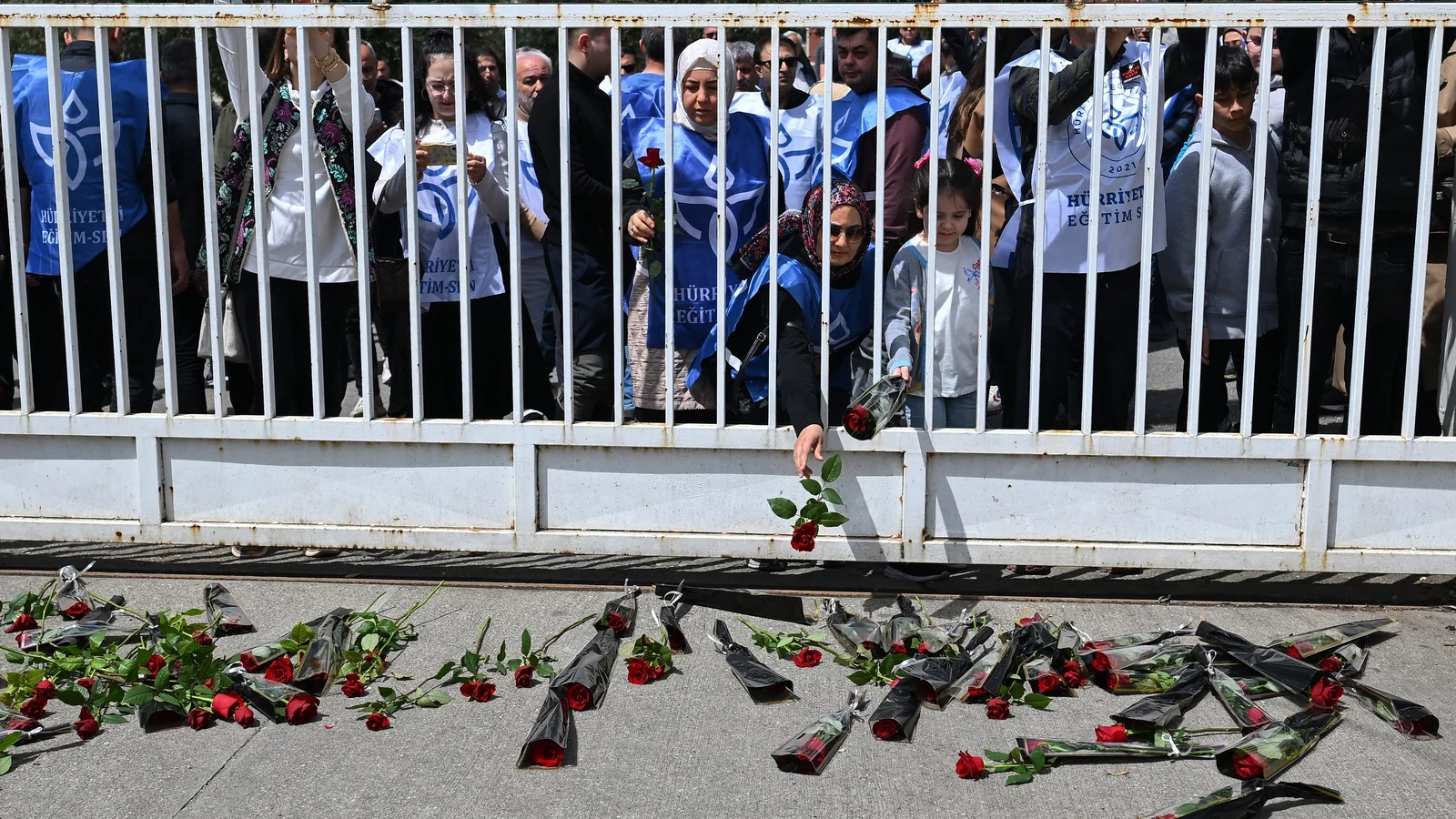
On a cool morning in Kahramanmaraş, where vendors still fry the thick, stretchy Maraş ice cream that gives the city its sweet, stubborn reputation, flowers were being laid in a different kind of place: a school corridor that will now be remembered for a single, terrible day.
Families are preparing to bury nine people — eight children, mostly 10 and 11 years old, and a 55‑year‑old teacher — after a 14‑year‑old entered two classrooms and opened fire. The boy, authorities say, carried five weapons. He died at the scene; the exact circumstances of his death remain under investigation.
“I woke up to calls and then to the names of boys I had seen running to football practice yesterday,” said Fatma Demir, a neighbor of one of the victims. “You don’t expect laughter like that to stop so abruptly.”
What Happened — The Facts, As Known
Local authorities say the attack took place in the southern province of Kahramanmaraş. Police have said the perpetrator’s WhatsApp profile included an image referencing Elliot Rodger, the 22‑year‑old who carried out a 2014 killing spree in Isla Vista, California. Rodger killed six people before taking his own life; he left behind a manifesto and videos that have, over time, become part of an online mythology among some violent extremists.
Investigators seized digital media from the suspect’s home and from a vehicle belonging to his father, a former police inspector who has been detained. Authorities insist preliminary findings show no proven terrorist link and that this appears to be an isolated act, though they continue to probe all angles.
In the immediate aftermath, schools across Kahramanmaraş were closed for two days. Grief has been matched by anger and fear. Teachers’ unions rallied in Ankara, holding banners declaring, “We will not surrender our schools to violence,” and calling for broad strikes to demand accountability and protection.
Another Shock This Week
This massacre came on the heels of a separate shooting in the southeast, in the Siverek district, where a student opened fire at his former high school, wounding 16 people before taking his own life. Together, the two incidents have shattered a national sense of safety: Turkey, like much of Europe and Asia, has not seen the same pattern of school shootings that has so tragically become more common in the United States. That makes these back‑to‑back events all the more jarring.
How the State Responded
Police announced sweeping action on social media and online platforms following the shootings. Arrest orders were issued for 83 people accused of posting content that praised the crimes or criminals or otherwise disrupted public order. Authorities also reported blocking access to 940 social media accounts and shutting down 93 Telegram groups linked to provocative or inflammatory posts.
“We will investigate every thread that may have enabled this violence,” said a senior police official in Ankara. “This is not only a criminal inquiry but a societal one — how ideas spread, how young minds are shaped online.”
Voices from the Ground
In the market square near the schools, people spoke with a mix of bewilderment and anger. “My son begged me to let him play outside this morning,” a father named Mehmet Yıldız told me, voice breaking. “Now I won’t let him out of my sight.”
A local imam officiating a small prayer gathering said, “We teach forgiveness here. But parents must also ask why a child was able to bring weapons into a school. We must face that question together.”
Union leaders were blunt. “Teachers are tired,” said Leyla Özkan, a representative of one of the major education unions. “We are not simply clerks of curriculum; we are caretakers of society’s children. Where were the safeguards? We demand immediate measures to make schools secure, and policies that tackle the online radicalization of our youth.”
Digital Echoes: The Shadow of Copycat Violence
Investigators flagged the suspect’s online imagery as a potential link to a troubling global pattern: the way violent acts and their perpetrators can be amplified and glamorized on social networks, creating a contagion effect.
“We know from behavioral research that adolescents are particularly vulnerable to social identity influences,” said Dr. Leyla Kaya, a child psychologist based in Istanbul. “Imagery, memes, and online groups can validate destructive feelings and give a young person a narrative that explains, even glorifies, their pain. It is an ugly shorthand: rejection, resentment, violent retribution.”
Dr. Kaya urged caution in media coverage, warning against sensational detail while advocating for transparency and mental health resources. “We must resist turning perpetrators into anti‑heroes. Instead, let’s name the failures: social isolation, access to weapons, online ecosystems that feed grievance.”
Questions the Country Is Asking
As funerals are arranged and classrooms sit empty, Turkey faces hard questions. How did a child obtain multiple firearms? What role did online channels play? Are schools — and the adults who run them — equipped to spot warning signs and intervene before private pain becomes public tragedy?
President Recep Tayyip Erdoğan expressed sorrow and vowed a full investigation, saying the attack would be “shed light in all its aspects.” But many on the streets want concrete change, not promises.
“Words are not enough,” said a woman who works at the school and asked to be identified as Aysel. “We need counsellors in every school, safe reporting mechanisms, and a serious dialogue about violence and the internet.”
Beyond Kahramanmaraş: A Global Moment
What happened in Kahramanmaraş is local, raw, and specific. But it also intersects with global questions about youth mental health, social media governance, and the diffusion of violent narratives across borders. In an era when images travel faster than borders, tiny online subcultures can have outsized real‑world consequences.
Are we doing enough to protect children in digital and physical spaces? How do societies balance civil liberties with aggressive efforts to remove harmful content? And perhaps most urgently: how do we prevent our schools — places of learning and play — from becoming scenes of mourning?
Small Steps That Could Matter
- Immediate: increased school security and on‑site mental health support; rapid audits of how weapons enter communities.
- Medium term: tougher oversight of channels known to foster violent content; hotlines and reporting mechanisms for students and parents.
- Long term: community investment, poverty alleviation, and youth services to address isolation and despair before they become despair turned outward.
A City in Mourning — and a Country Searching for Answers
As the city prepares to say goodbye to the children and the teacher, the cadence of everyday life continues in small, poignant ways: the cafe owner down the street keeps a radio on low, the school’s courtyard flowers are being watered by volunteers, and teachers are drafting lists of demands and proposals to bring to the ministry.
“We lost our children,” said Fatma Demir, her hands tightening around a cup of tea. “But we cannot lose our courage. We must keep asking questions until the answers change things.”
What will Turkey — and the world — learn from this week? That is a question whose answer will be written not in statements from officials but in the policies enacted, the supports funded, and the small acts of care that follow. For now, a city grieves. For now, parents hold their children a little closer and wonder how to keep them safe in a world where violence can be both local and global, immediate and amplified.