Blockade, Bargains and the Breath Between Wars: A Gulf at the Edge
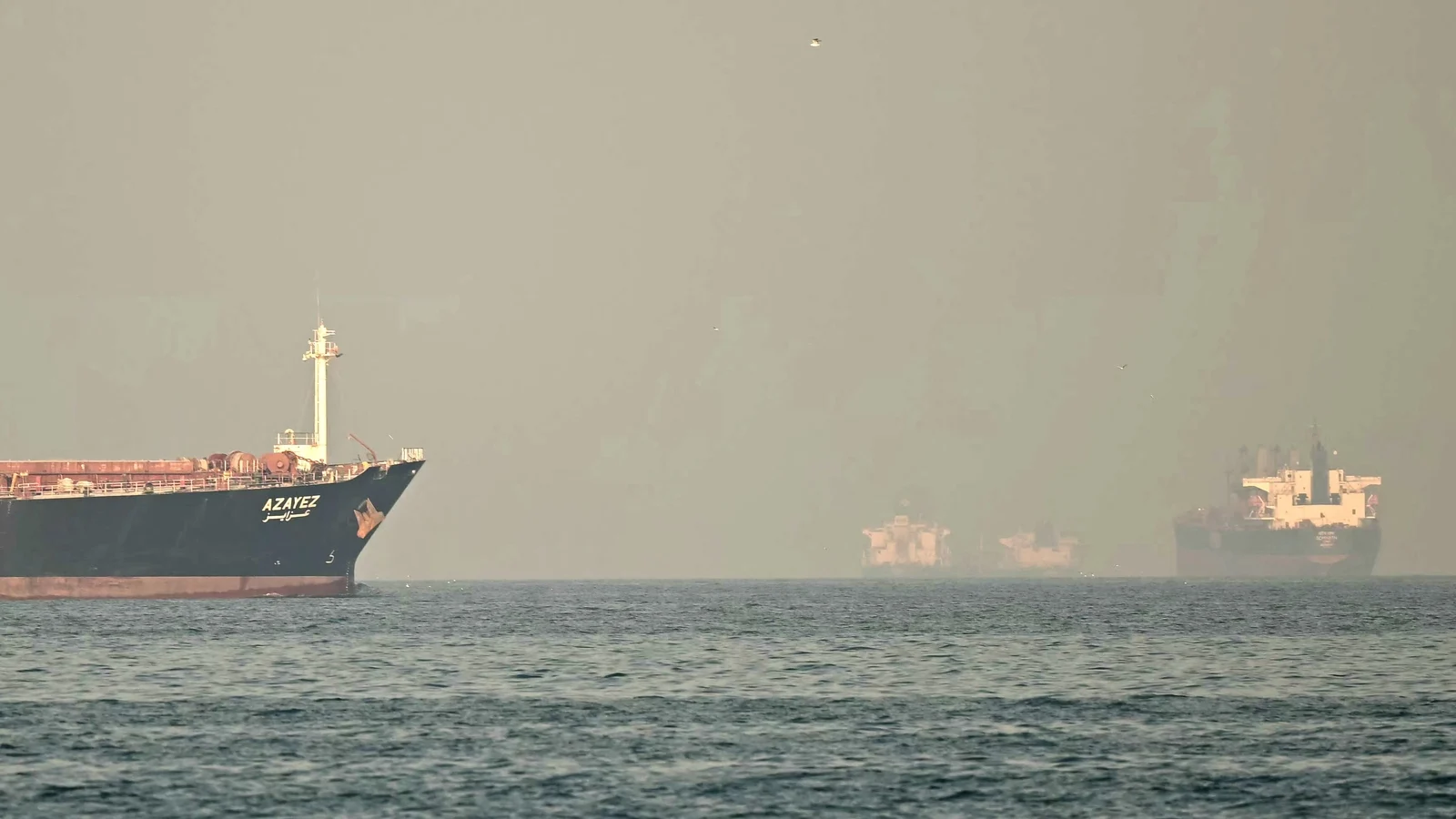
There is a peculiar hush that falls over port cities when trade stops. The cranes pause mid-arc, the deckhands lean on rusted rails and cups of tea cool untouched in the hands of men who have always measured their days by the coming and going of ships. In the Persian Gulf today, that hush is not a local misfortune but a strategic silence: the United States says it has effectively stopped seaborne trade into and out of Iran, even as tentative diplomacy flickers back to life a few time zones away.
“In less than 36 hours since the blockade was implemented, US forces have completely halted economic trade going into and out of Iran by sea,” wrote Admiral Brad Cooper, head of US Central Command, on social media. It is a simple, stark sentence. For Tehran, officials say, shipping is not incidental—“it fuels 90% of Iran’s economy,” Cooper added—so the blockade is a blunt instrument.
Back to the Table — Or Back to the Brink?
On the other side of the ledger, President Donald Trump has signalled optimism that talks may resume imminently. “I think you’re going to be watching an amazing two days ahead,” he told reporters, suggesting negotiators could meet in Pakistan within days and indicating he did not expect to extend the fragile two-week ceasefire that is due to lapse on 21 April.
There is a careful choreography at work. Pakistani officials, Iranian envoys and Gulf intermediaries say negotiating teams could reconvene in Islamabad later this week. One senior Iranian source—speaking on condition of anonymity—told me the calendars were not closed and that “everyone understands a pause is still a possibility, but we have to see whether words turn into deeds.”
On the Ground: Voices from the Gulf
A fisherman in Bandar Abbas named Reza described the blockade in small, human terms. “Boats don’t need to be shot at to be damaged,” he said, fingering a frayed rope. “When cargo stops, my son’s wages stop. When my son’s wages stop, the shopkeepers close. We smell war in the air—sometimes it arrives in the belly.”
In Dubai’s coffee shops and Tehran’s teahouses, the conversation is the same: fear braided with weary hope. A Lebanese teacher in Beirut commented, “We have lost so many already—people talk about numbers, but tonight we count the names.” The toll cited by multiple sources: roughly 5,000 dead in the conflict so far, with about 3,000 in Iran and 2,000 in Lebanon. Those numbers are more than statistics. They are empty chairs in kitchens from Shiraz to Sidon.
Diplomacy Under Pressure: Nuclear Moratoria, Sanctions and the Big Ask
What’s blocking a deal? The nuclear question, which always has been the Gordian knot in relations between Washington and Tehran. Over the weekend in Pakistan, U.S. negotiators reportedly offered a sweeping 20-year suspension of all nuclear activity in Iran. Tehran countered with a far shorter pause—three to five years, according to people briefed on the talks. It is a chasm measured in decades and trust.
Rafael Grossi, director of the International Atomic Energy Agency, framed the issue clinically in Seoul: a moratorium’s length is ultimately a political decision, he said, and one that could be used as a confidence-building measure. “There are technical pathways to verification,” Grossi explained, “but politics decides timelines.”
On the other side of the ledger, Tehran insists any pause should be matched by sanctions relief; Washington wants verifiable removal of enriched material. “Each side is asking the other to start from the thing it fears losing most,” an analyst at a Middle East policy think-tank told me. “That creates bargaining space—but also a lot of pressure.”
Complications Beyond the Table
Even if negotiators can find a compromise on enrichment, the region’s violence complicates matters. Israel has continued military operations in Lebanon targeting Hezbollah—operations the US and Israel say are not part of the ceasefire, while Iran insists they are. Those differing legal interpretations undermine the fragile trust necessary for any broader settlement.
International outrage has been rising. Britain, Canada, Japan and several other countries jointly condemned recent attacks that led to the deaths of UN peacekeepers in Lebanon, calling for an “urgent end to hostilities.” The death of three Indonesian peacekeepers last month was cited as a particularly dark marker of conflict spilling beyond state-on-state exchanges.
Markets, Movement and the Maritime Map
The diplomatic back-and-forth has immediate global reverberations. The Strait of Hormuz—this narrow throat of water between Iran and the Arabian Peninsula—matters to the world’s energy markets. Historically, roughly one-fifth of seaborne oil flows through the strait, and when the waterway is threatened, prices move. Oil benchmark prices eased for a second day on the hints that talks might resume. Asian stocks rose; the dollar, which had been on a seven-session slide, steadied.
And yet the sea still tells its own tale. Several vessels turned back under the blockade, including the Rich Starry, a Chinese-owned tanker sanctioned by the US, which reversed course toward the Strait of Hormuz after exiting the Gulf. The Wall Street Journal reported that US forces had intercepted eight Iran-linked vessels since the blockade began—numbers that underline the degree to which economics and security have been fused into a single, high-stakes tactic.
What Would Success Look Like?
Imagine for a moment that a deal emerges: a limited, verifiable pause on enrichment; a phased sanctions rollback; assurances that Israel’s activities in Lebanon would be addressed by separate mechanisms. Would that bring durable peace? Perhaps. Or perhaps it would simply buy time—an interlude in a longer, more complicated rivalry that will need economic, political and social reconciliation to be solved for good.
“We can stop the shooting, but you cannot engineer trust at gunpoint,” an experienced diplomat who has worked on Iran nuclear issues told me. “Trust takes institutions, transparency, and time.”
Questions for the Reader
What would you ask negotiators if you could sit at that table? Is a deal that freezes nuclear progress for two decades worth the economic and political costs of a blockade? And how should the international community weigh the lives lost—5,000 and counting—against the strategic calculus that brought them here?
Lasting Echoes
There are scenes from ports that will stay with me: a container yard where a security guard chews on a sunflower seed and says, almost casually, “We used to have trucks every hour. Now we wait.” An elderly woman in Beirut folding a map of the region into a square and telling me, “Maps are like promises; sometimes they tear.”
If the coming days bring negotiators back to a table in Pakistan, we should welcome the effort while remembering that diplomacy is slow and that human lives are not—they break quickly. The blockade is a lever. So too is dialogue. Which one bends the world toward peace depends—more than anything—on the willingness to trade bravado for compromise, and suspicion for a chance to rebuild.