Night of Fire: Drones and the New Geography of Energy Warfare
They say wars change the map. Lately, they are also changing the map of energy. In the hush between midnight and dawn this week, drone swarms traced new lines across Russia’s energy infrastructure—picking out refineries, tank farms and port terminals that, until now, sat largely beyond the front lines of a conflict centered hundreds of kilometres away.
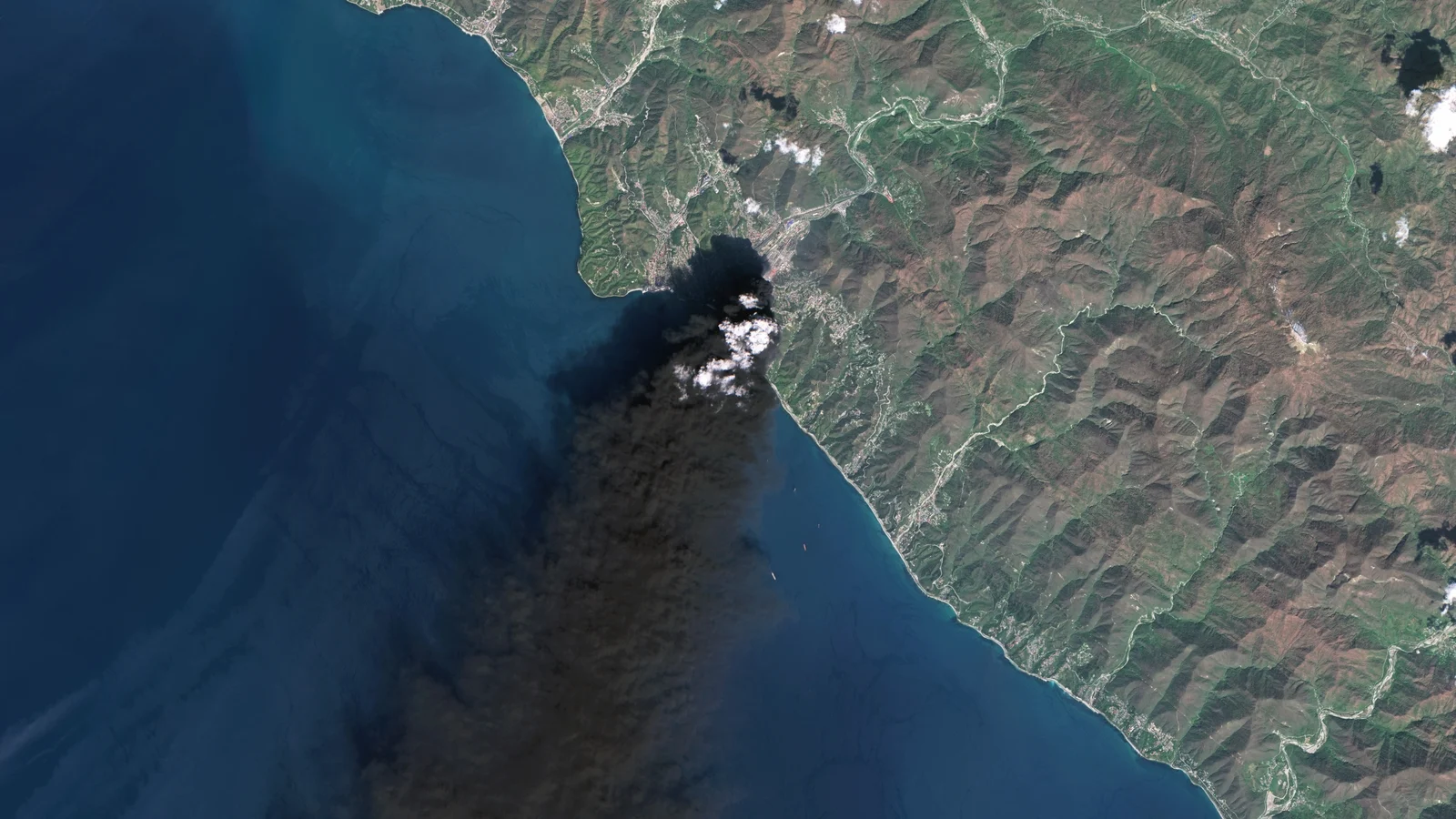
From the windswept piers of the Baltic to the industrial banks of the Volga, flames licked storage tanks and black smoke stained the sky. Local officials in the Leningrad region reported a blaze at Vysotsk, a Baltic Sea port where terminals load fuel oil, diesel and naphtha onto ships. In the Samara oblast, two refining hubs—Novokuibyshevsk and Syzran—were struck. Farther south, an oil depot in Tikhoretsk and a terminal at the Black Sea port of Tuapse were also reported ablaze, and a site in Sevastopol under Russian occupation in Crimea was hit as well.
The immediate image is cinematic: orange reflections on water, cranes silhouetted against smoke, firefighters racing under the glare of floodlights. But the scene has a strategic heartbeat. Energy infrastructure is not just collateral; it is a seam of economic power that funnels cash into Moscow’s war effort. Cutting that flow is the aim. But at what cost?
Why these targets?
“They are striking where oil moves: ports, pipelines, refineries,” said a defense analyst based in Kyiv who asked not to be named for safety reasons. “It’s logistics warfare—disrupt the supply chain, disrupt the money.”
Ukraine’s drone forces have increasingly focused on the oil economy abroad, sometimes reaching deep into Russian territory. Commanders argue that by degrading export capacity, they can make it harder for Moscow to sell fuel on world markets and to finance military operations. One Ukrainian operations commander publicly noted the deliberate targeting of refineries and terminals and framed it as an economic counterpunch to the battlefield deadlock.
Ukrainian sources claimed a cumulative reduction in daily oil shipments of about 880,000 barrels after a string of hits on ports including Primorsk, Ust-Luga, Sheskharis and Tuapse. That figure could not be independently verified at once, but even a partial cut in shipments would reverberate across trade flows that handle millions of barrels each day.
Context matters: Russia’s hydrocarbon exports have been a cornerstone of its federal finances for years. While estimates vary, hydrocarbons have historically contributed a substantial portion—often measured in the tens of percent—to federal revenue. Pressure on that income stream is precisely the lever Kyiv seeks to pull.
Voices from the ground
In Vysotsk, a dockworker who asked to be referred to as Ivan explained the mood on the quay the morning after the attack. “We woke to the smell of burning, to the sound of sirens. A ship stood at the berth, her hull dark with soot. People here are used to storms and cold Baltic water, but not to explosions,” he said. “We don’t know what tomorrow brings.”
A resident of Syzran, a city that grew up around Soviet-era petrochemical plants on the Volga, offered a different cadence. “This refinery is more than an industry—it’s our calendars, our meals, our holidays,” she told me. “At the same time, people say if the machines of war run on this fuel, then it becomes a target.”
At a small café in Krasnodar, a teacher stirring her tea shrugged. “We have lived with warnings and checkpoints for years now. You learn to keep your life small—school, shops, the market. But then you look at the news and think, what about the people who work at those terminals? Do they get a choice?”
Experts in energy security warn of secondary effects beyond immediate damage: insurance premiums for tankers could rise, chartering routes may shift, and logistical snarls could create localized shortages or price spikes, affecting ordinary people far from the blasts.
Environmental and human costs
Fires at oil depots are not abstract statistics—they poison air, blacken shorelines and endanger first responders. A tanker-sized spill or an extended blaze can harm coastal fisheries and tourism, blight local livelihoods and leave scars that take years to heal.
“Even if the charred tanks are repaired, the ecosystems won’t recover overnight,” said an environmental scientist in St. Petersburg, who has studied oil blowouts in northern waters. “Birds, benthic life, even soil quality around refineries—these effects are real and expensive.”
What this means beyond borders
This is not merely a bilateral exchange. Energy markets are global, and each disruption ripples outward. How Europe sources fuel, how insurers price risk, how shipping lanes are plotted—these decisions now account for strikes that can occur in port towns and refineries long thought to be safe havens.
The strikes have also intersected with diplomatic manoeuvres. Kyiv’s push against maritime oil exports dovetails uneasily with moves by other powers to maintain energy flows, such as recent discussions over waivers permitting the at-sea purchase of sanctioned Russian oil. These legal and political patches can blunt some of the operational impacts of attacks, but they also complicate the simple calculus of economic pressure.
Is this escalation a new normal? If drones can reliably hit infrastructure many hundreds of kilometres from the front, nations everywhere must rethink the concept of ‘home front’ security. Seaports, pipelines, refineries—places we imagine as industrial backdrops—are now military frontiers.
Broader themes and questions
We are witnessing a convergence of technological smallness and geopolitical largesse: relatively inexpensive drones leveraged to strike assets that cost billions. Is this asymmetry a democratic equalizer or a chaotic destabilizer? Does the targeting of economic inputs to war constitute legitimate strategy, or does it widen the circle of harm to civilians?
Every strategic decision here carries moral and practical consequences. The people who work in refineries are often not soldiers. The communities that pay the environmental price are not policymakers. And yet their lives become entangled in the broader contest of power.
Looking ahead
Authorities on all sides will scramble to harden facilities, reroute shipments, and shore up public messaging. Companies will reassess risk and maybe pass costs to consumers. Diplomats will once again juggle sanctions, waivers and alliances. The technical choreography of security—radars, interceptor drones, hardened storage—will intensify.
But beneath the hardware and headlines, there is a more human question: what kind of wartime economy do we want to permit? Is degrading an enemy’s revenue worth the environmental, social and regional toll it exacts? And if the theatres of war now include ports and pipelines, how do ordinary citizens regain a sense of safety?
You, the reader, may live thousands of miles from Vysotsk or Syzran, but the story reaches you. Rising energy prices, supply chain detours, and the human fallout of these strikes will be part of the coming months. What do you think—can economic pressure craft a path to peace, or does it simply broaden the war’s shadow?
For now, the nights along Russia’s coastlines and riverbanks will carry new watchfulness. The cranes stand like questions against the smoke. And somewhere, a dockworker, a teacher, a fisherman, an analyst—each with their own small truths—wait to see what dawn brings.