The Return of the Draft: Europe’s Quiet Reboot of Citizen Armies
On a rain‑slick morning in Ahlen, western Germany, a line of young people hunched into their jackets waiting to register. Some chatted about university applications; others clutched CVs and sported the nervous energy of first‑time job seekers. A stern drill sergeant barked orders in the distance, but what you could see, more than the uniform, was a question etched on every face: what does service mean in a Europe that suddenly feels less certain?
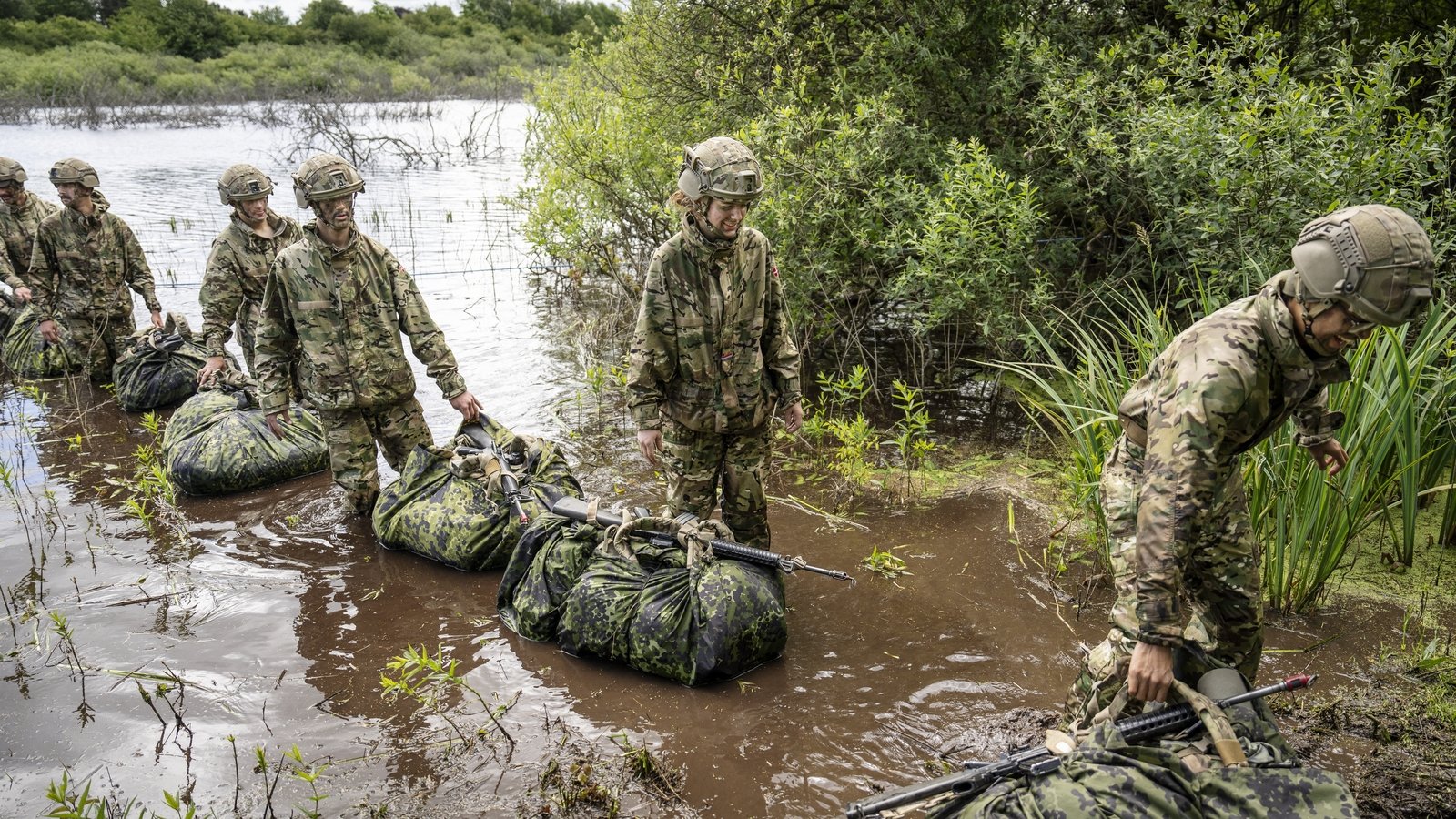
Since Russia launched its full‑scale invasion of Ukraine, governments across the continent have quietly but decisively rewritten a chapter many thought closed after the Cold War. Once, the post‑1990s orthodoxy favored lean, professional armies and the idea that national defence could be outsourced to small standing forces and international alliances. Today, the drumbeat is different: call it a return to citizen soldiers, a revival of conscription in new clothes, or simply a pragmatic move to ensure readiness.
From Professional Armies to Mass Reserves
What we’re seeing is less a monolithic return to compulsory national service and more a range of hybrid models. Some countries are reintroducing mandatory drafts. Others are offering attractive short‑term contracts, incentivised voluntary programs, or national training courses designed to build large reserve pools. The logic is straightforward: trained bodies are the backbone of deterrence.
“We no longer live in a security environment where ambition equals complacency,” said Dr. Elena Kovac, a defence analyst in Brussels. “European capitals have recalibrated. It’s not nostalgia for the past; it’s an insurance policy for the future.”
Germany and France: Different Flavors of the Same Idea
Germany’s parliament voted in early December to create what officials call a voluntary conscription system — a phrase that has already been contested on the streets and in cafés. Young men turning 18 will complete a digital questionnaire and a medical review, and those who opt in will serve six to 11 months. Recruits will receive a monthly pay of roughly €2,600 and, after their initial service, will become part of the reserves. The target is striking: the Bundeswehr aims to grow from about 184,000 active personnel and 60,000 reservists today to roughly 260,000 full‑time soldiers and 200,000 reservists by 2035.
But the law also contains a caveat that sits uneasily with many: it permits the activation of a wider draft if security conditions demand it or if enlistment goals fall short. Thousands of students protested across German cities the weekend the bill passed. “We’re not opposed to security; we’re wary of sudden powers,” said Lara Meier, a sociology student in Cologne, holding a handmade placard. “This bill feels like a first step that could turn into something bigger.”
France, too, is reviving a form of national service for 18‑ and 19‑year‑olds after a two‑decade hiatus. President Emmanuel Macron framed the plan as aligning France with its European partners: recruits will spend 10 months in service, earning around €800 a month, as Paris aims to enrol 10,000 volunteers annually by 2030. “We must not stand still,” Macron said when announcing the plan, pointing to a changing security landscape that leaves no room for complacency.
Northern Europe: A Longstanding Sense of Frontier
Closer to the eastern flank, the scars of past geopolitics have kept conscription alive or born it anew. Lithuania reintroduced compulsory service in 2015, and Sweden resurrected a selective conscription system in 2017 for both men and women. The Swedish model is meritocratic and surgical: all 18‑year‑olds answer an online questionnaire, undergo tests and interviews, and the military selects under 10% in a given year — last year that meant about 7,000 recruits serving between nine and 15 months.
Finland never abandoned the draft. Every man is eligible for six to 12 months of service, with conscientious objectors able to opt for civil service, often twice as long. These conscripts become reservists until their 50s: in crisis, Finland can mobilise up to roughly 280,000 trained reservists. “This isn’t about aggression; it’s about readiness,” explained Captain Aino Pietilä at a Finnish training base. “We prepare so that citizens know how to protect what they love.”
Estonia, which has maintained conscription since breaking free from the Soviet Union in 1991, counts about 40,000 reservists and treats military service as a civic rite for many. “I met people who came back from service more confident, more community‑minded,” one young Estonian teacher told me. “It’s woven into a sense of national survival.”
Varied Responses Further West
Not every European government is marching in the same direction. Poland, which ended conscription in 2008, has opted for flexible, modular training: a recent program allows citizens to sign up for between one and 30 days of basic military and survival training, with a target of training 100,000 people by 2027. Political surveys in Poland are mixed — one late‑November poll suggested 59% support for reinstating compulsory service, while other polls paint a less enthusiastic picture.
The United Kingdom, despite being one of Europe’s nuclear powers, has no plans to revive conscription. Ireland and Malta, both neutral, have no history or appetite for a draft. Italy and Spain rely on professional forces, though Italian officials have floated voluntary service models similar to France and Germany. The farther west and south you travel from NATO’s eastern flank, the less appetite there seems to be for mandatory service — a pattern as much cultural as it is strategic.
Quick Overview: Who’s Doing What?
- Germany: new voluntary conscription (6–11 months), pay ~€2,600, reserve targets by 2035.
- France: 10‑month national service for 18–19 year olds, €800/month, aim 10,000/year by 2030.
- Sweden: selective conscription for men and women, <10% conscripted, ~7,000 last year.
- Finland: continuous conscription for men, mobilisable reserves up to ~280,000.
- Estonia, Latvia, Lithuania: conscription reintroduced or maintained; Baltic states especially focused on reserves.
- Poland: modular training for civilians; large reserve and training ambitions.
What This Means for Young People and Societies
At stake is more than manpower. Europe’s revival of conscription-like programs forces a conversation about citizenship, intergenerational obligations, and the militarisation of daily life. For some families, service is a source of pride — a rite that teaches discipline, first aid, camaraderie. For others, especially in large metropolitan areas, it raises questions about civil liberties, the role of the military in society, and unequal burdens across socioeconomic lines.
“We must ask: who bears the cost?” wondered Professor Marta Delgado, a sociologist in Madrid. “If conscription becomes the patch to fix budget shortfalls, it risks becoming coercive. If it’s a well‑resourced civic program, it can knit communities closer together.”
There are practical questions, too. How do countries ensure meaningful employment and retraining pipelines for reservists? How will these programs adapt to new forms of warfare — cyber, drones, information operations? And what will happen if political winds shift and the urgency that drove these reforms cools off?
Conclusion: A Continent Rethinking Its Contract
Walking past the registration tent in Ahlen, a woman in her sixties paused to watch. “When I was young, we marched for hope,” she said, eyes bright with a mixture of worry and resolve. “Now they march for safety. That’s a different kind of hope.”
Whether Europe’s new emphasis on citizen soldiers will prove a prudent hedge or a slippery slope is a question only time can answer. For now, what is clear is that the post‑Cold War era of small professional forces has been reassessed. Governments are betting that a broader base of trained citizens—whether through conscription, voluntary service, or modular training—will strengthen deterrence and deepen civic ties.
So I’ll leave you with this: should defence be a private choice, a public duty, or something in between? The answer may define a generation.