Night of Fire and Fury: How a Small Town Became a Mirror for a Country’s Pain
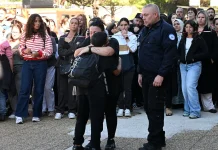
They arrived at dusk in a blur of headlamps and headlights, a knot of people bearing grief like a second skin. Alice Springs—red dust, eucalyptus perfume, and tourist postcards of the “Red Centre”—felt suddenly raw and intimate. In the space of a single night, grief became rage, and a community that has long been bruised by history and neglect found itself confronting two things at once: the death of a five‑year‑old child and the question of what justice should look like when institutions have repeatedly failed.
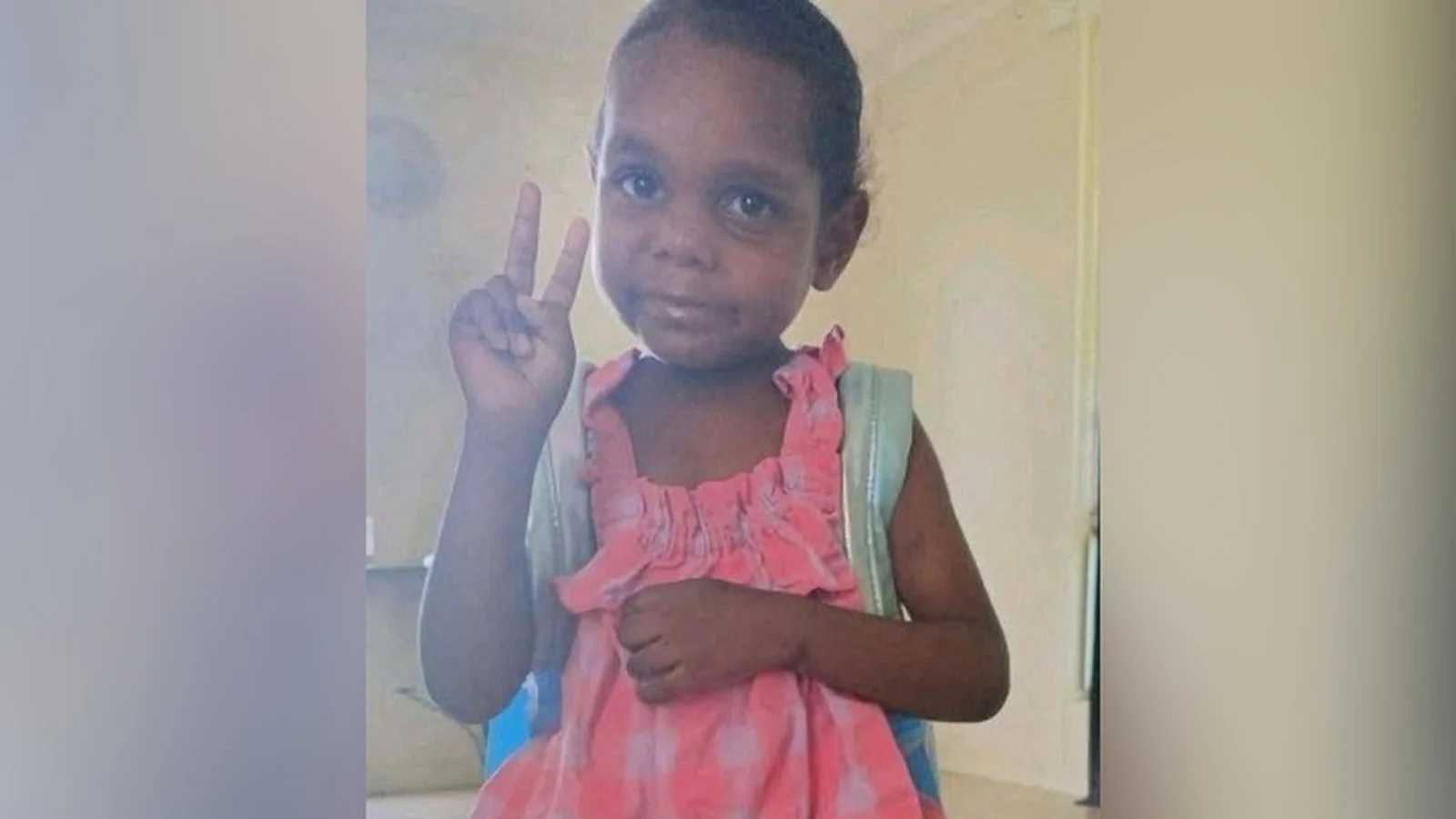
The child, known within family and community circles as Kumanjayi Little Baby in keeping with Indigenous naming customs, was reported missing late on Saturday. By the following day, after hours of searching through dense spinifex and the rocky gullies that circle town, one of the search parties found her body. The discovery ignited not only mourning but a communal fury that spilled onto the streets.
What happened that night
According to Northern Territory police, a 47‑year‑old man, named by authorities as Jefferson Lewis, presented himself at one of the town camps. Locals say he was beaten unconscious by members of the camp before he was taken to the regional hospital. Video footage and eyewitness accounts circulated quickly: people shouting for “payback”—a term used in some Aboriginal communities to mean traditional retribution—and setting fires in the hospital car park.
Roughly 400 people gathered outside the hospital, police said. Rocks and other projectiles were thrown, ambulances and police vehicles were damaged, and several officers and medical staff were hurt. Police deployed tear gas to disperse the crowd. In the early hours, authorities moved the suspect to Darwin for his own safety and to allow legal processes to begin without the immediate threat of vigilante action.
Voices from the street
“We found her under the ghost gums,” said Aunty Maree, an elder who joined the search parties, her voice a low tremor. “You cannot tell a parent that a fire will fix the hurt. But you will know what it is to want the world to feel your pain.”
“We are exhausted with waiting,” said a young man who asked to be named only as Daniel. “Every time someone does wrong, the response is either silence or more silence—until it overflows. People were not thinking about laws that night. They were thinking about a little girl and what could have been done to stop this sooner.”
Northern Territory Police Commissioner Martin Dole described the vigilante beating as the immediate catalyst for the crowd’s fury but urged calm. Prime Minister Anthony Albanese, speaking from Canberra, expressed understanding of the community’s anger while calling for restraint: “I understand people’s anger and frustration,” he said, “but we must let the legal system do its work.”
Damage done—and measures taken
The night left scars: smashed windows, singed hospital fences, and at least several injured first responders. Authorities announced a temporary, day‑long ban on takeaway alcohol in the town and said police reinforcements were being flown in from Darwin to prevent further escalation. Those restrictions join an existing patchwork of alcohol controls, a contentious policy tool that local leaders both criticize and sometimes support as a necessary but imperfect measure.
- Temporary takeaway alcohol ban imposed
- Additional police deployed from Darwin
- Suspect relocated to Darwin for safety and processing
Statistics that haunt the scene
The raw violence of the night cannot be divorced from the longer arc of social inequality. Indigenous Australians make up about 3.8% of the nation’s roughly 27 million people, yet they face stark disadvantages across health, education and justice systems. Government reports have long flagged gaps in life expectancy—often cited at roughly eight years for Indigenous men and seven to eight years for Indigenous women—and Indigenous people are incarcerated at many times the rate of non‑Indigenous Australians, a disparity that has persisted for decades.
These are not merely numbers. They are the backdrop of towns like Alice Springs, where thousands of Aboriginal people live in camps on the outskirts—dense, communal settlements often lacking adequate housing and services. “This is structural grief,” said Dr. Helen Matthews, a social policy researcher who has worked in the Territory for 15 years. “When a system fails whole communities over generations, the flashpoints we see are not anomalies; they’re manifestations of deep neglect.”
Tradition, trauma and the raw edge of payback
“Payback” is a word that carries careful meaning and heavy weight. To some, it refers to traditional, community-mediated responses to wrongdoing—responses that are complex, varied, and often aimed at restoring balance rather than simply inflicting punishment. In the chaos of an angry night, however, the practice can look like mob action.
“What the kids learned that night is not law,” said Robin Granites, an elder and family spokesperson. “This man was caught thanks to community action. Now we must allow the courts to decide. We need grieving, not theatrics.” His voice was steady but the sorrow in it was unmistakable. “We are hunters of peace, not of headlines.”
How do we move forward?
That is the question echoing beyond Alice Springs: How does a nation reconcile with people who have lived here for some 50,000 years while still being bound by a colonial legal system and a modern economy that often leaves Indigenous communities behind?
Some answers will come from courts and careful investigations. Others will come from long, slow investments in housing, education, and culturally appropriate health services. And still others will require a communal act of listening—government to community, non‑Indigenous Australia to Indigenous Australia, and one generation to the next.
“We want justice, not spectacle,” said a schoolteacher who has worked in the town for two decades. “If we rush to anger, we lose the chance to rebuild trust.”
A plea for both justice and compassion
On the red earth at dawn, with smoke still curling into the pale sky, the mood feels fragile and hopeful at once. There is a demand for accountability—understandable, fierce, and human. There is also a plea for restraint, ritual, and the slow work of repair.
As readers, what do we owe to scenes like this? Sympathy? Policy pressure? A refusal to look away? If you live far from the scrub and the hummocks, remember that this is not a distant cultural drama: it is a portrait of how inequality, history and trauma can collide in the life of a child and ignite an entire town. What kind of justice would satisfy both the letter of the law and the soul of a community? And how do we, as a nation and as neighbors, begin to make that possible?
For now, Alice Springs mourns. So does a family whose name is wrapped in cultural care. And so, in its messy, painful way, does Australia—asked again to reckon with the past in order to prevent more nights like this one.