Two Siblings, One Flag: Greenland’s Biathlon Story on the World Stage
They ski as if the wind itself was keeping time.
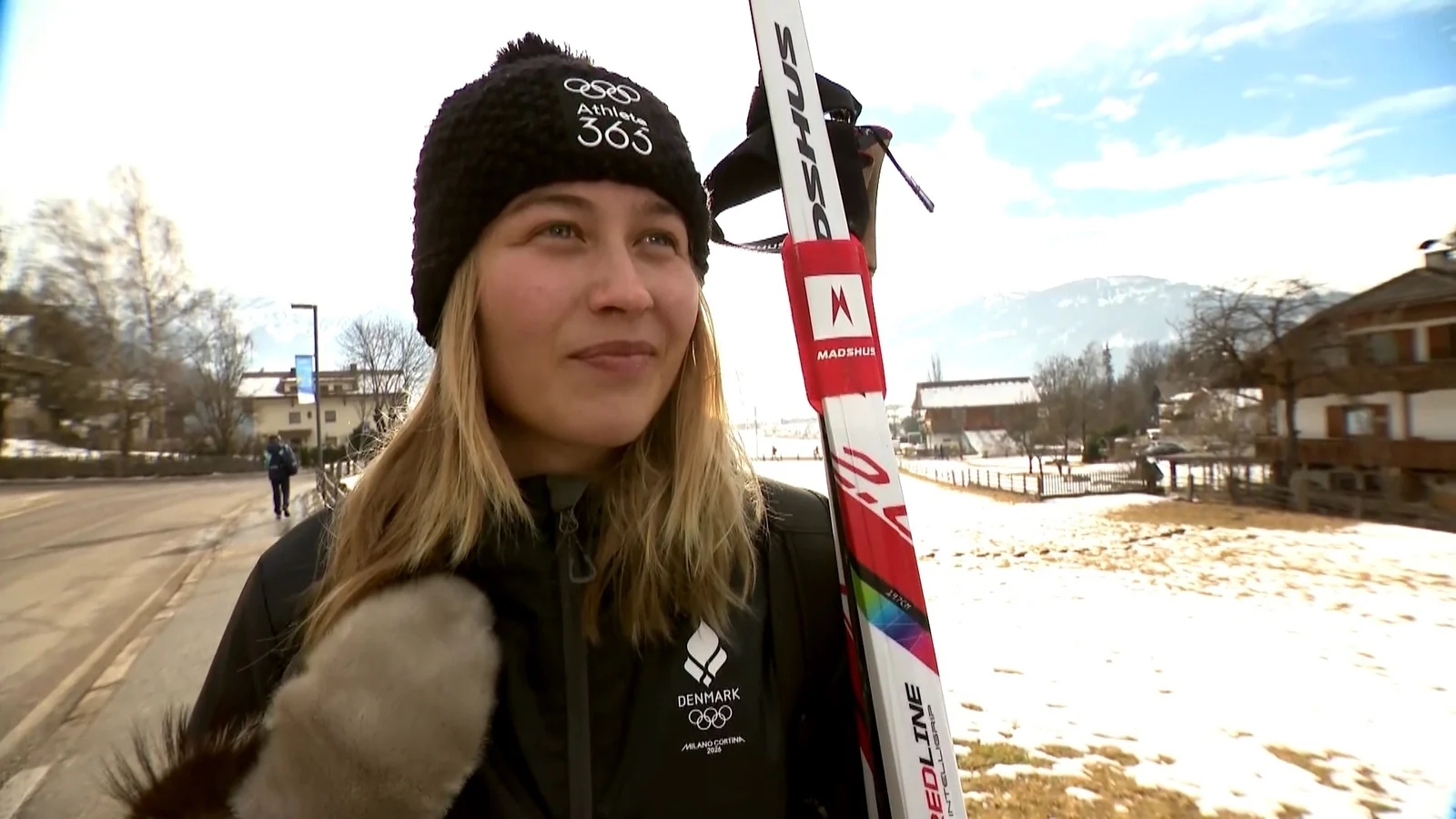
On the frozen loops of a Winter Olympic course—where heartbeats sync with the tick of skis and the sudden, breathless calm of the shooting range—Sondre and Ukaleq Slettemark carry something heavier than the rifles on their shoulders: the weight of a place that doesn’t officially exist on the Olympic map.
Greenland, an island of jagged fjords and wind-licked tundra, sends these siblings to the Games under Denmark’s flag. The arrangement is practical and legal—the island is an autonomous territory within the Kingdom of Denmark and has not been recognized by the International Olympic Committee as a separate National Olympic Committee—but it cracks open questions about identity, belonging, and the way small nations are counted in a world that still prizes formal recognition above lived reality.
The pride beneath the Danish colors
“When I step onto the course, I think of home,” one villager told me, wrapping a woollen scarf tighter against the cold. “We are Greenlandic. That flag in the stadium is not the one from our town, but the feeling is still ours.”
Ukaleq has spoken publicly about her pride in representing Greenland even while competing for Denmark. It’s an intimacy of contradiction: the throat-tight thrill of seeing Greenland’s name in conversations, the quiet ache that comes from not being able to march under its own banner.
“I am proud to be from Greenland,” an elder in Nuuk said, sipping coffee in a kitchen that smelled of dried fish and diesel. “We have our songs, our language, our hunting stories. When our children are at the Olympics, we are there too—even if the flag over them is not ours.”
Why Greenland doesn’t have its own Olympic team
Some facts help orient the paradox: Greenland is enormous—about 2.16 million square kilometres, more than twice the size of Texas—but sparsely populated, home to roughly 56,000 people. It has deep, centuries-long Inuit cultural roots and significant self-government: Denmark granted home-rule in 1979 and expanded autonomy in the 2009 Self-Government Act, which transferred many responsibilities to the island’s own authorities.
Yet in international sport, the criteria are strict. The International Olympic Committee recognizes National Olympic Committees from sovereign states, or territories that meet narrow criteria. Greenland has repeatedly sought separate IOC recognition, arguing that athletes should compete under their own flag. The bid has not yet succeeded. For now, Greenlandic athletes who reach the Olympic standard do so under Denmark’s banner.
What competing for Denmark means on the ground
There is gratitude, too. “Without Denmark’s Olympic funding and infrastructure, many of our young athletes would never make it to the world stage,” said a coach who has worked with biathletes in Greenland and Denmark. “It’s complex—support and visibility are crucial, but so is the right to represent one’s homeland.”
That support can mean coaching clinics in Scandinavia, travel grants, and access to competition—the kind of resources that transform a talented island skier into an Olympian. For families in small settlements, seeing one of their own on television is nothing short of electric.
“My nephew cried when he saw Ukaleq on the big screen,” a schoolteacher in Ilulissat said. “He pointed and said, ‘That’s us.’ It was as if our whole town had walked into the stadium.”
When geopolitics crashes the ski track
The story takes another twist when geopolitics enters the frame. In 2019, then-US President Donald Trump publicly suggested purchasing Greenland—a sensational proposal that islanders and Danish officials alike met with bewilderment and, often, amusement or irritation.
“We are not for sale,” Greenland’s premier said at the time. The remark went viral, emblematic of how the island is sometimes reduced to a bargaining chip in global conversation about resources, Arctic strategy, and real estate fantasies.
For athletes like the Slettemarks, those headlines are part of a larger tapestry. “On the one hand, the world mentions Greenland more,” a political analyst said. “On the other, the attention can be shallow—an exotic headline, rather than engagement with the island’s needs and aspirations.”
What the attention brings—and what it doesn’t
International headlines can catalyze interest in Greenlandic culture and climate reality. The Arctic is warming four times faster than the global average, with dramatic impacts on ice, sea levels, and traditional livelihoods. More attention can mean more funding for research, tourism, or cultural exchange.
But sensational proposals like a sale do little to empower the island’s long-term goals of greater international recognition. “We want partnerships,” a member of a Nuuk youth council said, “not auction adverts.”
Biathlon, identity, and the long ski home
Biathlon is a sport of contradictions: sprinting breathlessly through cold air, then finding a stillness so absolute you can hear the rifle’s click. It seems fitting, then, that two siblings from a place of extremes would excel at it.
“Biathlon makes you honest,” the siblings’ coach said. “You can’t hide a bad day. Either your heart is steady at the range, or you pay for it on the track.”
That honesty—of identity, history, and aspiration—plays out in every lap. Fans in Greenland watch via streamed races, gathered in community halls or spilled out onto porches, cheering when a Slettemark laps another competitor. The medal counts and rankings are one thing. The sight of someone from a small island competing on equal terms with athletes from global sporting giants is another.
Why this matters beyond sport
Consider the broader questions: Who gets to be counted on the world stage? Which places are given their own banners, voices, and institutions? As the climate shifts and global attention turns northward for economic and strategic reasons, the need for Greenlandic self-determination and cultural recognition intensifies.
“Sports can open doors,” said a sociologist who studies small nations in global forums. “They provide visibility. But visibility without agency is hollow. Representation—symbolic and institutional—matters.”
What to watch for next
- Greenland’s ongoing diplomatic push for greater international recognition, including in sports forums.
- Potential funding and training pipelines that help young Greenlandic athletes bridge remoteness and elite competition.
- How global interest in the Arctic—driven by climate, resources, and geopolitics—affects local communities’ ability to set their own agendas.
Final glide
When the siblings ski, they leave two kinds of tracks: one in the snow—clear, crisp, the black mark of skis on white—and another in the imagination, where a boy in a fishing village or a girl in a Nuuk school imagines themselves on the world stage.
These marks matter. They remind us that the world is full of places that are more than headlines and that identity can be both stubborn and supple. They invite us to ask: how do we honor the people behind the flags, whatever flag they carry in international arenas? What does it mean to belong, when borders are combinatory and histories are layered?
As Sondre and Ukaleq glide down the final stretch, breath steaming, rifles slung, they aren’t simply competing for medals. They are carrying stories—of ice and home, of autonomy and belonging—that refuse to fit inside a single national label. And in that refusal, there is a kind of endurance that isn’t measured by lap times but by how loudly a small island’s heart can beat on the global stage.