A winter price tag: Ukraine’s staggering bill to rebuild a nation
On a cold morning in a Kyiv neighborhood rimed with frost, an old woman pushes a grocery trolley past a gutted storefront. Steam rises from a samovar in a nearby courtyard where people queue not for tea but for a chance to plug in a phone and warm a child’s hands by a communal heater. This small scene — ordinary and fragile — helps explain why international experts now say Ukraine faces a reconstruction bill almost beyond imagining.
In a new assessment compiled by the World Bank, the United Nations, Ukraine’s government and the European Commission, the task ahead is calculated at roughly €500 billion. Translated into dollars, the same study pegs the price at about $588 billion — a sum about 12% higher than last year’s estimate and nearly three times the country’s expected GDP for 2025.
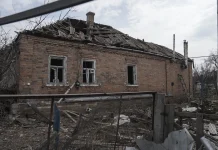
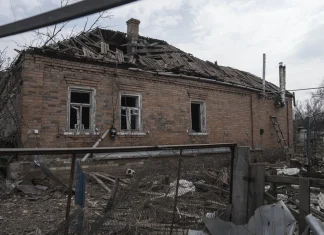
Numbers like these can feel abstract until you walk the cracked pavements of a city where one in seven homes has been damaged or destroyed, or meet the families huddling around diesel heaters after a series of winter strikes on the power grid. “We don’t rebuild numbers,” says Olena, a nurse in Kharkiv. “We rebuild lives. That costs more than concrete.”
The scale and the sectors
The report frames the rebuilding over a ten-year horizon and breaks the work down into sectors. Transport requires the most attention — about €81 billion — as rails, bridges and roadways that threaded commerce and daily life together have been torn apart. Energy and housing follow closely, each needing roughly €76 billion. There’s also a sobering €24 billion earmarked simply to clear debris and neutralize explosive hazards — the invisible, long-lasting cost of war.
- Transport: ~€81 billion
- Energy: ~€76 billion
- Housing: ~€76 billion
- Debris & demining: ~€24 billion
The human geography of damage is not evenly spread. The frontline regions of Donetsk and Kharkiv account for the deepest scars. Kyiv, too, though farther from the most brutal front-line fighting, will need more than €13 billion to restore schools, hospitals and apartment blocks. In southern industrial centers such as Zaporizhzhia and Odesa, repeated strikes on energy and industrial infrastructure have left a patchwork of ruin and insecurity.
Between survival and reconstruction
Western governments have pledged large sums since the invasion began in February 2022, and allies have provided hundreds of billions in military, economic and humanitarian support. Data from independent institutes points to more than €340 billion in assistance flowing to Ukraine so far. But Kyiv says that the majority of these resources have been spent keeping the state alive — paying salaries, supplying ammunition, and meeting emergency needs — rather than laying bricks and restoring livelihoods.
“The money we’ve received has been a lifeline,” a Kyiv government official told me. “But lifelines aren’t the same as foundations. You can’t build a school with an emergency grant meant for bullets and bandages.”
The European Union has proposed a substantial loan package — about €90 billion — though much of that is intended to shore up defense and state budgets rather than direct reconstruction. That raises a hard question: can the international community sustain both the urgent needs of war and the longer, patient investments of recovery?
Lives between rubble and resilience
If the numbers describe scale, the stories describe cost. In Odesa, where drones and missiles struck industrial and energy sites this winter, small businesses that anchored neighborhoods suddenly vanished. “Our café has been here for twenty years,” says Anatoliy, a barista whose shop is beside a scarred tramline. “There is a photo of my son on the wall. He left for Poland last year. I don’t know if he’ll come back to this corner.”
In Zaporizhzhia, a 33‑year‑old man was killed and others wounded during a strike on industrial facilities. In Kharkiv, a missile hit a residential district. In Kyiv and its suburbs, power cuts meant hospitals improvised, schools shifted online where they could, and families cooked on camping stoves in place of kitchen ranges. These scenes are daily headlines and enduring realities: a landscape of interrupted routines.
“When the lights go off, so does life,” says Dr. Marta Ivanenko, a pediatrician who volunteers at a mobile clinic. “Children get sick in the cold, parents can’t work, and education stalls. Long before the cranes arrive, people need warmth, healthcare and hope.”
Clearing the future: demining and environmental cost
One of the least visible but most urgent tasks is removing unexploded ordnance. Clearing roads, fields and urban lots of bombs and mines is slow, dangerous, and expensive. The report’s estimate of €24 billion for debris and explosive hazard management underscores a grim truth: rebuilding buildings is only part of the challenge. The land itself must be made safe.
Environmental damage compounds the human toll. Fires, destroyed industrial sites and the corrosion of infrastructure can poison waterways and arable land. In regions where sunflower fields once rippled in summer, neighbors now pick through fields for signs of agriculture’s return, wary of hidden danger.
Reconstruction as an opportunity — and a dilemma
There is an argument unfolding in reconstruction circles that damage also presents a chance to modernize. Can Ukraine rebuild not as it was, but greener, more resilient, and more inclusive? Can transport corridors be redesigned for climate resilience, housing retrofitted for energy efficiency, and power grids hardened against missile and drone strikes?
“Reconstruction is an opportunity to leapfrog,” says Anna Petrov, an urban planner who has advised municipal councils on recovery strategies. “But only if funding supports more than façade repairs. We must invest in durable, climate-smart infrastructure and social systems that prevent future displacement.”
That’s a tall order. Rebuilding to modern standards raises costs — but some experts argue the long-term payoff justifies the investment. International donors face a policy choice: fund immediate recovery to alleviate suffering, or commit to the deeper transformation that might prevent recurrence of vulnerability.
What next? A test of global solidarity
When you stand in a ruined courtyard and listen to a neighbor whistle over a pot of soup, you measure the war not in billions but in small acts of care. Those acts will need scaffolding: money, but also political will, technical know-how, and years of patient governance. Will that scaffold be built?
Each euro pledged will be judged not just by its size but by how it is spent. Will funds create jobs and repair schools, or funnel into short-term fixes? Will donors insist on transparency and local leadership? Can reconstruction respect cultural heritage while paving the way for new resilience?
The answers matter beyond Ukraine. How the world responds could set a precedent for post-conflict recovery globally — in places scarred by war, climate disasters or systemic neglect. It raises questions about priorities: defense and immediate survival, or a longer-term investment that could reduce future suffering. Which should come first?
Back in Kyiv, Olena the nurse folds a child’s knitted scarf and looks out at the street. “We will rebuild,” she says, quietly fierce. “But we need our friends to stay. Reconstruction is not a one-season harvest. It’s a decade-long return to life.”
What kind of life do we want to help rebuild? That is the question — for Ukrainians who have endured, and for the global community watching, wallets open and consciences stirring.