In the Quiet of Chappaqua, a Storm of Testimony: What the Clintons’ Epstein Depositions Reveal—and What They Don’t
There is a particular hush that falls over affluent suburbs when national drama comes knocking. In Chappaqua, New York—where clipped hedges meet flagstone walkways and the mailboxes are often more polished than a politician’s talking points—that hush was punctured last week by the staccato of news vans, the muffled footsteps of staff, and the hum of a story that refuses to fade.
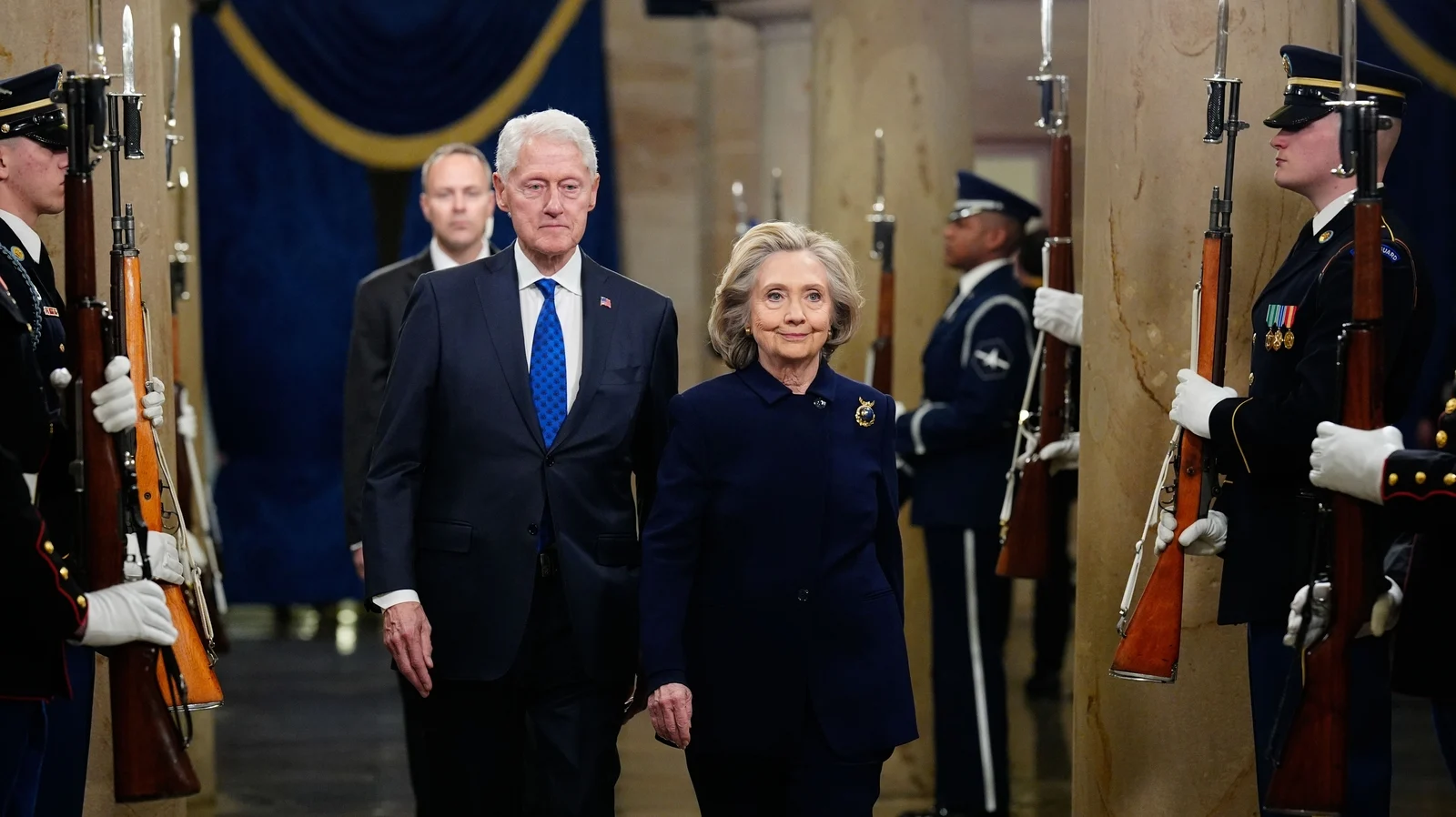
The event was both ordinary and seismic: closed-door depositions by Bill and Hillary Clinton, recorded and then released by a congressional committee probing the ties between powerful people and convicted sex offender Jeffrey Epstein. The footage is hardly a courtroom blockbuster; no shocking revelations leap off the screen. Instead, what we get is a study in how two of the most scrutinized public figures of the last half-century manage reputation, memory, and the relentless appetite of partisan politics.
Scenes from the Deposition
“I did not know him,” Hillary Clinton tells the panel in a measured tone, refusing to let the conversation be pulled into gossip. Bill Clinton, for his part, insists he “broke ties” with Epstein well before the financier’s 2008 conviction and says, plainly, “I did nothing wrong.”
In quieter moments, Bill Clinton acknowledges what is indisputable in the public record: he flew on Epstein’s private plane several times in the early 2000s for work related to the Clinton Foundation. “We went on humanitarian trips,” he says. “I did not visit Epstein’s island.”
Hillary’s response carries an edge of strategy as well as invitation. She urged the committee to depose President Donald Trump—another name that threads through the Epstein narrative—saying the panel should ask him “directly under oath about the tens of thousands of times he shows up in the Epstein files.” It is a pointed reminder that in American politics, power invites scrutiny in all directions.
What the Record Shows — and What It Does Not
Facts anchor this spectacle. Epstein was convicted in 2008 of soliciting sex from minors. He died in a Manhattan jail cell in 2019 while awaiting federal sex-trafficking charges; his death was ruled a suicide. The Department of Justice and other agencies have released large troves of documents—flight logs, financial records, and interviews—that link Epstein to an array of prominent people. But being named in those documents does not equate to criminal culpability.
“There’s a difference between presence in a document and provable wrongdoing,” says Dr. Laila Karim, a professor of law and ethics who studies high-profile investigations. “Documents open doors for questions, but they rarely provide airtight answers by themselves. Depositions like these are part of the slow work of tracing networks, not the quick thrill of a headline.”
Neighbors, Newsrooms, and the Weight of History
On the street outside the Clinton compound, local shopkeepers and residents watched with the peculiar mixture of distance and ownership common in small-town America. “You feel it here,” says Maria Lopez, who runs a bakery three blocks away and has lived in Chappaqua for 17 years. “People come into my shop and they’re whispering. It’s like our town is on the front page again. But really, this is about much more than our sidewalks—this is about how power gets around people who can’t protect themselves.”
A retired teacher, Tom Bertram, shrugged when asked what he thought of the depositions. “I’ve seen a lot in my day,” he said, folding his hands over his cane. “It’s a reminder that institutions are supposed to hold the powerful to account. Whether they’re doing it or using the moment for scoring points—that’s the question.”
The Broader Frame
These depositions arrive at a fraught moment in American public life, where congressional oversight is often accused of being either a grave necessity or a partisan sword. Democrats, including some allies of the Clintons, have argued the inquiry is being weaponized to wound political opponents rather than to pursue genuine oversight. Republicans argue the investigation is about accountability and transparency.
“Oversight means nothing if it’s selective,” says Monica Reid, director of a victims’ advocacy group. “Survivors deserve a system that is relentless and impartial—where allegations are investigated thoroughly regardless of the names involved. But survivor advocacy is too often caught in the crossfire of politics, and that hurts everyone.”
Small Data, Big Questions
When documents in high-profile cases are released, readers scan for patterns: flights logged between islands and cities, names that recur, the faint spoor of a network. But these fragments provoke as much speculation as clarity. The public appetite for closure collides with the slow churn of legal process and the murk of incomplete records.
Consider the flight logs that make frequent cameos in discussions of Epstein. They show a series of trips, some tied to humanitarian work, others not. They raise useful questions: Who was on these flights? What was discussed? What brought these people together in the first place? But they do not answer the central, searing question: who is responsible for the crimes alleged against victims?
- Epstein’s 2008 conviction was for soliciting sex from a minor; the case resulted in a controversial non-prosecution agreement in Florida.
- Epstein died in 2019 in federal custody while awaiting federal charges; his death was ruled suicide.
- Documentation released in subsequent years has included thousands of pages and records, but inclusion in files does not imply guilt.
Where Do We Go From Here?
As the video files circulate and pundits parse the faces and phrases, one question keeps returning: what do we want our systems of accountability to do? Do we want them to be swift and theatrical or slow and methodical? Is the point to extract confessions, or to build cases that can withstand scrutiny in neutral institutions?
“The spectacle of testimony can be satisfying,” Dr. Karim says, “but justice and truth often require patient, unglamorous work. That includes supporting survivors, preserving evidence properly, and ensuring that investigations aren’t derailed by political score-settling.”
For onlookers around the world, the Clintons’ depositions are more than a local soap opera. They are a mirror. They ask us to consider how societies handle power, privilege, and abuse. They force us to ask difficult questions: Do our institutions protect the vulnerable? Do we allow partisan interests to eclipse the pursuit of truth? And perhaps most importantly—how do we prevent the harm that seeds cases like Epstein’s from taking root again?
As the cameras pack up and Chappaqua’s sidewalks return to their genteel quiet, the questions remain. The videos are a piece of a sprawling puzzle, not its conclusion. For survivors seeking justice, for neighbors seeking answers, and for citizens trying to make sense of power in an age of relentless exposure, the work continues—away from the headlines, in courtrooms, archives, and the patient labor of law and policy reform.
What do you think? When powerful people are accused or connected to wrongdoing, how should societies balance transparency, due process, and the needs of survivors? The conversation matters, because the answers shape how we, collectively, live with power.