When the Gates Close: Gaza on the Brink as Rafah Shuts Again
The air tasted like dust and diesel. In Gaza City, a generator hummed its lonely, frantic rhythm beneath a sky that seemed to hold its breath. Then, as if someone had reached a hand across the border and turned a valve, the hum stuttered.
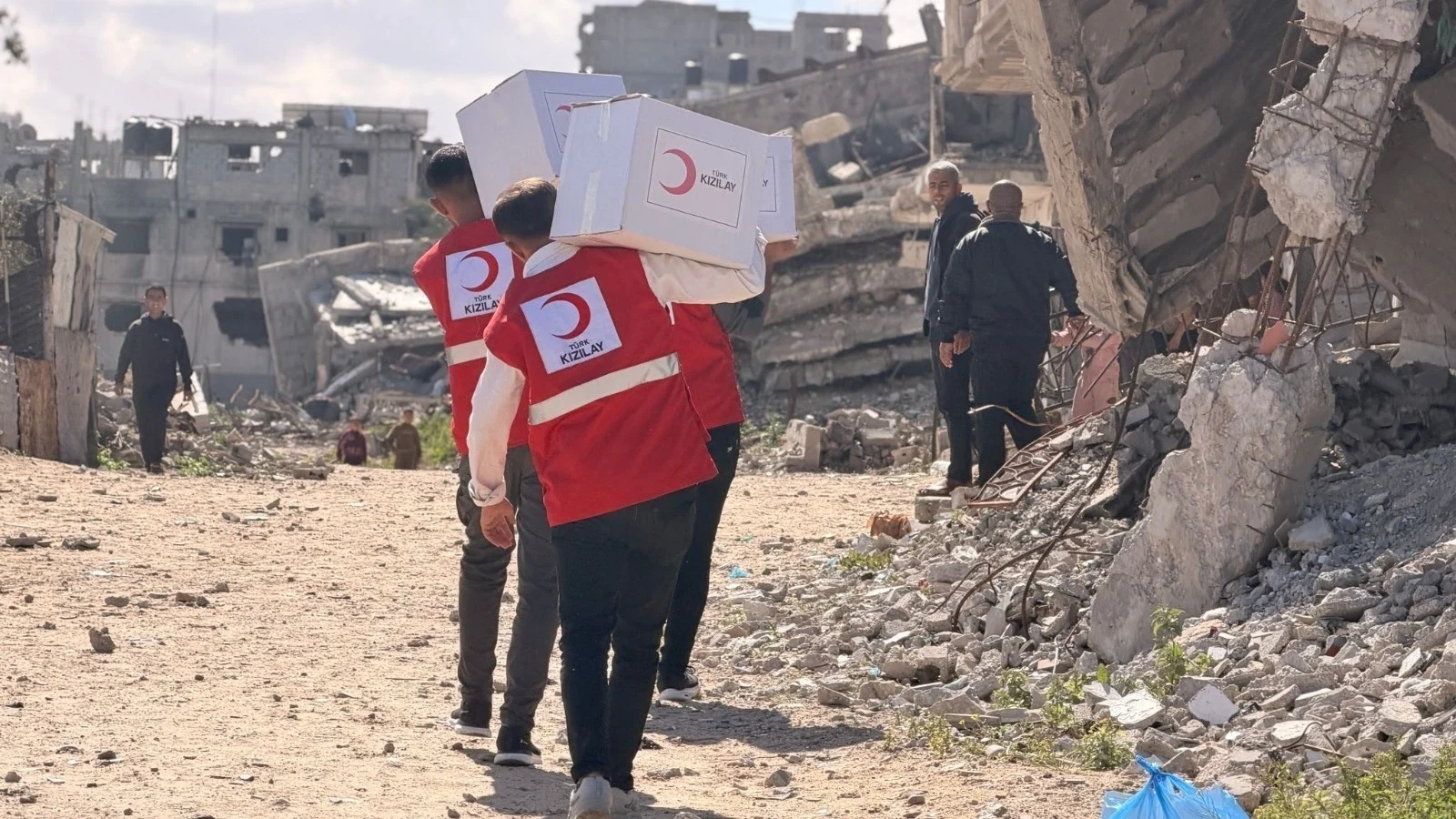
On a recent Saturday, Israeli authorities closed all border crossings into Gaza — including Rafah, the strip’s only gateway to the outside world that does not pass through Israel. For the more than two million people who live in the territory, already battered by years of conflict and displacement, the shutters going down are not an abstract diplomatic event. They are a sinking-in of dread: will hospitals run out of fuel? Will clean water stop? Will food supplies hold long enough for the next convoy?
A plea from the United Nations
From New York, United Nations Secretary-General António Guterres has urged an urgent reversal. “All crossings must be reopened as soon as possible,” UN spokesman Stéphane Dujarric said, puncturing the silence with a blunt warning that fuel and humanitarian resources have been rationed to stretch dwindling reserves. “When the doors are shut, we obviously stretch whatever we have to make it last longer.”
Rafah’s closure is especially painful because it is the crossing that links Gaza directly to Egypt — the narrow thread through which people, commercial goods, and lifesaving aid can move without transiting Israeli-controlled territory. It had only reopened to movement of people on 2 February, nearly two years after Israeli forces took effective control of the crossing amid earlier fighting with Hamas. Its latest closure followed air strikes that Israel said it carried out, with U.S. participation, against targets in Iran — an escalation that has reverberated through the region and into Gaza’s already fragile supply chains.
Counting down the hours
Inside Gaza, the arithmetic of scarcity is alarmingly simple. “I expect we have maybe a couple of days’ running time,” Karuna Herrmann, who heads fuel distribution operations for the UN in Gaza, told reporters. Other aid coordinators paint a slightly brighter — but no less urgent — picture: Amjad Al-Shawa, who coordinates between charities and the UN, estimated fuel might last three to four days and cautioned that stocks of vegetables, flour, and other staples could soon dwindle if crossings remain closed.
“It’s not numbers on a page,” said a young surgical nurse at a central Gaza hospital, asking not to be named for safety reasons. “It’s mothers holding babies while we count the minutes left on our oxygen tanks. It’s the dialysis patient who depends on a machine and the diesel that keeps that machine alive. We are not being dramatic — we are stating a timetable.”
What’s at stake — in practical terms
Gaza’s infrastructure is porous and precarious. The territory is overwhelmingly dependent on fuel delivered by truck through border crossings from Israel and Egypt. Without a steady inflow, hospitals rely on generators whose consumption can spike during emergencies; water and sanitation systems falter when pumps and treatment plants lose power; bakeries slow to a halt and supermarkets thin their shelves.
Local officials say most Palestinians in Gaza are internally displaced, living in scraps of shelter within the enclave. In the markets and alleyways — the places where daily life reasserts itself against war — people are acutely aware of the stakes. “When the trucks stop, the soup runs out,” said Mahmoud, a shopkeeper in Jabalia. “You can survive a day or two without much. But children cannot last without milk and warmth.”
Official responses and competing narratives
Israel’s COGAT agency, which oversees movement into Gaza, has sought to reassure the international community. COGAT said that since the start of an October truce there had been enough food delivered to meet needs, saying “existing stock is expected to suffice for an extended period” — without providing details or addressing fuel shortages.
That truce — brokered with U.S. support — included provisions to reopen Rafah, scale up aid flows and begin rebuilding. Now, with crossings closed, the truce’s promise feels fragile. The disconnect between stockpiles and distribution, between what is said and what is seen on the ground, leaves humanitarian workers scrambling to prioritize life-saving operations.
Scenes at the closed crossing
At Rafah itself, memories of long lines and makeshift shelters cling to the air like heat. Elders recall the day in February when Rafah began accepting people again, the relief that swept through families reunited with relatives or able to seek medical care abroad. Now, with the stamping of a seal and the tightening of borders, that relief has been interrupted.
“Why is it our fault?” asked Hamada Abu Laila, a displaced Palestinian who fled his home months ago and now lives in a crowded school converted into temporary housing. “We are here because there is war. Regional wars are not our business to pay for. But it is our bodies, our kids, who suffer the consequences.”
Beyond the headlines: what this means globally
How should the world measure the closure of a crossing? As a side effect of escalating regional tensions, or as a direct humanitarian emergency? Both answers are correct, and together they expose a painful truth: civilians often pay the price when geopolitical strategies are deployed. When borders close, when fuel is withheld, the impact is not abstract. It is visible in the faces of children waiting for treatment, in the stalling pumps that empty a cistern, in the bakeries that cannot bake.
Consider these realities:
- Gaza is home to roughly 2.2–2.4 million people, a densely packed population with high dependency on aid and cross-border supplies.
- Most essential services — health care, water, sanitation — rely on imported fuel to operate at even a minimal level.
- Humanitarian actors can stockpile to an extent, but perishable food, medical oxygen, and fuel have limits; when crossings close, those limits arrive quickly.
Questions to carry with you
As you read this from wherever you are, ask yourself: what does it mean when diplomacy is measured against the rhythms of a nursery ward or a dialysis machine? How do international actors balance security concerns with the immediate needs of civilians? And how do communities — those living at the seams of these geopolitical decisions — survive when the lifelines used to do so are severed?
For families in Gaza, answers are not abstract policy debates. They are how long a baby can be fed, how long a hospital can keep its lights on. For the rest of the world, the moment calls for clarity, pressure, and — above all — compassion. “Open the crossings,” Mr. Guterres urged. It is a plea that reaches beyond borders and into the small, urgent things that sustain life.
What happens next will be decided in corridors of power and by the hum of generators in basements. For those who live where the gates have closed, each hour counts. For those of us watching, each hour is a test of conscience.