In the shadow of Kharkiv: cataloguing a war, one ruined missile at a time
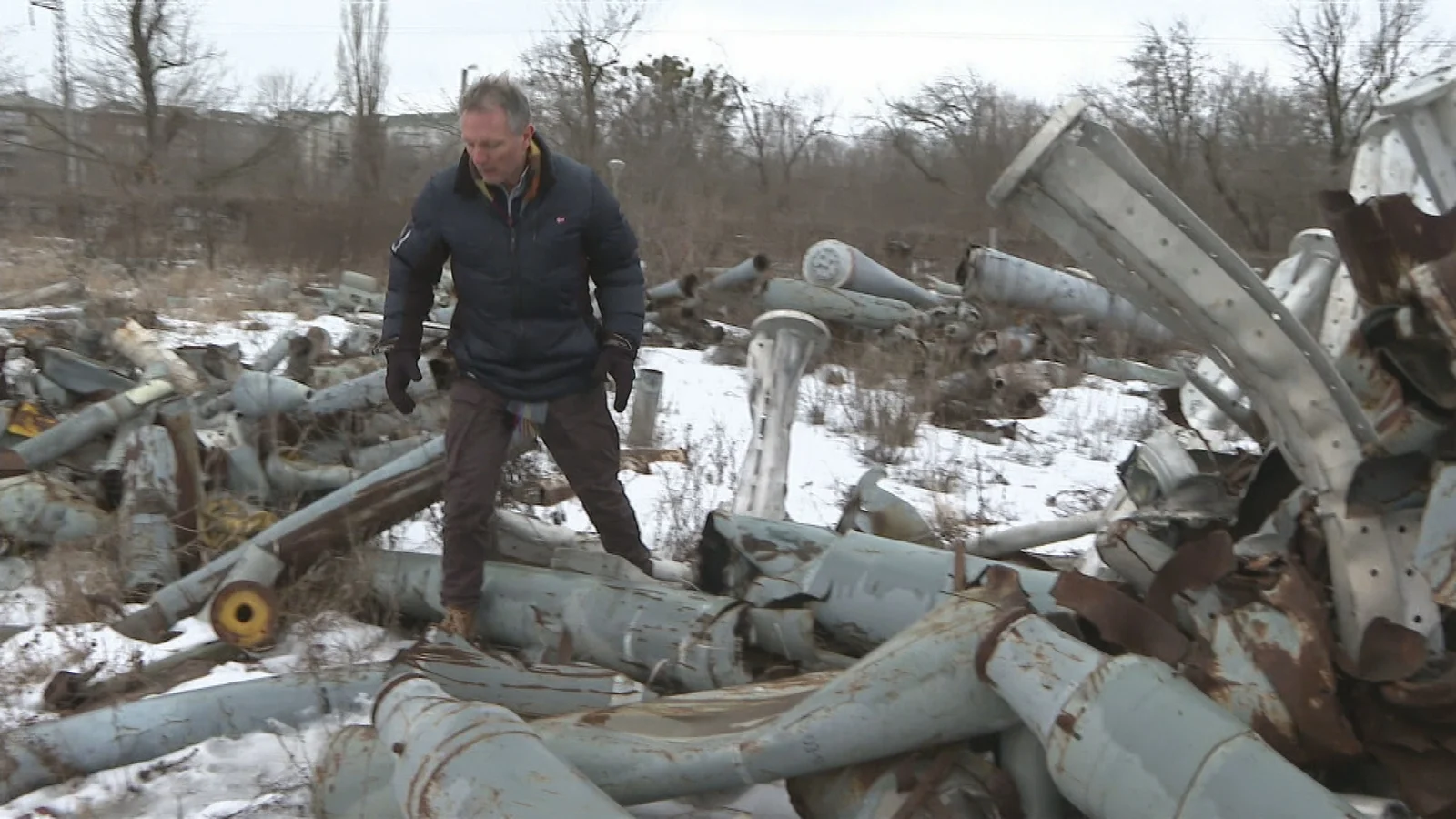
There is a place on the outskirts of Kharkiv that looks like a graveyard for the modern age: twisted fragments of drones and missiles lie scattered across a field, as if some industrial apocalypse had breathed and spat them out. Locals have nicknamed it the “drone cemetery.” Walking among the wreckage you can hear the city — distant horns, an air siren every so often — and beneath it the collective hum of painstaking work: cameras, notebooks, gloved hands lifting shrapnel into evidence bags.
“It’s only a small part of all the missiles which fall on Ukraine every day, every hour,” says Olexander Kobylev, the regional war crimes investigator for Kharkiv, standing beside a row of blackened fuselages. “What I can say for sure is that each missile has caused harm.” His voice is steady. His eyes are not.
That harm is what Ukrainian investigators are trying to make speak. For four years, teams of prosecutors, forensic scientists, open-source researchers and volunteers have been collecting photographs, witness statements, satellite clips and the metal remains of weapons. Their goal is not merely to tally damage: it is to stitch individual incidents into a legal narrative strong enough to carry to an international courtroom — to a special tribunal in The Hague that many here imagine as the ultimate ledger of accountability.
What collecting war looks like
Evidence gathering here is intimate and relentless. A forensic analyst will crouch on a kitchen floor where a missile pierced the ceiling, cataloguing the pattern of splinter marks while a neighbor brings tea and recounts the sound of the blast. Elsewhere, volunteers comb through social media posts, geolocating video clips to prove where a strike happened and when.
“We started with rubble and names,” says Elena, a forensic photographer who has spent months documenting strike sites. “Now we have a map of violence — not just dots on a screen, but lives connected to each other through the way they were targeted.”
The scale is sobering: Ukrainian authorities report that more than 500 indictments have been transferred to the national public prosecutor’s office, and over 100 Russian officers have already been tried in absentia. These filings cover crimes that range from mass killing of civilians to looting, and from the destruction of cultural sites to the meticulous cataloguing of damage caused by individual missiles.
- Evidence types: debris, medical records, witness testimony, intercepted communications, satellite imagery, open-source videos.
- Case status: hundreds of indictments filed domestically, with many intended for an international tribunal.
- Challenges: chain-of-custody, proving command responsibility, securing international cooperation.
From street-level grief to international law
“Translating grief into a legal standard is a painfully technical thing,” says Dr. Anna Petrov, an international law scholar at a university in Kyiv. “You need more than anger. You need a documented sequence: who ordered, who executed, who benefited. Every shred of evidence becomes part of a mosaic.”
That mosaic requires extraordinary care. Chain-of-custody protocols dictate that every piece of debris must be tracked from the moment it is photographed until it might someday be presented in a courtroom. That means refrigerated storage of ballistic fragments, secure servers for video, and meticulous timestamps on witness statements. In a country still under threat, maintaining that chain is both logistically daunting and emotionally draining.
“I remember a family who lost their home,” recalls Pavlo, a prosecutor who has spent nights transcribing testimony under a dim lamp. “The mother insisted on telling us every day what she saw, how she cradled her child’s jacket. These details matter. They humanize what could otherwise be only numbers.”
Local color: Kharkiv between resilience and routine
Kharkiv is a city of stubborn rhythms. On certain streets, the bakeries still open before dawn, flour dusting the air like a stubborn snowfall. In the metro stations, commuters — some with backpacks, some carrying wooden crates of preserved fruit — have perfected the choreography of living in a city that can be safe and unsafe within the same hour. Windows are boarded and flowers still bloom in patched gardens. A café owner named Halyna jokes about the resilience of her espresso machine — “it survived air raids and worse” — and then adds, quietly, that every cup now tastes like a promise.
These small acts of normalcy are more than routine. They are evidence of a civilian life that refuses to be entirely consumed by wartime statistics. They are also, paradoxically, a challenge to investigators: how to transform everyday testimony into admissible, persuasive proof?
The people who remember
“We are not historians here,” says Myroslava, a volunteer who organizes witness interviews. “We are not just collecting stories to archive memory. We are building cases so that future generations understand there was accountability.” She hands me a notebook full of names and short, jagged sentences that read like pieces of a broken life.
One of those entries is a short account from an elderly man who describes the sky as a “blue sheet burned through in a place.” Another is a teenager’s voice message recorded the morning after a strike: trembling, punctuated with laughter that sometimes cuts through grief. These are the textures that make a legal case legible to a judge who will never stand in this field of metal and mud.
Why this matters beyond Kharkiv
What happens here matters to the global conversation about war, justice and the rules that govern armed conflict. The effort to institute a special tribunal in The Hague represents a broader yearning: that there should be mechanisms to hold individuals, not just states, responsible when violence crosses certain lines.
Globally, the project raises hard questions. Can international justice be timely enough to matter? Can the evidence collected under fire survive political winds? And perhaps most importantly: will convictions, if they come, actually deter future crimes?
“We all hope the answer is yes,” says Kobylev, looking across the field at the scattered ruins. “But justice is not only about punishment. It’s about recognition. It’s about telling people that their loss was seen, recorded, and judged.”
A final thought
As you read this, consider the small, ordinary things that signal home — a steaming bowl on a cold day, a photograph pinned to a wall, a name on a list. Imagine those things are at stake. Imagine the patient, sometimes tedious work of transforming them into proof that the world can hold onto. That is what investigators here are doing: collecting the shards of what was lost, arranging them so that they might one day form a case, a verdict, and a statement about the bounds of human behavior.
Will it be enough? Time will tell. But for now, in Kharkiv’s drone cemetery and in kitchens and courtrooms, people are doing the labor of memory, law, and, ultimately, hope.