A signature, a script, and a city that remembers
Imagine a summer morning in Tehran: the smell of roasting chestnuts on the pavement, the clatter of tea glasses being rinsed in the corner of a busy kafé, the slow, deliberate bargaining in the bazaar that has been the city’s heartbeat for centuries.
Now imagine a small piece of paper—an imperial firman—laid on a desk and signed by a monarch who did not want to sign it. That one handwriting, historians say, helped reroute the lives of millions and set a course for decades of mistrust between Iran and the West.
What happened in August 1953 reads like a Cold War thriller, but it was not fiction. Mohammad Mossadegh, the nationalist prime minister who had dared to nationalize Iran’s oil industry in 1951, was removed from power in a coup engineered in large part by foreign intelligence services.
The theatre of the covert
They called it Operation Ajax. The plotters used money, propaganda and carefully staged street scenes to manufacture consent. Newspapers that had accepted cash printed lurid stories about a communist takeover. Clerics were nudged to issue sermons. Loyalists were encouraged to march with portraits of the Shah through winding alleys and under the shadow of the mosques.
Kermit Roosevelt—working under an assumed name as the station chief of the Central Intelligence Agency and the grandson of a former U.S. president—was a leading figure in the operation. Declassified documents and scholarly accounts later showed how American and British agencies mapped fissures in Iranian society, then widened them until political life snapped.
“We didn’t create every critic of Mossadegh, but we paid handsomely to make the most fractious voices louder,” a former intelligence analyst once summarized of the era, in candor to a historian. “It was a production—stage directions, paid extras, and a script tailored to a foreign audience.”
Aftershocks that lasted decades
The immediate result was a restoration of the Shah’s power and a replay of autocratic rule backed by foreign support. The Shah’s regime—bolstered by U.S. aid, weapons, and training—became increasingly repressive. A secret police, SAVAK, born with support from foreign intelligence partners in the mid-1950s, gained a reputation for brutality that tightened the noose on dissent.
The price was steep and slow to collect. For 26 years the Shah’s autocracy grew, while many Iranians seethed with private anger and public despair. In 1979 that pressure released into a revolution that overthrew the monarchy and produced a new, uncompromising political order in Tehran.
As one Tehran shopkeeper told me over tea last year, “My father told me stories about 1953 like a warning: never let an outsider remake your country. That seed has borne a bitter fruit.”
Memory as a political force
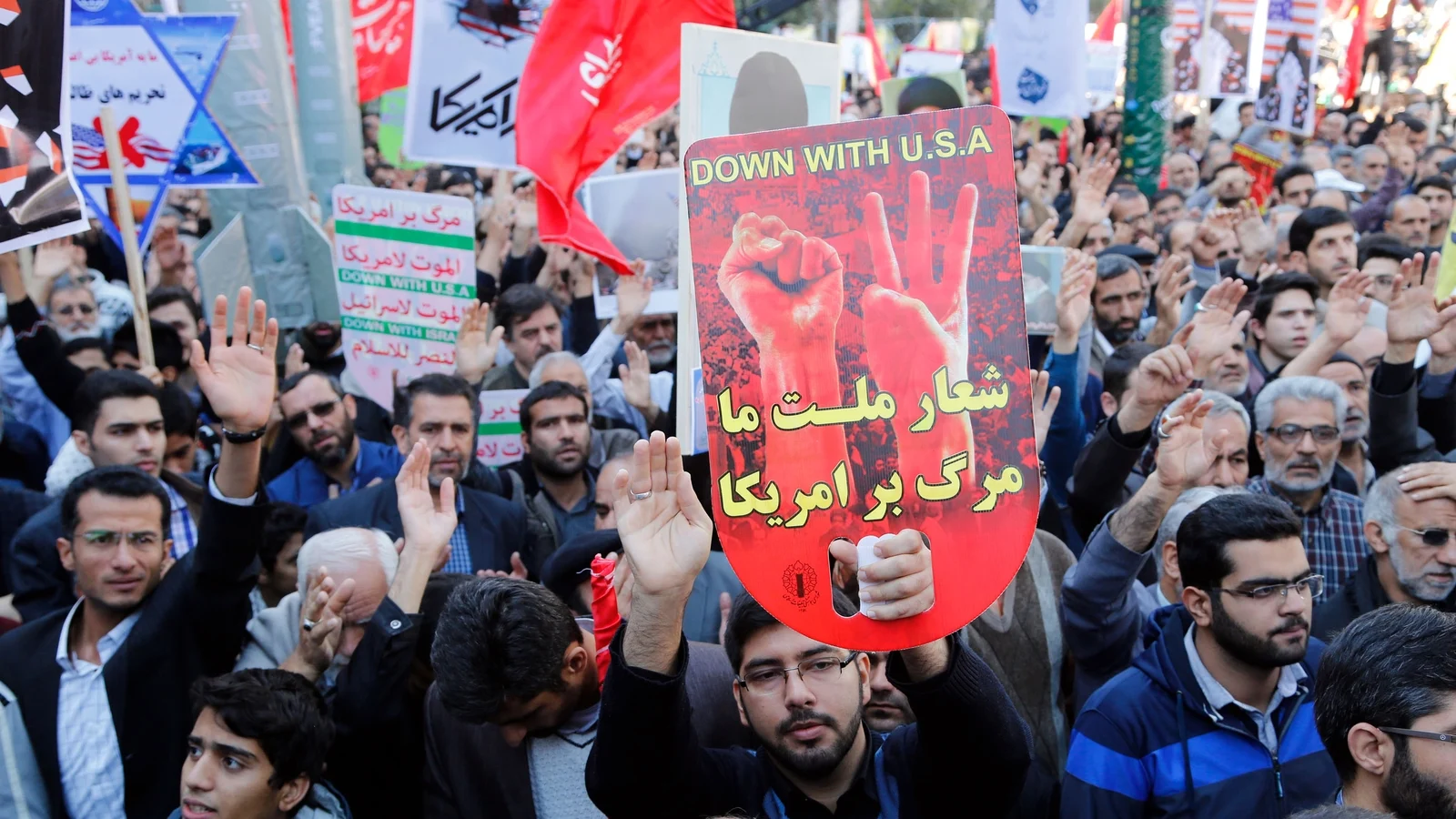
The 1953 coup did not simply remove a prime minister; it altered memory. It became a touchstone—recounted in families, taught in schools, invoked in political speeches—as proof that foreign powers could and would interfere in Iranian sovereignty. The siege of the U.S. embassy in 1979, the rhetoric of “Death to America” chanted in Tehran squares, and the distrust that has shaped Iran’s diplomacy all have tendrils leading back to that summer.
“When you study the long arc of events, you see a chain of unintended consequences,” says an academic who has written extensively on the period. “Short-term tactical gains—securing oil concessions, checking perceived communist influence—converted into a strategic disaster.”
What the record actually tells us
Facts matter in a story of this magnitude. Mossadegh became prime minister in 1951 after a landslide parliamentary win and nationalized the Anglo-Iranian Oil Company, a move that polarized Iran and led to an economic and diplomatic standoff with Britain.
Official U.S. documents later declassified—centuries of narrative do not stand on rumor alone—confirm that the CIA and British intelligence played crucial roles in planning and executing the 1953 operation. The coup’s architects believed they were preventing a communist foothold in the Middle East; the cost of that calculation has been debated ever since.
Numbers help measure the ripples. It has been more than seven decades since those events—the distance in time is one thing; their gravitational pull in politics and public sentiment is another. Iran’s modern political identity, in many respects, was forged in reaction to external meddling.
- 1951: Mossadegh nationalizes Iran’s oil.
- August 1953: Forceful removal of Mossadegh backed by foreign intelligence.
- 1957: SAVAK is established and grows into a feared security apparatus.
- 1979: Revolution topples the Shah; anti-American sentiment becomes an organizing theme.
Why the story of 1953 still matters now
History is not an anchor; it’s a warning siren. When recent political leaders loudly proclaim an ability—or an appetite—to remove hostile regimes, or when military options ripple through the media cycle, those words collide with a deep, lived memory in Tehran and beyond.
We ought to ask ourselves: what does it mean to believe you can fix a region by swapping its leaders? And if foreign powers can change a regime, who pays for the human and political fallout?
Consider the paradox: the 1953 operation was, for a time, hailed in Western capitals as a success. It secured oil interests, reinstated a friendly monarch, and checked Soviet influence in the minds of strategists. But the strategic calculus rarely accounted for the moral and social costs. In the long run, the apparent victory morphed into a geopolitical liability.
Voices from the street and the study
“We feel like history was taken out of our hands,” said a young Iranian student I met at a bookshop in Tehran. “When outsiders interfere, they imagine they change a regime. What they change is us.”
A retired professor in London suggested a different angle: “Intervention erodes legitimacy. You can prop up a government, but you cannot manufacture trust.”
Lessons for global citizens
What can the world learn from that single signature and the shadow it cast? Perhaps that quick fixes are often a setup for long-term problems. Perhaps that foreign policy guided by short-term interests can produce generational distrust. Maybe, too, that any effort to reorder another society must reckon with history, culture, and the right of people to choose their own destiny.
Ultimately, this is not just a tale about spies and signatures. It is a study in how power, when used without humility, can fracture relationships between nations and between governments and their people.
So before the next debate about intervention heats up—before the next urgent cable to some distant capital—ask this simple question: if you could go back to that Tehran desk and turn the firman over, would you?
History will teach you, if you listen, that the hardest work is political reconstruction that builds consent rather than buys compliance. The easy script—the one that looks good in a wartime briefing room—has a habit of coming back to haunt its authors and their descendants.