Markets on Edge: When Oil and War Collide
By late afternoon across European trading floors and breakfast cafés from Tokyo to Dublin, you could feel the same thrum: a low, insistent worry that today’s headlines might be tomorrow’s grocery bills.
Shares slid in city after city. In London, the FTSE lost ground and closed down about 1% by mid-afternoon. Paris’s CAC slipped 1.7%, Frankfurt’s DAX dropped 1.4%. Dublin’s market, which had rallied in patches earlier this year, fell roughly 1.3% as household names such as Kingspan, Cairn Homes and Ryanair retreated from the highs. The mood was not just local — it was global and contagious.
Numbers that tug at pocketbooks
What put a match to nerves was oil. The commodity spiked more than 15% in a single session, pushing prices just shy of $120 a barrel — a level that reverberates beyond the terminals where traders trade futures.
- European equities: London -1%, Paris -1.7%, Frankfurt -1.4%, Dublin -1.3%
- Sector moves: Banks -3.2%, Tech -3.1%, Energy +0.1%, Defence firm Leonardo +1.4%
- Asia markets: Japan’s Nikkei fell over 5%; South Korea’s Kospi plunged around 6%
These are not abstract numbers. They are the shorthand for rising mortgage costs, pricier flights, and filling stations where drivers wince. Central bankers watch them as closely as any investor: higher oil means higher headline inflation, and higher inflation can force interest rates up — an unwelcome scenario for heavily indebted households and stretched economies.
From Tehran’s corridors to the Strait of Hormuz
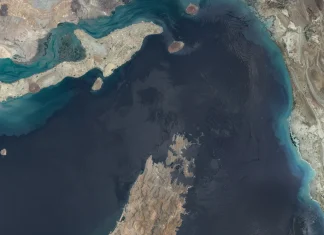
The immediate cause of the spike is a widening crisis in the Middle East. Iranian state outlets named Mojtaba Khamenei as successor to his father, Ali Khamenei, a development that many interpreted as a signal that hardline elements in Tehran remain firmly in control. At the same time, maritime traffic through the Strait of Hormuz — the narrow chokepoint through which an estimated 20% of global seaborne crude and gas moves — has all but ground to a halt since fighting broke out on February 28.
“We feel it down here,” said Reza, a fisherman whose family has worked the waters outside the Strait for three generations. “The tankers avoid the lane, the insurance costs go up, and people who sell fuel in our town are asking how they’ll fill their trucks.”
For major importers such as Japan, the situation carries particular bite. Japan relies on the Middle East for roughly 95% of its crude imports, and approximately 70% of that passes through the Hormuz corridor. Prime Minister Sanae Takaichi has sought to calm nerves by reminding the public that Japan holds emergency supplies equal to 254 days of domestic consumption. Kyodo reported that the government was weighing a release of reserves, though officials offered few details.
South Korea — another heavyweight crude importer — watched markets tumble too. China remains the world’s largest crude importer, but for Seoul and Tokyo the squeeze is immediate and intimate.
Voices from the markets and the streets
On the London trading floor, a veteran trader named Hannah pulled off her headphones and said, “When oil moves this fast, it drags everything with it. Banks, tech — anything that depends on future growth gets repriced.”
An energy analyst in Amsterdam, Dr. Marcus Alvaro, put it bluntly: “Supply shocks often start regionally; they end up global. Energy is the fastest route from geopolitics into your daily life.”
And in a suburb outside Naples, café owner Maria gestured to empty tables and said, “People complain about fuel to go to work, and then complain about prices on their bill. It’s not just numbers on a screen — it’s bread, gas and the little things.”
Central banks and governments: in the spotlight
With inflation fears renewed, all eyes turn to central banks and policy-makers. European markets will be listening closely to comments from European Central Bank President Christine Lagarde and to remarks from board member Piero Cipollone, while eurozone finance ministers convene for a Eurogroup meeting later in the day.
The balance they face is familiar but brutal: raise interest rates to head off dangerous inflation expectations, and risk choking an already fragile growth recovery; hold rates steady to protect growth, and allow inflation to take root — especially if energy costs keep climbing.
“This is classic stagflation risk,” said Laila Mendes, an economist at the Institute for Global Macro. “Policymakers have to thread a needle — not just in Europe, but globally. The decisions made in Frankfurt and Washington will ripple to Seoul and Sydney.”
What this means for you
Ask yourself: how would a persistent rise in oil affect your life? For commuters, a busier pump. For businesses, higher distribution costs that often get passed on. For governments, pressure on subsidies, budget balances and political capital. For investors, shifts between sectors — banks and tech weakening, while energy and defence firms sometimes find buyers.
Already, defence contractor Leonardo ticked up about 1.4% on the day — a small, telling detail about the market’s instinct to hedge geopolitically driven risk.
Beyond the markets: larger threads
This moment reveals broader truths about our interconnected world. Energy security, the fragility of supply chains, and the political choices that shape markets are not new problems, but they’ve become sharper. Nations that once leaned on global trade lanes and distant suppliers must now reckon with the fragility of those dependencies.
Will we see renewed investment in alternative energy and strategic stockpiles? Will companies reconfigure supply chains away from single points of failure? Trends toward diversification and resilience were already underway before this shock; this crisis accelerates them.
“Resilience costs money,” says Dr. Eva Kwan, a supply-chain strategist. “But after a few months of higher inflation and supply disruption, that cost suddenly looks a lot smaller than the alternative.”
Where do we go from here?
In markets and on the ground, the next few days will tell a story of how quickly commerce adapts and how decisive policy-makers choose to be. Will oil cool off if shipping lanes reopen? Can diplomatic channels lower the temperature in Tehran and beyond? Can central banks talk down inflation without throttling recovery?
There are no easy answers. But there is one certainty: these economic tremors are about people as much as prices — the café owner in Naples, the commuter in Tokyo, the trader in London, the fisherman in the Strait — all connected by threads of oil and policy that tug at daily life.
So look up from your screen for a moment: what would you change to make your community more resilient to shocks like this? The choices made now will shape the comfort, cost and security of everyday life for years to come.