When the Sky Feels Like a Threat: Ukraine’s Quiet Lecture in Drone Defence
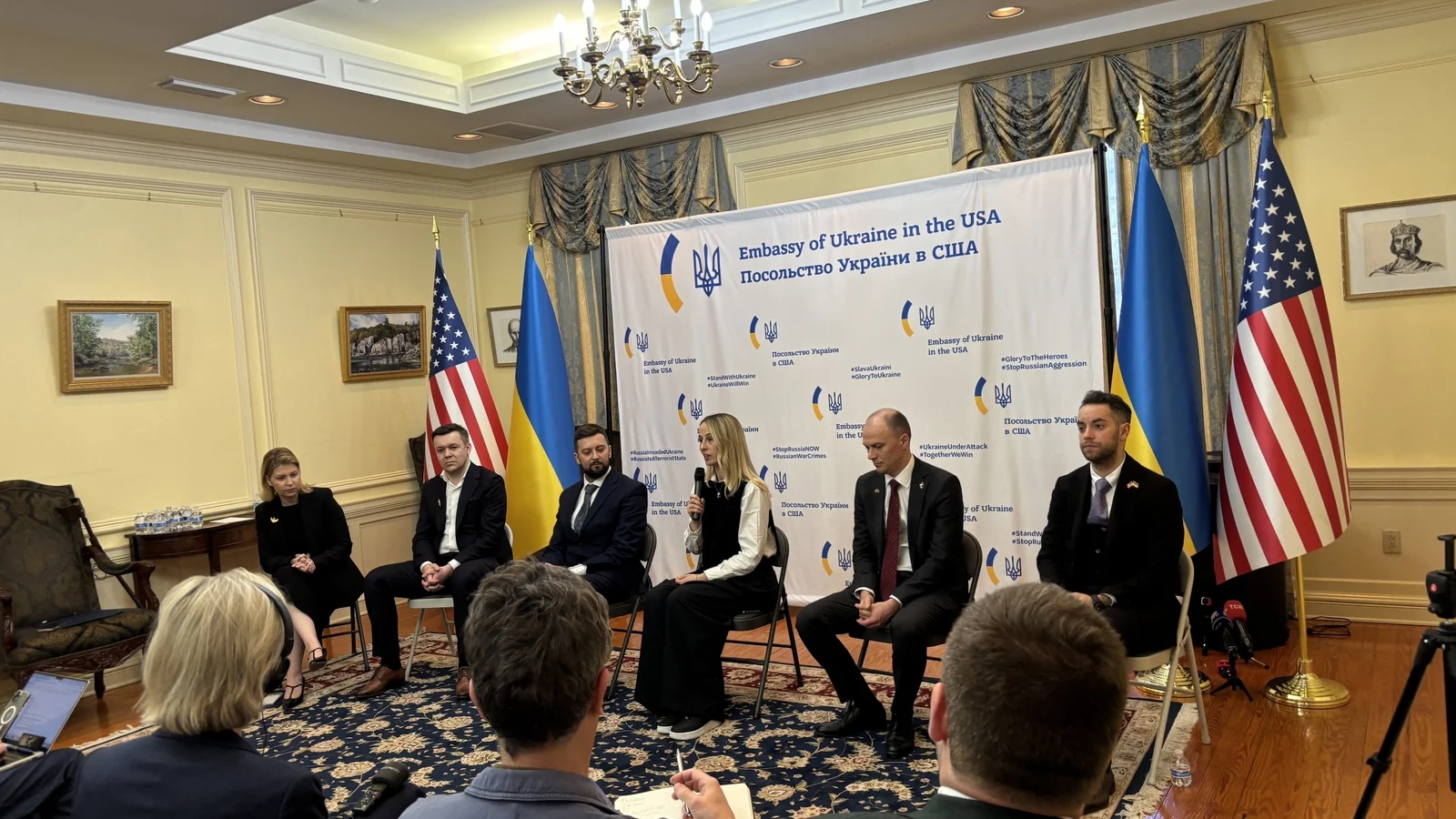
It started as a night at the embassy — soft lighting, the buzz of conversations, the clink of coffee cups — and then the talk turned, inevitably, to explosives in the sky. In the atrium of Ukraine’s mission in Washington, D.C., diplomats and defence entrepreneurs were less intent on condolence than on action. They spoke like people who have learned their lessons the hard way and are ready to hand those lessons to anyone who will listen.
“We don’t want to offer just sympathy,” Olha Stefanishyna, Ukraine’s ambassador to the United States, told reporters. “We want to offer immediate help that secures cities and saves lives.”
Her words landed against a sharply practical backdrop: Ukrainian specialists, equipment and strategy are already being dispatched to the Middle East this week, at the request of nations scrambling to defend themselves from waves of Iranian-launched drones in the aftermath of Operation Epic Fury.
From Kyiv’s Battlefields to New Frontiers
It is a strange sort of export — expertise forged in conflict, traded not in barrels of oil but in algorithms, tactics and counter-drone choreography. President Volodymyr Zelensky said 11 countries have asked Ukraine for help dealing with Iranian drones that Tehran has fired in retaliation to US-Israeli strikes. The teams leaving Ukraine are not mercenaries but engineers, coders and air-defence technicians whose curriculum vitae reads like a who’s who of modern, improvised warfare.
“We learned early on what it means to face swarms,” one Ukrainian engineer, who asked to be called Maksym, told me in a phone interview. “In our workshops in Lviv and Kharkiv we turned cheap parts and old sensors into something that can see a hundred micro-drones at once. Now we package that know-how and bring it to cities that are used to a different kind of threat.”
Numbers That Shape Strategy
Numbers sharpen the contours of this exchange. Iranian forces have launched more than 1,500 drones since the operation began, an onslaught that — though many were intercepted — still resulted in tragedy: six US service members were killed in a strike in Kuwait on 1 March. Meanwhile, Ukrainian operators tell a darker, longer story: according to Iryna Zabolotna, representing Brave 1, a Ukrainian government platform that rallies defence innovators, Ukraine intercepted more than 15,000 drones in February alone.
“That is not a typo,” Zabolotna said on Irish television. “We don’t use missiles for this job because it’s financially unsustainable. Our interceptors cost roughly $5,000 to $15,000 each — far cheaper than launching multimillion-dollar Patriot missiles every time.”
What that price tag really means
Consider this: a single US-made Patriot interceptor can run into the millions. When a nation is under a barrage of small, low-cost aerial systems, using high-end interceptors is like bringing a sledgehammer to a watchmaker’s task. Ukraine’s pitch is practical and global: deploy the right tools for the job, and teach others how to use them.
People, Not Just Platforms
Behind the figures are people learning to react under pressure. In a briefing room crowded with representatives from 17 Ukrainian defence companies — part of a roadshow bringing know-how to Washington — conversations moved from patent details to human moments. Engineers described blackout drills that look like rehearsed dances: when the warning tone starts, a dozen eyes flick to screens and hands fly to steering wheels. They made me picture municipal workers in faraway towns learning to do the same in the space of days.
“We taught them to see the sky differently,” said Lara Ivanova, a systems integrator who was showing a municipal official how to fuse radar, cameras and radio-frequency detection. “This is not remote warfare. This is about someone’s grandmother, someone’s school. We think in terms of civilians first.”
How Do You Build an Answer to an Answer?
There is an irony to the global spread of Iranian drone tactics: the same systems Kyiv faced when Russia was an early adopter of Iranian loitering munitions are now being used in other conflicts. “These Shahed drones were developed and shipped to the Russian Federation deliberately to attack and target cities to kill civilians,” Stefanishyna reminded the room, noting the technological lineage that has made this crisis transnational.
So nations are asking: when a state begins to export lethal drone capabilities, what is the global responsibility? Is it enough to intercept? Or must there be diplomacy and regulation to starve these systems of supply and legitimacy?
Voices from the Ground and the Beltway
In Washington, officials are listening — and worrying. Pentagon briefings have reportedly warned lawmakers that waves of Iranian-launched drones are sometimes punching through layered defences. “We are seeing saturation tactics designed to overwhelm conventional systems,” a defence analyst said on background. “The challenge is not just the hardware, it’s the doctrine.”
President Donald Trump, in public remarks, claimed Iranian drones are being “blown up all over the place,” even at manufacturing sites. Whether those strikes are surgical or not, the broader reality remains: when drone fleets proliferate, they change the economics and ethics of targeting.
Local Color: The Embassies, The Workshops, The Coffees
If you want to see the human dimension, wander into one of the back rooms at the Ukrainian embassy’s event or a workshop in Kyiv. You’ll find whiteboards scrawled with radar arcs, schematics pinned beside photos of towns, and a jar of sunflower oil on the counter — an oddly comforting nod to home. Engineers bring pastries. Diplomats trade phone numbers. There are jokes about bureaucracy, yes, but also a seriousness that fills the air: this is not charity; it is practical solidarity.
Why This Matters to You
Ask yourself: would you rather your city spend millions on high-end interceptors or learn to stop a drone wave for a fraction of the cost? The choice is not just financial. It speaks to how the world distributes risk and resilience. When one country refines an approach to a problem others will surely face, sharing that approach can be an act of global public health — adapted to the age of swarm tactics.
Ukraine’s offer to export defence experience is an invitation to think differently about alliance and learning: not only asking for hardware, but delivering human expertise that multiplies the value of every system on a city’s rooftop.
Looking Ahead
There are no easy answers. The skies over conflict zones are changing rapidly, and so too must policy: export controls, sensor networks, municipal preparedness and international norms about the use of unmanned systems. The next phase will test whether the international community can turn tactical know-how into strategic change.
As the Ukrainian teams board flights and rollcases stuffed with laptops and antennas are wheeled into terminals, the image that lingers is a quiet one: technicians teaching city officials to watch the sky, municipal workers learning to act fast, and diplomats negotiating something more durable than a one-off military sale — a curriculum in survival crafted in the crucible of war.
What will the world do with that curriculum? That is the question now — and it may determine not only how cities defend themselves in the months ahead, but what kind of global order we choose to build in the age of drones.