Chaos in the Classroom: A Campus Mourns, a Community Asks Why
It was an ordinary afternoon at Old Dominion University — the kind of late-winter stillness that sits over Norfolk like a held breath. Students drifted between lectures, coffee cups steamed against the cool March air, and the flag by the ROTC building snapped faintly in the breeze from the nearby Elizabeth River. Then, in one room, in one small pocket of time, everything changed.
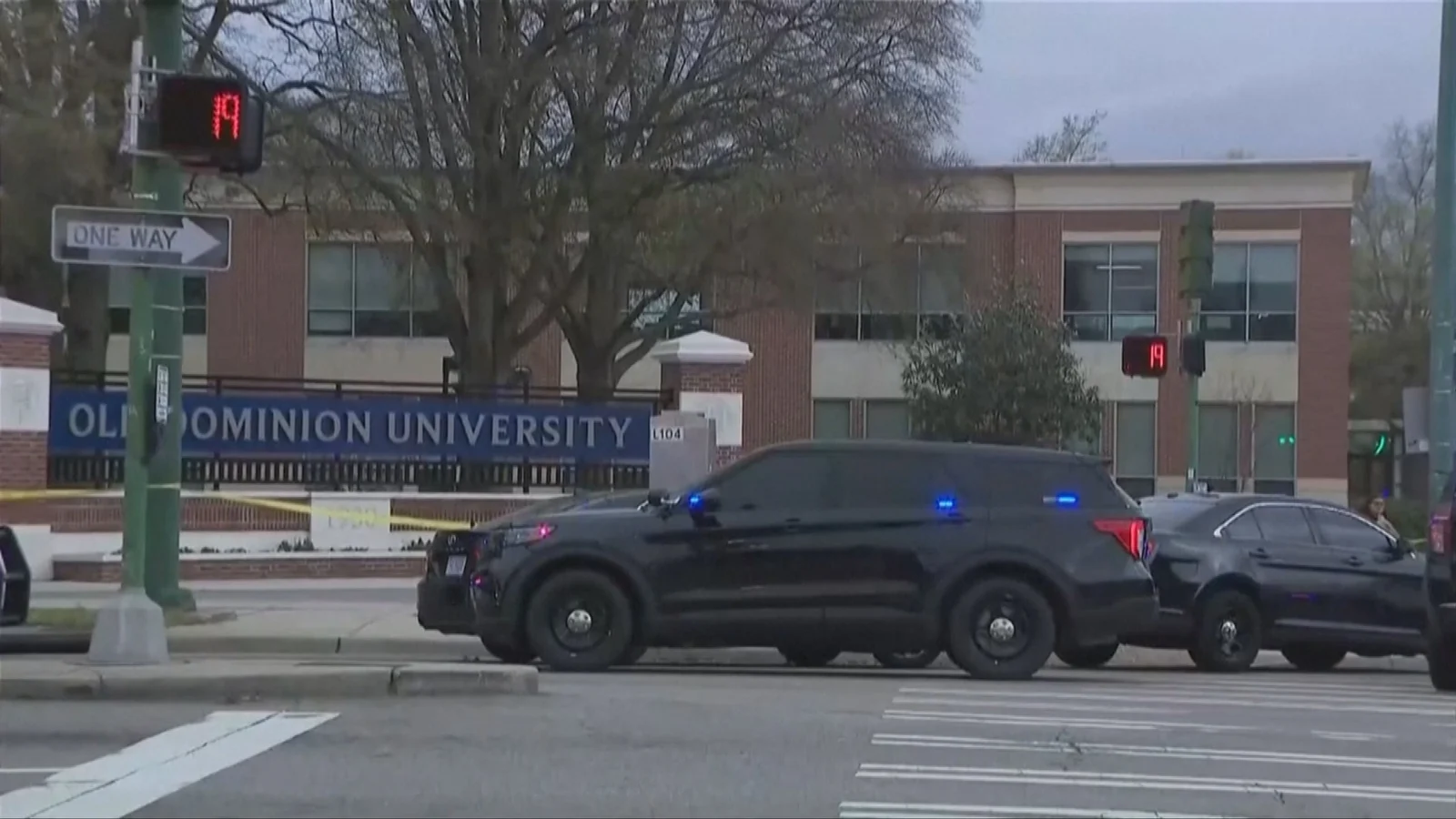
By dusk the campus was a different place: cordoned-off sidewalks, uniformed officers moving with the studied urgency of people who have done this before, and a cluster of grieving faces. A life had been taken. Two others lay wounded. A shooter was dead. And a question buzzed through the crowd, loud and insistent: how did this happen here, in a classroom that trains the people many Americans rely on to protect them?
What Happened
Authorities have identified the shooter as Mohamed Bailor Jalloh, a former member of the National Guard who had previously pleaded guilty in 2016 to attempting to provide material support to the Islamic State group. He was sentenced in 2017 and released from prison in 2024.
The FBI declared it is treating the attack as “an act of terrorism.” FBI Director Kash Patel posted a statement on social media praising the students who intervened: “The shooter is now deceased thanks to a group of brave students who stepped in and subdued him — actions that undoubtedly saved lives along with the quick response of law enforcement.”
Special Agent Dominique Evans of the FBI’s Norfolk office told reporters the suspect shouted “Allahu akbar” before opening fire and that he told investigators he intended to carry out an attack similar to the 2009 shooting at Fort Hood, Texas. Three victims — all members of the university’s ROTC program — were struck. Virginia Governor Abigail Spanberger named the fallen instructor as Lt Col Brandon Shah and wrote, “Lt Col Shah didn’t just lead a life of service to our country, he taught and led others to follow that path.”
Eyewitness accounts and official statements converged on one surprising — and chaotic — detail: the shooter did not die under immediate police fire. “There were students that were in that room that subdued him and rendered him no longer alive,” Special Agent Evans said, noting that the suspect was not shot by the students. Authorities have not released further specifics on how he died.
What We Know — Quickly
- Motive: Investigators are treating the incident as an act of terrorism, citing the suspect’s prior conviction and comments during the attack.
- Victims: Three ROTC members were shot; one — Lt Col Brandon Shah — was killed.
- Perpetrator: Mohamed Bailor Jalloh, ex-National Guard, jailed 2017 for attempted support to ISIS, released 2024.
- Campus response: Students intervened; law enforcement arrived quickly.
Voices from the Campus
What a press release can’t capture are the small, human moments that stitch a campus back together. “We heard shouting, then a pop — it sounded like something in the ceiling,” said a junior who asked not to be named. “Then somebody yelled ‘get down,’ and a bunch of us just lunged. I still can’t believe we did it.”
An ROTC cadet, bandaging a friend’s hand in a makeshift aid station, spoke in a steadier voice than his years suggested. “Brandon taught half of us here how to aim for more than targets — to aim for duty,” he said. “He was a leader. We reacted because we were trained. We reacted because we remembered what he taught us.”
A nearby resident, who had watched the ambulances arrive from her porch, wiped her eyes and summed up the town’s weariness. “We keep hearing about mass shootings like they’re weather reports,” she said. “You prepare for storms, you stock up on bread and water. But how do you prepare for something that’s meant to target your sense of safety?”
Context: Guns, Radicalization, and Returning Citizens
To make sense of this single, bloody episode, it helps to stand back and look at the landscape. The United States contains more firearms than people — a reality that shapes the contours of almost every conversation about security. According to estimates from the Small Arms Survey and other researchers, there are roughly as many as 120 firearms per 100 residents in the U.S., a statistic that helps explain why acts of violence can escalate so quickly.
But numbers alone don’t account for the other, quieter risks that thread through cases like this: the problem of radicalization, the challenges of rehabilitation, and the mixed success of deradicalization programs. Experts caution that prisons are not simple incubators; they are also laboratories where ideologies can be amplified or disrupted, depending on the programs and oversight in place.
“If someone has a history of trying to support an extremist group, and that person is reintegrated back into the community without robust monitoring or support, there’s a risk,” said Dr. Evelyn Carter, a researcher who studies violent extremism. “But the solutions are not simple. Surveillance can help, but so can community engagement, mental health care, and credible programs that offer exits from violent ideologies.”
That Same Day: A Wider Pattern
Across the country, another violent episode played out: a man drove a truck into a Michigan synagogue and its preschool. Security personnel there — trained and ready — engaged and stopped the attacker. All 140 children at the preschool were safely evacuated. It was a grim reminder that nowhere in the U.S. feels immune to sudden, targeted violence, and that security measures taken by places of worship and schools have become part of daily life.
Oakland County Sheriff Michael Bouchard told reporters that hundreds of officers were involved in the response and that smoke from a fire inside the synagogue had sent several officers to the hospital for inhalation. “What happens around the world sometimes affects us, so we have to prepare for it,” he said, underscoring a point made increasingly often in recent years: local communities are on the frontlines of global tensions.
Questions We’re Left With
After the sirens fade, the questions remain. How did Jalloh, with a prior conviction for trying to aid an extremist organization, regain access to the tools of violence? How are universities balancing open campuses with the need to keep students safe? What role should prisons play in preventing reoffense, and how should communities be involved when a person is released?
Those questions don’t have easy answers. They thread through policy debates about gun laws, parole and probation systems, rehabilitation programs, and the way communities respond to individuals labeled as dangerous. They also require a kind of moral clarity that is too often missing from political conversation: a willingness to say that protecting public safety and preserving civil liberties are both urgent goals, and neither will be achieved without hard work and uncomfortable trade-offs.
Closing — A Community Remembers
At a candlelight vigil organized on short notice the evening after the shooting, a ROTC student read a folded card. “Lt Col Shah believed in service,” she said into the microphone. “He believed in teaching us to be stronger. We will not let his death be the last lesson.”
We can listen to the statistics and the policy experts and we can watch the footage of classrooms and ambulances, but at the heart of stories like this are human lives and small acts of courage: students who leapt toward danger, an instructor who taught more than drills, security teams who saved children in Michigan. The stakes are intimate and enormous at once.
As readers scroll past this piece tomorrow, what will they remember? The names? The numbers? Or the faces — the frightened, brave, resilient faces of people who, for a flash, were asked to do the impossible? If there’s one thing this campus and that synagogue unfold for us, it’s this: the need to look beyond headlines and into the messy, painful work of protecting each other — not just with policy, but with communal care.
What would you do if you were there? And what are we, as a society, willing to change to make sure fewer of us ever have to find out?